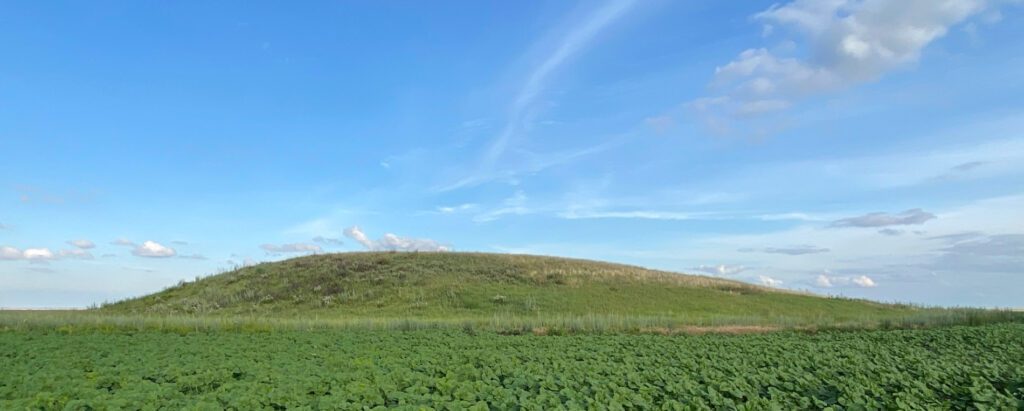
Archaeologists investigating the wide steppe plains of the Southern Urals have uncovered an unexpected ritual deposit dating to the 4th century BC—a discovery that sheds new light on the ceremonial life of early nomadic elites. The find comes from the inter-kurgan zone of the large necropolis known as “High Mound – Studenikin Mar,” a sprawling Scytho-Sarmatian burial landscape in the Orenburg region.
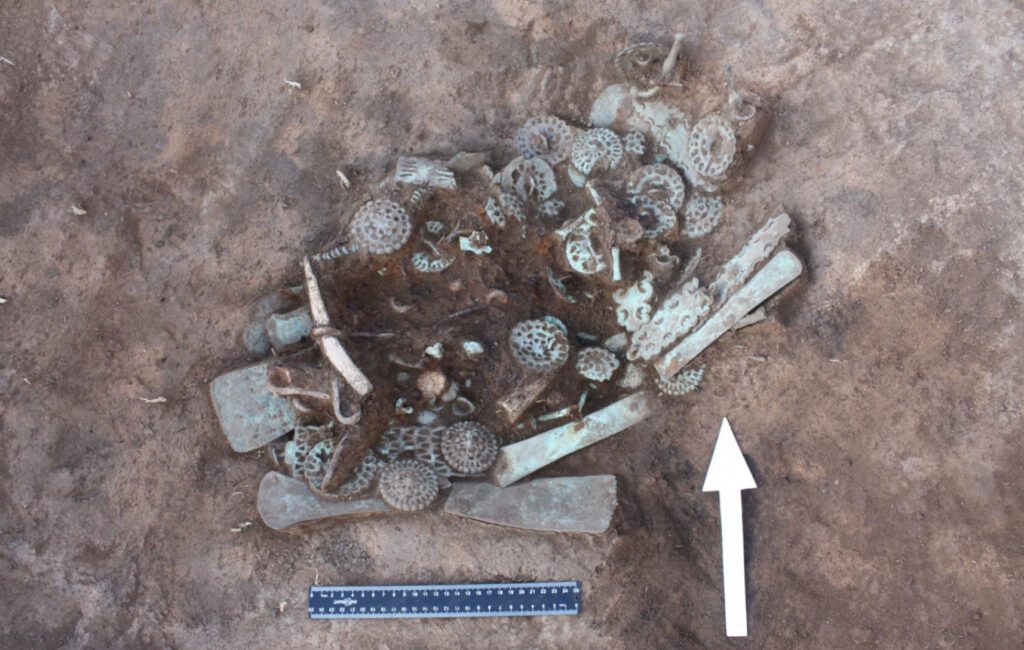
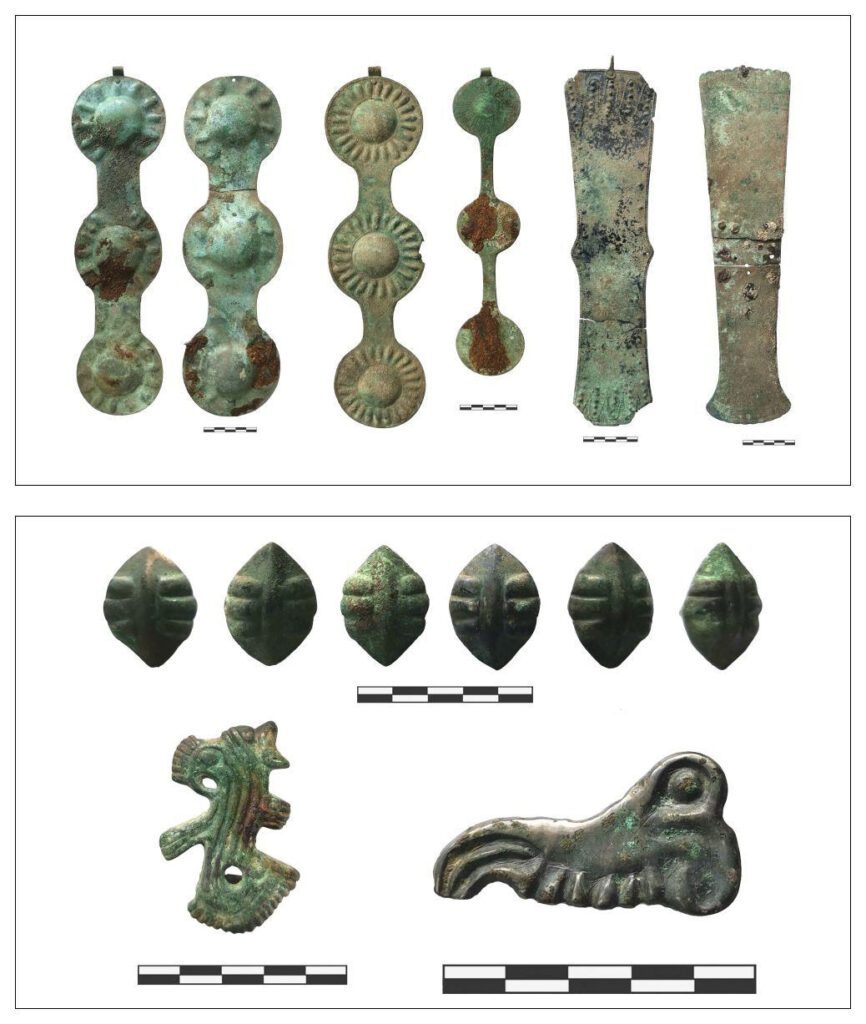
The complex, hidden in a shallow circular pit between two large mounds, contained an exceptionally rich assemblage of horse trappings crafted from bronze, bone, antler, and iron. More than a hundred complete objects—and over five hundred additional fragments—were recovered, including bits, psalia, strap fittings, frontlets, decorative plaques, and unique ritual ornaments.
An Assemblage Unlike Anything Previously Recorded in the Southern Urals
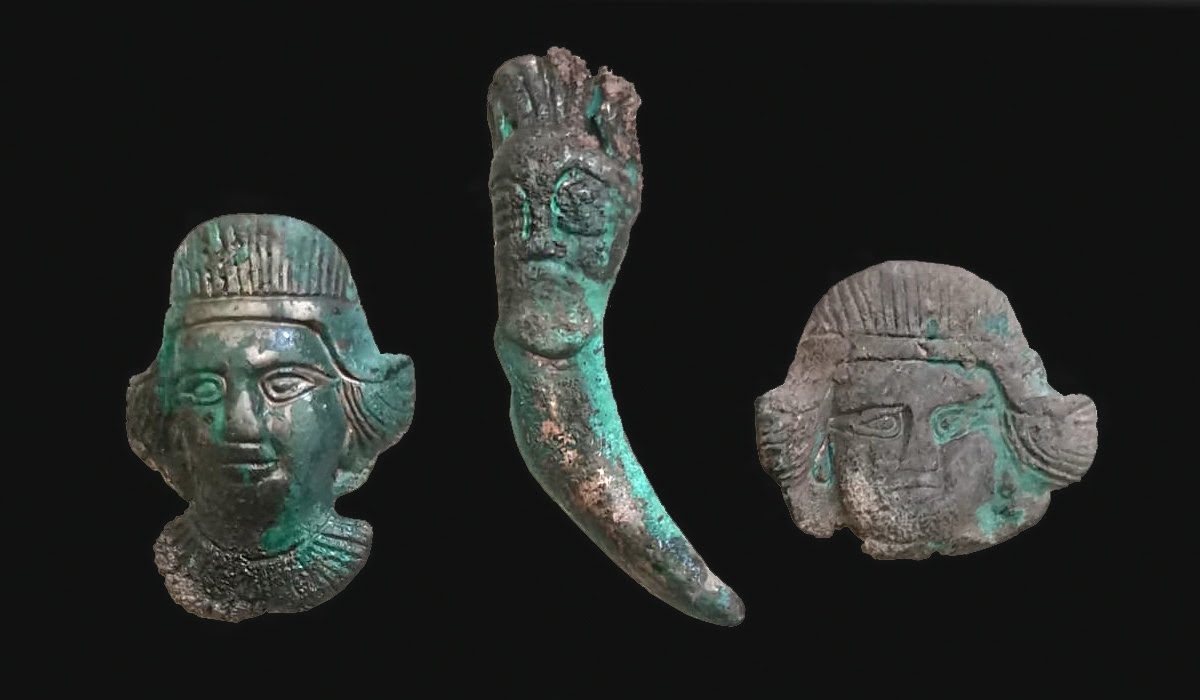
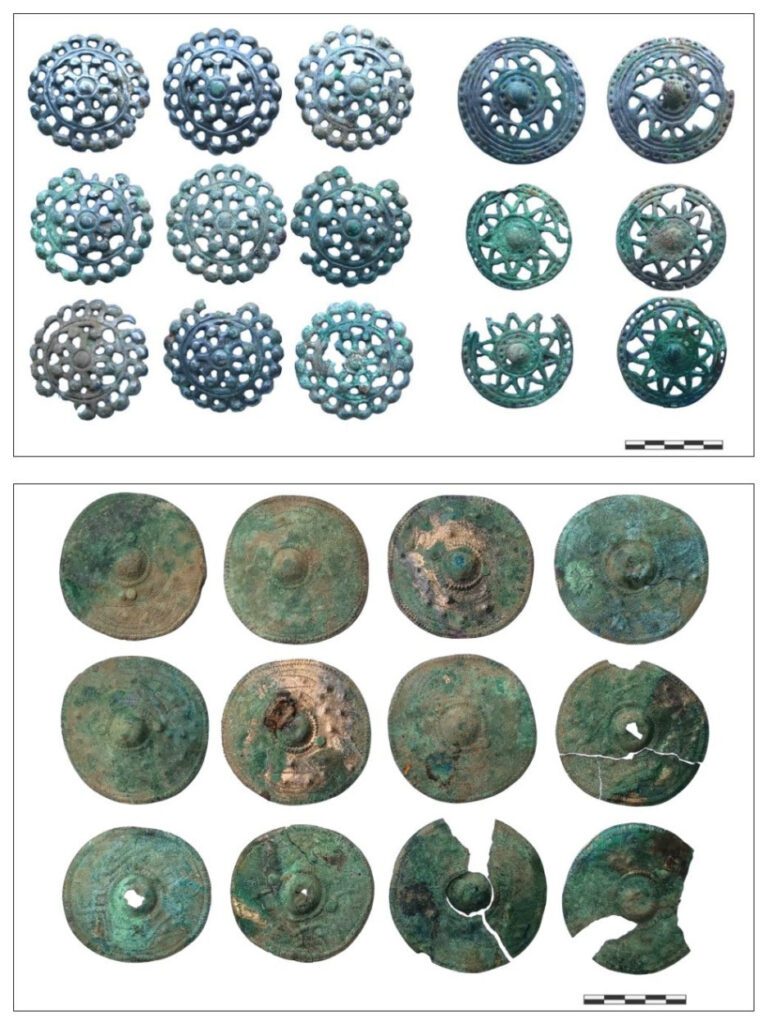
The excavation team from the Russian Academy of Sciences’ Institute of Archaeology soon realized they were dealing with a deposit that far exceeded ordinary grave offerings. Among the most striking finds were bronze strap-distributors shaped as miniature human faces, intricately crafted openwork browpieces, flat circular plaques with raised centres, and a bronze pendant decorated in the animal-style tradition.
According to expedition leader Sergei Viktorovich Sirotin, the scale and variety of the assemblage are unprecedented:
“This is currently the largest ritual complex of its kind in the Southern Urals—both in terms of the number of objects and the range of imported items recovered from an inter-kurgan area of an early nomadic necropolis. Some elements, such as the psalia and animal-style bridle plaques, have parallels in Scythian contexts and in high-status 4th–early 3rd century BC Southern Ural burials. But many artefacts—openwork browpieces, flat circular plaques with central knobs, and certain decorative fittings—show clear affinities with assemblages from the North Caucasus, the Don region, and the Northern Black Sea. These types have never before been documented in the Southern Urals,” he explained.
These stylistic parallels point to extensive cultural interactions stretching across the Pontic–Caspian steppe, suggesting that the nomadic communities of the Ural–Ilek region maintained far-reaching connections with other Iron Age centres.
A Ritual Deposit Linked to Post-Burial Ceremonies
Alongside the horse-gear components, the pit contained a wooden ceremonial bowl clad in silver, decorated in the same animal-style aesthetic, as well as boar mandibles intentionally placed as a sacrificial offering. Sherds from a handmade ceramic vessel were also present, hinting at additional ritual acts.
Such a combination of objects indicates that the deposit represents a carefully structured ceremony rather than discarded equipment. Its placement between major kurgans suggests that it formed part of post-burial practices connected to the social and political elites interred in the largest mounds.

The Necropolis and the Rise of a Nomadic Confederation
Excavations at “High Mound – Studenikin Mar” began in 2015 and have so far examined nearly half of its monumental mounds. The earliest and largest kurgans belong to the Filippovski horizon (4th–early 3rd century BC)—a period during which a powerful nomadic polity emerged in the Southern Ural steppe. Smaller kurgans date to the late Sarmatian period (2nd–4th centuries AD), marking the necropolis’s long use.
Sirotin highlights the broader historical implications:
“The materials recovered from these excavations support the idea that a powerful military-political confederation of nomads emerged in the Southern Ural steppe during the 4th century BC. The Ural–Ilek nomadic groups played a defining role in this process. By the mid-4th century BC they controlled vast territories, as reflected in the spread of Filippovski-type necropolises with their distinct burial rites and object complexes across the Southern Ural region,” he said.
Earlier seasons had already produced remarkable finds, including weapons, arrowheads, ornaments, and in 2021, a bronze scale helmet with an iron neck-guard. The newly uncovered ritual complex adds an essential dimension to this evolving picture: evidence not only of funerary display but of ritual performance carried out around the mounds.
Inter-Kurgan Zones as Ritual Landscapes
The latest discovery underscores the importance of systematic exploration beyond the mounds themselves.
The inter-kurgan areas, often overlooked in earlier research, are proving to be key locations for understanding nomadic ceremonial behaviour.
As Sirotin emphasizes:
“Finds of ritual complexes and isolated offerings in the inter-kurgan zones reveal new dimensions of funerary behaviour among Southern Ural nomads. It is increasingly clear that the large kurgans functioned not only as burial monuments but as cult-ritual centres with their own systems of sacrificial deposits and post-burial ceremonial actions. This is why systematic investigation of the inter-kurgan spaces in Filippovski-type necropolises is so crucial,” he noted.
The 2025 season demonstrates that these liminal areas once hosted complex ceremonial practices, providing an indispensable complement to the archaeological record preserved within the mounds.
Cover Image: Bronze strap-distributors shaped as miniature mask plaques, accompanied by a bronze pendant from the 4th-century BC ritual complex at the “High Mound – Studenikin Mar” necropolis.
Source: Institute of Archaeology, Russian Academy of Sciences.