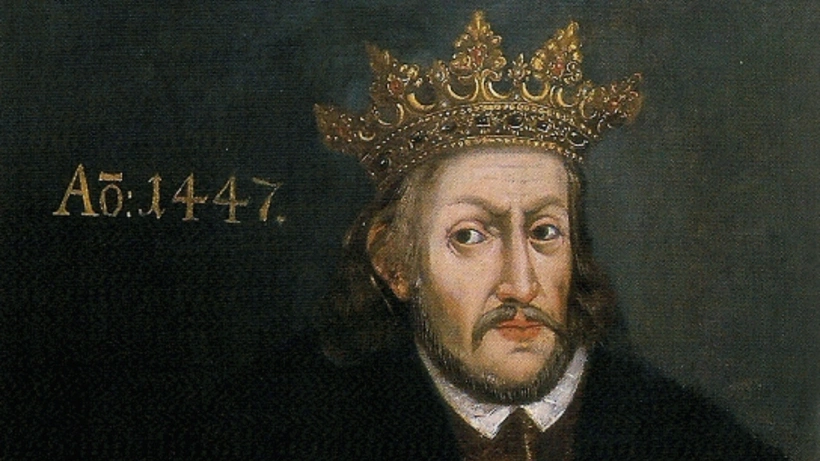
When researchers opened the tomb of Polish King Casimir IV Jagiellon in 1973, they entered a burial chamber that had remained sealed for almost 500 years. Inside were the king’s remains, fragments of a decayed wooden coffin and a biological environment that had developed undisturbed for centuries.
Over the following decade, 15 people associated with the examination reportedly died. Their deaths gave rise to the story of the “Jagiellonian curse,” turning a conservation project at Kraków’s Wawel Cathedral into one of Poland’s most enduring historical mysteries.
The deaths were real, and potentially dangerous microorganisms were discovered inside the tomb. Whether the two were directly connected, however, has never been scientifically established.
A Royal Tomb Sealed Since 1492
Casimir IV ruled Poland from 1447 until his death in 1492 and served as Grand Duke of Lithuania from 1440. During his long reign, the Jagiellonian dynasty became one of the most powerful royal houses in Central and Eastern Europe.
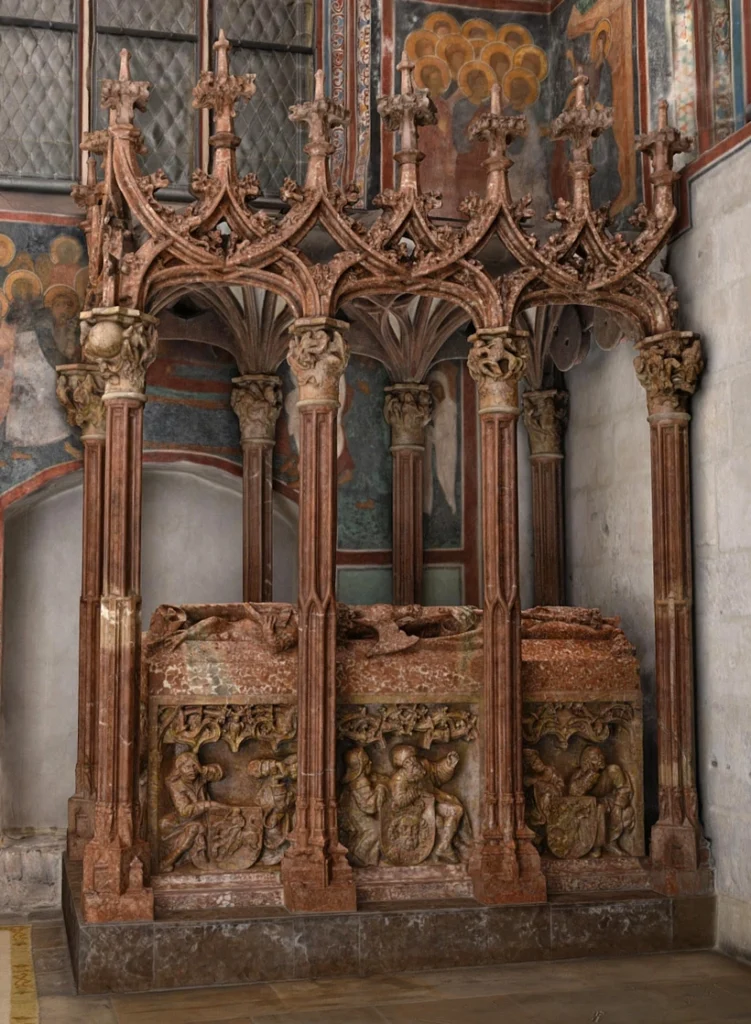
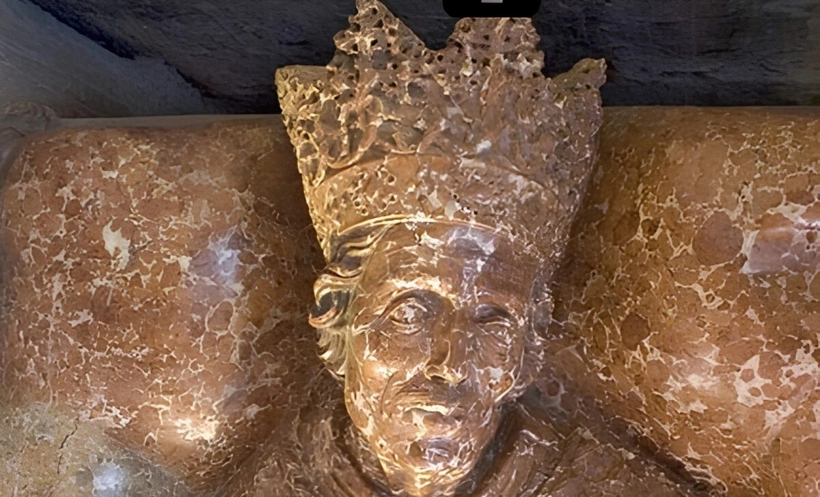
The king was buried in the Holy Cross Chapel at Wawel Cathedral, the traditional coronation and burial place of Polish monarchs. His elaborate late-Gothic tomb monument was created by Veit Stoss, one of the most celebrated sculptors of medieval Central Europe.
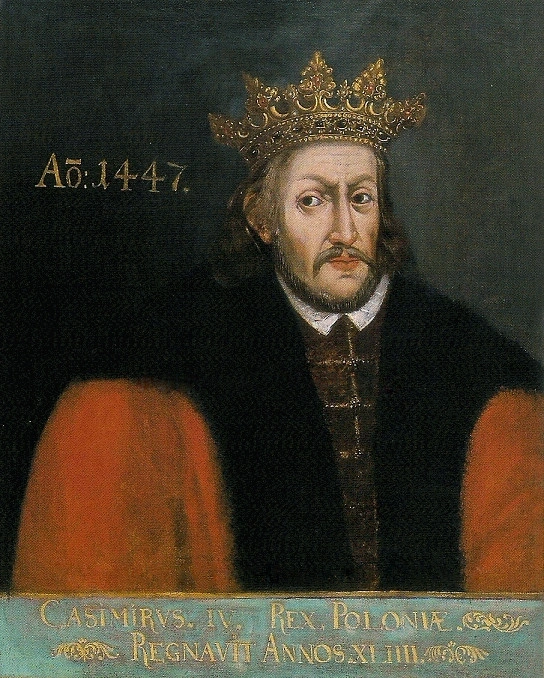
By the time conservation work began in 1973, the burial chamber had not been opened since the king’s funeral. Specialists first entered the tomb in April, with a more extensive examination following in May.
They found that the wooden coffin and much of the original burial material had severely deteriorated. Textiles, wood, human remains and other organic materials had decomposed within a confined space with little ventilation.
It was an environment capable of preserving more than the physical remains of a medieval ruler.
Fifteen Deaths Over the Following Decade
Later accounts sometimes claimed that members of the research team began dying within days of entering the tomb. The actual sequence was far less immediate.
The first widely reported death occurred in April 1974, approximately one year after the chamber was initially opened. Other deaths followed over the next several years.
In total, 15 people connected with the investigation were said to have died within roughly a decade. Heart attacks, strokes and cerebral haemorrhages were among the recorded causes.
The number was disturbing enough to encourage comparisons with the supposed curse of Tutankhamun’s tomb. The Polish story soon acquired its own supernatural explanation: Casimir IV was taking revenge on those who had disturbed his grave.
Researchers, however, found evidence of a more tangible danger.
A Potentially Dangerous Fungus
Microbiological examinations identified several types of fungi associated with the tomb. The organism that attracted the greatest attention was Aspergillus flavus.
This widespread mould can produce aflatoxins, poisonous compounds that may cause serious health problems under certain conditions. Disturbing contaminated dust inside an enclosed burial chamber can also release fungal spores into the air, creating a potential hazard for archaeologists, conservators and laboratory specialists.
The discovery made the idea of a biological threat plausible. A small crypt containing decaying wood, textiles and human remains could provide favourable conditions for fungal growth, especially after remaining sealed for centuries.
Yet the presence of Aspergillus does not mean that everyone exposed to it will become ill. Most people regularly inhale fungal spores without developing serious disease. Severe infections are more likely among individuals with weakened immune systems or existing lung conditions.
There is also no evidence that those who entered Casimir’s tomb were examined for fungal infections immediately after their exposure.
The Curse Was Never Scientifically Proven
The fungi found inside the royal tomb demonstrate that the researchers may have entered a hazardous environment without fully understanding the risks. They do not prove that fungal exposure caused all 15 deaths.
No published clinical investigation has connected each death to aspergillosis, aflatoxin exposure or another illness originating inside the burial chamber. The reported causes of death also do not reveal a single medical pattern shared by every person involved.
A 2015 study frequently mentioned in connection with the story adds to the confusion. Researchers documented high levels of fungal contamination in a Polish burial crypt, but the investigation took place at the Buchholtz Chapel in Supraśl—not inside Casimir IV’s tomb at Wawel Cathedral.
That research showed that poorly ventilated crypts can contain concentrations of airborne fungi high enough to create occupational risks. It did not determine what caused the deaths associated with the 1973 examination in Kraków.
The “Jagiellonian curse” therefore rests on two unsettling facts: 15 people connected with the opening later died, and potentially harmful fungi were present in the tomb.
What remains unknown is whether one caused the other.
There is no evidence that the medieval king reached beyond the grave to punish those who disturbed his burial. But the tomb may still have contained a danger its investigators could neither see nor fully understand—one created not by a royal curse, but by nearly five centuries of decay inside a sealed chamber.