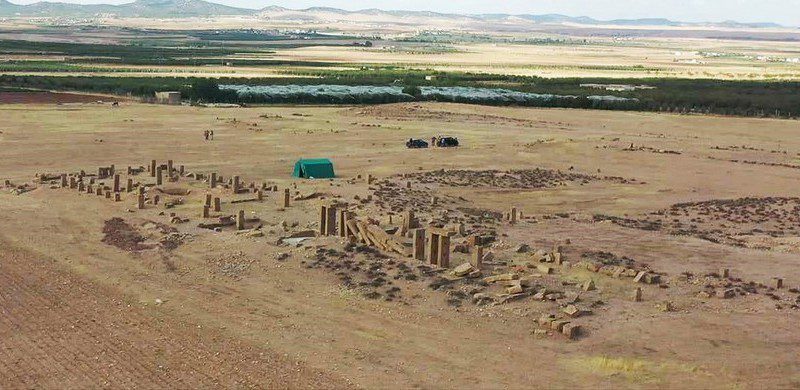
The high steppes of central Tunisia don’t give up their secrets easily. From a distance, the Jebel Semmama massif looks empty—bare earth, scattered stone, a harsh wind cutting over the plateau. But beneath this deceptively quiet landscape, archaeologists have now confirmed something far more ambitious: one of the largest Roman olive-pressing installations ever identified across the empire.
A Forgotten Frontier Reveals an Industrial Giant
A new international mission co-directed by Ca’ Foscari University of Venice has begun rewriting what we know about agricultural production at the edges of Roman Africa. Working in the ancient territory of Cillium, near today’s Kasserine and close to the Algerian border, researchers uncovered industrial-scale olive-oil facilities once operated by veteran colonists and local Numidian-descended communities known as the musulamii.
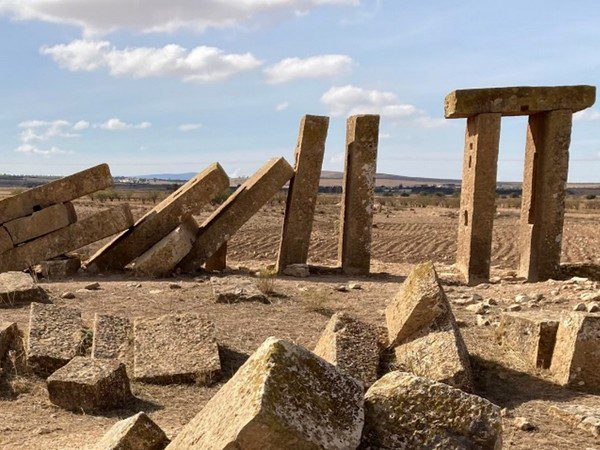
The scale is staggering: two massive torcularia—olive-pressing workshops—dominate the heart of the rural estate. One of them, located at Henchir el Begar, is now considered the second-largest Roman olive press in the entire Empire, with twelve monumental beam presses arranged in sequence.
A Landscape Engineered for Oil
The Jebel Semmama plateau offered the Romans the one thing they valued above all in North Africa: predictable olive harvests.
Cold winters, hot summers, minimal rainfall captured in rock-cut cisterns—harsh but perfect conditions for stable, high-yield olive groves.
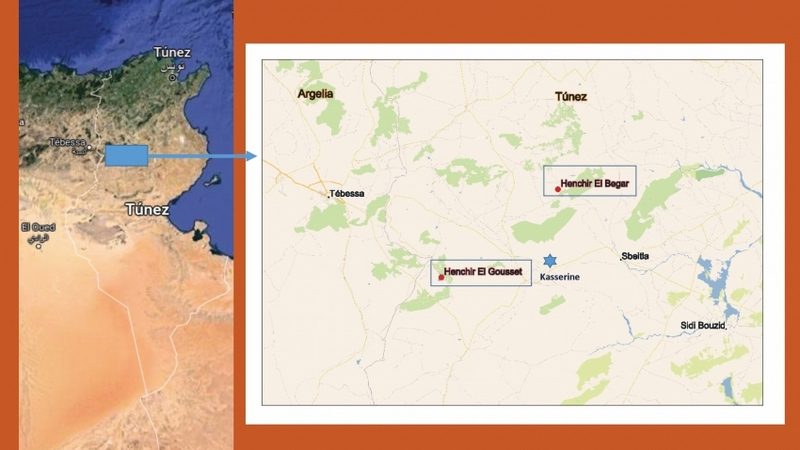
Roman Africa Proconsularis became the empire’s oil powerhouse, supplying Rome’s markets, bathhouses, athletes, medical practitioners, and even lamp-fuel distributors. The newly documented farms at Henchir el Begar and nearby Henchir el Gousset add a missing chapter to this economy. Their layout suggests a coordinated system of production, storage, and distribution operating between the 3rd and 6th centuries CE.
Inside the Saltus Beguensis Estate
Henchir el Begar corresponds to the ancient Saltus Beguensis, a rural estate once owned by the vir clarissimus Lucillius Africanus. A famous 138 CE senatorial decree—preserved in Latin inscriptions (CIL VIII 1193, 2358)—authorized a bimonthly market here, hinting at a thriving hub of trade, ritual traffic, and social life.
Excavations show the settlement covered roughly 33 hectares, divided into two major clusters:
- Hr Begar 1: Home to the colossal twelve-press torcularium
- Hr Begar 2: A second installation equipped with eight presses
- Additional infrastructures: water-collection basins, multiple cisterns, storage areas, and a vicus likely inhabited by colonists and local laborers
Surface finds include rotary querns, millstones, and reused architectural elements—evidence for a mixed agricultural economy combining cereal and oil production.
Georadar surveys added another layer: dense housing blocks, road alignments, and workshop zones invisible from the surface, pointing to a highly organized rural network rather than an isolated estate.
A New International Partnership Redraws the Map
The mission grew from a collaboration launched in 2023 by Prof. Samira Sehili (Université La Manouba, Tunisia) and Prof. Fabiola Salcedo Garcés (Complutense University of Madrid).
In 2025, Prof. Luigi Sperti of Ca’ Foscari University joined as co-director with the support of Italy’s Ministry of Foreign Affairs—expanding the project into a Mediterranean-wide research alliance.
Excavations from late antiquity and medieval layers have already yielded objects such as:
- a decorated copper-and-brass bracelet
- a white limestone sling bullet
- fragments of reworked Roman architectural sculpture
One reused press block embedded into a Byzantine wall is a striking sign of how deeply the site’s industrial past shaped its later occupation.
“A Rare Window into the Roman Empire’s Agricultural Power”
“This mission offers an unprecedented view of how frontier regions of Roman Africa were organized,” said Prof. Sperti.
He emphasizes that olive oil was far more than a culinary staple: it was a cosmetic, a medical resource, a product for athletic training, and—when quality was low—a crucial fuel for urban lighting.
“Understanding production and distribution on such a scale,” he notes, “is not just about ancient industry; it shows how archaeology can connect research, heritage protection, and economic development. Sites like these redefine what we know about the infrastructure that fed an empire.”
Cover Photo: General view of the rural settlement at Henchir el Begar, part of a vast olive-producing estate in the Jebel Semmama massif. Courtesy of the archaeological mission. Source: Ca’ Foscari University