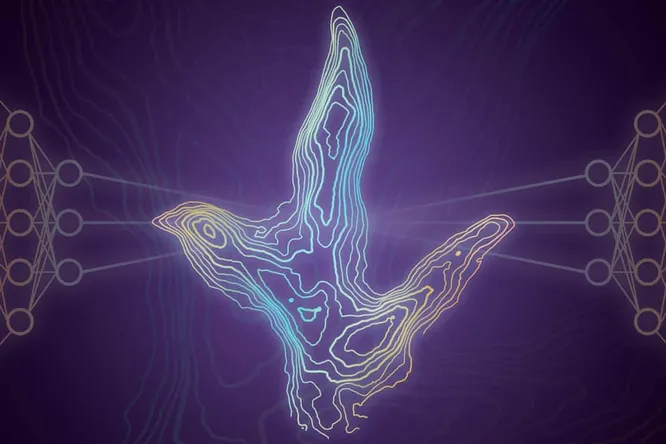
At first glance, a fossilized dinosaur footprint looks deceptively simple. Three toes. A heel mark. But for paleontologists, identifying which dinosaur made which track has long been one of the field’s most stubborn puzzles. Now, a new artificial intelligence tool is offering a fresh way forward—by learning without labels.
Researchers have launched DinoTracker, a free AI-based application designed to compare and classify dinosaur footprints based purely on shape. Instead of relying on expert-assigned names, the system groups tracks according to shared geometric features, matching human expert judgments in roughly 90 percent of cases. The creators emphasize, however, that the app is not meant to deliver final answers—only to test and refine scientific hypotheses.
Why Dinosaur Tracks Are So Hard to Identify
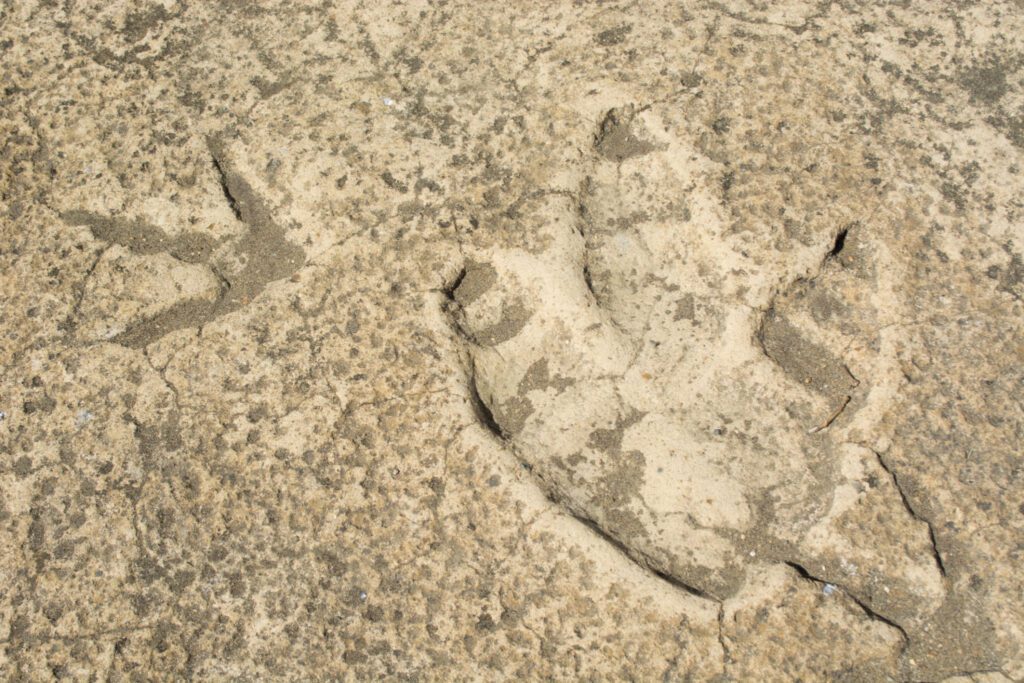
“Identifying a dinosaur from its footprint is a bit like trying on Cinderella’s glass slipper,” explains Steve Brusatte, a co-author of the study and professor at the University of Edinburgh. The problem, he notes, is that a footprint records more than anatomy. It also captures movement, sediment type, moisture, and how deeply the foot sank into sand or mud.
Earlier AI approaches trained on already-labeled tracks inherited the same uncertainties that have long troubled If the original labels were wrong—or overly confident—the algorithms simply reproduced those errors.
Learning Without Labels
The team behind DinoTracker took a different approach. In a study published in Proceedings of the National Academy of Sciences, Brusatte and colleagues—including Gregor Hartmann of Helmholtz-Zentrum—fed the system more than 2,000 footprint outlines with no taxonomic names attached.
The algorithm compared the silhouettes on its own, identifying patterns of similarity and difference. From this process, it isolated eight key shape features, such as toe spread, heel placement, and the overall contact area with the ground. These variables now form the backbone of DinoTracker’s interface.
Users can upload a footprint outline, view the seven closest matches in the database, and adjust each of the eight parameters to see how small changes shift the results. The experience is deliberately exploratory rather than declarative.
theguardian.
Context Still Matters
Hartmann stresses that the app does not replace traditional paleontological judgment. Geological context remains essential. The age of the rock layers and the type of sediment must align with any biological interpretation. DinoTracker, he says, is best understood as a consistency check—a way to see whether a hypothesis holds up when stripped of prior assumptions.
Bird-Like Tracks Older Than Birds?
One of the most intriguing outcomes of the project concerns footprints from the Triassic and Early Jurassic periods. The AI repeatedly grouped some of these tracks as unusually “bird-like,” despite being around 60 million years older than the earliest known bird skeletons, including Archaeopteryx.
Brusatte acknowledges that this could hint at deeper evolutionary roots for birds. But he remains cautious. A more conservative explanation, he argues, is that these tracks were made by predatory dinosaurs with highly bird-like feet—not true birds.
Not everyone agrees. Jens Lallensack of Humboldt University of Berlin counters that footprint shape alone can be misleading. In soft, waterlogged sediment, even a typical theropod foot can leave an impression that looks strikingly avian. In his view, track morphology by itself is not enough to rewrite avian origins.
A Tool for Asking Better Questions
Rather than settling debates, DinoTracker seems designed to sharpen them. By stripping away labels and forcing researchers to confront raw shape data, the app encourages more careful questioning—and more transparent uncertainty.
In a field where a single footprint can carry millions of years of evolutionary speculation, that restraint may be its most valuable feature.
Cover Image Credit: The Guardian