Archaeologists have long relied on trained eyes to classify ancient pottery. But a new study suggests that may no longer be enough. Using 3D data and artificial intelligence, researchers have shown that machines can now identify subtle differences in ceramic forms with a level of consistency that challenges traditional methods.
The findings were published in the Journal of Archaeological Science, one of the field’s leading peer-reviewed journals.
A Long-Standing Problem: Subjective Ceramic Classification
For decades, ceramic classification has been one of the foundations of archaeological analysis. Researchers have depended on visual comparison, typologies, and 2D outlines to distinguish between vessel types. Yet this process has always carried an unavoidable weakness. Subtle differences in shape often leave room for interpretation, and different experts can reach different conclusions when examining the same object.
The problem becomes more visible when artifacts sit between categories. In such cases, classification does not fail because of missing data, but because the categories themselves begin to lose clarity.
From Pottery to Data: Turning Vessels into 3D Models
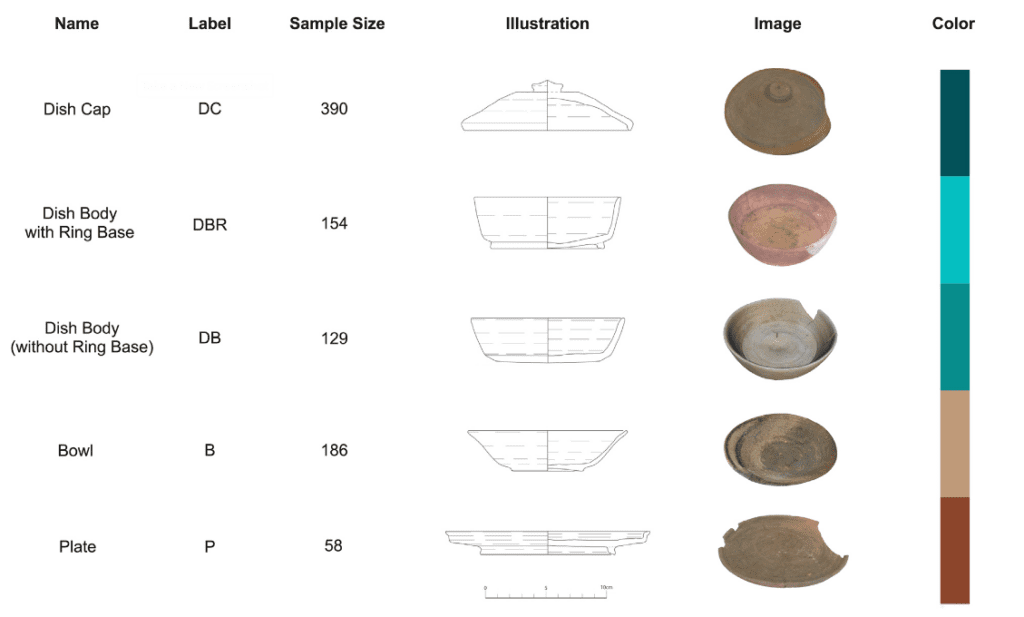
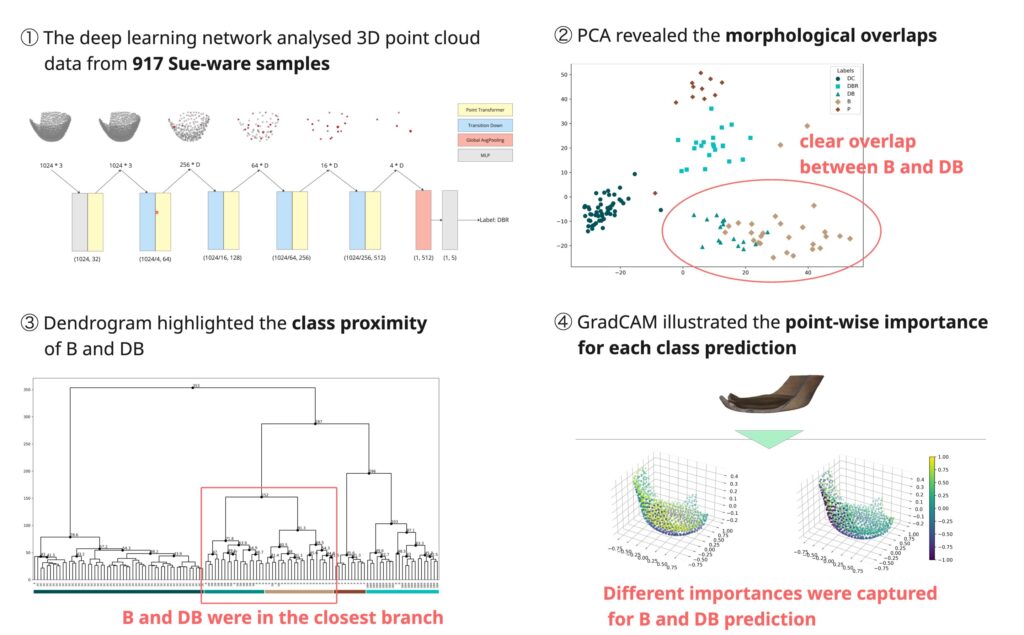
The new research shifts the focus from subjective observation to measurable data. The team examined 917 ceramic vessels from Japan’s Sanage kiln, dating to the 8th and 9th centuries, and converted each piece into a 3D point cloud composed of 1,024 spatial data points.
These digital models were processed using a deep learning system known as Point Transformer, a model designed to interpret complex three-dimensional structures.
The outcome is difficult to ignore. The system reached an average accuracy with an F1-score of 0.932, while some categories were classified with near-perfect precision. What stands out is not just accuracy, but consistency—the model identifies patterns without the variability seen in human judgment.
Where AI Outperforms Traditional Methods
The most revealing results appeared in ambiguous cases. Archaeologists have long struggled to distinguish between certain dish-like and bowl-like forms because their shapes overlap and their functions may have intersected.
The AI model was able to correctly classify most of these borderline examples. More importantly, it could show how it reached those conclusions.
Using visualization techniques, researchers identified which parts of each vessel influenced the model’s decisions. The system consistently focused on the curvature of the inner wall, the angle of the rim, and the transition between base and body. These are the same features experts rely on—only analyzed with far greater consistency and scale.
A Historical Insight Hidden in the Data
The study does more than introduce a new method. It also points to a broader historical question.
The blurred boundary between certain vessel types may not simply reflect classification problems. Instead, it may reflect a real cultural transition. During the 8th and 9th centuries in Japan, eating practices were changing, moving from hand-based consumption toward the use of utensils such as chopsticks.
This shift likely influenced the design of tableware. What appears today as typological ambiguity may actually be evidence of cultural transformation.
Beyond Japan: A Method with Global Potential
The implications of this research extend far beyond a single region or period. Traditional ceramic analysis remains valuable for its accessibility and speed, but it is limited by simplified representations and subjective interpretation.
By contrast, AI-driven 3D analysis captures the full geometry of artifacts, produces reproducible results, and reveals patterns that may otherwise remain hidden.
Because the method is not region-specific, it can be applied to Roman pottery, prehistoric ceramics, and other archaeological assemblages. The fact that the dataset and code have been made publicly available further strengthens its potential impact.
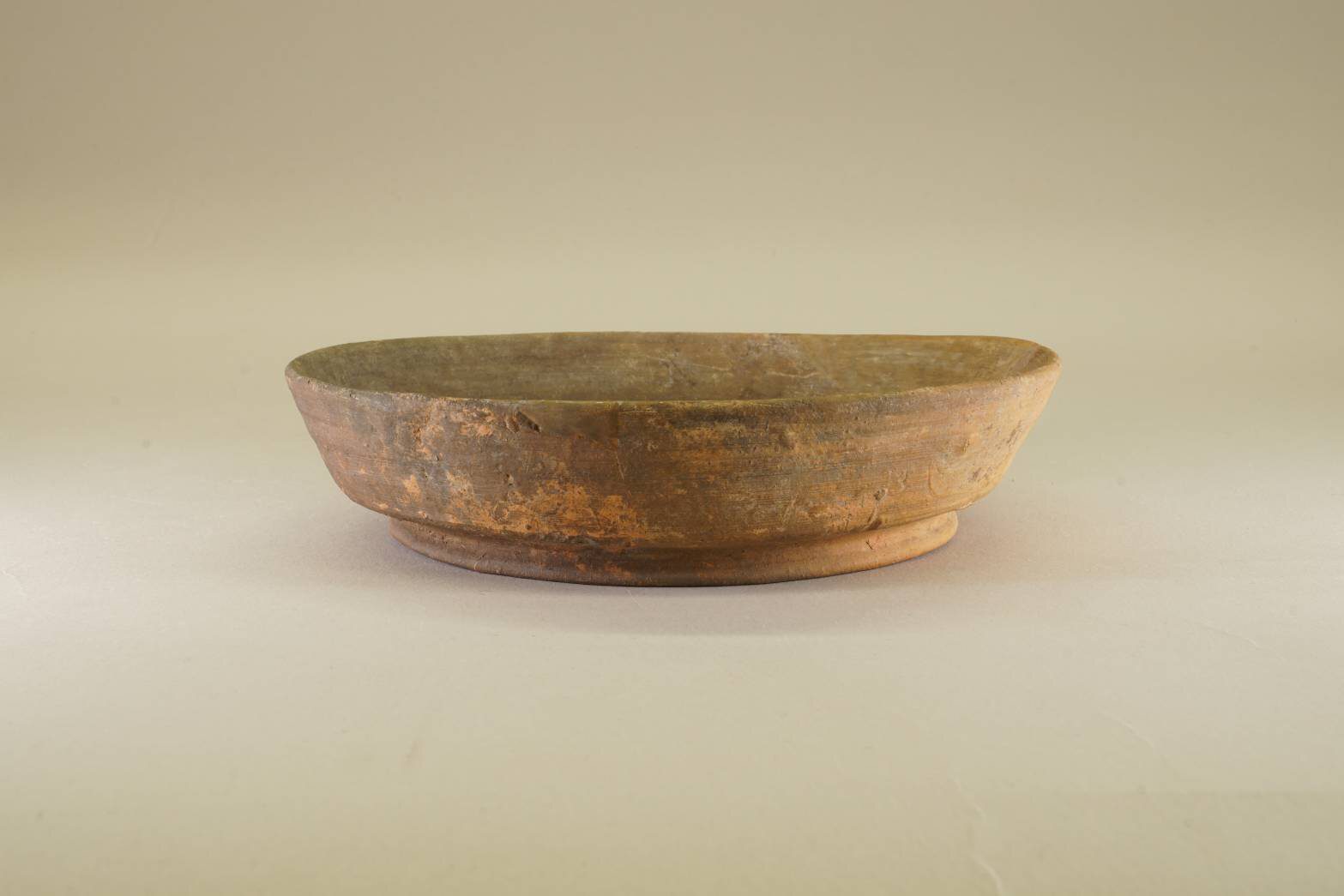
Cover Image: A representative example of Sue ware, a type of ancient pottery from Japan widely used between the 5th and 10th centuries. Credit: Hayata Inoue / Aichi Prefectural Ceramic Museum
Wataru Tatsuda et al, Deep learning-based morphological classification of ceramics: A case study of 3D point cloud analysis for Sue ware, Japan, Journal of Archaeological Science (2026). DOI: 10.1016/j.jas.2026.106472