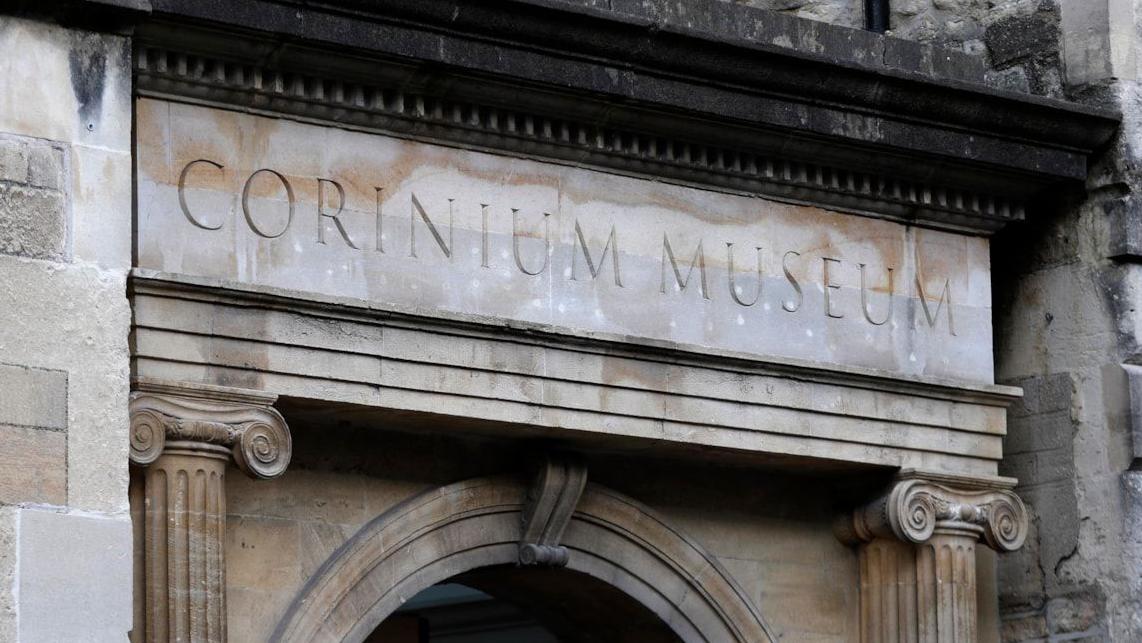
A newly opened display at the Corinium Museum is bringing an extraordinary Early Bronze Age burial into public view, offering a rare insight into ritual practices and social hierarchy in prehistoric Britain.
The artifacts were uncovered during excavations at Lechlade Memorial Hall in 2017 and include amber beads, a copper dagger and fire-lighting flints. All were found inside a barrow burial, a circular mound used for funerary practices, alongside the remains of two men.
A High-Status Burial with Unusual Ritual Elements
The primary burial immediately stands out. One of the individuals appears to have held exceptional status, interred with multiple symbolic objects and animal remains. The grave contained four sets of cow skulls and hooves, an archery wrist-guard, amber ornaments and a copper dagger—items that together suggest identity, power and possibly ritual authority.
What makes this burial particularly significant is its rarity. Ritual offerings of this scale are well known across Bronze Age Europe, but are uncommon in Britain, giving the Lechlade grave a distinct place in the archaeological record.
A Second Burial Suggests Continued Ritual Use
A second individual was buried within the same mound, though with a more modest assemblage. The remains were accompanied by a single cow skull, hooves and flint tools.
Despite the difference in richness, the presence of two burials indicates that the site was not used only once. Instead, it reflects a structured and possibly ongoing funerary tradition, where the barrow maintained symbolic importance over time.
Archaeological Significance Beyond a Single Find
Archaeologist Andrew Hood, who led the excavation, described the burials as clear evidence of the “rich and fascinating prehistory” of the Lechlade area. His statement underlines how discoveries like this extend beyond isolated finds and contribute to a broader understanding of regional Bronze Age societies.
The exhibition itself was made possible following conservation work funded by the Pilgrim Trust, the Julian Rausing Trust and the Association for Independent Museums, emphasizing the importance of preservation in bringing such narratives to the public.
Reframing Britain’s Prehistoric Narrative
Corinium Museum director Emma Stuart highlighted the importance of sharing these artifacts with the public, noting that they help illustrate the achievements and lifeways of early communities across the Cotswold landscape.
Seen together, the Lechlade burial is more than a collection of objects. It represents a carefully constructed funerary setting that reveals how Bronze Age communities understood status, memory and ritual.
In that sense, the display does not simply present artifacts—it reconstructs a human story buried for over 3,000 years, now made visible again.
Cover Image: The artefacts were uncovered during a 2017 archaeological dig.Credit: Cotswold District Council