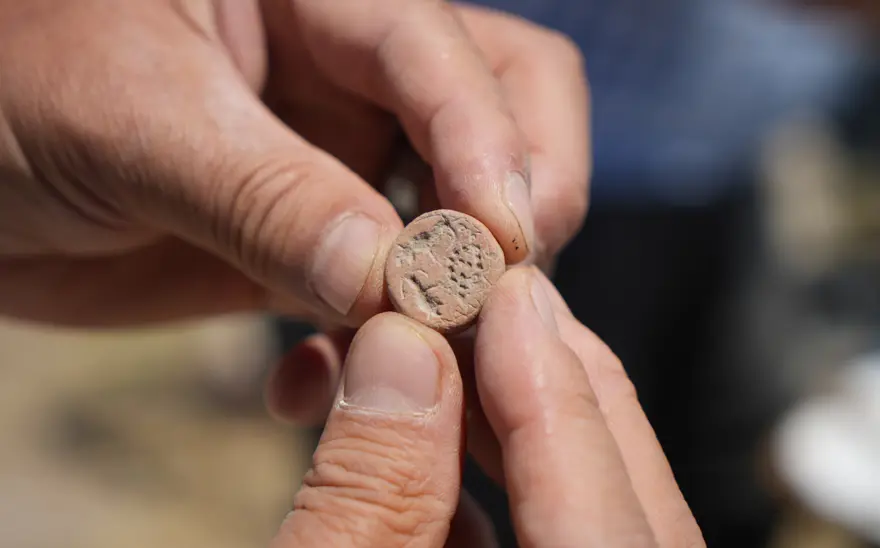
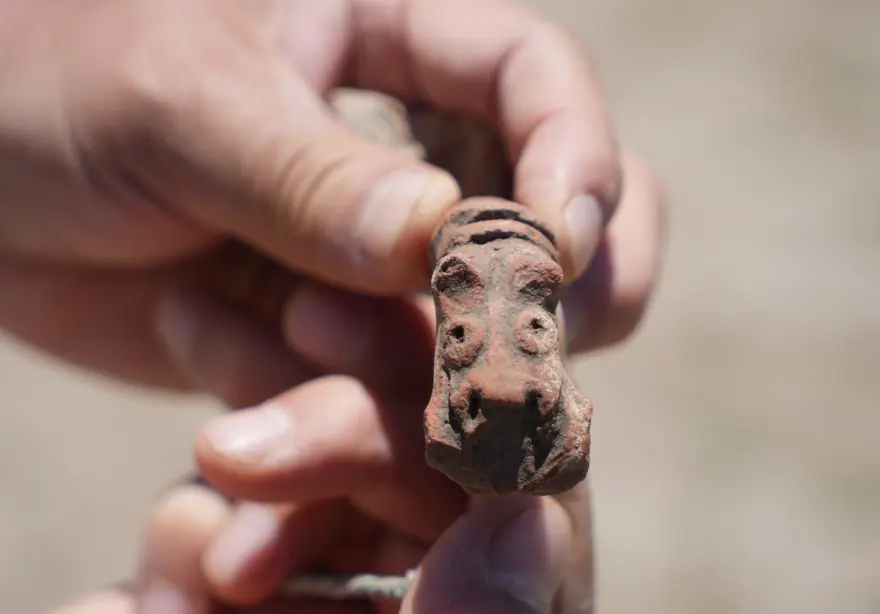
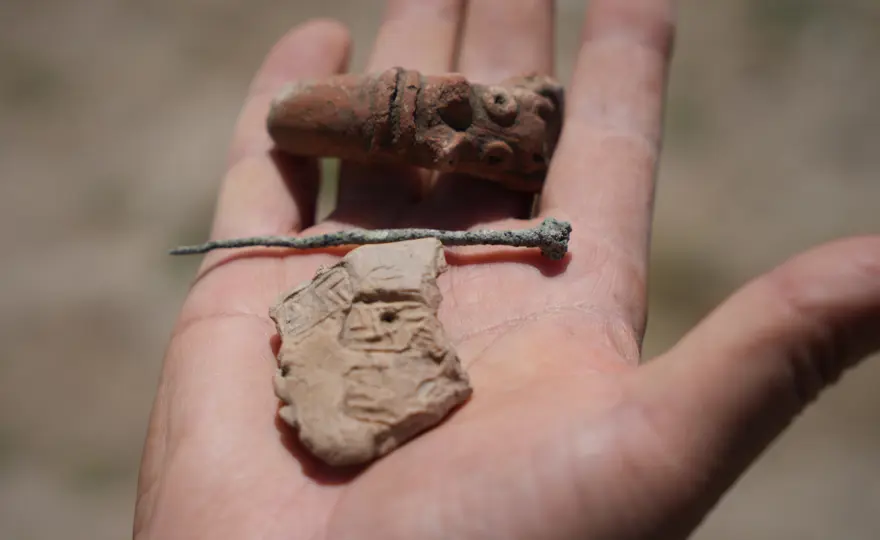
A handled stamp seal with two animal figures has been found at Büklükale, the multi-layered archaeological site near the Kızılırmak River in central Türkiye.
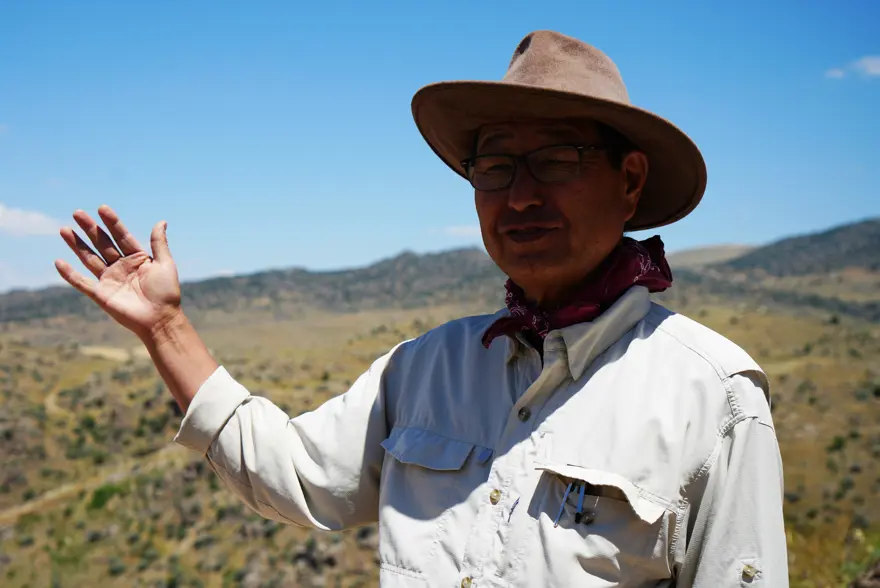
The object was uncovered during excavations in Karakeçili district of Kırıkkale province, where a team from the Japanese Institute of Anatolian Archaeology has been working under the direction of Assoc. Prof. Kimiyoshi Matsumura.
The seal has a handle, two animal figures on its face, and a second motif below them formed by very small holes. Matsumura said the lower motif has not yet been identified. The object has also not been assigned to a fixed date.
That caution matters. The seal is not being presented as a confirmed Hittite object. According to Matsumura, however, handled stamp seals of this type are generally known from a period stretching from the end of the Karum Period into the Old Hittite Period, in the second millennium B.C.
That makes the new find worth watching closely. If further study supports the initial comparison, the seal may belong to a material tradition linked with the early Hittite world.
A handled seal with two animals
The find is small, but it comes from a site where small objects have already changed the discussion.
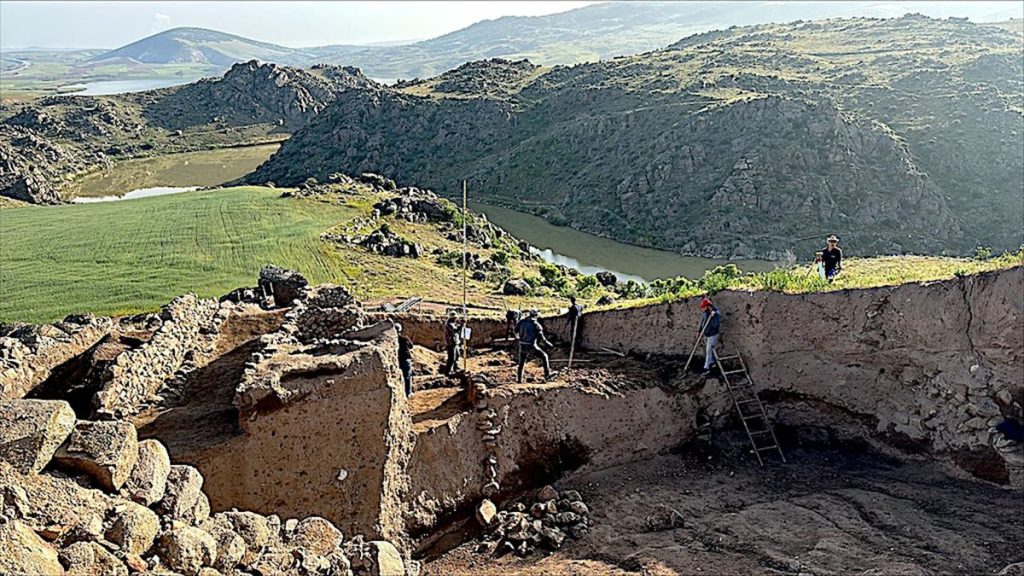
Büklükale lies about 60 kilometers southeast of Ankara, beside the Kızılırmak, Türkiye’s longest river. Matsumura describes the site as an ancient city located next to an important river crossing. That position helps explain why the settlement was used repeatedly across different periods.
Excavations are continuing in two areas, known as the Lower City and the Upper City. The upper levels include remains from the Ottoman period. Beneath them, the team has identified settlement traces from the Hellenistic period, broadly associated with the age after Alexander the Great.
Below those layers are Iron Age remains. Matsumura has also referred to evidence linked with the Achaemenid Persians, Lydians, Phrygians and possibly the Cimmerians, who moved into Anatolia from north of the Black Sea during the early first millennium B.C.
This long sequence is important for the new seal. A single object from Büklükale cannot be read without its archaeological context. Later occupation, reuse and disturbed layers can complicate interpretation. For now, the safest point is the typological one: the seal resembles forms known from the Karum and Old Hittite horizon.
Why the Hurrian tablets matter
Büklükale was already unusual before this new seal was found.
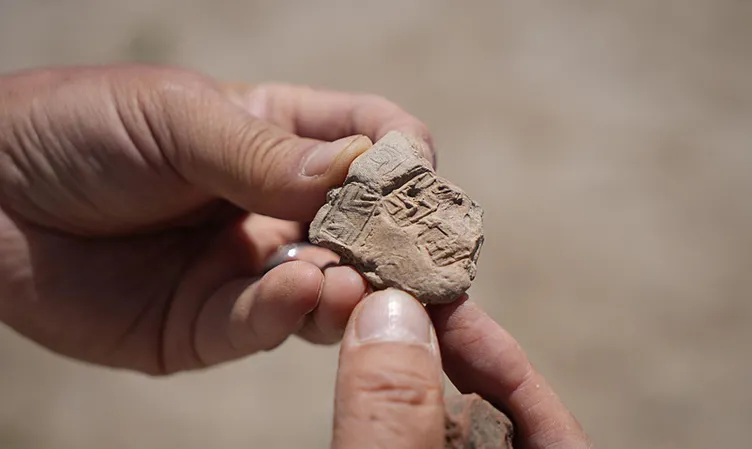
Earlier excavations produced Hittite cuneiform tablets. The excavation team has described them as among the westernmost Hittite tablets found in Anatolia. That alone made the site important for understanding how far Hittite written culture extended toward central-western Anatolia.
Then, from 2019 onward, Hurrian tablets were also found at Büklükale.
This is not a routine detail. Matsumura noted that Hurrian tablets in Anatolia had previously been identified at Hattusa, Ortaköy and Kayalıpınar, settlements connected with the Hittite royal sphere. Büklükale became another site in that short list.
Hurrian had a particular role in the Hittite world, especially in ritual and religious contexts. Its presence at Büklükale does not automatically make the site a royal residence. But it does make a simple explanation harder. A river crossing alone would not easily account for Hittite and Hurrian written material, seal impressions and possible palace-related architecture.
Not proof, but another part of the same pattern
The animal-figured seal does not prove that Büklükale was a Hittite royal center. It does not settle the function of the settlement in the second millennium B.C.
Its importance is more specific. It adds one more object to a group of finds that already includes Hittite tablets, Hurrian texts, seal impressions and architectural remains interpreted as possibly belonging to the entrance area of a palace complex.
That combination is what keeps Büklükale from being treated as just another fortified point beside a river. The site sits on a strategic route, but the written and material evidence suggests that its role may have reached beyond local control of a crossing.
The new seal now has to be studied in detail: its form, motif, context and parallels. Until that work is done, the most careful reading is also the strongest one. Büklükale has produced another object that may belong to the Early Hittite tradition, at a site where the Hitit and Hurrian evidence was already difficult to ignore.