The Hittites are often remembered for their fortified capitals, stone reliefs, and royal archives carved onto clay tablets. Yet behind their political power lay a dense and symbolic religious world, one in which gods were not distant beings but active participants in daily and ceremonial life. Some of their most intriguing rituals are described in texts — but until recently, few could be clearly imagined.
A small ceramic vessel from central Anatolia now changes that.
A Modest Object With an Extraordinary Interior
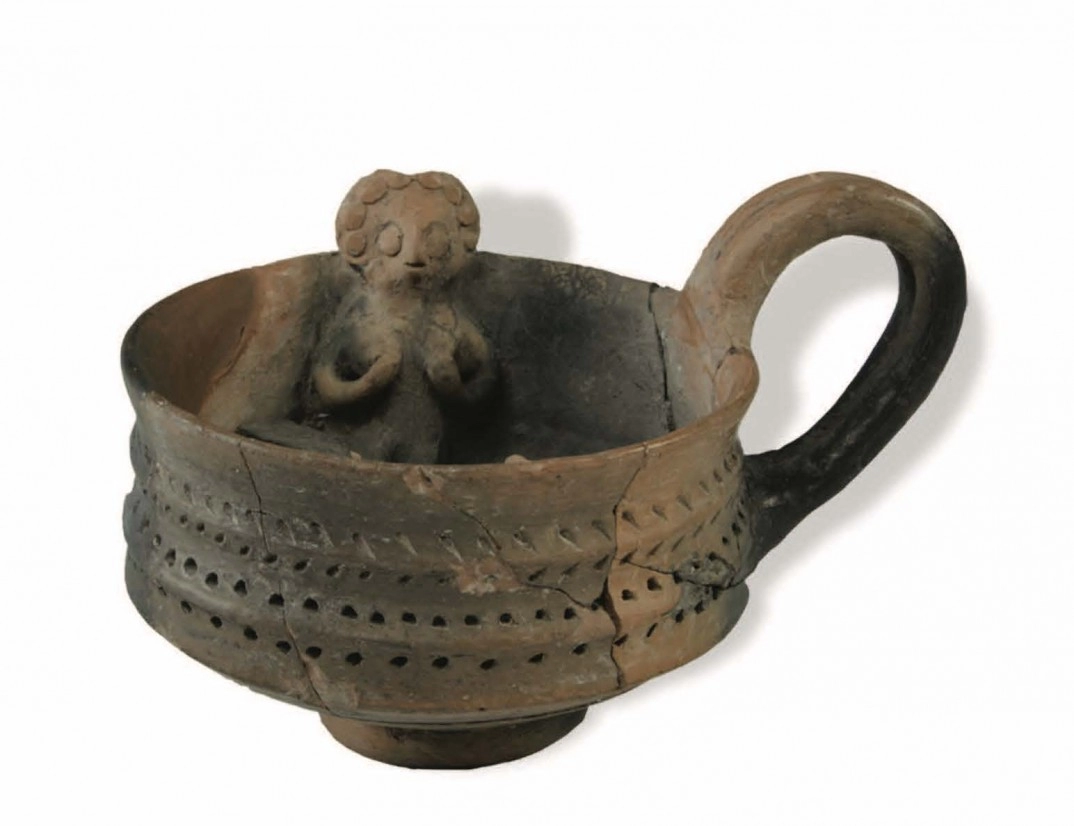
The cup-shaped cult vessel dates to the Old Hittite period and was discovered at the site of Eskiyapar in today’s Çorum province, Türkiye. From the outside, it appears unremarkable. Inside, however, it reveals a carefully composed sacred scene.
At the center stands a ritual table, and upon it lies a loaf of bread. Dominating the scene is a female deity, grasping her breasts in a gesture associated with nourishment, fertility, and divine abundance. She wears a solar disk crown, a symbol deeply embedded in Hittite religious imagery.
This is not decorative art. It is theology rendered in clay.
Visualizing a Ritual Known Only From Texts
Hittite ritual tablets frequently mention offerings of flat, disk-shaped bread presented to the gods. But one particular phrase has long puzzled scholars: the act described as “drinking the god.” How this ritual was performed has remained unclear.
According to Hittite ritual specialist Hatice Baltacı, the Eskiyapar vessel may finally provide an answer. The arrangement inside the cup appears to materialize this ritual, showing bread offered both on the altar and placed upon the ground — a dual act bridging divine and earthly realms. At present, this vessel is the only known archaeological object that visually represents this ceremony.
The Crown That Changes Everything: Eight Disks, One Goddess
What truly distinguishes the Eskiyapar cup is the goddess’s crown. While solar disk headgear is well known in Hittite art, this example is without parallel.
Surrounding the central solar disk are eight smaller disks — a feature unseen elsewhere in Hittite iconography.
As noted by archaeologist Kutlu Emre, Hittite artists did not include details without meaning. Entire narratives could be compressed into a single scene. From this perspective, the eight disks demand interpretation.
A Forgotten Ceremony and Eight Goddesses
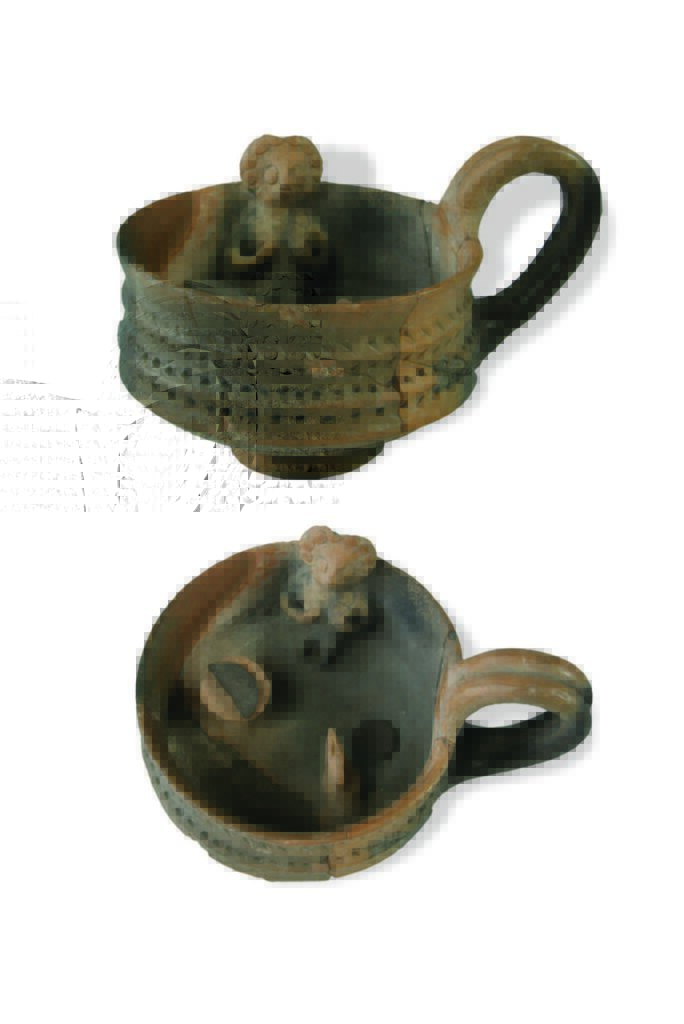
The interior scene, featuring a goddess figure, bread offerings, and ritual elements, is widely interpreted as a rare archaeological visualization of the Hittite ritual known as “drinking the god.”
That interpretation may lie in a specific cult ritual described in Hittite texts. During a ceremonial journey from the capital Hattusa the Hittite queen performs offerings in the city of Tahurpa for the Sun Goddess of Arinna.
Crucially, the ritual does not honor a single deity. Offerings are made to eight associated goddesses — figures widely thought to represent deceased and deified Hittite queens.
Seen through this lens, the eight small disks crowning the goddess in the Eskiyapar cup gain clarity. They likely symbolize these eight goddesses, embedding an entire state ritual within the interior of a single vessel. The figure inside the cup, then, is not a generic deity, but the Mother Goddess of Arinna herself.
Why Eskiyapar Matters
This interpretation carries implications beyond religion. If the vessel reflects ceremonies tied to Tahurpa, it strengthens the argument that Eskiyapar may indeed be that city known from Hittite texts. The cup thus becomes evidence not only of belief, but of sacred geography.
This idea gains further weight from another discovery. In 1945 — before systematic excavations began — a second goddess cup was found at Eskiyapar. Though broken and incomplete, it was published in American Journal of Archaeology 51 (1947). The vessel again depicts a goddess holding her breasts inside a cup. Even then, scholars suggested a connection to the “drinking the god” ritual and noted that when held in the right hand, the design places the worshipper face-to-face with the goddess — an unmistakably intentional act.
The fact that such vessels have been found only at Eskiyapar suggests that both the ritual and these extraordinary cups may represent a local religious tradition, not a widespread Hittite practice.
A Theology Held in the Palm of a Hand
Ongoing excavations may soon clarify whether Eskiyapar can be definitively identified with Tahurpa — a development that would also strengthen the association of Arinna with nearby Alacahöyük.
For now, the Eskiyapar goddess cup reminds us of something essential:
not all ancient belief systems were carved in stone or proclaimed from temples.
Some were meant to be held, lifted, and experienced — quietly — in the palm of a hand.
This article draws on archaeological interpretations and published analyses from the “Birth of Cities” dossier in Aktüel Arkeoloji Dergisi, Issue 78, as well as current Hittite textual and iconographic scholarship.