An ancient Hittite text preserves the story of a royal power struggle that unfolded around 3,600 years ago, when a king rejected his intended successor and accused the young man of falling under the influence of a woman he described with a striking word: “serpent.”
The episode appears in the political testament of Hattusili I, one of the earliest rulers of the Hittite kingdom in central Anatolia. Rather than presenting an orderly transfer of royal authority, the document reveals a court divided by family loyalties, competing interests and an ageing ruler determined to control what would happen after his death.
The serpent imagery is examined by Nermin Atila of Hitit University in a study devoted to the relationship between humans and snakes in Hittite cuneiform texts. Her research places the episode within the broader symbolic world of the Hittites, where snakes could appear in ritual, religious and magical contexts but could also become powerful metaphors for danger and political disorder.
A king turns against his chosen heir
Hattusili’s testament, preserved in Hittite and Akkadian versions, records the king explaining to members of the political elite why a young royal named Labarna would no longer succeed him.
Labarna had previously been presented as the king’s son and intended heir. According to Hattusili’s own account, however, the relationship deteriorated because the young man failed to obey royal instructions and instead listened to members of his family, especially his mother, who became the focus of the king’s accusations.
In one of the most memorable passages in the document, Hattusili complains that Labarna did not listen to the king but instead followed the words of “his mother, the serpent.” The language was not casual. In a text intended to justify a major change in the succession, portraying the woman as a serpent turned her political influence into something threatening and potentially destructive.
The precise identity of Labarna’s mother and her position within the complicated early Hittite royal family remain debated. The surviving text nevertheless makes Hattusili’s attitude unmistakable: he regarded her influence over his former heir as incompatible with his own authority.
Labarna was consequently removed from the succession. Hattusili did not simply erase him from royal life, however. The testament indicates that the rejected heir was to receive property and resources, while limits were imposed on his ability to interfere in political affairs.
Hattusili then named Mursili as his new successor. Mursili would later become a major ruler of the Old Hittite Kingdom, remembered particularly for campaigns that carried Hittite armies far beyond central Anatolia.
When a ‘serpent’ threatened Hattusa
The political use of serpent imagery was not limited to Hattusili’s insult against Labarna’s mother.
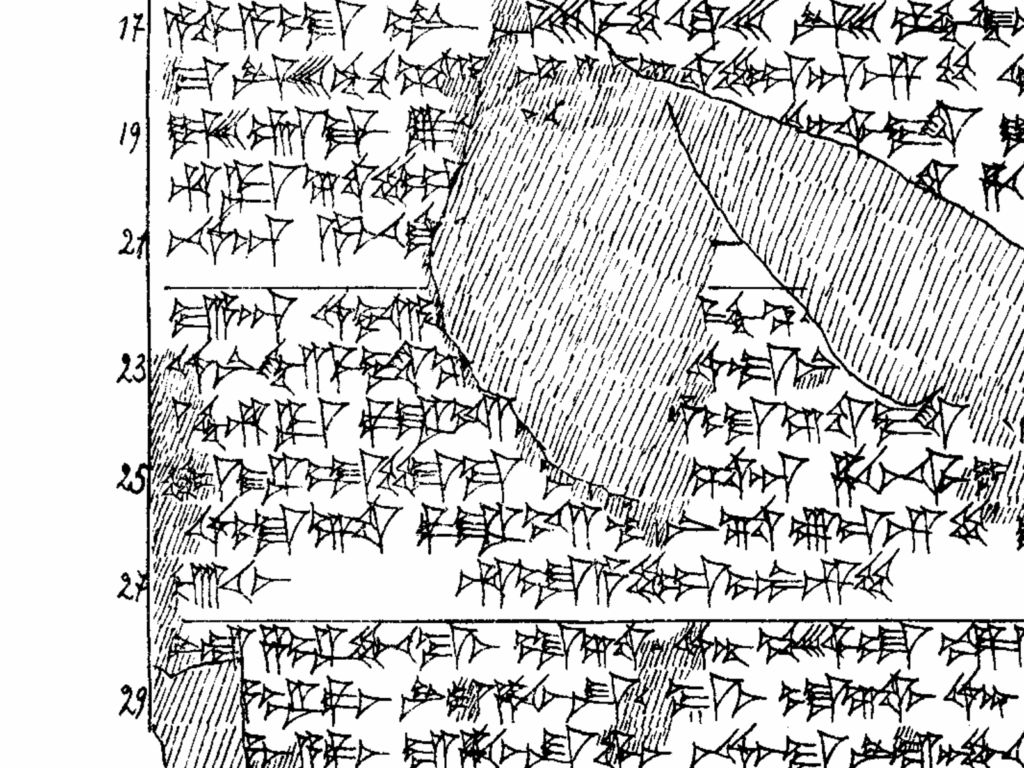
Another Old Hittite text, KBo 3.27, contains an equally dramatic image involving the Tawananna, the title used for the Hittite Great Queen. In the warning preserved in the text, the danger posed by her influence is expressed through the image of a serpent surrounding Hattusa, the Hittite capital.
Atila interprets this language as a metaphor for the disruption of peace, security and political order in the capital rather than as a literal supernatural prediction.
That distinction matters. The text does not provide evidence for a belief that an enormous snake was expected to attack Hattusa, nor does it describe a “curse” in the modern sense. Instead, the serpent appears to have offered Hittite political language an unusually vivid way of describing a threat spreading through the royal household and potentially engulfing the state itself.
Scholars have long debated exactly who the Tawananna mentioned in this early material was and how the various women surrounding Hattusili were related to one another. It is therefore difficult to identify the “serpent” in Hattusili’s testament and the Tawananna of KBo 3.27 confidently as the same individual.
What the texts do reveal, however, is that women at the highest levels of the Hittite royal family could exercise enough political influence to become central figures in disputes over succession and royal authority.
The serpent as political language
Snakes had a much broader role in Hittite culture than these hostile passages alone might suggest. Hittite cuneiform records refer to them in rituals, divination and other religious practices, and their symbolism was not uniformly negative.
Within the context of Hattusili’s succession crisis, however, the imagery takes on a distinctly political character.
Calling the mother of a rejected heir a “serpent” allowed the king to portray opposition within his own family as more than simple disagreement. It transformed a dispute over influence and succession into a threat to the stability of the kingdom.
The documents therefore preserve something more revealing than the name of the ruler who eventually inherited the throne. They offer a glimpse into the rhetoric of one of the earliest recorded Hittite succession struggles, when family relationships, political propaganda and royal authority became inseparable — leaving behind one of the most striking insults known from early Hittite political writing: a royal woman portrayed as “the serpent.”
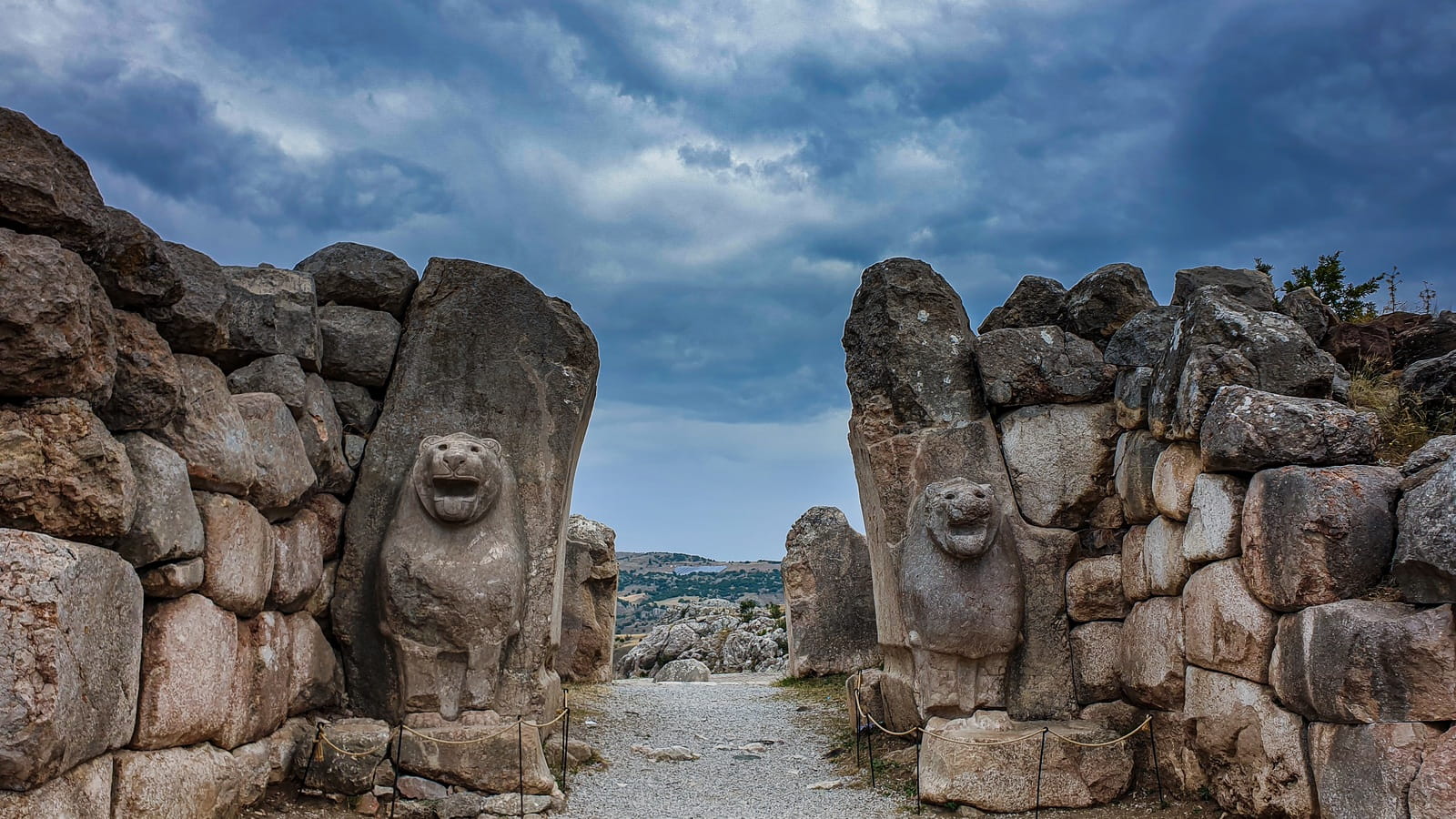
Cover Image: The Lion Gate at Hattusa, the capital of the Hittite kingdom, where ancient texts preserve evidence of a bitter royal succession struggle. Credit: KapuskaCoFabli / Wikimedia Commons, CC BY-SA 4.0.