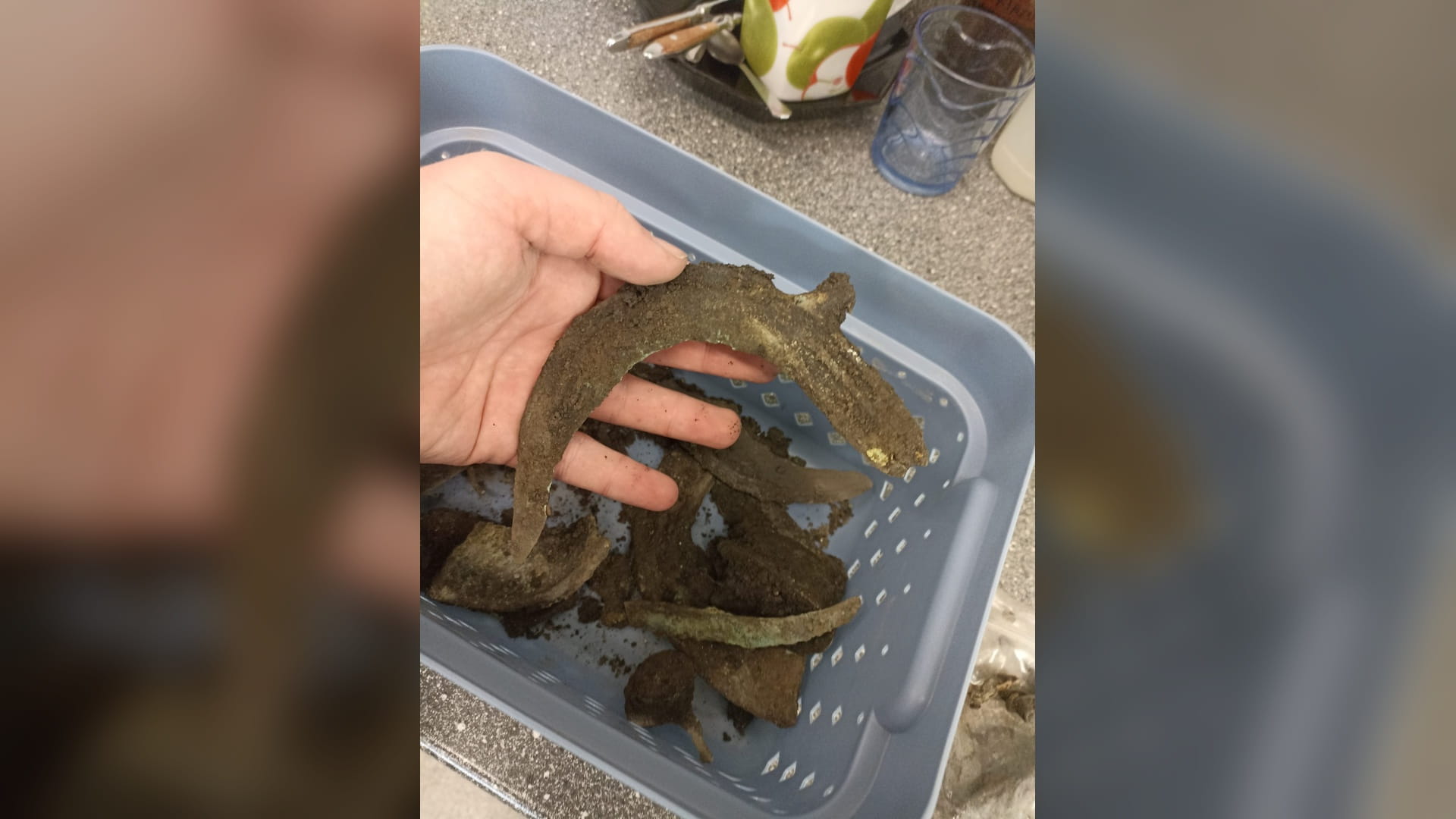
Archaeologists near Kojetín in the Czech Republic have discovered a hoard of bronze tools that were used, deliberately damaged and then deposited in a wetland more than 3,000 years ago.
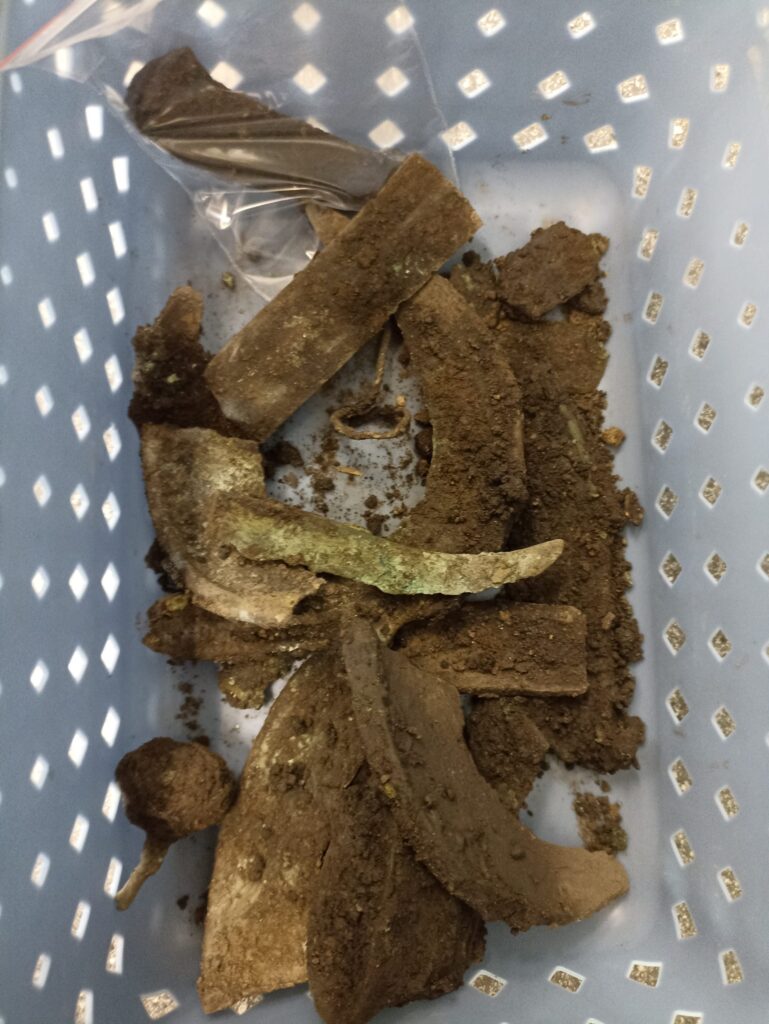
The find includes nine bronze sickles, part of a sword blade, fragments of ornaments, three metal ingots and two unfinished objects. Researchers believe the assemblage dates to the Urnfield culture of the Late Bronze Age.
The Archaeological Centre Olomouc uncovered the hoard while monitoring construction work along the modernized Brno–Přerov railway line. Metal-detector surveying was used because earlier excavations in the area had revealed an extensive prehistoric settlement.
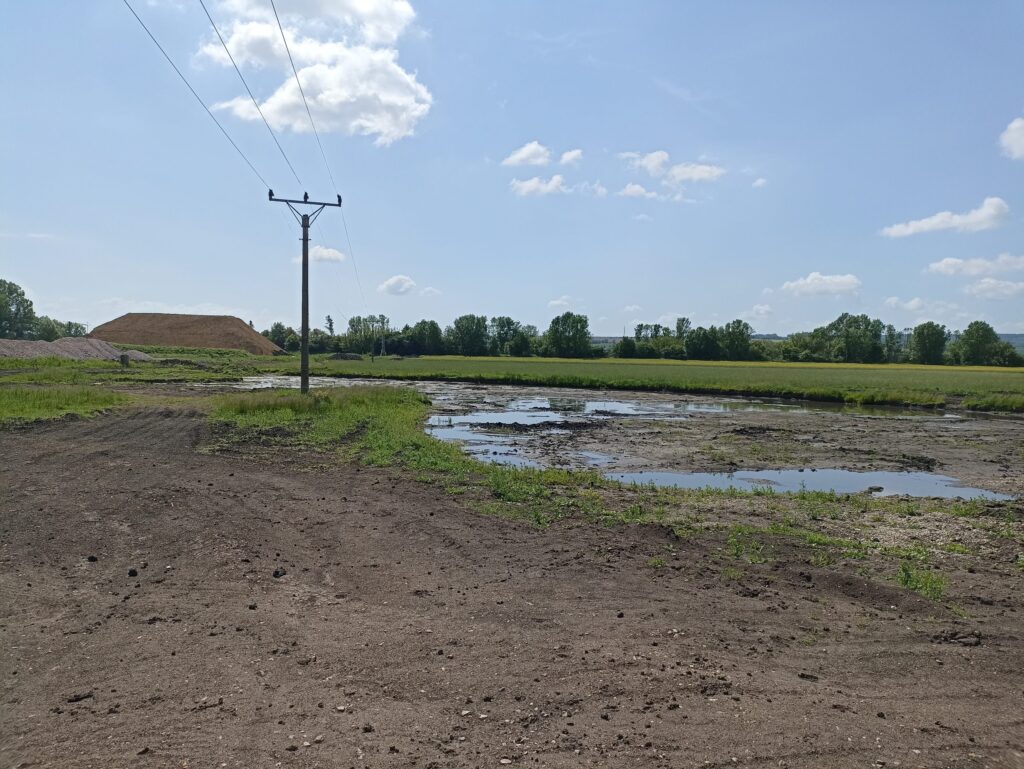
The objects were found in late May 2026 in ground that had recently been flooded. Archaeologists consider the location one of the most important clues to understanding why the objects were placed there.
Rather than being buried in a settlement, workshop or storage pit, the bronzes appear to have been deposited in what was once a wetland close to a river.
Tools damaged before burial
Most of the hoard consists of worn working tools. Eight of the sickles were deformed, while only one remained complete.
Microscopic use-wear analysis confirmed that many of the objects had been used before they were deposited. The marks left by ordinary work were clearly different from the damage inflicted shortly before burial.
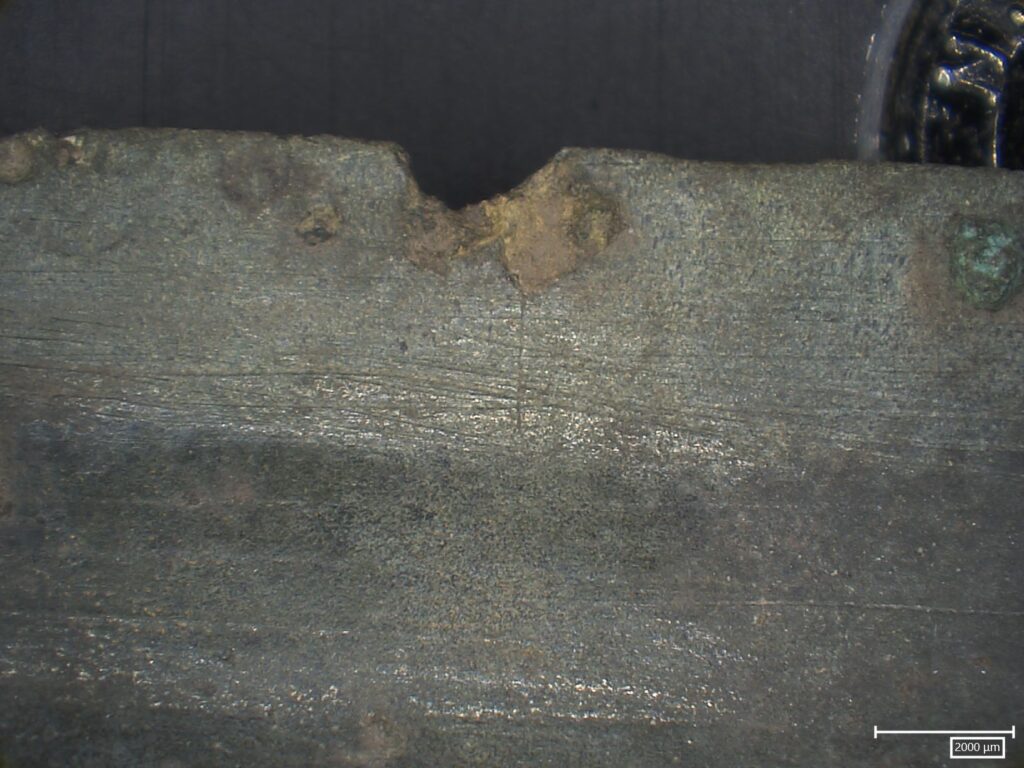
Several sickles had been deliberately bent. The sword blade had been separated by a single heavy blow, probably delivered with an axe or chisel.
“These interventions were not caused during normal work but are connected with the objects’ deposition,” said traceologist Michael Kamarád.
The evidence suggests that the bronzes were not simply discarded after breaking. Some remained usable before they were intentionally taken out of circulation.
A ritual deposit?
Broken bronze objects were often collected during the Bronze Age because the metal could be melted down and reused. The presence of ingots and unfinished pieces means recycling cannot be completely ruled out.
However, archaeologists say the wetland setting and deliberate destruction of several objects make the Kojetín hoard look different from an ordinary stockpile of scrap metal.
Bronze Age weapons, tools and ornaments have been found in rivers, marshes and other waterlogged places across Europe. Such deposits are often interpreted as offerings, although their exact meaning is rarely known.
The archaeologists are therefore treating the ritual explanation cautiously. The objects may have been deliberately damaged and placed in the wetland as part of a ceremony, but further analysis will be needed before a firmer interpretation can be made.
An early medieval hoard of iron objects had previously been discovered at the same site. That collection was found inside a craft-related structure and appears to have served a practical purpose. The Bronze Age deposit, by contrast, was placed in a wet environment and may reflect a very different reason for burying metal.
The newly discovered objects are now undergoing conservation and detailed documentation. Further study may clarify when they were produced, how long they were used and what happened immediately before they were placed in the wetland.