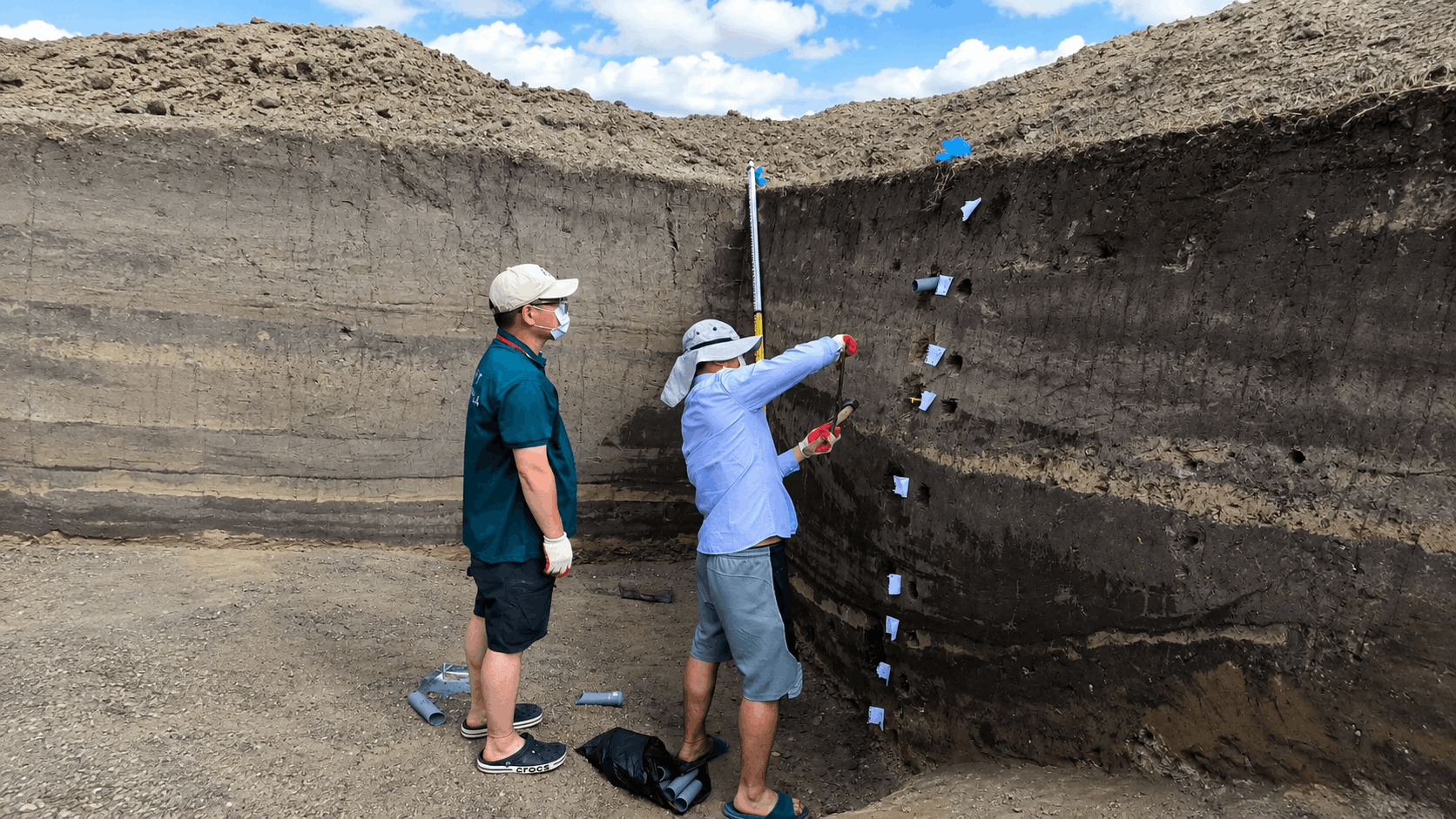
Archaeologists excavating Bay-Balyk in Mongolia have uncovered new details of the defenses that protected one of the principal cities of the Uyghur Khaganate more than 1,100 years ago.
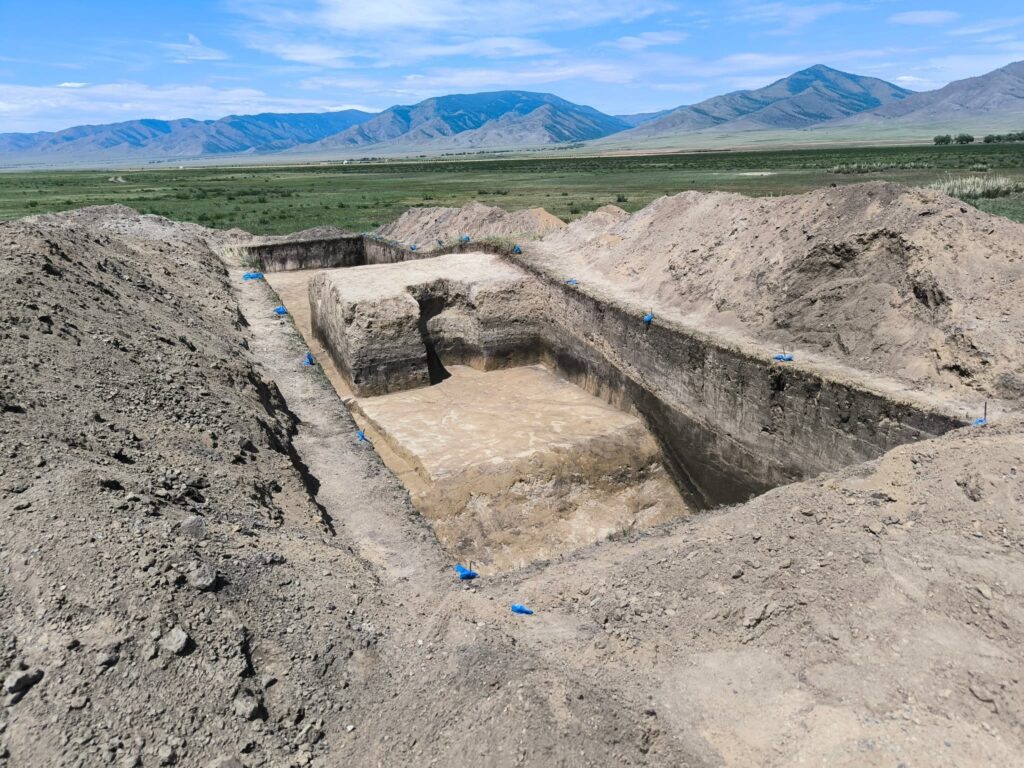
A trench opened beside the western citadel revealed a fortification wall measuring up to five meters wide. Along its outer side, researchers documented a ditch extending 2.5 meters below the ancient surface. Sediment inside the ditch indicates that a watercourse once passed through it and contributed to the citadel’s defenses.
The work was conducted in June 2026 by the A. H. Khalikov Institute of Archaeology of the Tatarstan Academy of Sciences and the Institute of History and Ethnology of the Mongolian Academy of Sciences.
Bay-Balyk served as the northern capital of the Uyghur Khaganate during the eighth and ninth centuries.
A Wall, a Ditch and Flowing Water
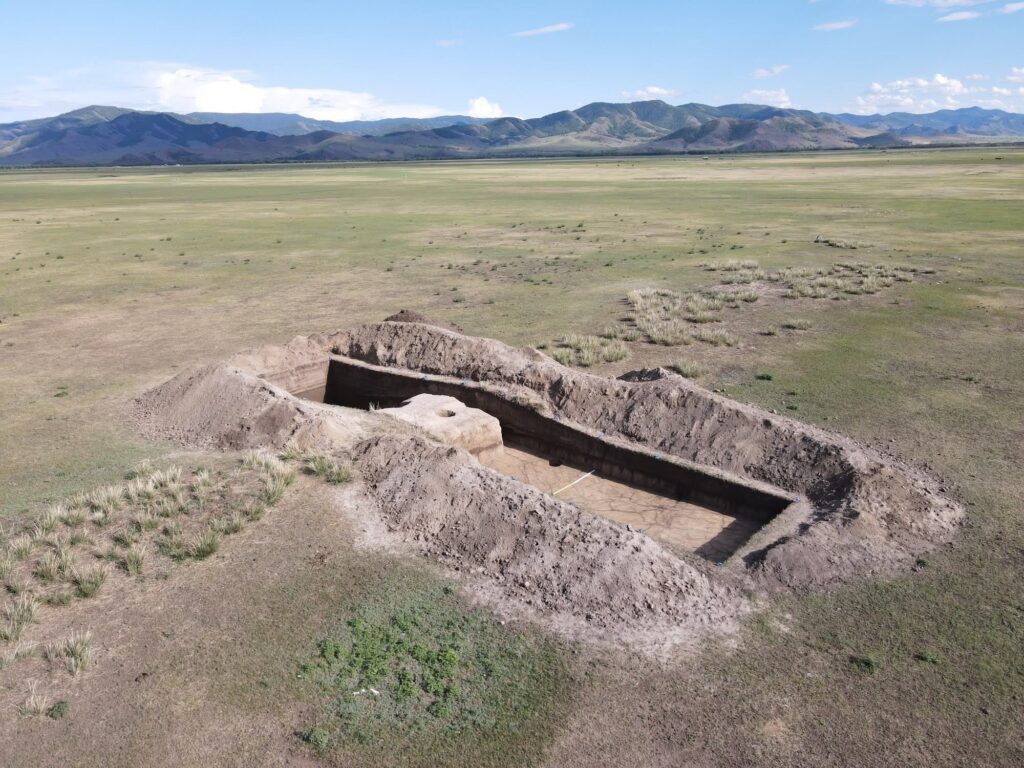
The team excavated an area of 80 square meters in the northwestern section of the western citadel, where some of the site’s best-preserved fortifications survive.
The newly exposed wall was constructed using building methods associated with Uyghur urban architecture. Its width—up to five meters—shows that the citadel was protected by a substantial defensive structure rather than a light enclosure.
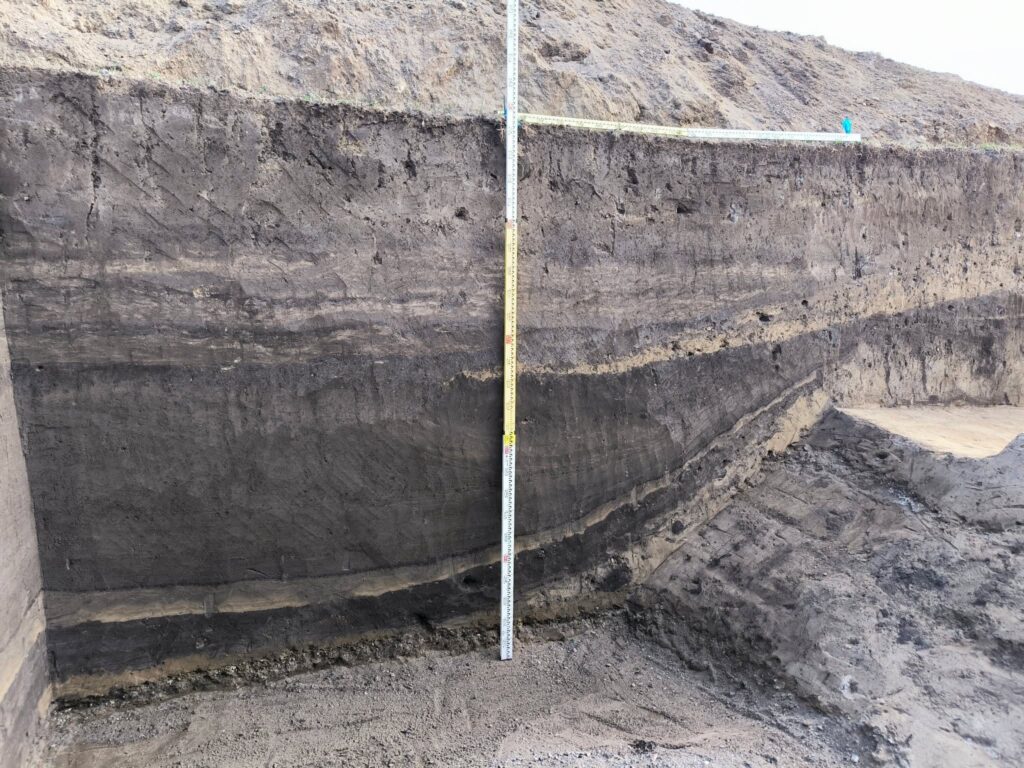
Outside the wall, archaeologists found the deep ditch. Alluvial deposits at its base point to the former presence of moving water.
The researchers have not yet established whether the watercourse was natural or had been altered by the city’s inhabitants. The available evidence nevertheless indicates that it formed part of the defensive landscape surrounding the citadel.
The excavation also clarified the sequence of activity inside the walls. Archaeologists identified a construction horizon, deposits associated with everyday occupation and a later layer formed after this part of the city had been abandoned.
Samples collected from sealed archaeological deposits will undergo radiocarbon dating. The results may provide firmer dates for the construction, occupation and eventual desertion of the western citadel.
Traces of Everyday Life Inside the Citadel
Most of the objects recovered during the excavation were connected with ordinary life rather than royal display or ceremonial activity.
The finds included pottery fragments decorated with stamped geometric patterns, pieces of roofing tile and animal bones belonging to both domesticated and wild species.
Some of the roof tiles preserve impressions left by woven fabric while the clay was still wet. These marks offer evidence of the production methods used by the craftspeople who supplied materials for Bay-Balyk’s buildings.
The animal remains may help researchers investigate food consumption, livestock use and hunting around the settlement. Detailed results from the analysis have not yet been released.
Pollen samples were also collected for palynological study. Preserved pollen can provide information about the vegetation and environmental conditions that surrounded the city during its occupation.
Combined with radiocarbon dating and the study of animal remains, the environmental evidence may help place the citadel’s architecture within a more precise chronological and ecological setting.
An Urban Center on the Eurasian Steppe
Bay-Balyk is important not only because of its political status but also because it offers evidence for urban life within the Uyghur Khaganate.
The khaganate is frequently discussed in connection with the mobile pastoral societies of Inner Asia. Bay-Balyk, however, contained broad fortification walls, tiled buildings, organized occupation areas and a defensive ditch connected with a watercourse.
These features reveal a permanent and carefully constructed urban center on the medieval Eurasian steppe.
The new excavation does not yet prove that Bay-Balyk possessed a deliberately engineered water-management system. It does show that water beside the western citadel was incorporated into the city’s defenses.
During the same field season, researchers also conducted exploratory work at Muyenchur in Mongolia’s Arkhangai Province. A test trench was opened to examine magnetic anomalies previously identified through geophysical survey.
The results helped refine the interpretation of a funerary and commemorative complex associated with the elite of the Uyghur Khaganate. The findings will guide the placement of future excavations at the site.
Laboratory analysis of the Bay-Balyk material will continue, while further fieldwork is planned for future seasons. The results may establish more precise dates for the western citadel and show how its walls, occupation areas and ditch changed over time.
For now, the excavation demonstrates that Bay-Balyk was protected by more than its massive walls. A deep ditch—and the water that once passed through it—formed another layer of defense around the Uyghur Khaganate’s northern capital.