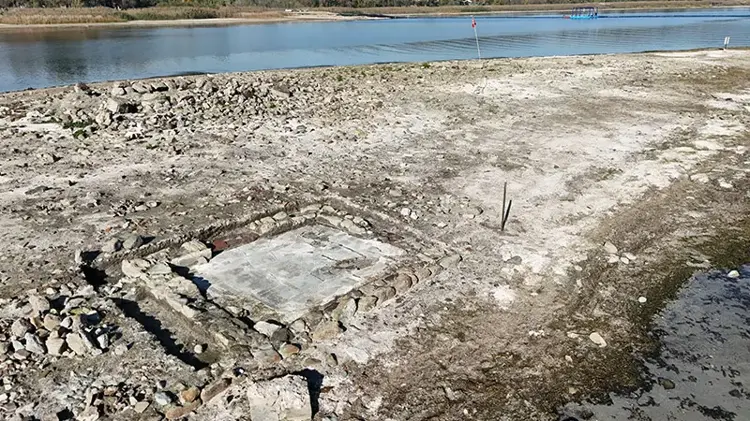
A newly exposed Late Antique building is shedding light on the early Christian footprint of the Lake Sapanca region.
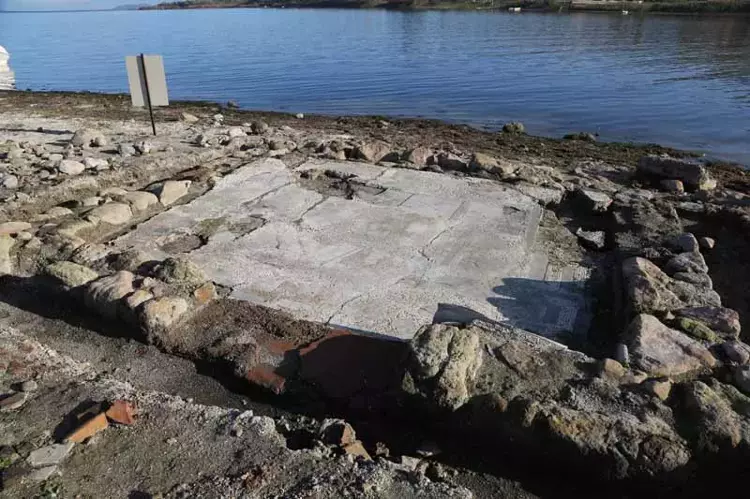
When the water level of Lake Sapanca receded sharply in recent weeks, a geometric floor pattern suddenly appeared beneath a thin layer of silt: the unmistakable remains of a mosaic-paved chamber. The discovery immediately drew scholarly attention, not only because the floor has survived remarkably well, but because its construction aligns with a distinctive period of early Christian architecture in northwestern Anatolia.
According to Dr. Görkem Işık of Sakarya University, the structure was almost certainly a Late Antique chapel or a small rural church, dating between the 4th and 6th centuries CE. The mosaic’s mortar bedding, stone arrangement, and restrained geometric design all point toward a sacred function rather than domestic use.
A central liturgical space surrounded by smaller rooms
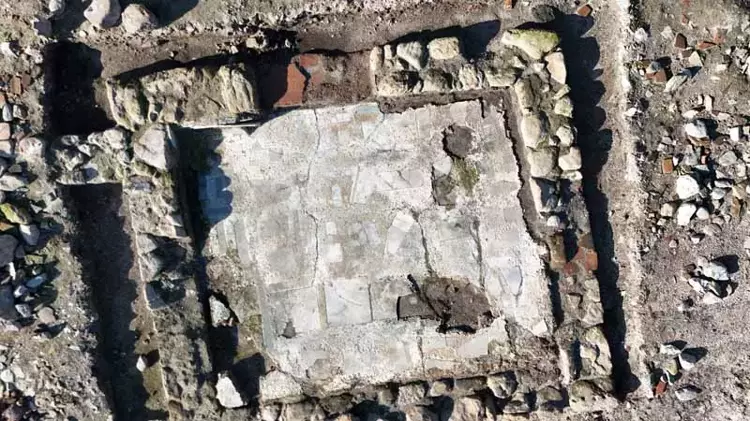
The exposed mosaic appears within a single, square chamber—the clearest indication that this room served as the primary liturgical space. Surrounding it, traces of smaller, undecorated compartments can be observed. This plan closely matches rural Christian chapels of the Late Antique period, where decorative investment was reserved for the central worship room.
Even after centuries underwater, portions of the floor’s geometry remain visible. The muted, almost minimalist style reflects the provincial Christian aesthetic common across the region during the later Roman world.
A building that did not begin its life underwater
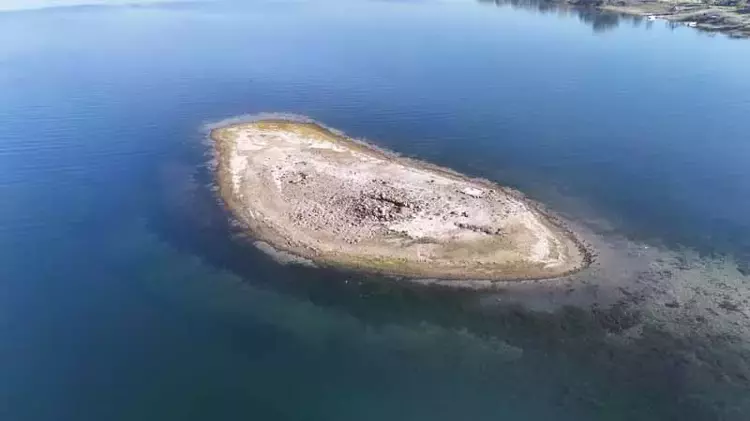
Today, the foundations lie fully within the lake basin. But this was not always the case. Dr. Işık emphasizes that Lake Sapanca’s shoreline shifted significantly over time. When the structure was first built, the water’s edge would have been farther away. Over centuries, gradual hydrological rise submerged the building completely.
Local residents recall earlier decades when water levels temporarily dropped and similar portions of the structure briefly emerged. Such fluctuations, they note, are part of the lake’s natural cycle rather than a modern anomaly.
A quiet node in the region’s Byzantine landscape
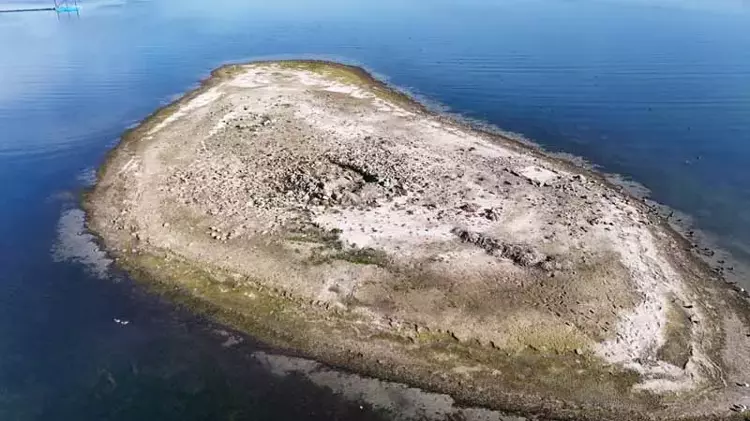
Though Sakarya was never a major Byzantine urban hub, small Christian sites, monastic retreats, and fortified points once dotted the landscape around Lake Sapanca. Dr. Işık proposes that the resurfaced structure may have been linked to the Byzantine fortress at Kurtköy, located not far from the shore.
These small, often isolated chapels played important roles in sustaining rural communities and supporting travel routes. The resurfacing of this chapel mirrors the discovery of the submerged basilica in Lake İznik, reinforcing the idea that western Anatolia’s lakes conceal a layered early Christian past.
A structure returning to light—briefly
For a province with few surviving architectural monuments, the reappearance of a Late Antique worship site holds significant cultural and academic value. Archaeologists stress the urgency of documentation before the lake rises again.
“This is not just a building,” Dr. Işık explains. “It is a rare trace of Sakarya’s early Christian heritage—fragile, unexpected, and deeply important.”