Early Iron Age hybrid uncovered in the Penedès region suggests equid crossbreeding knowledge reached Europe centuries earlier than believed
When archaeologists opened a small Iron Age pit at Hort d’en Grimau nearly four decades ago, the discovery seemed intriguing but not extraordinary: a partially burned human skeleton, mixed with the bones of an equid. Only now, thanks to a new multidisciplinary investigation, has the full significance become clear. The animal buried beside the woman turns out to be the oldest mule ever documented in the western Mediterranean and continental Europe, dating to between the 8th and 6th centuries BC—a period when Phoenician trade routes were transforming the Iberian Peninsula.
A hybrid with far-reaching implications

The study, led by researchers from the Prehistoric Studies and Research Seminar (SERP) and the Institute of Archaeology of the University of Barcelona, and published in Journal of Archaeological Science: Reports, reveals a hybrid animal produced by the mating of a donkey and a mare. Because donkeys were introduced to Iberia by Phoenician merchants arriving from the Levant, the presence of a mule at such an early date suggests that the knowledge of equid hybridization—long practiced in the Middle East—reached Europe much earlier than scholars assumed.
At the time this animal lived, the Penedès region sat within a dynamic web of Mediterranean exchange. Imported goods, exotic livestock, and new technological practices followed the same routes. The mule’s existence here implies that the mechanisms of hybrid animal production arrived with those networks, whether the mating occurred locally or the mule itself was brought from outside the Iberian Peninsula.
A burial that preserved a milestone
The equid was originally uncovered in 1986 within what appears to have been a reused silo—a subterranean structure that later became a deposit for human and animal remains. The bones, currently housed at the Museum of Wine Cultures of Catalonia (VINSEUM) in Vilafranca del Penedès, have now undergone detailed radiocarbon dating, genomic sequencing, and anatomical, pathological, and isotopic study.
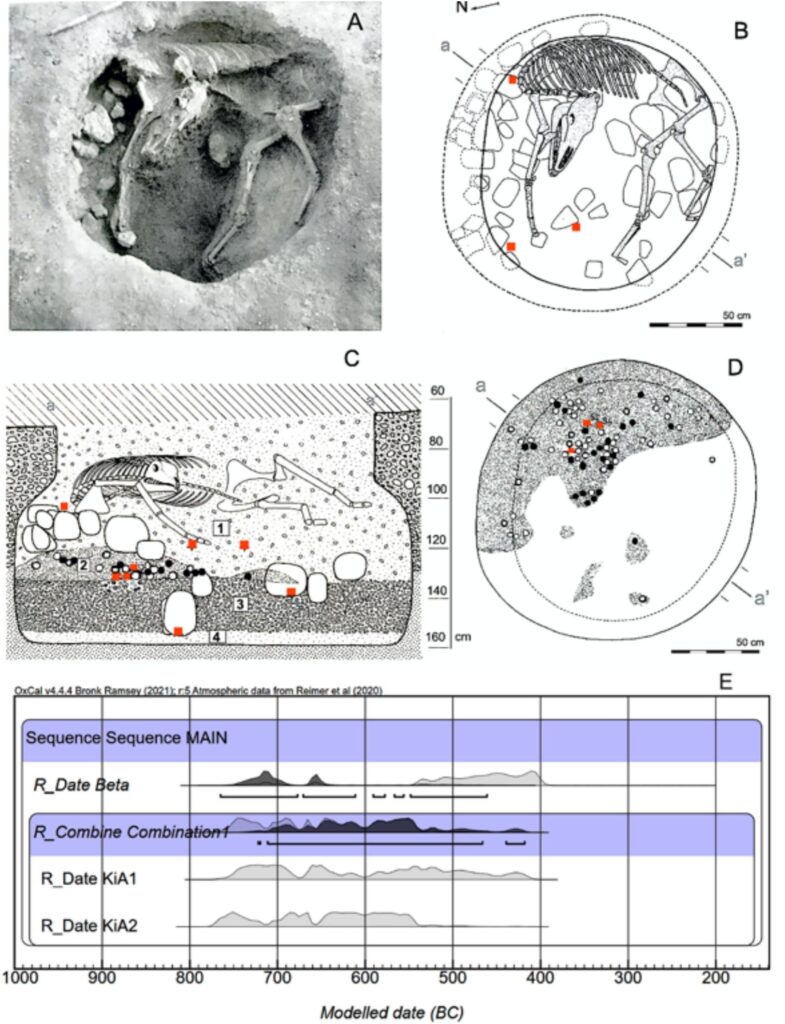
These analyses not only confirmed the hybrid but also provided a glimpse into its life. The animal had been used for transport, suggesting that its value lay in the endurance and strength that made mules prized throughout antiquity. Isotopic signatures indicate a fodder-based diet—evidence of human-managed care rather than free grazing.
Tracing Phoenician routes across the western Mediterranean
Phoenician traders, whose settlements dotted the Iberian coastline, were instrumental in reshaping the animal landscape of the region. They introduced donkeys, chickens, and other foreign species, integrating the peninsula into an interconnected Mediterranean system. The discovery at Hort d’en Grimau strengthens the argument that Catalonia’s interior was more deeply embedded in these networks than previously understood.
Researchers note the presence of Phoenician materials not only at the site itself but also at neighboring settlements. This reinforces the idea that the inland Penedès corridor functioned as a meaningful extension of coastal trade dynamics, rather than a peripheral frontier.
Rethinking the chronology of European mules
Until now, the earliest securely dated mules in Europe belonged to the early Roman period, several centuries after the Iron Age hybrid from Penedès. The new find shifts the chronology dramatically backward and suggests that the northwestern Mediterranean—rather than central Italy or Greece—may have served as a previously unrecognized center for the early spread of mule breeding in Europe.
As further genomic and isotopic work continues, researchers hope to determine whether this mule was born on the peninsula or imported from abroad. Either outcome challenges long-held assumptions about mobility, trade, and technological exchange at the dawn of the first millennium BC.
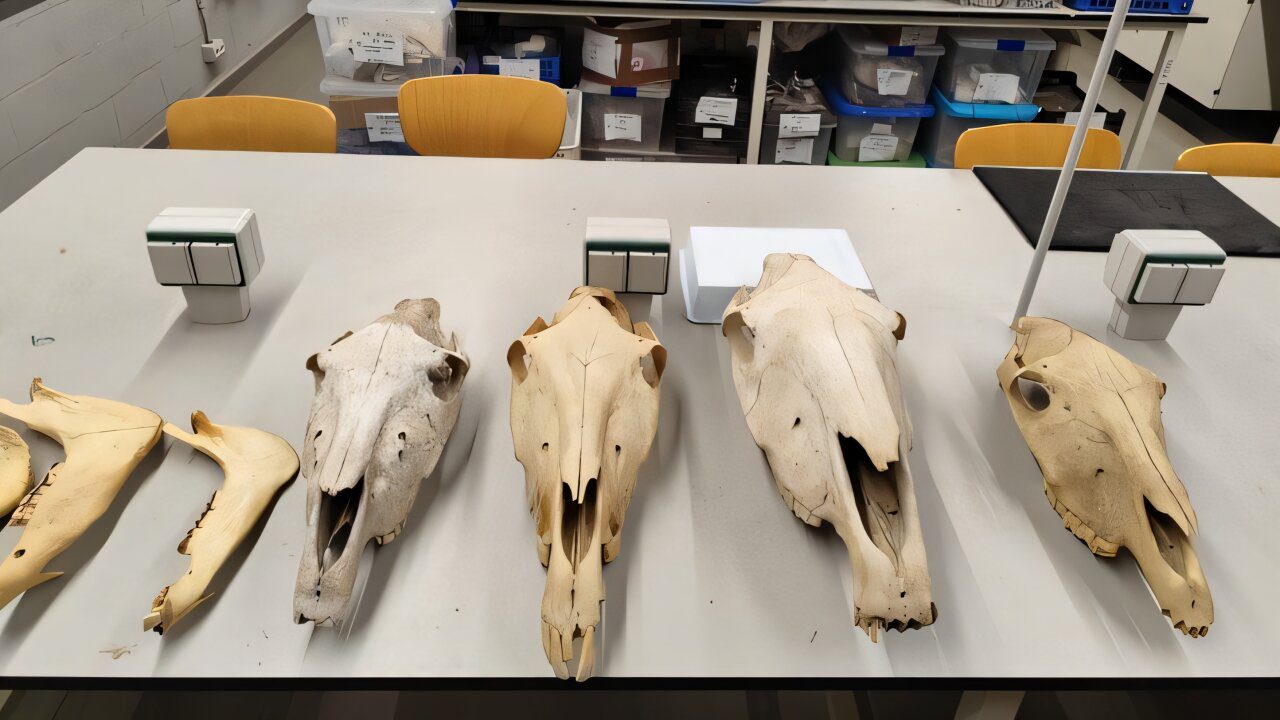
Cover Image: Animal bones that comprise the reference collection of mule remains. Credit: University of Barcelona