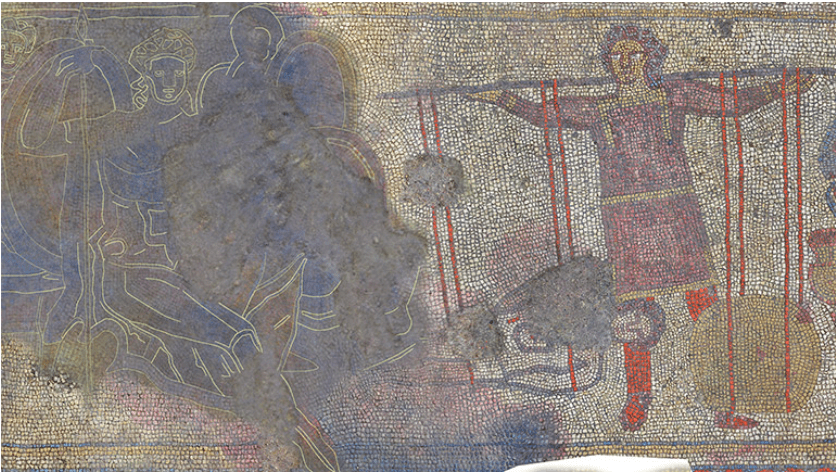
When a farmer’s quiet walk across a Rutland field during lockdown revealed the glint of ancient tesserae, no one imagined the discovery would reopen a lost chapter of the Trojan War. Yet five years later, researchers say the celebrated Ketton mosaic preserves a forgotten retelling of the conflict—one that vanished from the historical record more than two millennia ago.
A new study from the University of Leicester argues that the mosaic does not illustrate scenes from Homer’s Iliad, as initially assumed. Instead, it draws from a lesser-known tragedy by the Athenian playwright Aeschylus, Phrygians—a play so thoroughly lost that its story survives only in fragments. The mosaic therefore offers something extraordinary: not just a window into the Roman imagination, but a rare visual echo of a disappeared Greek drama.
A Roman villa with cosmopolitan tastes
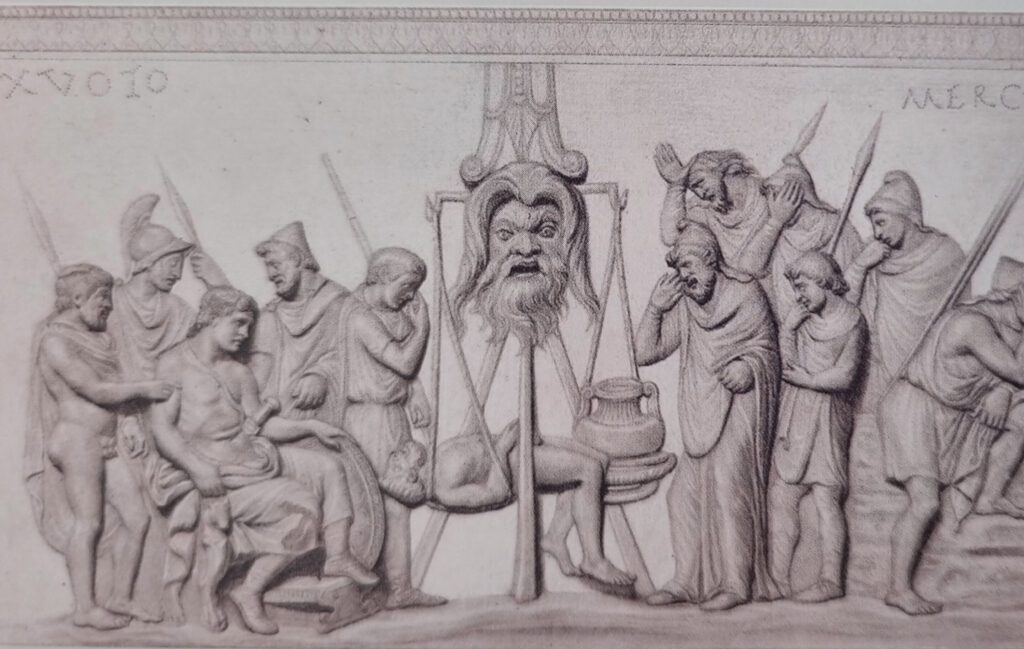
Credit: 19th-century line illustration of the Berthouville Treasure, Bibliothèque Nationale de France.
Excavated between 2021 and 2022 after its 2020 discovery by local resident Jim Irvine, the Rutland mosaic quickly gained fame as one of the most remarkable Roman finds in Britain in a century. Now protected as a Scheduled Monument, the villa complex is reshaping how scholars understand cultural exchange in Roman Britain.
The mosaic presents three intense scenes between Achilles and Hector: their duel, the desecration of Hector’s corpse, and Priam’s emotional ransom of his son’s body—here depicted with Hector literally weighed in gold. But what seemed like familiar episodes from Homer dissolved under closer scrutiny.
Dr. Jane Masséglia, Associate Professor in Ancient History and lead author of the new research, describes a revelatory moment. The upper panel, she found, matches a design used on a Greek vase dating back to the lifetime of Aeschylus—eight centuries before the mosaic was laid. Similar pattern correspondences emerged with ancient silverware, coins, and pottery originating from Greece, Turkey, and Gaul.
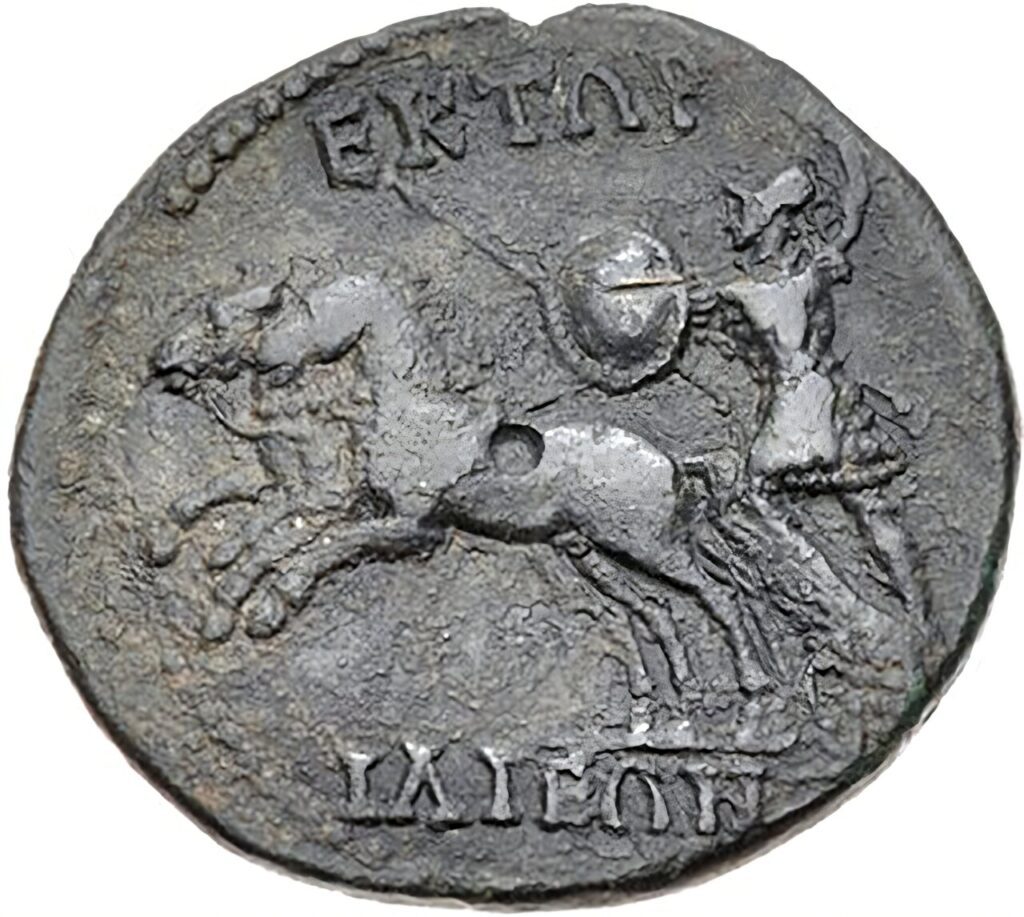
Her conclusion is striking: the artisans who created the Ketton mosaic were tapping into a Mediterranean-wide visual repertoire.
“Romano-British craftspeople weren’t isolated,” Masséglia explains. “They were part of an artistic network where pattern catalogues circulated for generations. At Ketton, we see Roman British workmanship grounded in Mediterranean traditions.”
A lost Aeschylean tragedy beneath English soil
The reinterpretation hinges on the mosaic’s unique sequencing of events. The composition reflects motifs and narrative cues not found in Homer but consistent with Phrygians, Aeschylus’ long-lost account of Priam’s desperate negotiation for Hector’s return. The scene of the body being weighed—absent from the Iliad—appears to be a direct reference to this vanished play.
For the villa’s original owner, choosing such a niche version of the Troy legend may have been a statement of education, taste, and cultural sophistication. In a world where Homer was mainstream, Aeschylus offered distinction.
Jim Irvine, whose discovery set the research in motion, sees the findings as transformative. “Jane’s work reveals a level of cultural integration we’re only beginning to appreciate,” he says. “This suggests Roman Britain may have been far more cosmopolitan than we imagine.”
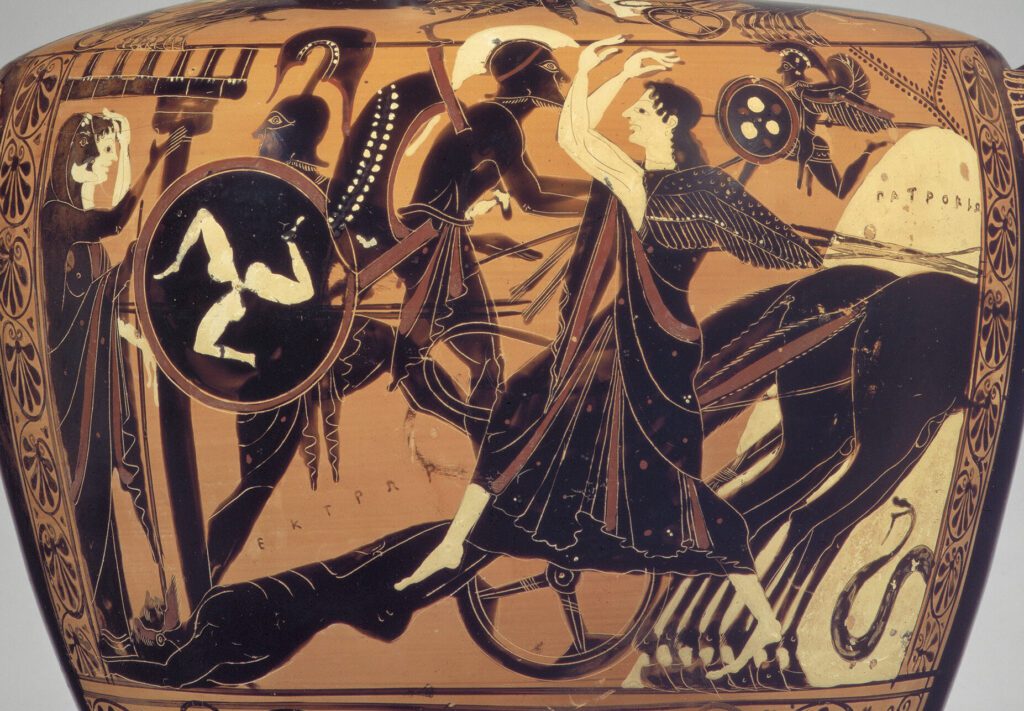
A striking parallel appears on a Greek Attic vase created eight centuries earlier, where the same visual formula is already in use: the flailing gesture of the supplicant, the shield, the clustered chariot team, the running figure with outstretched arms, and even the small serpent coiled beneath the horses all follow an identical artistic template. (Boston 63.473 © MFA Boston).
Rethinking Britain’s place in the Roman world
Historic England, which co-led the excavation, notes that the results deepen our understanding of elite life in Roman Britain. Rachel Cubitt, Post-Excavation Coordinator, highlights that the reinterpretation provides “a more nuanced picture of the interests and influences” shaping the villa’s inhabitants.
External scholars share the excitement. Professor Hella Eckhardt of the University of Reading, who was not involved in the study, calls the research “an exciting piece of work,” noting how it illuminates the spread of heroic imagery across media—from pottery to silverware to mosaics.
A mosaic that bridges worlds
Ultimately, the Ketton mosaic does more than decorate a villa floor. It bridges Roman Britain with Greek theatrical tradition, threads together artisans from distant regions, and preserves a story that the written record lost. It stands as a testament to the interconnectedness of the ancient world, carried not by texts alone but by the hands and memories of craftspeople spanning centuries.
The University of Leicester and Historic England are preparing a full publication of the excavation results—offering, perhaps, more surprises from a site that has already rewritten part of Trojan War reception history.
Jane Masséglia et al, Troy Story: The Ketton Mosaic, Aeschylus, and Greek Mythography in Late Roman Britain, Britannia (2025). DOI: 10.1017/s0068113x25100342
Cover Image: Panel 3 of the Ketton Mosaic shows Priam, king of Troy, loading a set of scales with gold vessels, to match the weight of his son, Hector. This version of the story is based on the lost play, Phrygians by Aeschylus. Jen Browning from University of Leicester Archaeological Services was able to reconstruct the burnt section by tracing the outline of the tiles. (©ULAS).