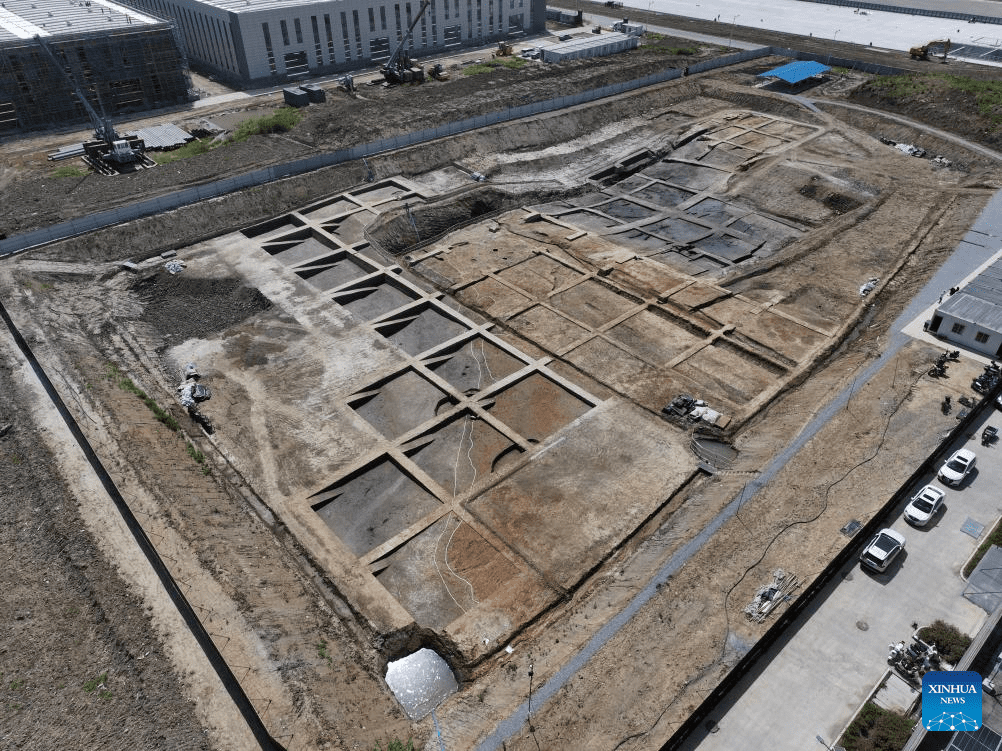
When archaeologists gathered in November to review the latest field season in eastern China, one announcement immediately reshaped the early cultural history of the Yangtze River basin. New radiocarbon results from the Baojia site in Liyang City, Jiangsu Province have confirmed that the settlement predates all previously known human occupations around Lake Taihu, pushing the region’s Neolithic timeline back to nearly eight millennia.
Earliest prehistoric site around Lake Taihu reveals deeply layered river systems
Excavations at Baojia have been underway since 2023 under the joint direction of the Jiangsu Provincial Institute of Cultural Relics and Archaeology and the Nanjing Museum, operating with approval from the National Cultural Heritage Administration. The exposed area—estimated between 20,000 and 30,000 square meters—sits atop a landscape shaped by shifting waterways. During this season’s work, the team identified an east–west flowing ancient channel and, beneath it, the remnants of an even older river course preserved in waterlogged sediment.
Lead archaeologist Hu Yingfang explained that this buried riverbed contained deposits reaching 2.5 meters in depth. The stratified layers, sealed in oxygen-poor conditions, held an unusually rich archive of organic remains that rarely survive at open-air Neolithic sites in China.
Waterlogged preservation reveals rare wooden, botanical and textile remains
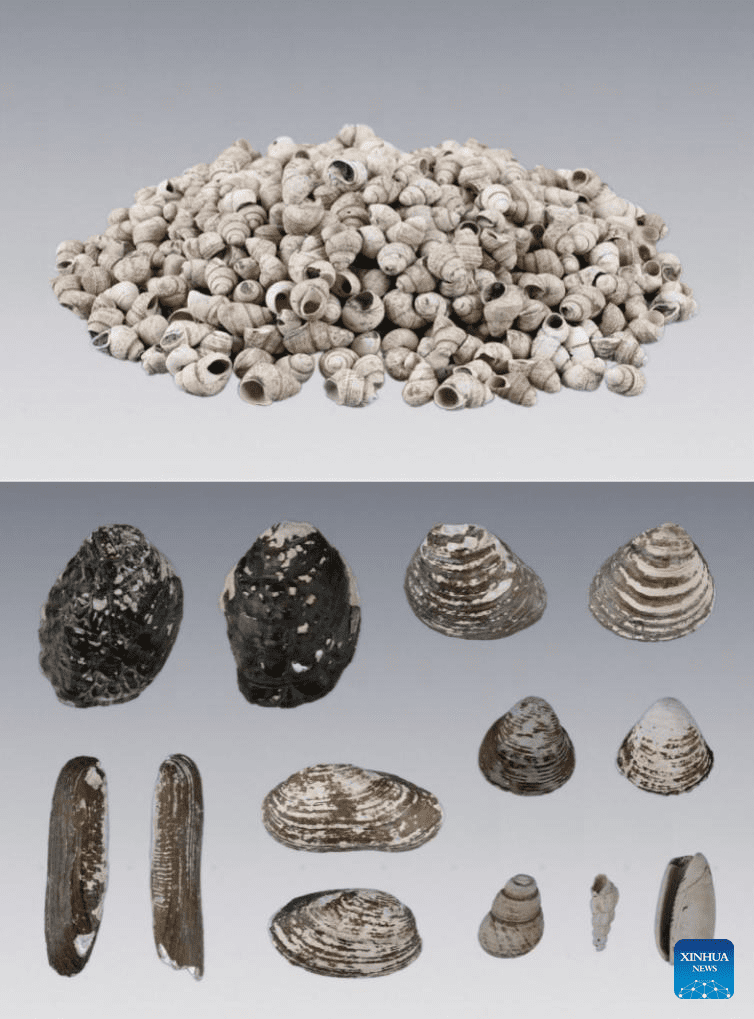
Because Baojia’s sediments remained saturated for thousands of years, preservation conditions were ideal for materials such as wood, textiles and plant fibers that usually decay rapidly. Archaeologists have recovered a dense assemblage of pottery fragments, wooden implements, woven objects including hemp or grass ropes, and a broad array of animal bones representing several mammalian species.
According to Hu, these materials offer a rare opportunity to reconstruct not only the lifeways of early communities but also the wider ecological conditions of the Taihu basin during the early Holocene. The volume of preserved botanical remains has already allowed researchers to perform radiocarbon dating across multiple layers, anchoring the site between 7,500 and 8,100 years old.
Experts confirm Baojia as the oldest Taihu-region Neolithic settlement
Further excavation on the site’s eastern terrace revealed more than 200 ash pits, one of which held the complete skeleton of a dog—an intriguing sign of early ritual or domestic activity. Following a comprehensive field review, nearly ten specialists from leading institutions, including the Chinese Academy of Social Sciences, Nanjing University, Zhejiang University, and Renmin University of China, reached a unanimous conclusion: Baojia is the earliest known prehistoric site yet identified around Lake Taihu.
Their evaluation emphasized that the site’s cultural traits stand apart from previously documented Neolithic communities in the region. Its early date, combined with its unique material signature, fills a significant gap in the archaeological sequence between emerging inland settlements and the later, well-documented cultures surrounding the lower Yangtze.
A key piece in tracing the origins of Yangtze River civilization
The discovery carries implications far beyond Jiangsu Province. Because the lower Yangtze is regarded as one of the world’s primary centers of early agriculture and complex settlement, new chronological anchors such as Baojia help clarify how early communities adapted to a dynamic landscape of rivers, wetlands and lakes. The site’s stratified organic deposits—exceptionally rare for the region—serve as a critical dataset for exploring the origins of the broader Yangtze River civilizations that flourished millennia later.
Researchers now view Baojia not simply as an isolated settlement but as an essential reference point for understanding how prehistoric societies in eastern China developed technologies, managed resources, and interacted with changing environments long before the appearance of the well-known Liangzhu and Majiabang cultures.
Cover Photo: This aerial drone photo shows a view of the Baojia site in the city of Liyang, east China’s Jiangsu Province. (Jiangsu provincial institute of cultural relics and archaeology/Handout via Xinhua)