
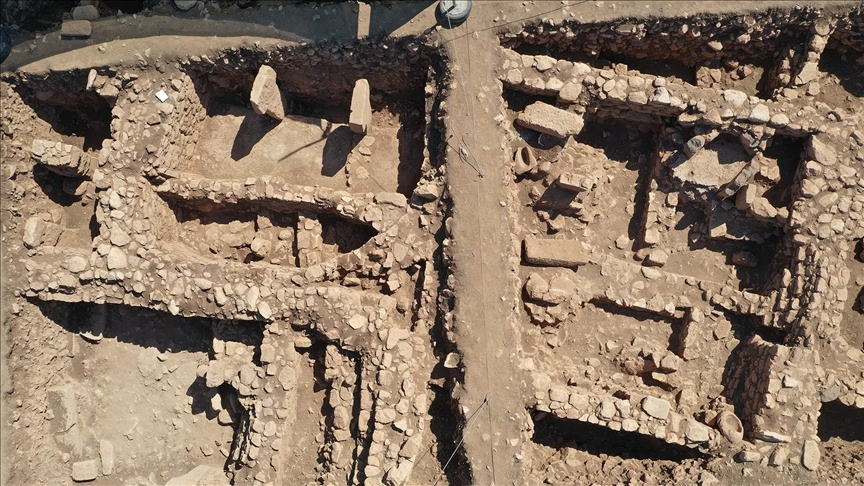
Archaeologists working at Sefertepe, one of the emerging Neolithic sites of Türkiye’s Taş Tepeler region, have uncovered a delicately incised depiction of a wild boar piglet carved into the underside of a heavily used grinding stone. The discovery, reported exclusively by Arkeolojihaber, adds a new layer to our understanding of symbolic expression in the 10th millennium BCE and further strengthens the growing view that Sefertepe may have played a more complex cultural role within the early Pre-Pottery Neolithic settlements of Upper Mesopotamia.
The engraving was identified by the Istanbul University excavation team led by Assoc. Prof. Dr. Emre Güldoğan. The team has been excavating Sefertepe since 2021 as part of an expanding research program investigating the dense cluster of early monumental sites that also includes Göbeklitepe, Karahantepe, Sayburç, Çakmaktepe and Ayanlar Höyük. Compared with its more famous counterparts, Sefertepe remains comparatively understudied, yet recent seasons have begun revealing finely worked architectural features, terrazzo-like floors, and activity areas consistent with structured communal life.
A Hidden Image Revealed Beneath a Tool of Daily Work
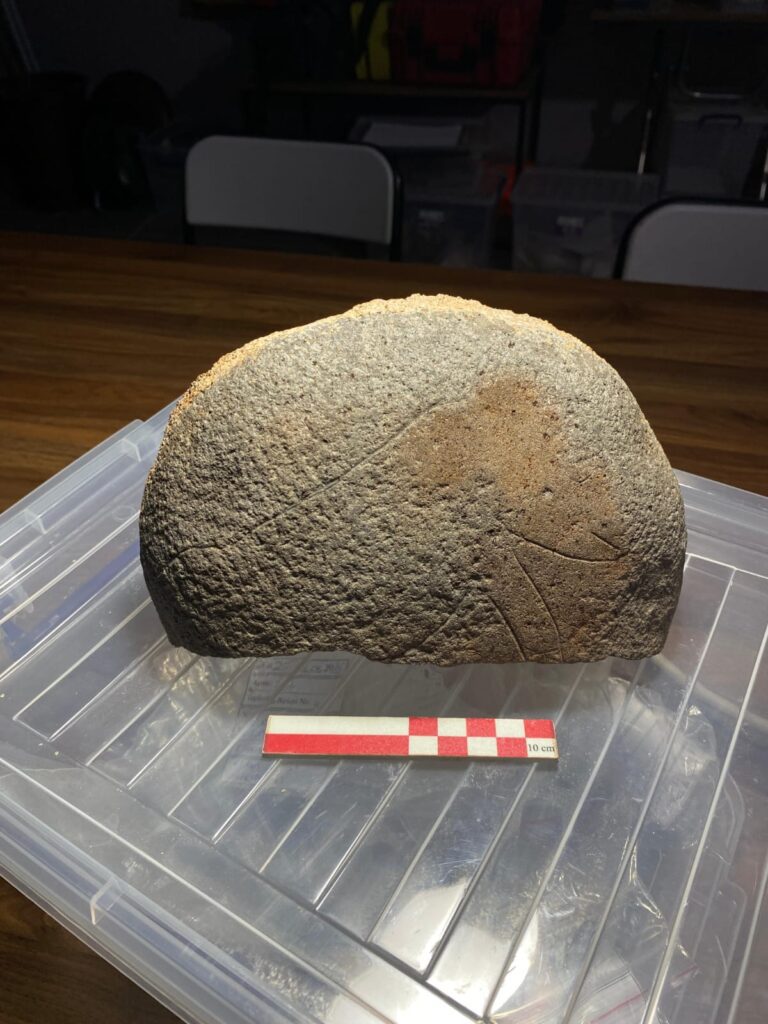
According to Güldoğan, the carving was discovered on the reverse side of a lower grinding stone whose upper surface bears clear evidence of long-term use. When the stone was turned over for documentation, faint but deliberate incised lines emerged:
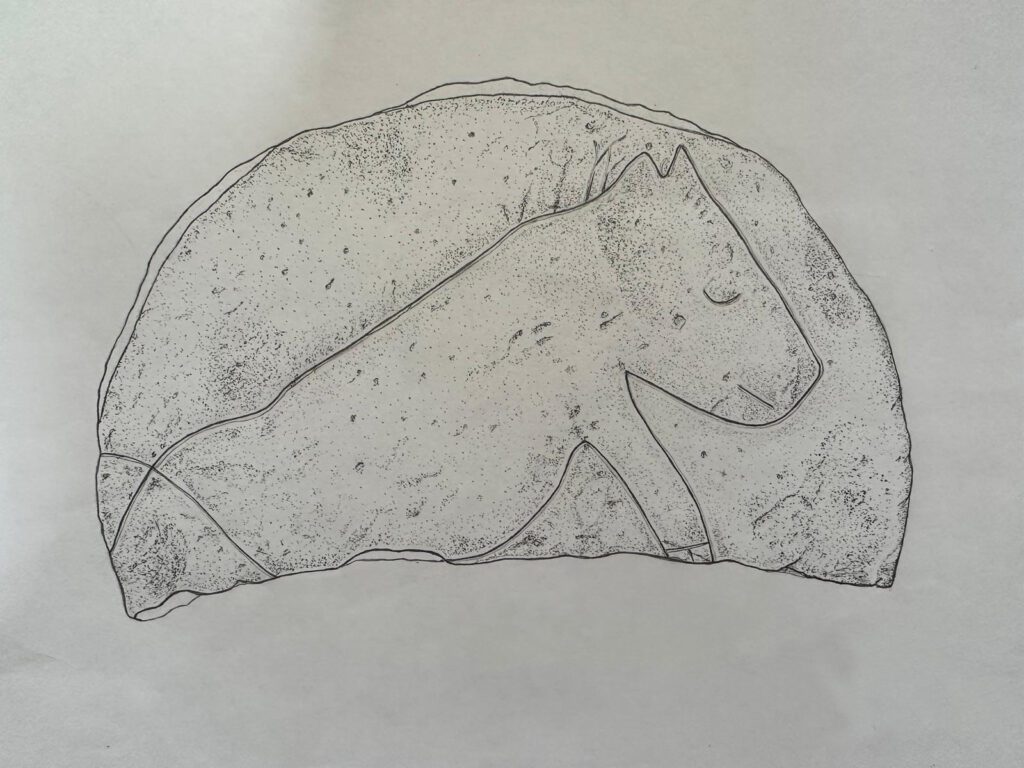
“On the back of the tool, we found a carefully executed depiction of a boar cub created with fine linear incisions,” he explained. “The animal’s head is rendered in notable detail. Its front legs and cloven hooves are clearly distinguishable. The body extends across the full surface of the stone, with defined eyes, mouth, ears and even its mane. The rear section shows a stylized tail and simplified body contours.”
The diagnostic style—especially the use of shallow, confident linear strokes—matches a technique previously documented at Karahantepe, where a wild ass was similarly carved onto a stone tool. This parallel suggests that certain artistic habits or symbolic conventions circulated across the Neolithic communities of the Harran–Tektek–Viranşehir uplands.
Why a Boar Cub Matters in Understanding Sefertepe
Wild boars were prominent in the faunal landscape of early Holocene southeastern Anatolia. Zooarchaeological studies from nearby sites, including Göbeklitepe and Karahantepe, indicate their frequent interaction with human groups, both as prey and as symbolic animals. The selection of a boar cub, however, is particularly intriguing. In the broader Taş Tepeler corpus, juvenile animals are rarely portrayed, making this example an important outlier that may hint at nuanced perceptions of growth, seasonality, or social identity among Sefertepe’s inhabitants.
Sefertepe itself sits on a limestone ridge overlooking natural corridors that would have been rich in wildlife. Although the site has not yet yielded large-scale monumental enclosures like those at Karahantepe or Göbeklitepe, its spatial organization reveals carefully prepared plastered floors, channels, and stone-built features suggesting repetitive communal practices. Recent geomagnetic surveys published by the Ministry of Culture and Tourism also indicate sub-surface anomalies consistent with additional structures awaiting excavation.
The new engraving contributes to a pattern becoming increasingly clear: Sefertepe communities invested meaning not only in architecture and ritual installations but also in everyday objects. A grinding stone—typically a utilitarian tool—being chosen as a medium for a carefully composed animal portrait implies a fluid boundary between daily labour and symbolic expression.
Growing Evidence of a Shared Symbolic Grammar Across Taş Tepeler
Over the last decade, the Taş Tepeler sites have radically reshaped debates about early social organization. Motifs such as foxes, aurochs, snakes, birds, and equids appear repeatedly on stone pillars, benches, and tools. The Sefertepe boar cub engraving, while modest in scale, aligns with this expanding “symbolic grammar” and raises questions about how imagery circulated between communities.
Did artisans travel between sites?
Were certain animal forms associated with seasonal rituals or group identities?
Or did communities independently converge on similar representational techniques?
While definitive answers remain elusive, finds like this offer new material for comparative analysis. The technical affinity between the Sefertepe boar cub and the Karahantepe wild ass is a strong indicator that these sites were not isolated but part of a dynamic cultural network spanning southeastern Anatolia during the early Neolithic.
A Small Image with Large Interpretive Potential
Güldoğan emphasizes that the engraving’s significance lies not in its size but in its context. A tool that once processed plant materials may also have served as an artistic surface or a symbolic marker within a household or communal setting. As excavations continue, researchers hope that additional examples will help clarify how widespread this practice was and what roles such objects played in shaping social or ritual life at Sefertepe.
The 2025 excavation season is expected to expose new architectural areas on the western terrace, where ground-penetrating surveys have suggested multi-room complexes. With each new season, Sefertepe is emerging as a key site for understanding the early symbolic world of Upper Mesopotamia—one where even the underside of a grinding stone can reveal a story thousands of years old.