
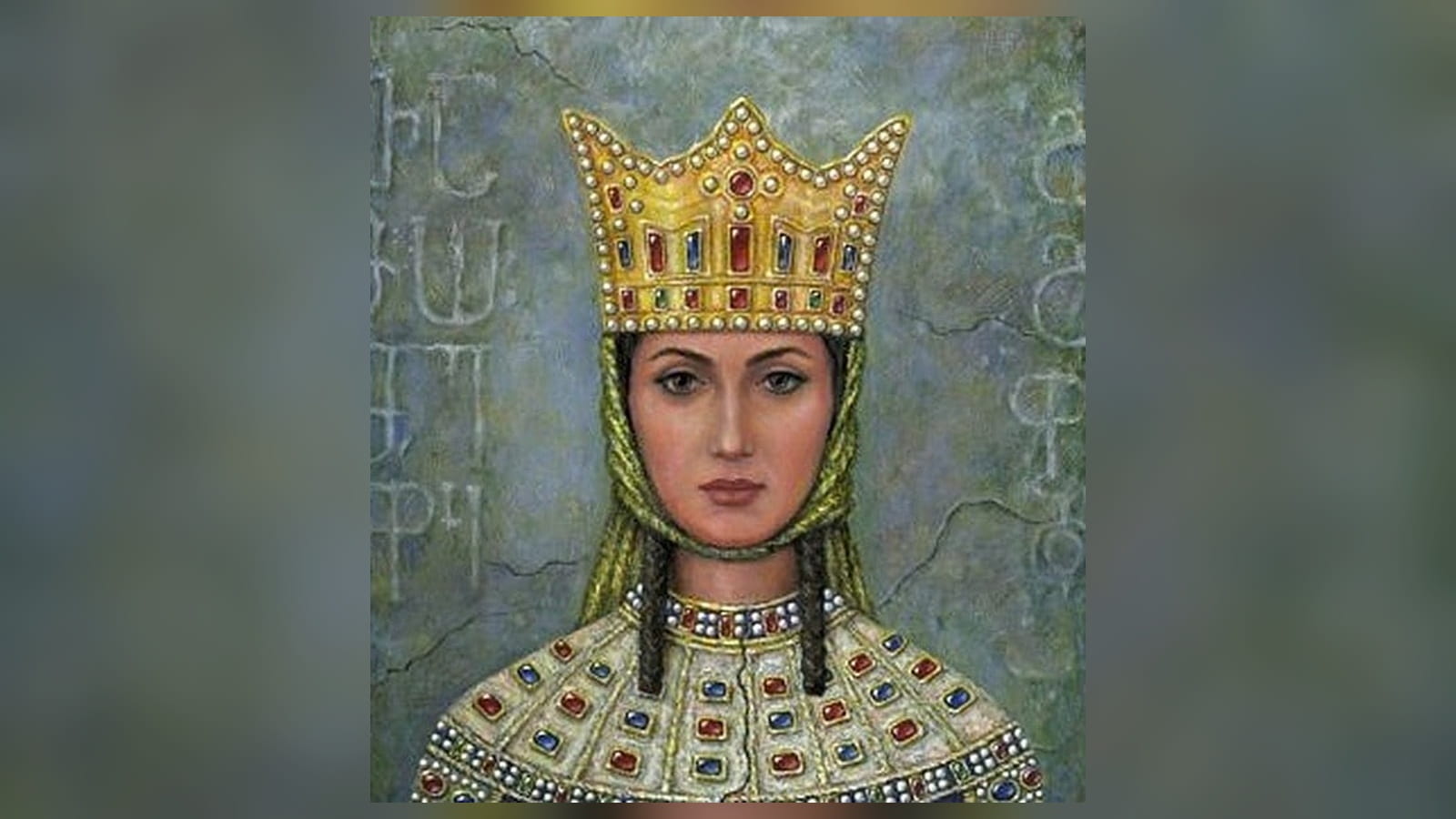
The burial place of Queen Tamar, one of the most powerful rulers in Georgian history, has never been identified with certainty. The latest claim points not to Georgia, but to a remote cave landscape in northeastern Türkiye: Kesikkayalar, near Yolağzı village in Posof, Ardahan.
Local tradition has long linked the caves and rock-cut spaces of Kesikkayalar with the medieval queen. Fehim Gündüz, the headman of Yolağzı village, claims that earlier Georgian research also pointed toward Posof or the Artvin side of the same borderland rather than to a confirmed burial place inside Georgia.
No archaeological evidence has identified Kesikkayalar as Queen Tamar’s tomb. The reason the claim has gained attention lies in the geography. Posof sits close to the routes that once connected the Caucasus with eastern Anatolia, a frontier zone shaped by Georgian, Armenian, Byzantine, Seljuk, and local medieval powers.
A Borderland Close to the Georgian World
Queen Tamar ruled Georgia from 1184 to 1213, during a period often described as the kingdom’s golden age. Under her reign, Georgia became one of the dominant political powers of the Caucasus, and its influence reached beyond present-day Georgia into parts of northeastern Anatolia.
That wider medieval landscape gives Posof a stronger historical context than a simple local rumor would suggest. The district lies among valleys and passes that linked the South Caucasus with Anatolia. Castles, churches, tunnels, reused architectural blocks, and rock-cut spaces recorded across the Posof basin point to a region used for movement, defense, settlement, and religious activity during the Middle Ages.
A medieval archaeological survey carried out in cooperation with Ardahan University in 2024 and published in 2026 documented numerous cultural remains across the Posof basin. Around Yolağzı, researchers also recorded traces that may indicate past human use of caves and rock shelters.
What the Kesikkayalar Caves Show
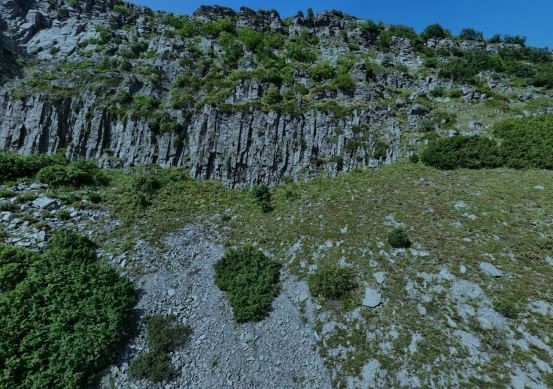
Uğur Dede, Ardahan’s Provincial Director of Culture and Tourism, said inspections in the Kesikkayalar area identified architectural traces in open caves and in places locally known as “watchman caves.”
According to Dede, some of the features observed in the area are difficult to explain as purely natural formations. Local authorities are considering further documentation of the site, possible registration for protection, and future use as part of a cultural tourism route.
The archaeological survey offers a more limited but important picture. In the natural cave known as the First Watchman Cave, researchers recorded architectural blocks, stone elements that may be connected with a doorway or threshold, and a small number of ceramic fragments. These finds suggest that the cave was used by people at some stage.
They do not point directly to a royal burial. At Kesikkayalar, the material evidence currently indicates human activity in or around a cave setting. The connection with Queen Tamar remains part of local memory rather than the established archaeological record.
The Claim of 205 Rooms
Local accounts go further, describing a large hidden complex inside the cliffs. Gündüz said the area is believed to contain 205 rooms, with a rocky line roughly 800 meters long and 150 meters high. He also noted that “watchman caves” stand on both sides of the area, while some lower sections are no longer accessible because of landslides and damage over time.
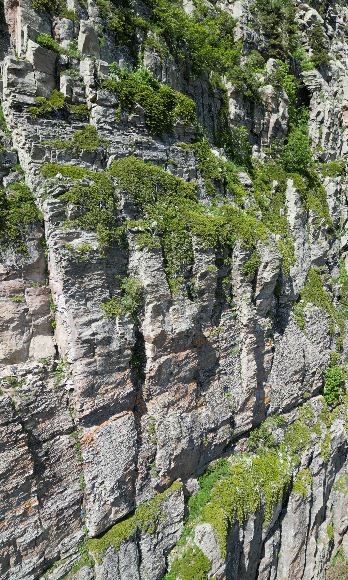
That claim has not been confirmed by excavation or detailed mapping. Without a systematic survey of the inaccessible levels, the supposed 205-room complex remains an oral tradition attached to a striking landscape.
The same caution applies to the tomb story. One version told in the area says Queen Tamar passed through Posof while being pursued, and that enemy forces sealed a tunnel or passage at Kesikkayalar. In this account, the queen was trapped there and died.
Written historical sources have not confirmed that story. Traditions about Tamar’s burial more commonly point to Georgia, especially the area associated with Gelati Monastery. Yet the absence of a securely identified grave has allowed alternative claims to survive in border regions connected with medieval Georgian history.
A Site Beyond the Legend
The Posof claim is best read as a meeting point between archaeology and local memory. Kesikkayalar has not produced evidence of a Georgian queen’s tomb. It has produced signs of human use in a medieval landscape that deserves closer investigation.
The caves may help clarify how the Posof basin functioned in the Middle Ages: as a place of movement, defense, shelter, and settlement between Anatolia and the Caucasus. Whether the Queen Tamar story has any material basis is a separate question, and one that cannot be answered without more detailed archaeological work.
The evidence at Kesikkayalar does not show a discovered royal grave. It shows an archaeological landscape wrapped in a powerful local tradition. Future research may reveal what the caves were really used for—and whether the old story of Queen Tamar left any trace in this remote corner of northeastern Türkiye.