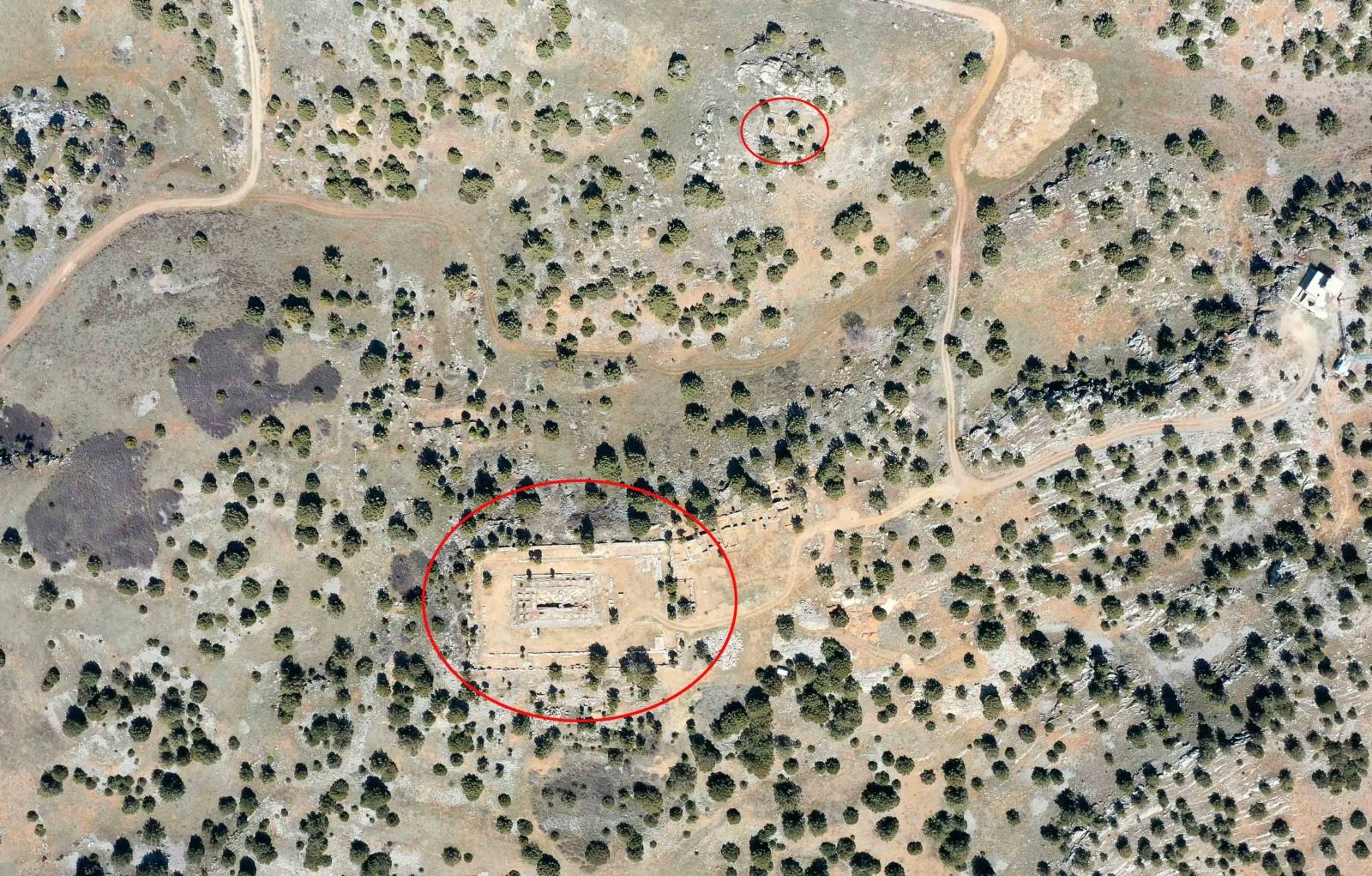
A temple uncovered more than a century ago at the Men Sanctuary in Yalvaç, southwestern Türkiye, is now being identified by archaeologists as a sanctuary of Hecate rather than Demeter.
The structure stands on Gemen Mountain in Isparta Province, at an altitude of about 1,600 meters. It was first brought to light during excavations carried out in 1912–1913 and has long been known simply as the “Small Temple.” Earlier researchers associated it with Demeter, the Greek goddess of agriculture and fertility, although no inscription securely named the deity worshipped there.
Prof. Dr. Mehmet Özhanlı of Süleyman Demirel University, who leads the excavations in the area, says the evidence now points to Hecate, a goddess often linked in antiquity with night, crossroads, the underworld, and dogs.
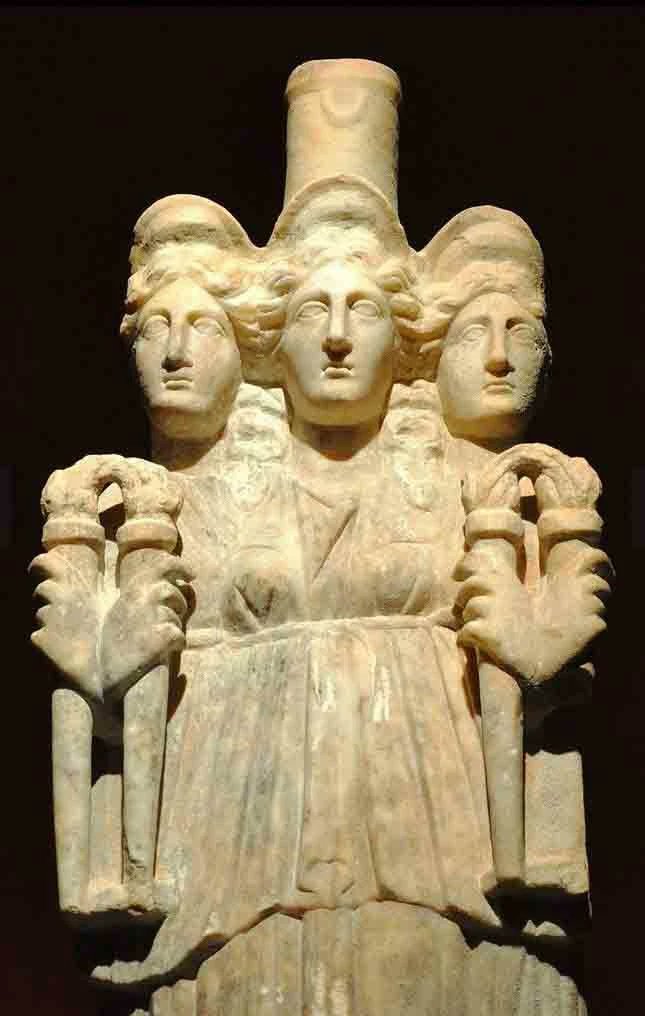
According to Özhanlı, figurines and reliefs connected with Hecate were found both in earlier work and during recent excavations. These finds are the main basis for the new identification. Another clue comes from nearby Pisidian Antioch, where archaeologists previously uncovered two sacrificed dog burials.
The dog burials do not prove the identification by themselves. But together with the Hecate images and the temple’s position inside a major sanctuary of the Anatolian moon god Men, they are being used by the excavation team to reassess the long-debated “Small Temple.”
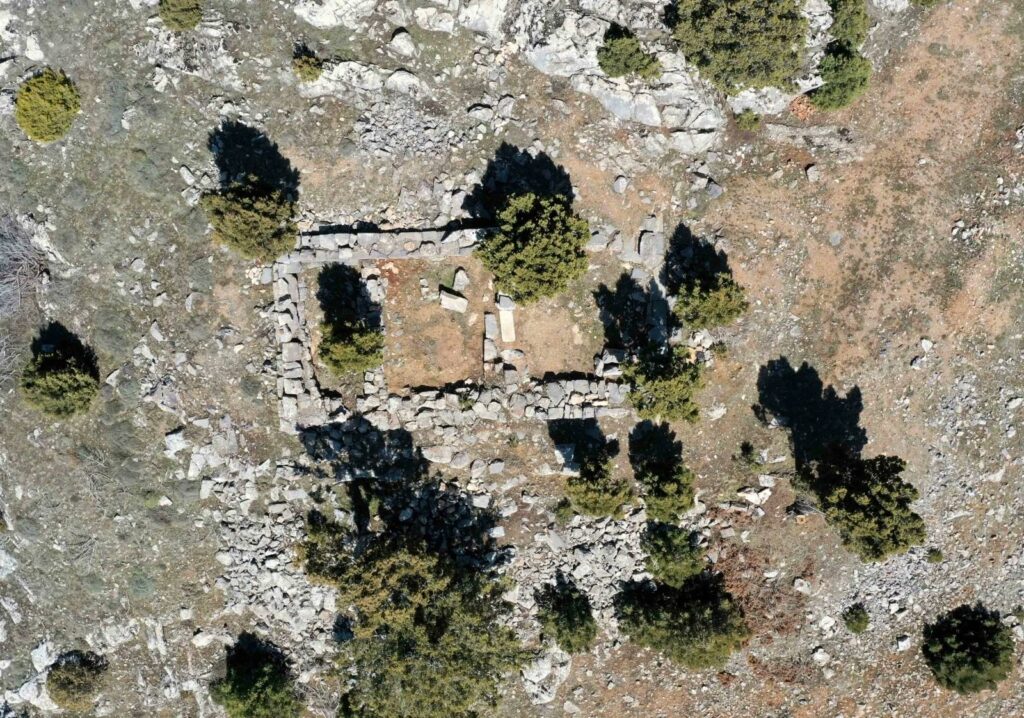
A small temple in the sanctuary of Men
The Men Sanctuary lies near ancient Pisidian Antioch, one of the major cities of the Lakes Region in antiquity. The sanctuary was dedicated to Men, an Anatolian moon god widely worshipped in Pisidia, Phrygia, and neighboring regions.
The complex included more than one sacred structure. Alongside the main temple of Men were a smaller temple, ceremonial areas, an andron used for ritual meals, a stadium, and other buildings whose functions are still being studied.
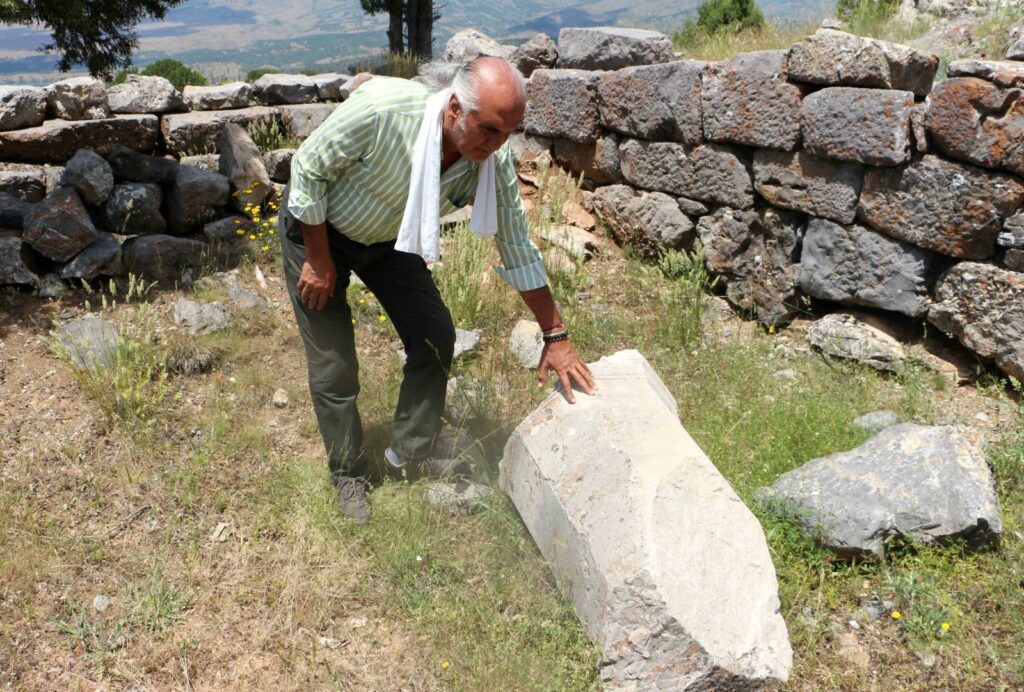
The structure now identified as the Hecate temple preserves the basic layout of a classical temple. Özhanlı said it includes a pronaos, or front hall; a naos, the central sacred chamber; and an opisthodomos, the rear chamber. Inside the naos, an octagonal base thought to have supported the cult statue remains in place.
The temple was damaged in late antiquity, probably during the Christianization of the region, when many pagan sanctuaries were dismantled, altered, or reused. Architectural blocks from the building still lie around the structure, which may allow parts of it to be restored in the future.
What changed the interpretation
The earlier Demeter link appears to have been cautious rather than definitive. The temple was uncovered in the early 20th century, but no clear dedicatory inscription was reported. Over time, the Demeter association remained, while the building itself continued to be referred to more neutrally as the “Small Temple.”
The new interpretation rests mainly on cult material found at the site. Hecate figurines and reliefs recovered from the sanctuary and its surroundings are now being used to connect the building with the goddess.
Hecate was worshipped across the Greek and Roman world, but her Anatolian connections were especially strong in Caria. Her best-known sanctuary in Türkiye is Lagina in Muğla Province, where a major temple of Hecate was linked to the city of Stratonikeia by a sacred road.
That comparison makes the Yalvaç identification important, but it should still be treated carefully. If the interpretation is accepted, the temple would become one of the rare architecturally identifiable Hecate sanctuaries in Anatolia, and potentially the second such temple documented in Türkiye after Lagina.
Why the dog burials matter
The most unusual supporting clue comes from nearby Pisidian Antioch, where two sacrificed dog burials were previously found.
Dogs were closely associated with Hecate in ancient religious traditions, especially in contexts involving night, boundaries, tombs, and the underworld. This makes the burials relevant to the new interpretation, but not conclusive on their own.
The stronger argument comes from reading the finds together: the Hecate figurines and reliefs, the temple’s location within the Men Sanctuary, and the dog burials at Pisidian Antioch. Together, these finds form the basis for the excavation team’s argument that Hecate was worshipped in the area around ancient Antioch.
A 113-year-old temple gets a new reading
The reidentification shows how old excavations can change meaning when new material is added. The building itself has been known for 113 years. What has changed is the reading of its cult context.
For Yalvaç, the claim adds another layer to an already important archaeological area. Pisidian Antioch is known for its Hellenistic, Roman, and early Christian history, while the nearby Men Sanctuary preserves one of the clearest traces of Men worship in Anatolia.
After 113 years, the so-called Small Temple at Yalvaç is being read in a different way. The excavation team now links it to Hecate through cult images found at the site, its position inside the Men Sanctuary, and the sacrificed dog burials uncovered at nearby Pisidian Antioch. If confirmed by further study, the temple would become one of the few known architectural traces of Hecate worship in Anatolia.