
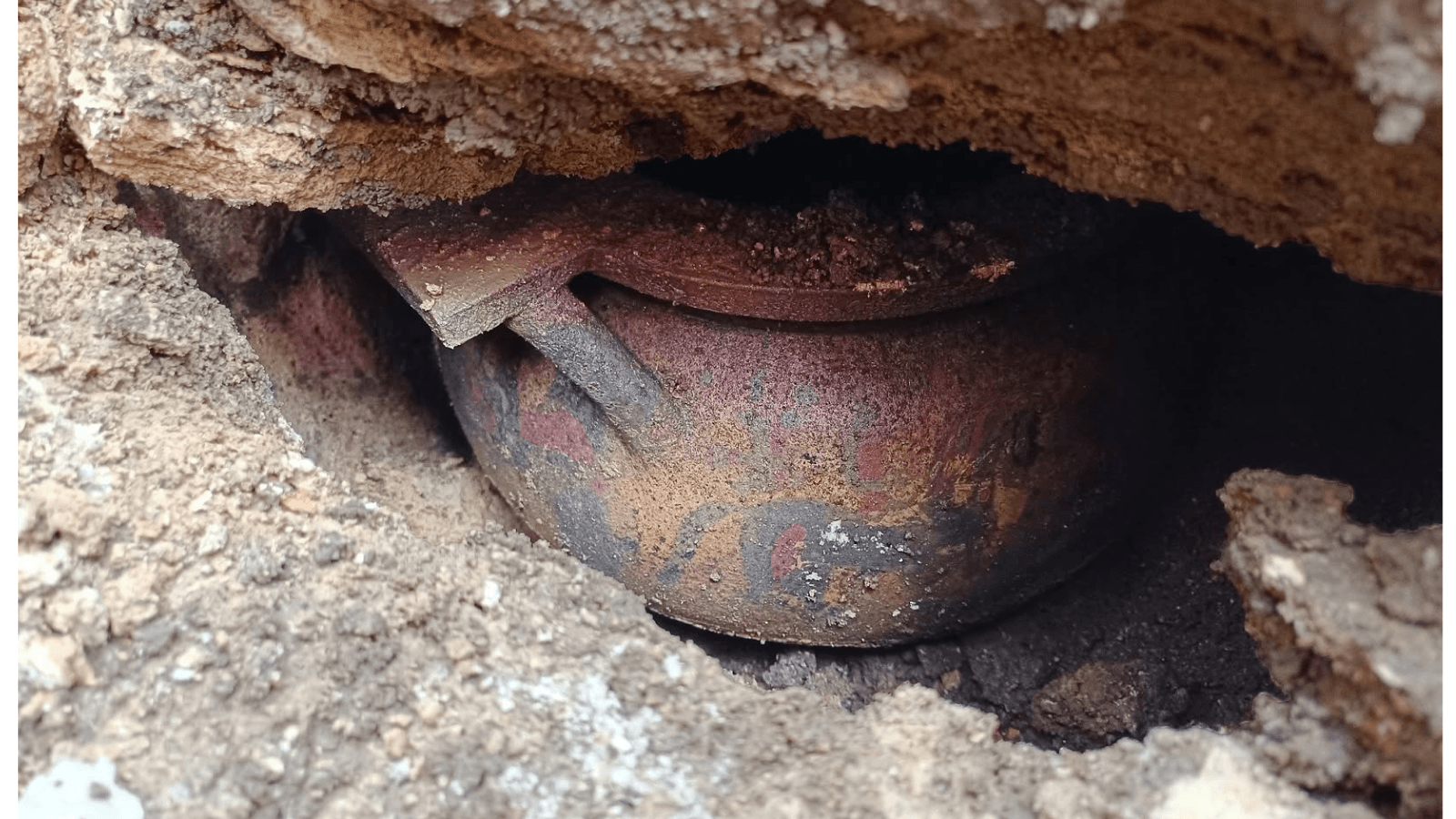
A rare Etruscan-era burial built around an imported Greek wine vessel has been discovered beneath the modern town of Pontecagnano Faiano in southern Italy. Dating to the first half of the sixth century BC, the tomb is believed to have belonged to a high-ranking member of the ancient community.
Archaeologists uncovered the burial during preventive investigations conducted before the construction of a private building. The excavation exposed another section of the western necropolis associated with the ancient Etruscan settlement of Pontecagnano, near Salerno in Italy’s Campania region.
Four graves beneath the modern town
In the southern part of the construction plot, archaeologists identified four burials dating to the first half of the sixth century BC. Parts of the group had been damaged by a modern sewer system, but one grave, recorded as Tomb 10188, revealed an exceptionally rare funerary arrangement.
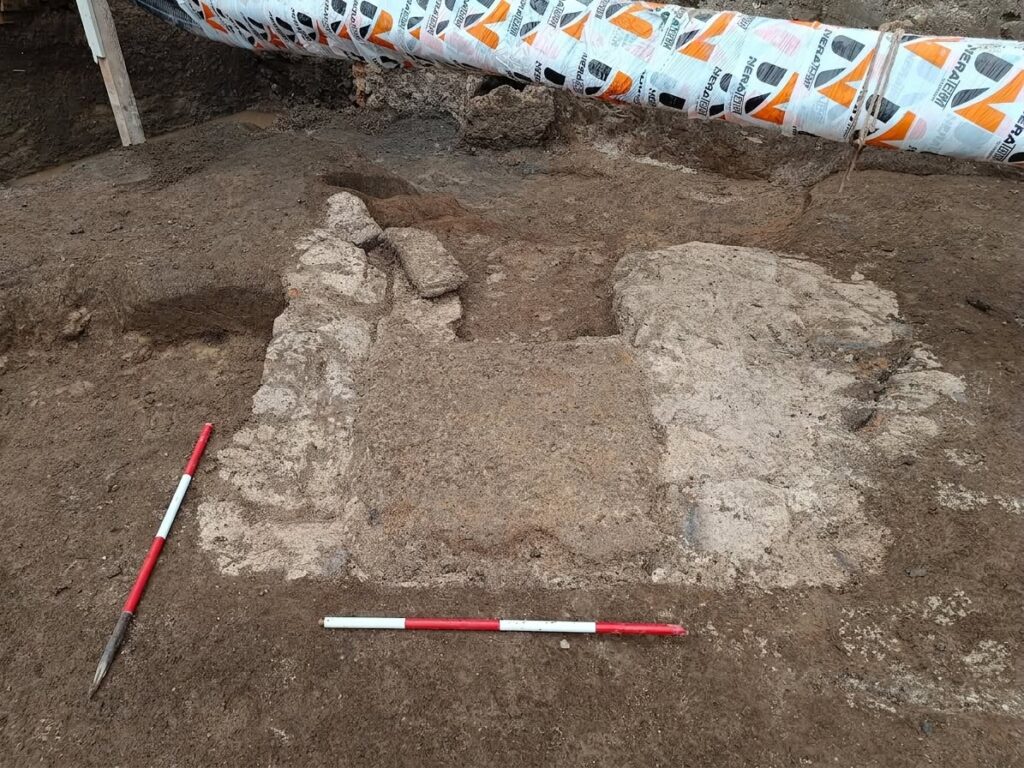
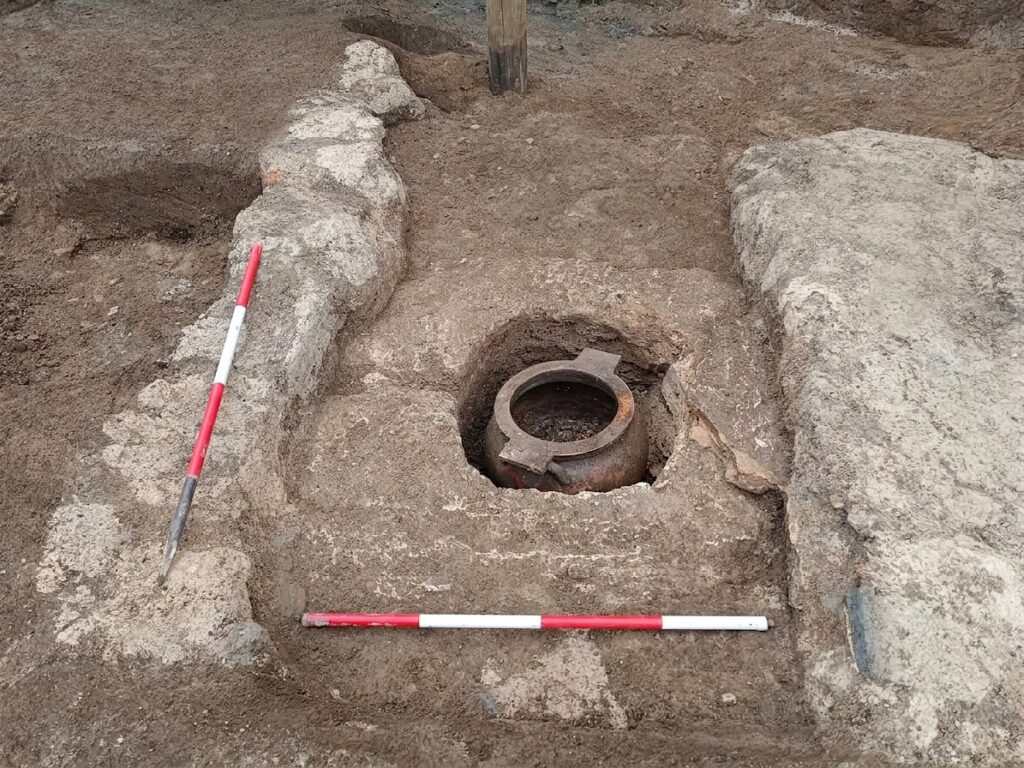
At the center of the grave was a figured krater made in Corinth. The large ceramic vessel contained the cremated remains of the deceased and had been placed inside a rectangular structure built from blocks of travertine. A stone slab sealed the protective enclosure.
Archaeologists describe this form of burial as a “cube-shaped tomb.” Although examples are known elsewhere in northern Campania, the type is exceptionally rare at Pontecagnano.
Only two other cube-shaped tombs—Tomb 1840 and Tomb 9954—had previously been identified at the site. Both are displayed at the National Archaeological Museum of Pontecagnano, whose exhibition is titled “The Etruscans of the Frontier.”
A wine vessel became a funerary urn
The choice of a krater as a container for the cremated remains was not accidental. In the ancient Greek world, kraters were used to mix wine with water during the symposium, a formal social gathering centered on drinking, conversation and entertainment.
In Tomb 10188, an object normally associated with communal drinking was given a very different purpose. The krater became a funerary urn, while its placement inside a carefully constructed travertine enclosure emphasized the unusual character of the burial.
The vessel’s figured decoration and Corinthian origin also show that the community had access to pottery imported from Greece. Such objects reached Etruscan settlements in Italy through the commercial and cultural connections that linked communities across the Mediterranean.
The tomb points to a person of high status
According to the archaeologists, several elements suggest that Tomb 10188 belonged to a prominent member of the community. These include its rare architectural form, the cremation ritual, the use of a krater to hold the remains and the selection of a decorated vessel imported directly from Greece.
The krater was particularly significant because of its connection with the symposium and the serving of wine. By placing the deceased’s remains inside it, those responsible for the burial may have linked the person’s identity with social status, communal gatherings and elite customs.
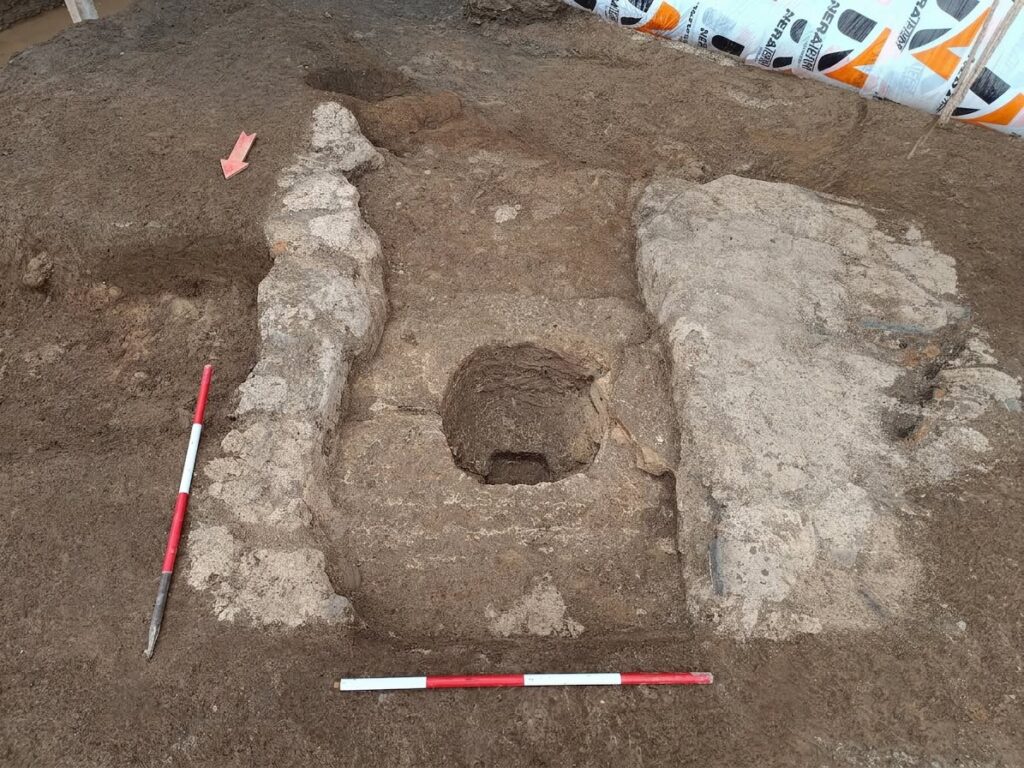
The identity of the deceased has not been announced. The available evidence nevertheless shows that considerable care went into selecting the vessel, constructing its stone enclosure and sealing the burial.
The finds will go on public display
The artifacts recovered during the excavation are now being held at the National Archaeological Museum of Pontecagnano. Specialists will carry out the first stages of study and restoration before the finds are presented to the public.
Tomb 10188 will eventually join the two cube-shaped tombs already displayed at the museum. Its discovery adds a rare new example to the burial record of Pontecagnano and offers another glimpse into how status, cremation and imported Greek objects came together in the funerary traditions of the ancient settlement.
Cover Image: The Corinthian figured krater found inside Tomb 10188 at Pontecagnano. The vessel contained the cremated remains of the deceased. Credit: Soprintendenza ABAP di Salerno e Avellino