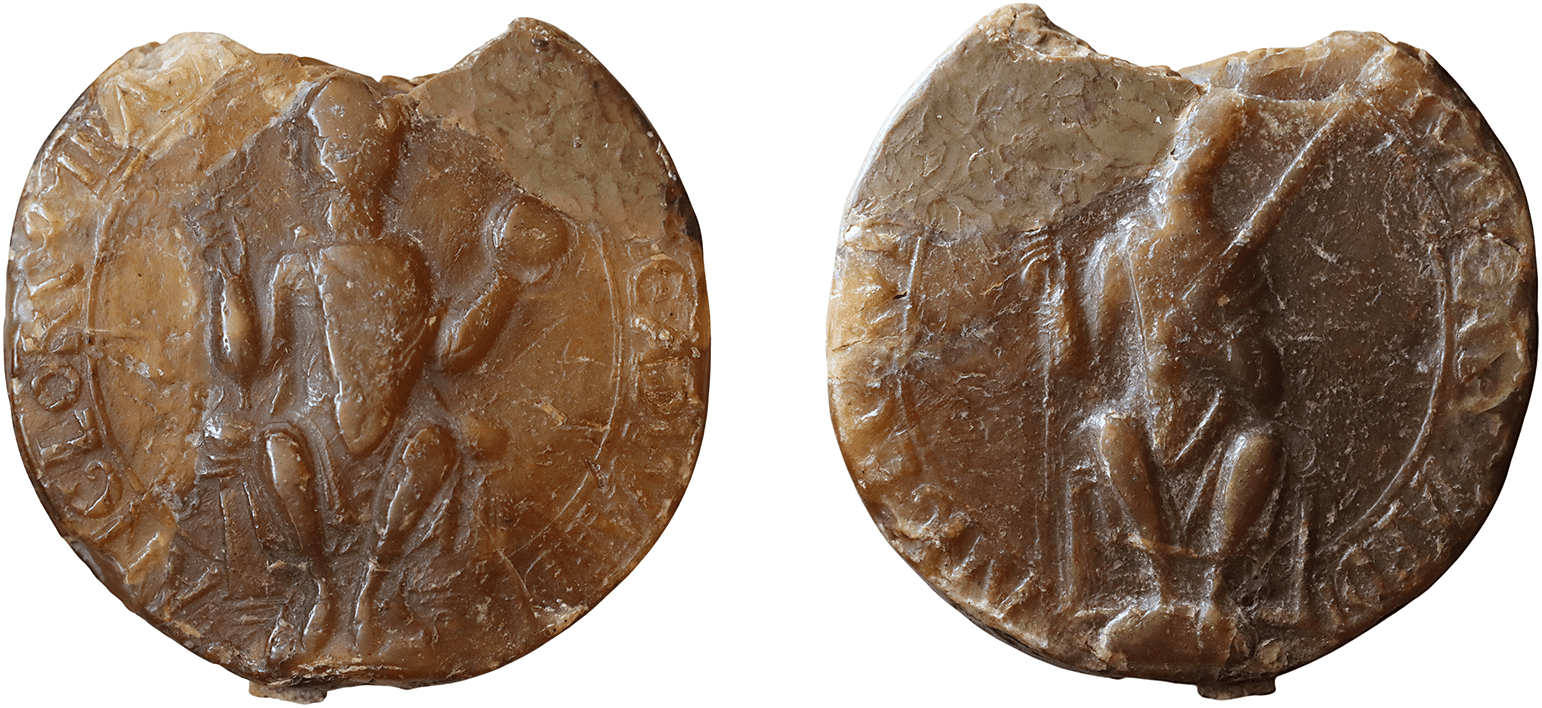
A royal seal long believed lost suddenly reappears—after decades without a trace. A rare royal seal belonging to Edward the Confessor, the last Anglo-Saxon king of England, has now resurfaced in Paris after more than 40 years. This development is not simply the recovery of a lost artifact; it offers an unexpected window into the political vision of pre-Norman England.
The wax impression, known as the Saint-Denis seal, went missing in the 1980s from the French National Archives. Preserved for nearly two centuries, the object was long considered lost, leaving what many historians saw as a significant gap in the academic record.
Not Lost, Just in the Wrong Place
The story behind the seal does not follow the usual pattern of theft or destruction. In 2021, Guilhem Dorandeu, a doctoral researcher at the École française de Rome, came across an unusual piece while examining seal collections in Paris. Further analysis revealed that the object was in fact the long-missing royal seal.
It had not been stolen. In reality, it had been sitting in plain sight—just in the wrong place. Separated from its original document and incorrectly classified, the seal went unnoticed for decades. Today, it is regarded as the best-preserved example among only three known authentic seals of Edward.
More Than a Seal: The Visual Language of Power
Dating to around 1053–1057, the seal immediately reveals that it is far from ordinary. Designed as a bifacial wax impression, it depicts the king enthroned on both sides, holding a scepter, an orb, and a sword.
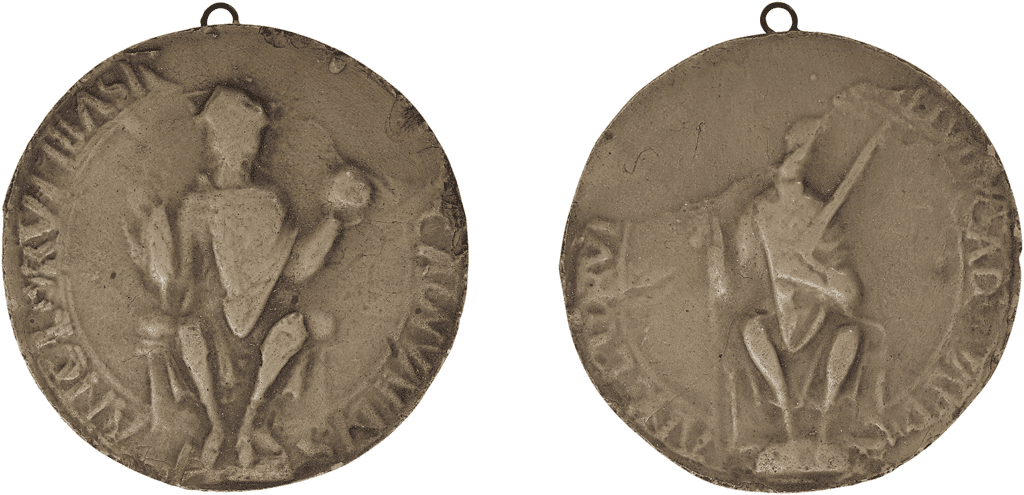
These details are unlikely to be accidental. In mid-11th-century England, such visual expressions of authority were not yet standard. The seal suggests that royal power was becoming more visible, more assertive, and more consciously constructed.
The most striking feature, however, lies in its inscription.
“Anglorum basileus.”
At first glance, it simply means “King of the English.” Yet the term basileus carries a different weight. It is a Greek title traditionally reserved for Byzantine emperors. Its use here is unlikely to be accidental. Instead, it points to a ruler who sought to position himself not merely as a local king, but as part of a broader political and cultural world.
Byzantine Influence Beneath the Surface
The imagery of the seal reinforces this interpretation. The presence of a sword is particularly notable. In Western Europe, such depictions were still rare at the time. In the Byzantine world, however, emperors were increasingly portrayed armed, symbolizing both authority and divine protection.
Taken together, these details form a coherent picture. Edward was not only aware of the international political language of his time—he was actively engaging with it. This suggests that Anglo-Saxon England was far more connected and outward-looking than often assumed.
A Shift in How England Was Governed
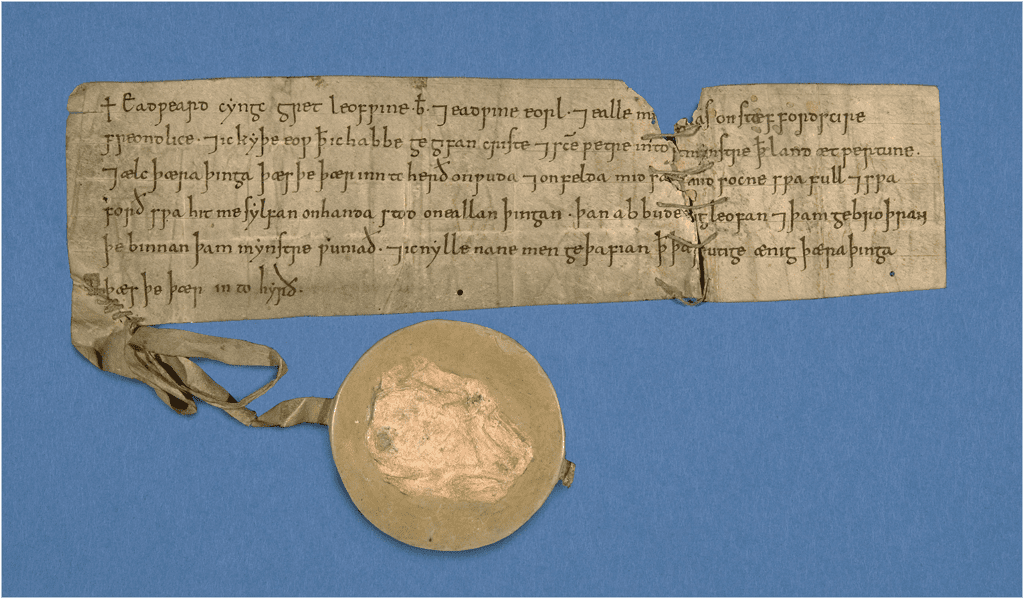
The seal is not only symbolic; it is also part of a broader administrative transformation. It was attached to a writ-charter, a new type of document that combined legal authority with practical governance.
Where earlier Anglo-Saxon documents relied on witness lists for validation, seals began to play a central role during this period. This shift reflects the emergence of a more centralized and systematized model of governance in England.
Who Was Edward the Confessor?
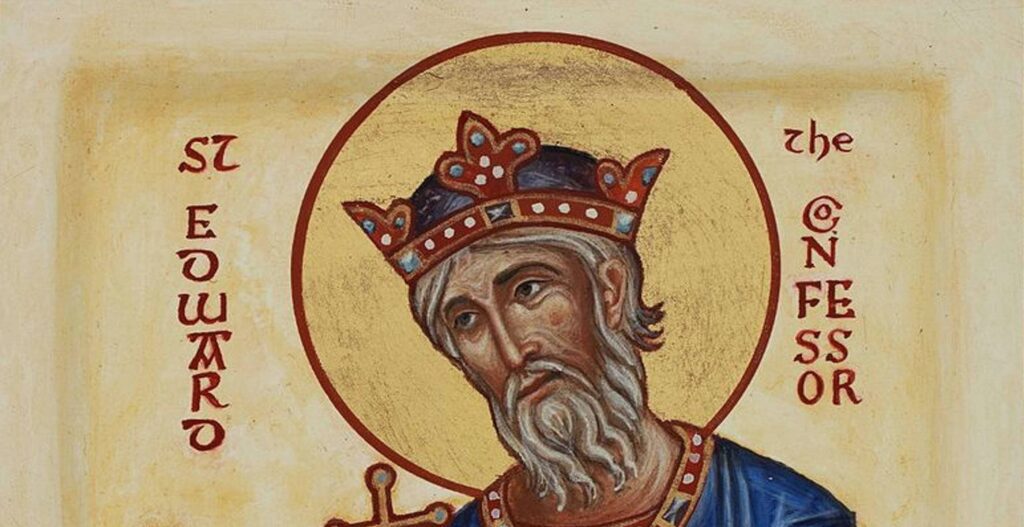
Edward the Confessor ruled England from 1042 to 1066 and is remembered as the last Anglo-Saxon king before the Norman Conquest. Known for his deep religious devotion, he was later canonized as a saint, which earned him the title “the Confessor.” His reign represents a transitional period in English history, during which the kingdom strengthened its ties with continental Europe. The rediscovered seal now suggests that these connections may have extended even further.
Why This Discovery Truly Matters
The rediscovery of this seal is not simply about recovering a missing object. It provides concrete evidence of how the concept of kingship was evolving in England.
The find points to stronger-than-expected European and Byzantine influences, while also shedding light on the early stages of the administrative systems that would later define the medieval state. As historian Levi Roach has emphasized, discoveries like this do not just answer questions—they generate new ones.
And this seal leaves us with one in particular.
Was Edward simply a king of England—or was he deliberately projecting something closer to imperial authority?
Dorandeu G, Roach L. Lost and Found: the Saint-Denis Seal Impression of Edward the Confessor (1053 × 1057) and the Development of the Early English Writ-Charter. Early Medieval England and its Neighbours. 2026;52:e8. doi:10.1017/ean.2025.10014
Cover Image Credit: Saint-Denis Seal Impression of Edward the Confessor (1053 × 1057). © Paris, Archives nationales, Sc/x/832. Dorandeu, G. & Roach, L., Early Medieval England and its Neighbours (2026)