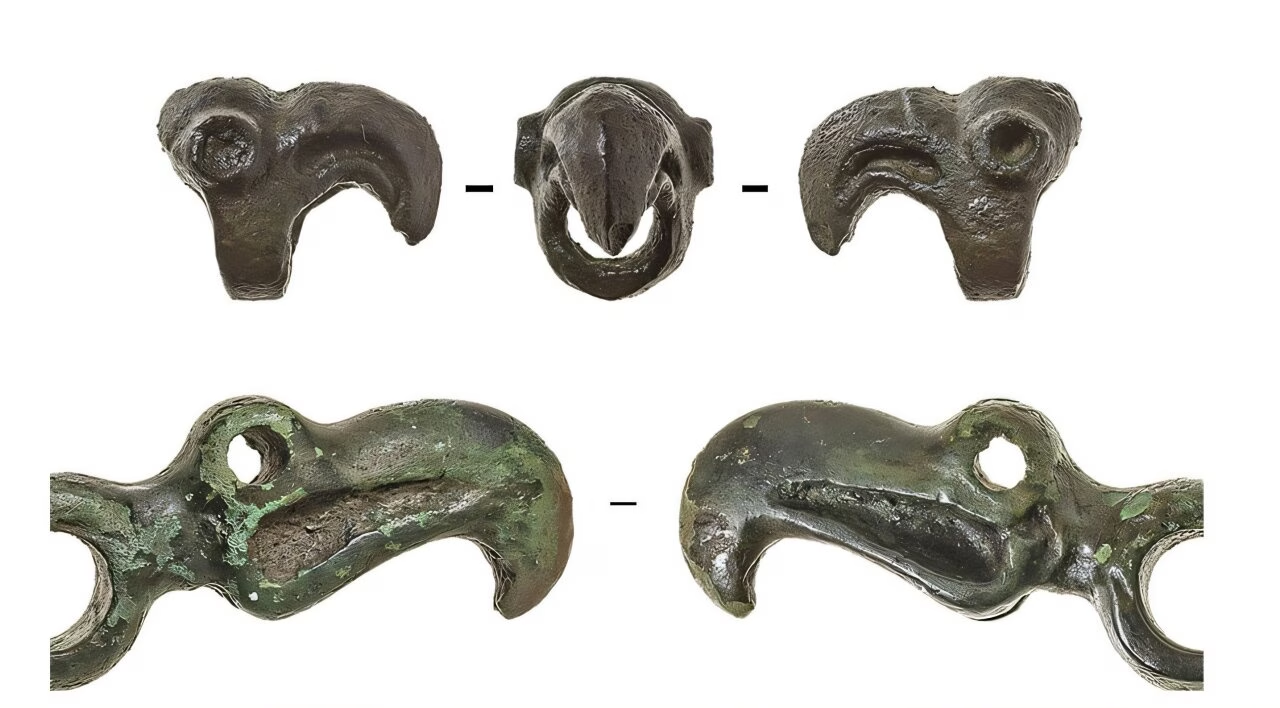
Archaeologists working in the remote Uyuk Valley of Tuva, Russia, have uncovered the earliest known examples of Scythian animal-style art — a distinctive visual language that would later dominate the Eurasian steppe. The study, published in Antiquity, reveals that the ninth-century BCE site of Tunnug 1 preserves a rare and securely dated stage in the evolution of Scythian visual symbolism.
The Scythian animal style — with its dynamic depictions of predators, prey, and mythical hybrids — is one of the most recognizable artistic traditions of the ancient steppe world. Yet despite its vast geographic spread from the Altai to the Black Sea, its precise origins have long remained elusive.
Now, new research led by Dr. Timur Sadykov and Dr. Gino Caspari sheds light on this mystery. Their analysis of artifacts from the Tunnug 1 burial mound — sometimes called “the Siberian Arzhan” — provides the earliest, securely dated evidence for the Scythian artistic tradition that would later define Iron Age nomadic identity.
“Tunnug-1 is an extremely rare, if not unique, monument with regard to ritual sacrifices and funerary architecture,” says Dr. Caspari. “For a researcher, this is a once-in-a-lifetime opportunity. We’re proceeding with great caution — we only get one chance to excavate a site like this.”
Discovered in a swampy area of the Uyuk River basin, the mound was initially overlooked in the 1980s due to its low elevation. However, recent excavations have revealed a full expression of the “Scythian triad” — weapons, horse gear, and animal-style ornaments — anchoring the site firmly within the earliest Scythian cultural horizon.
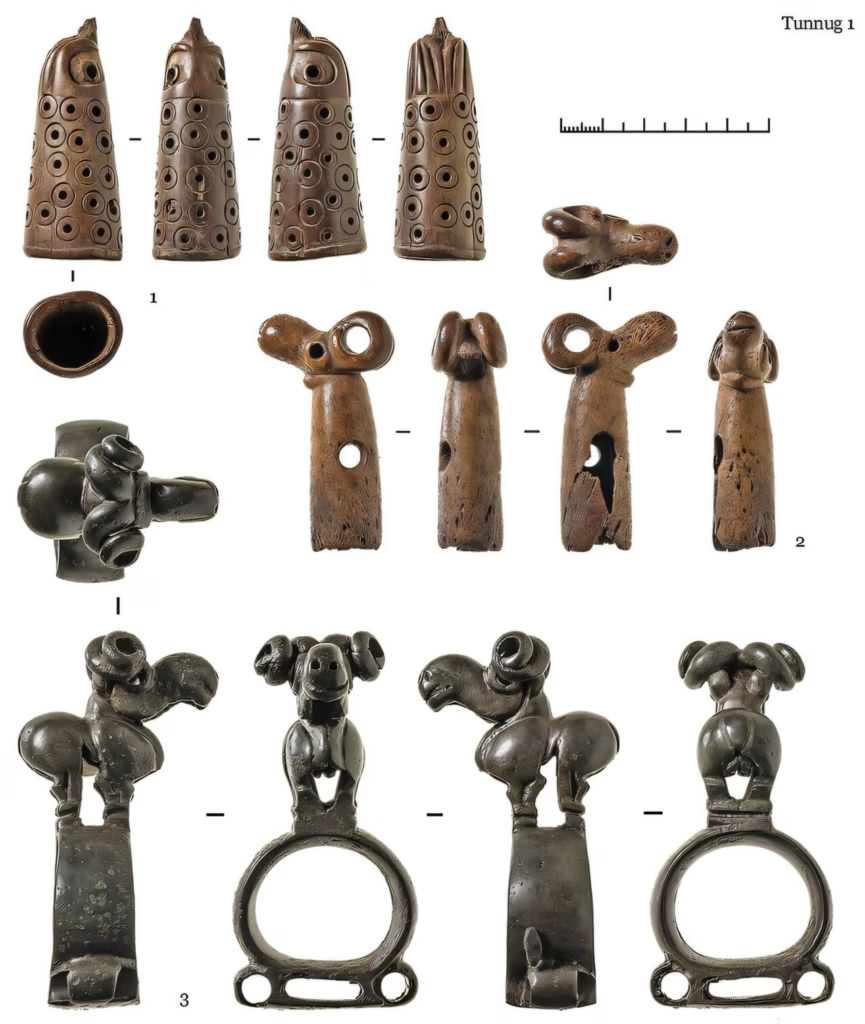
Unlike the later golden masterpieces depicting stags, griffins, and fantastic beasts, the Tunnug 1 corpus is surprisingly modest and specific: just four animals — rams (argali), felines, birds, and snakes. Most of these motifs appear on horse equipment rather than elite jewelry, suggesting that the animal style first emerged from ritual equestrian contexts rather than royal ornamentation.
“Wild animals were central to the steppe worldview,” Caspari notes. “It’s striking that we see almost no domesticated species here — these were spirits of the natural world, not livestock.”
The artifacts themselves were crafted mainly from bone and bronze, not gold. Although traces of gold were found elsewhere in the mound, none were used for animal-style items — a sharp contrast with the glittering treasures of later Scythian kings.
The researchers propose that the diversity of artistic motifs seen in later centuries may have arisen as different nomadic groups converged in the Uyuk Valley of the Kings, blending distinct symbolic and technological traditions through shared funerary rituals.
For now, the team continues to analyze thousands of recovered items and environmental samples to reconstruct the cultural landscape of ninth-century BCE Tuva — a moment when the visual grammar of the steppe was just beginning to take shape.
“We’re working with a huge amount of material, and publishing it properly takes time,” says Caspari. “But more papers are coming soon — this is only the beginning of what Tunnug 1 can tell us.”
Timur Sadykov et al, Expanding the corpus of the earliest Scythian animal-style artefacts, Antiquity (2025). DOI: 10.15184/aqy.2025.10214.