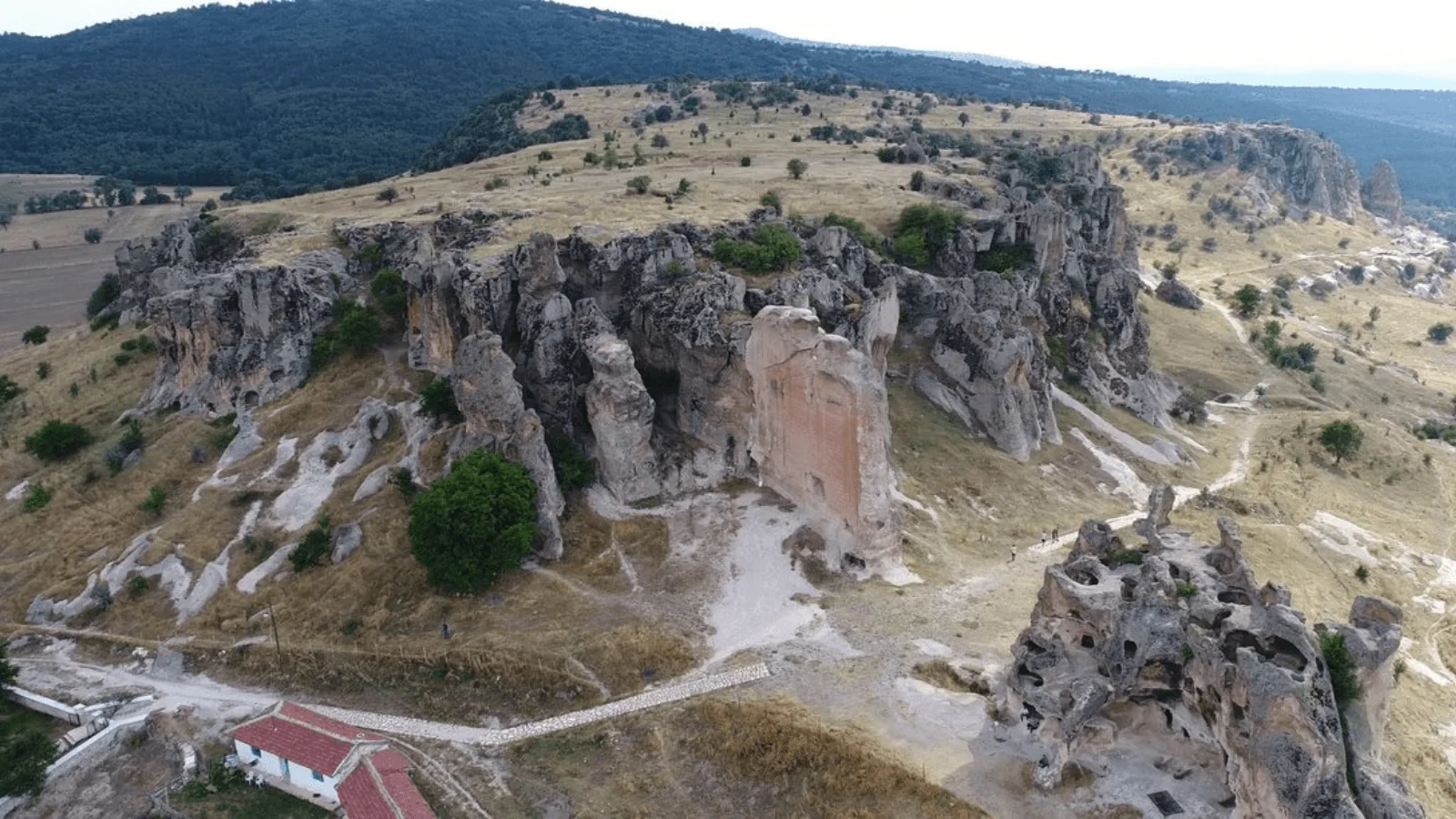
Archaeologists working at Yazılıkaya, also known as Midas Fortress, in central Türkiye have uncovered a substantial section of an ancient defensive wall still standing in its original position.
Researchers already knew that fortifications once surrounded parts of the Phrygian stronghold. Cuttings and wall beds carved into the bedrock showed where masonry had once stood, but according to excavation director Yusuf Polat, no in situ section of the fortress wall had previously been known.
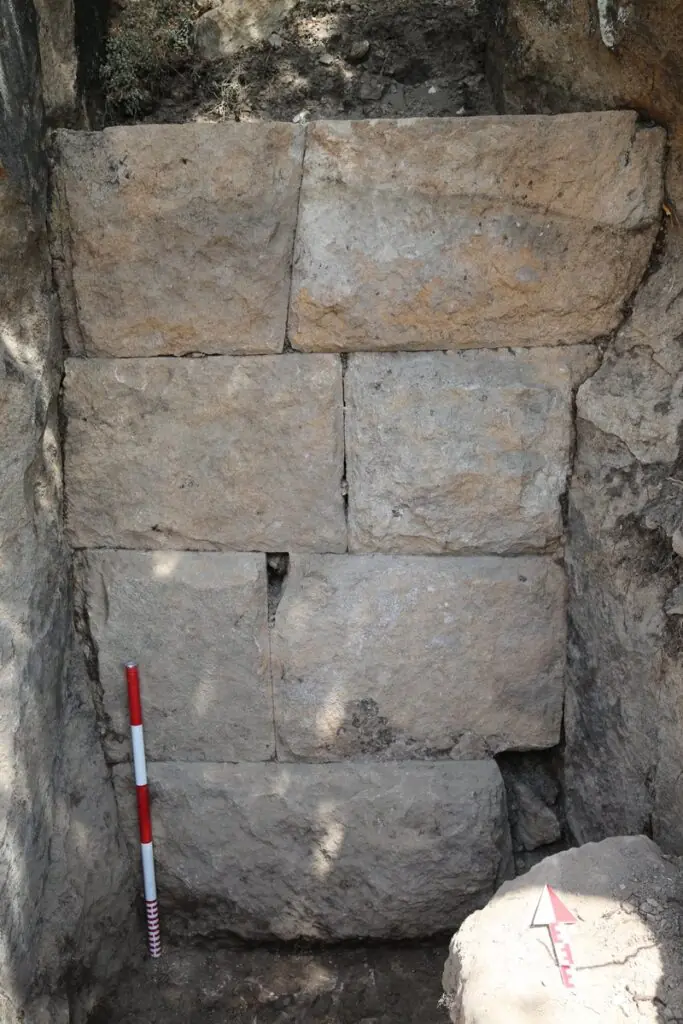
That has now changed. A test trench opened in an area identified as a watchtower revealed a wall preserved to a height of about 2.60 meters. Four courses of carefully dressed, bossed stone blocks survive, and the wall appears to have been built specifically to close a passage between rocky outcrops.
A wall where only traces had survived
The rocky terrain around Midas Fortress naturally protected large parts of the site, but gaps between the cliffs would still have provided possible routes into the settlement.
Archaeologists had long recognized signs that Phrygian builders reinforced those vulnerable points. Rock-cut beds and sockets marked places where blocks had once been fixed into the landscape, allowing researchers to reconstruct parts of the defensive line even after most of the masonry had disappeared.
The newly exposed wall gives them something much more direct to work with. Instead of relying mainly on negative traces left in the bedrock, they can now study several courses of the fortification itself.
Its position is particularly important. The masonry closes the space between two rock formations, showing how the builders combined natural topography with constructed defenses rather than attempting to build a continuous freestanding wall around the entire rocky plateau.
Pottery may help date the fortifications
Ceramics recovered from the test trench date to the 8th and 7th centuries BCE and may help clarify when the defensive system developed.
Polat has suggested that the process of enclosing the fortress with walls may have taken shape toward the end of the 7th century BCE or later. The pottery does not provide a precise construction date for the newly uncovered masonry, so the chronology remains provisional.
Even so, the finds add an important piece to the history of the fortress. They suggest that the defenses were part of a broader phase in which the rocky landscape was deliberately reshaped, with masonry inserted wherever natural cliffs alone did not provide enough protection.
The surviving wall also offers archaeologists a rare opportunity to examine the building technique more closely. Its carefully worked blocks and substantial preserved height provide details that rock-cut foundations alone could never reveal.
Excavations returned after a 71-year gap
Modern archaeological work at Yazılıkaya/Midas Fortress resumed in 2022 under the direction of Yusuf Polat of Anadolu University, on behalf of Türkiye’s Ministry of Culture and Tourism.
The new campaign began roughly 71 years after earlier large-scale excavations at the site had ended. Those earlier investigations, carried out from the 1930s into the early 1950s, helped establish Yazılıkaya as one of the key places for studying Phrygian architecture, religion and settlement in central Anatolia.
The fortress forms part of the wider Midas Valley landscape in Eskişehir Province. It is best known for the monumental rock-cut façade traditionally called the Midas Monument, but the plateau also preserves tombs, cult installations and other structures carved directly into the rock.
Recent excavations are adding a different kind of evidence to that visible monumental landscape. Rather than focusing only on the famous façades, researchers are beginning to reconstruct how the settlement itself functioned, including how people controlled access to the rocky stronghold.
A clearer picture of Phrygian defenses
The new wall does not overturn what archaeologists already knew about Midas Fortress. Instead, it turns a long-standing interpretation into something that can now be examined directly.
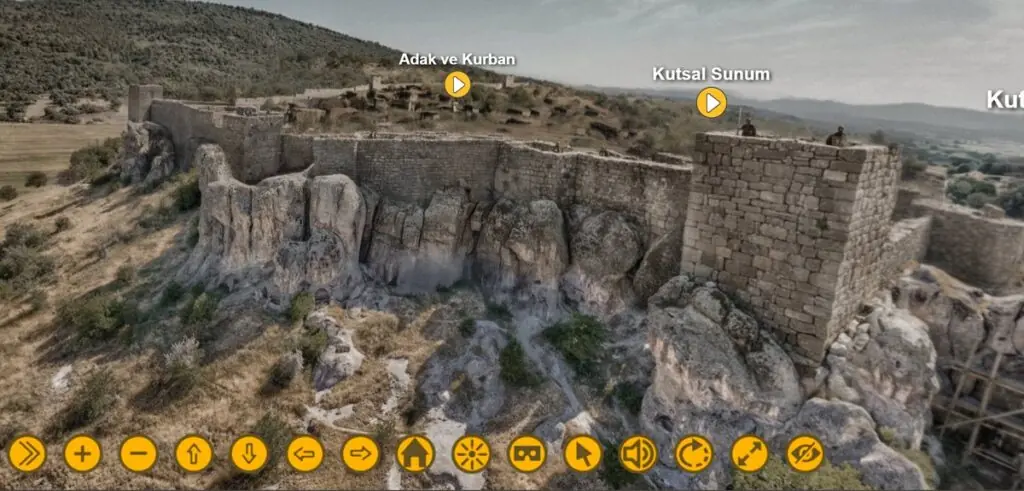
Before this discovery, the defensive system could largely be followed through the marks it had left behind: cuttings in the bedrock, wall beds and isolated architectural traces. The preserved masonry now shows how at least one section of that system actually looked on the ground.
Its location also helps explain the logic of the fortifications. Rather than separating the architecture from the landscape, the builders used the cliffs as part of the defensive plan and closed the remaining gaps with carefully constructed stone walls.
For a site famous for monuments carved into rock, the newly exposed wall adds another dimension to the picture. Midas Fortress was not simply a dramatic natural stronghold. Its builders actively shaped the terrain, reinforcing weak points and controlling movement through the rocky plateau with substantial masonry defenses.
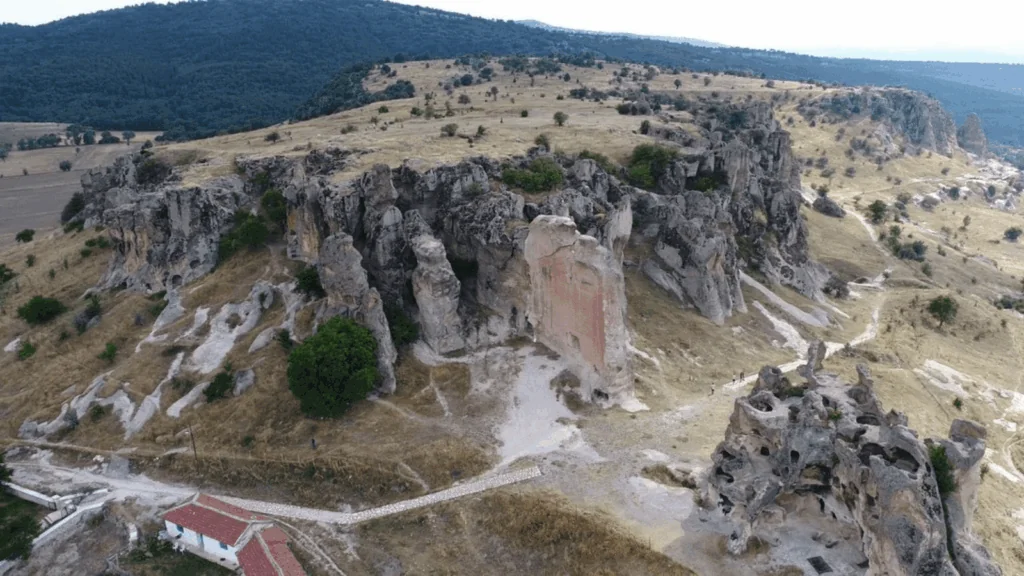
Cover Image: Aerial view of Yazılıkaya, or Midas Fortress, in Eskişehir Province, central Türkiye. Credit: Yusuf Polat / Yazılıkaya-Midas Fortress Excavation.