Archaeologists excavating the ancient city of Blaundos in western Türkiye have uncovered a 250-meter-long enclosure wall that shows the city’s North Temple was built inside a sacred precinct already centuries old.
The North Temple dates to roughly 1,900 years ago, but the wall surrounding its temenos has been dated to around 2,500 years ago. The gap suggests that this part of Blaundos had been marked out for religious use long before the Roman-period monument took shape.
That longer history is now becoming clearer as excavations move beyond the temple itself and into the surrounding sacred landscape.
A sacred boundary already in place
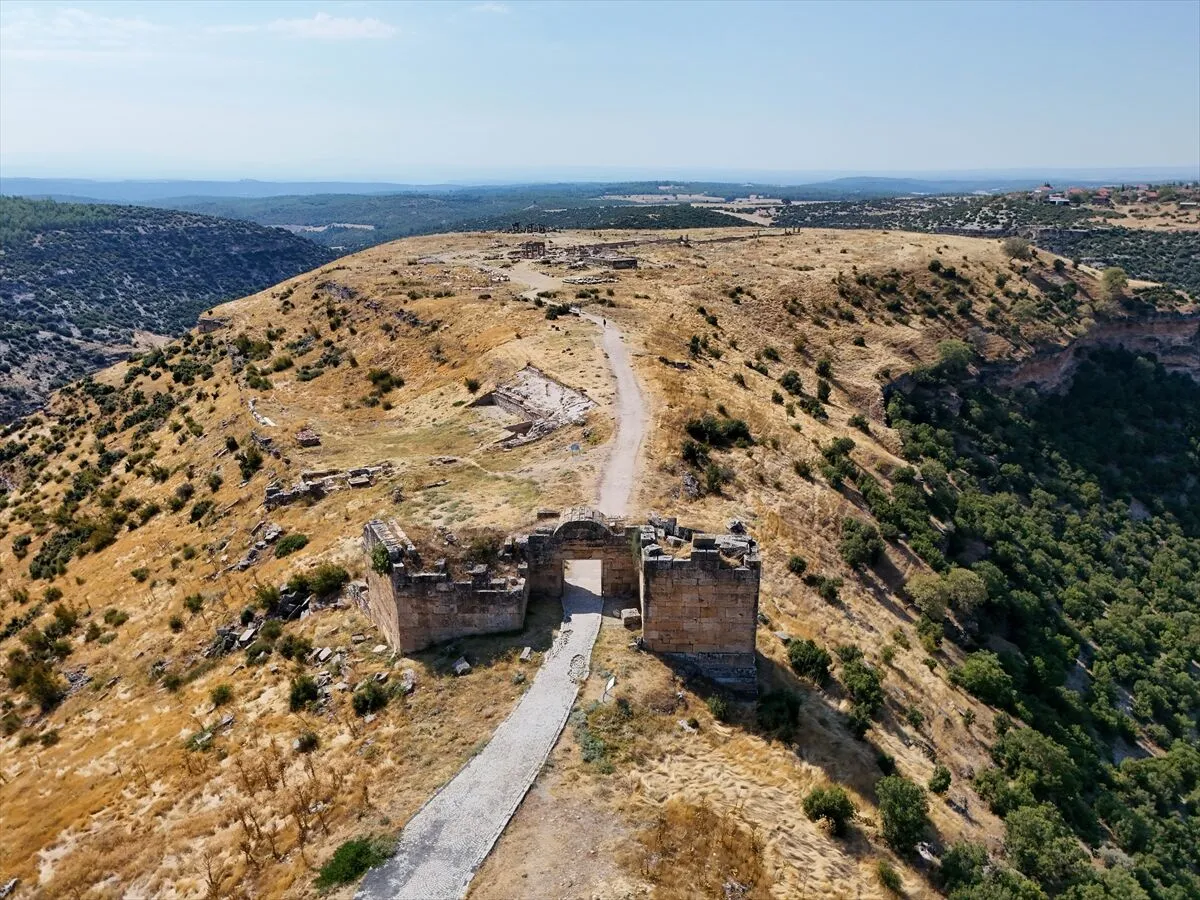
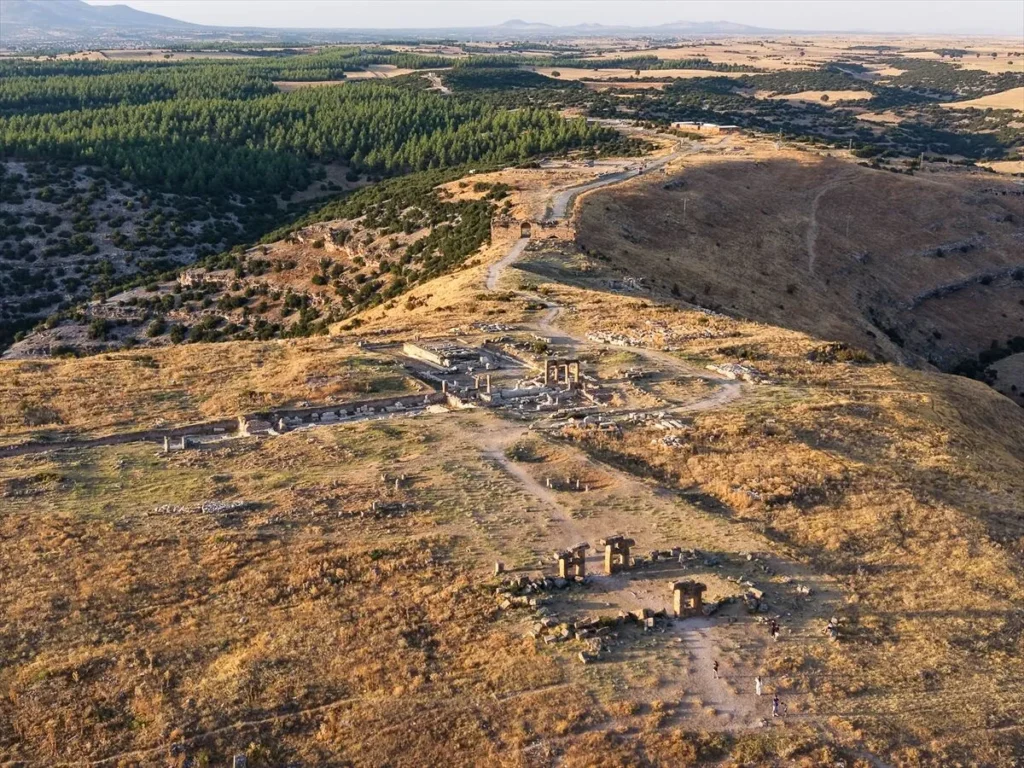
This season’s work has focused on the North Temple, located about 200 meters from the ancient city’s principal entrance.
According to İlhan Çavuş, director of the Uşak Museum and head of the Blaundos excavations, archaeologists have exposed the wall that enclosed the sanctuary. The rectangular boundary extends for approximately 250 meters around the temple complex.
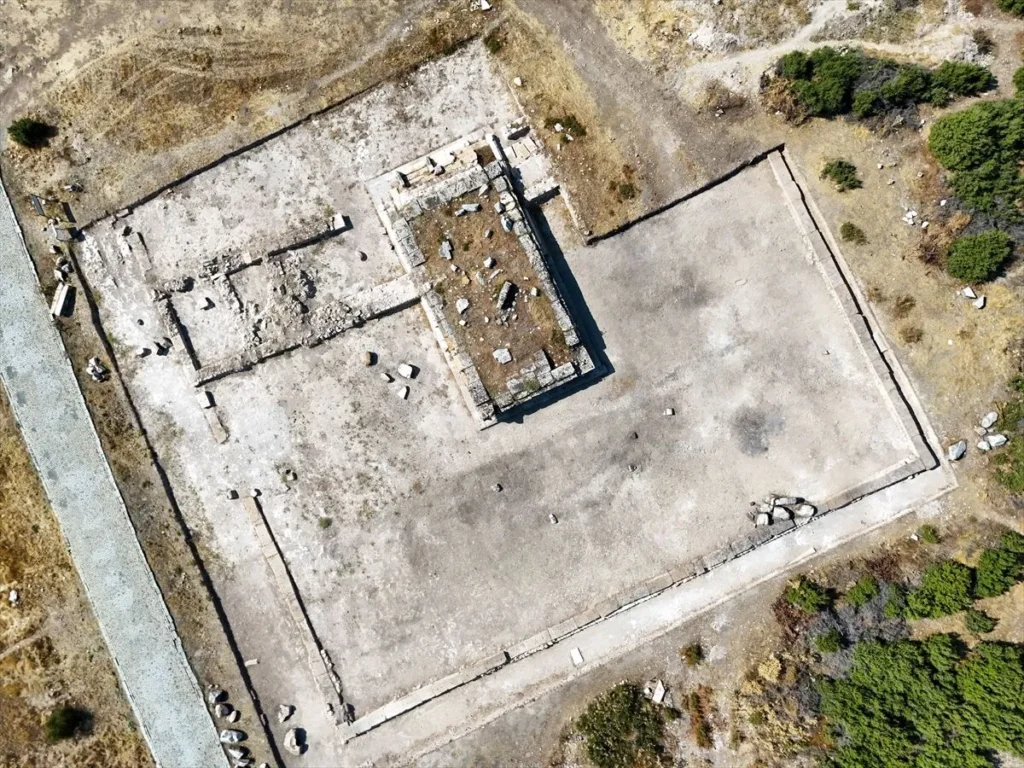
In ancient religious architecture, a temenos separated sacred ground from the ordinary spaces of the city. At Blaundos, that boundary appears to predate the Roman temple by several centuries, suggesting that the location retained a religious function through more than one phase of the settlement’s history.
The distinction is important because it changes the chronology of the sanctuary. The Roman temple was not necessarily the beginning of worship at the site; it may instead represent a later rebuilding or monumentalization of an older sacred area.
Hellenistic traces beneath the Roman phase
Excavation of the wall and its foundations has also produced evidence associated with the Hellenistic period, adding another stage between the earliest enclosure and the later Roman temple.
Blaundos is generally associated with Macedonian settlers established in western Anatolia after the campaigns of Alexander the Great. The city later developed under Hellenistic and Roman rule, and the North Temple now appears to preserve part of that long transition.
The surviving Roman monument therefore sits within a more complicated sequence than its architecture alone suggests. Earlier activity beneath and around the temple indicates that the sanctuary evolved over time rather than appearing in a single construction phase.
Water channels reveal how the sanctuary worked
Archaeologists have also uncovered water channels inside the sacred precinct.
Such features are easy to overlook beside monumental walls and temples, but they provide practical evidence for how the complex functioned. The channels supplied the temple area and formed part of the infrastructure that supported activity inside the enclosure.
Excavations have continued across the floor of the temenos toward the central sections of the temple, allowing the team to reconstruct the relationship between the building, the surrounding boundary and the internal installations.
The emerging layout points to a carefully organized religious complex in which architecture, access and infrastructure were closely connected.
Roman coins and traces of worship
Roman-period coins recovered from the temple area add evidence for the sanctuary’s later life.
Çavuş has suggested that some may have been deposited as offerings by visitors to the temple, possibly in connection with vows or requests made to the deity worshipped there. The interpretation remains dependent on archaeological context, but coin deposits are known from other ancient sanctuaries and can reflect ritual behavior as well as ordinary circulation.
At Blaundos, the coins are especially useful because they bring the chronology forward again, showing activity inside the sanctuary after the Roman temple had been constructed.
The site therefore preserves several overlapping phases: an early sacred enclosure, Hellenistic-period activity, the construction of the Roman North Temple and continued ritual use during the Roman period.
A city shaped by its landscape
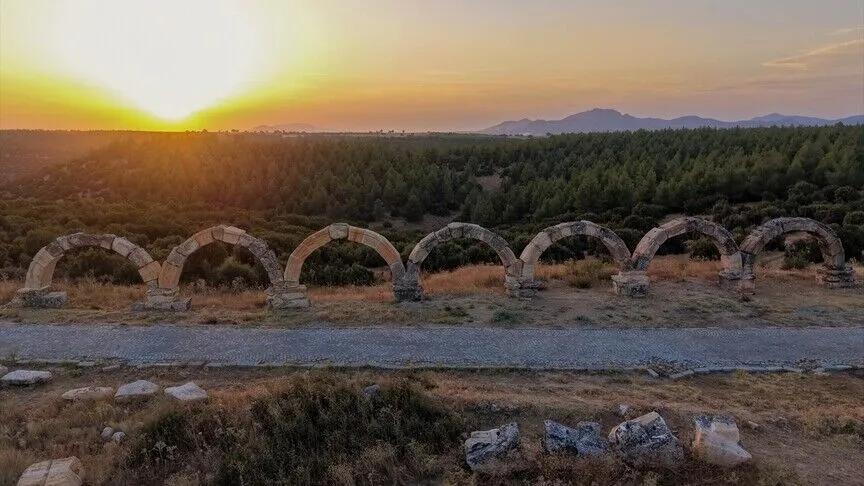
Blaundos occupies a plateau in Uşak Province surrounded on three sides by deep canyons. Its position gave the settlement strong natural defenses and helped define its unusual urban layout.
Excavations since 2018 have revealed streets, baths, workshops, religious buildings and numerous rock-cut tombs along the canyon walls. Some of those tombs preserve traces of Roman-period painted decoration, while other discoveries have shown that the city’s history extends across several cultural and political phases.
The North Temple is now providing one of the clearest examples of that continuity.
Its standing architecture belongs to the Roman period, but the 2,500-year-old enclosure wall shows that the ground around it had already been designated as sacred centuries earlier.
The sanctuary visible today was therefore not created on an empty site. It emerged within a religious landscape that had already been developing for generations.
Cover Image: The monumental entrance to Blaundos, a naturally defended ancient city built on a plateau above deep canyons in Uşak Province, western Türkiye. Credit: AA