For a long time, fishing in the Mycenaean world was treated as a peripheral activity—something practical, necessary, yet ultimately overshadowed by agriculture, animal husbandry, and the tightly controlled economies of palace centers. The absence of clear references in Linear B records seemed to reinforce that assumption, placing fishing firmly in the background of Bronze Age life.
But that long-standing interpretation is now beginning to unravel.
A new study led by Santo Privitera, published in Thiasos, brings forward compelling evidence that fishing was not only organized and technically sophisticated, but also carried social meaning, visibility, and even prestige—especially in the centuries following the collapse of the Mycenaean palace system.
Two Vessels, One Radical Insight
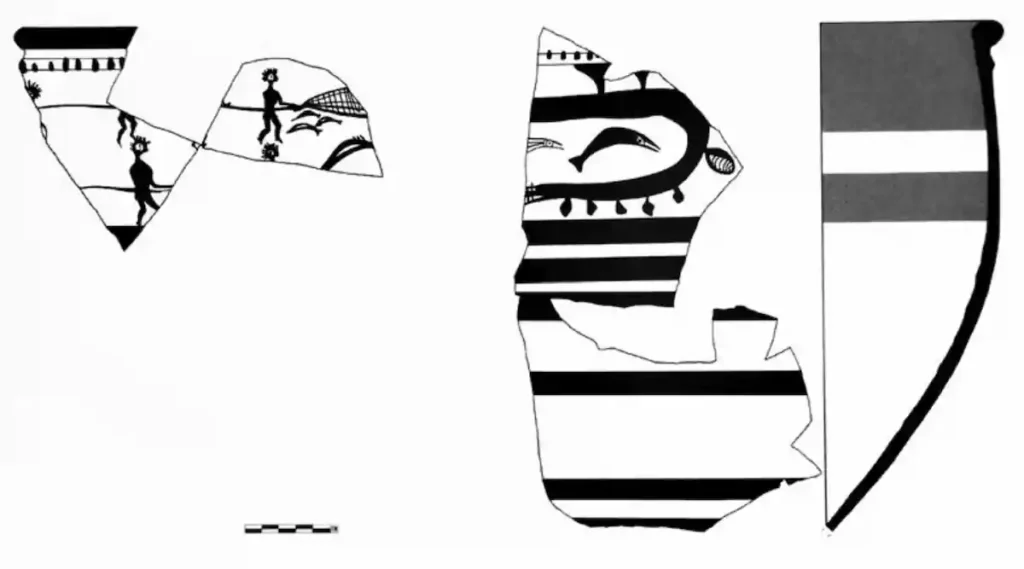
The argument rests on two remarkable ceramic finds dated to the 12th century BCE, a period marked by instability and transformation across the Aegean. One vessel comes from a tomb at Aplomata on the island of Naxos, while the other was uncovered at the coastal settlement of Kynos in central Greece.
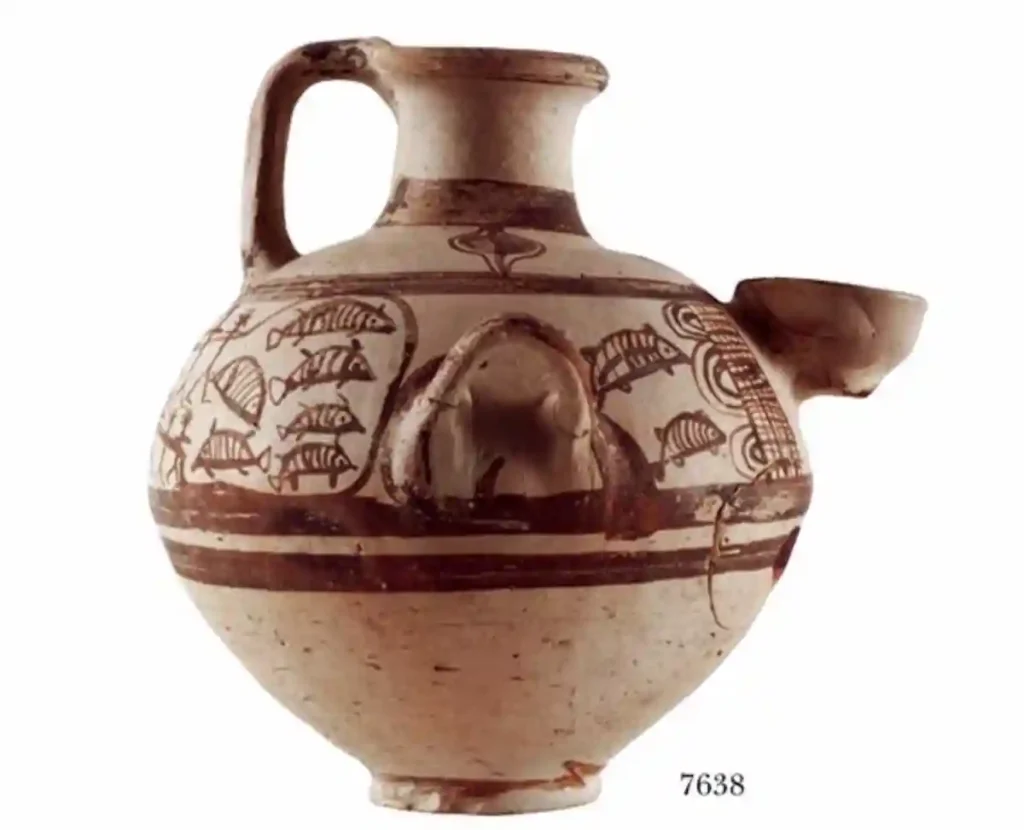
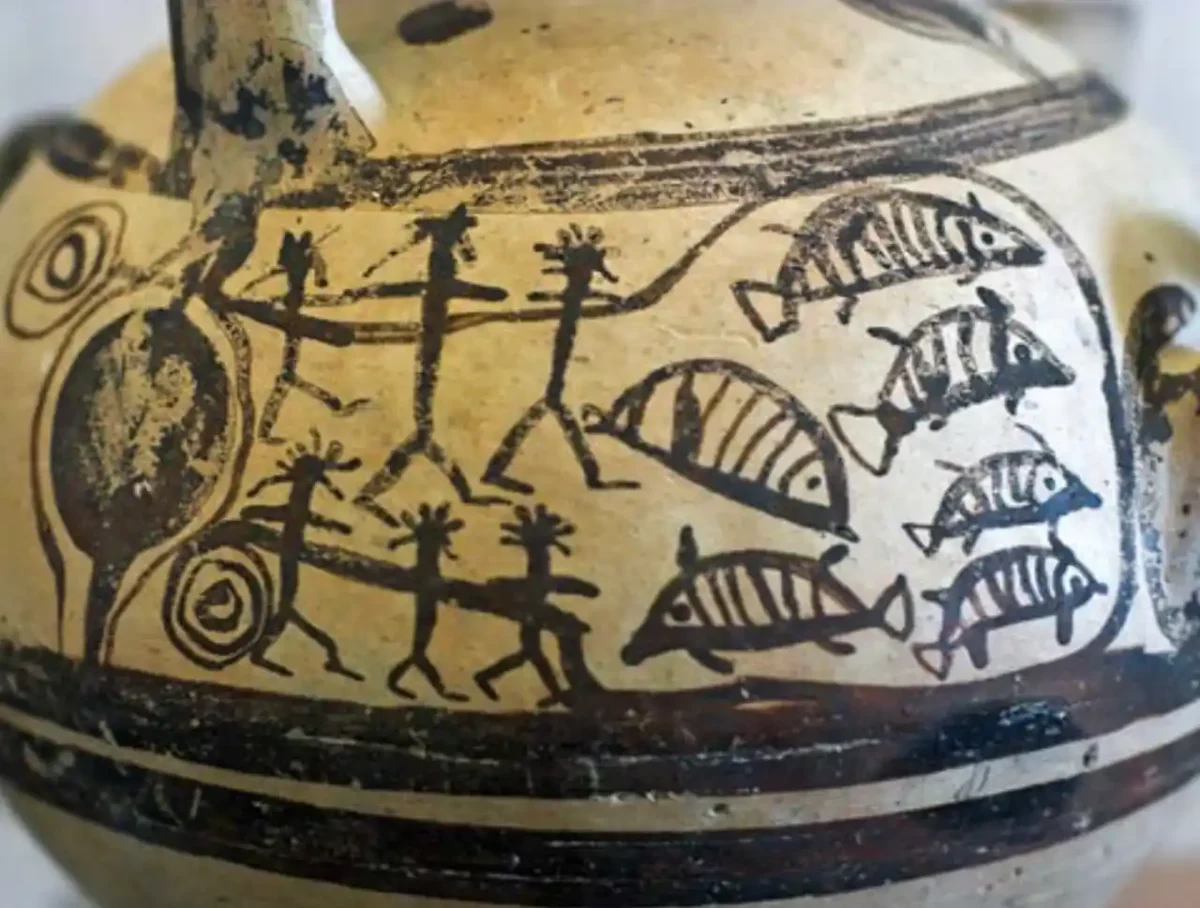
Although separated by considerable distance, both objects depict an almost identical scene: groups of individuals working together to haul in a large fishing net filled with sizeable fish. The composition is not symbolic or stylized in an abstract sense—it is structured, deliberate, and strikingly realistic.
This level of detail suggests that what we are seeing is not artistic imagination, but a visual record of coordinated labor.
Reading the Mechanics Behind the Image
A closer look at the imagery reveals a highly organized operation. The figures are arranged in balanced formations, pulling thick ropes that coil and stretch under tension, while the net encloses multiple large মাছ—likely species such as tuna. In the Naxos example, an element once interpreted as a decorative motif is now thought to represent a small boat seen from above, adding a new layer of logistical complexity to the scene.
Taken together, these details strongly align with a technique known from later periods: a form of shore-based drag-net fishing, similar to the Mediterranean “jábega.” This method required a boat to deploy the net offshore in a wide arc, while teams on land coordinated the final stage, hauling the catch back to shore.
It was not a simple task. It required planning, timing, manpower—and control.
When Fishing Became Visible
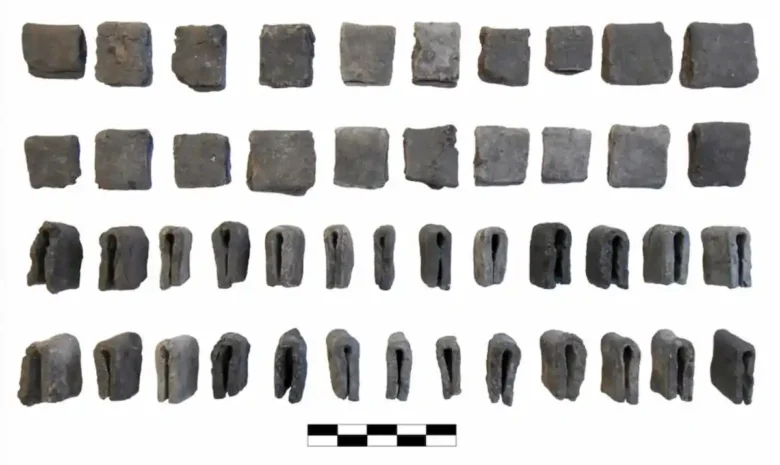
Archaeological evidence confirms that large-scale net fishing was already practiced centuries earlier, as shown by the discovery of lead net weights in sites such as Gla, Crete, and Attica. What changes in the 12th century BCE is not the existence of the technique, but its appearance in visual culture.
And that shift matters.
Because these images do not appear on everyday pottery. They are found on vessels associated with communal drinking, ritual consumption, and elite social gatherings. The Naxos hydria, equipped with a filter, is linked to ceremonial beverages, while the Kynos krater played a central role in wine-mixing during feasts.
These were objects meant to be seen, discussed, and remembered.
Power Without a Visible Leader
One of the most intriguing aspects of both scenes is the absence of a clearly depicted leader. At first glance, the activity appears collective, even egalitarian. But this interpretation may be misleading.
As Privitera argues, the organization behind such operations likely depended on individuals who controlled key resources—nets, boats, tools, and perhaps even access to coastal zones. These figures may not have been physically present in the scenes, yet their role in enabling and structuring the activity would have been central.
In nearby burial contexts, fishing equipment appears alongside weapons and luxury goods, suggesting that the ability to organize maritime production was valued in ways comparable to warfare.
A New Social Landscape After Collapse
The broader historical context is crucial. Around 1200 BCE, the Mycenaean palace system collapsed, dismantling centralized administration and redistributing power into smaller, localized networks. In this fragmented world, authority no longer flowed from bureaucratic positions, but from the capacity to mobilize people and resources.
Fishing—particularly large-scale, cooperative fishing—fit perfectly into this emerging model.
It was productive, visible, and dependent on coordination.
It created opportunity for leadership.
Sea, Survival, and Identity
At Kynos, additional ceramic fragments depict warships filled with armed figures, suggesting that maritime skill extended beyond subsistence into the realm of conflict. The coexistence of fishing and warfare imagery within the same cultural framework hints at a society in which the sea was both a source of food and a stage for power.
In this context, fishing was no longer just about sustenance.
It became a marker of identity, capability, and status.
Rethinking Bronze Age Economies
What these vessels ultimately reveal is not just a forgotten practice, but a shift in perspective. Fishing was not marginal—it was structured, meaningful, and embedded within the social fabric of post-palatial communities.
Cover Image: Detail of the fishing scene depicted on the Aplomata hydria from Naxos. Credit: Santo Privitera / Greek Ministry of Culture
S. Privitera, Rappresentare la pesca nell’Egeo postpalaziale: iconografia, tecnologia e proiezioni sociali. Thiasos 15, 2026, pp. 71-82