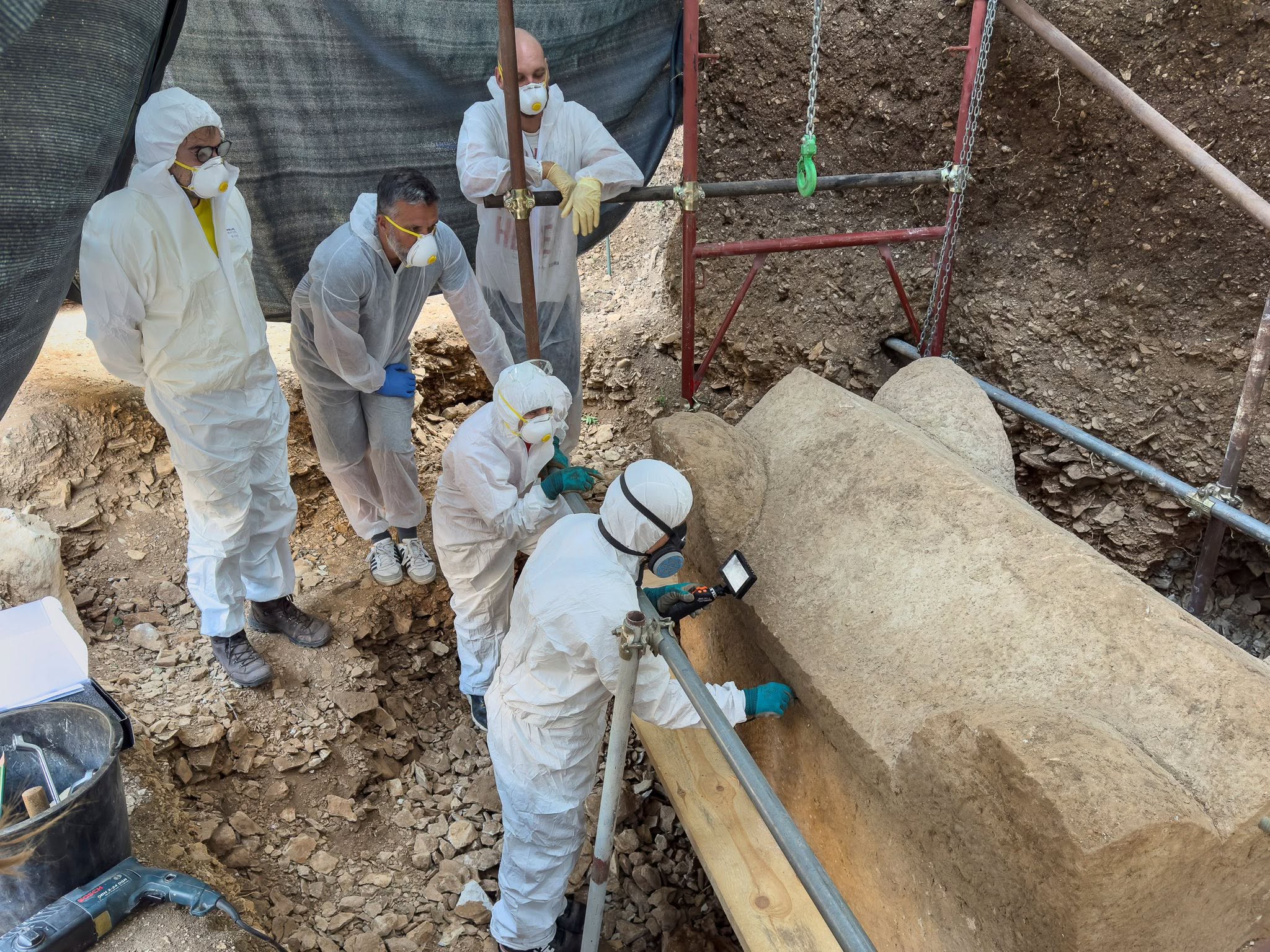
A five-ton Roman sarcophagus discovered beneath Cavtat, Croatia, was found still closed, sealed with lime mortar, and untouched after more than 1,500 years.
The stone coffin, dated to the 4th–6th centuries A.D., was uncovered three meters below the surface in the necropolis of ancient Epidaurum, a Roman colony on the Adriatic coast.
A sealed tomb in the necropolis of Epidaurum
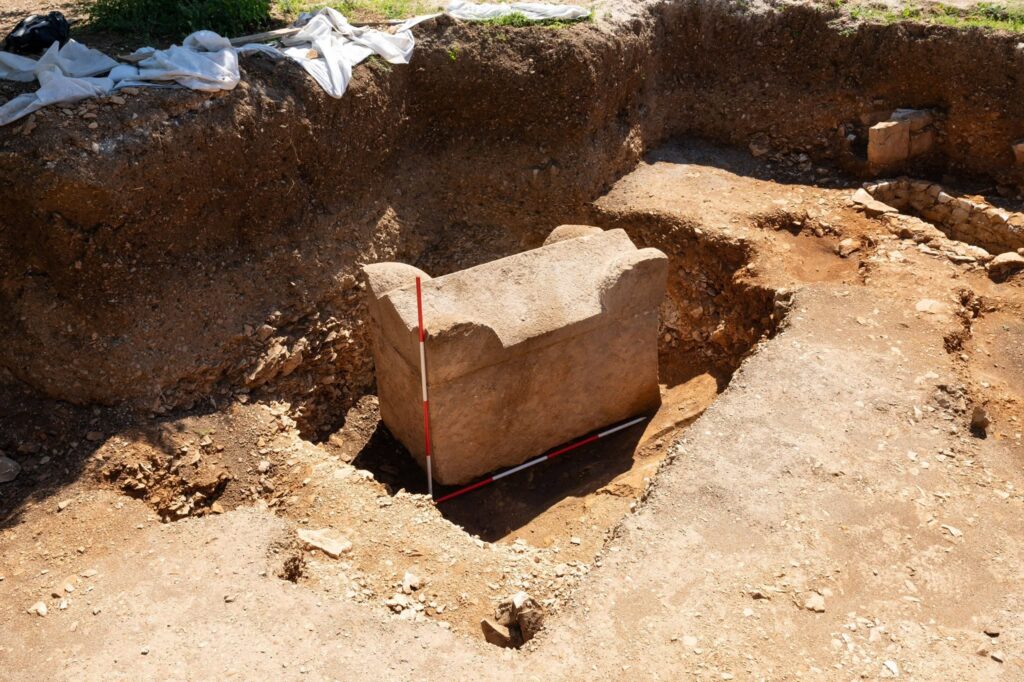
The discovery came after archaeologists uncovered several other burials in the same area. The necropolis contained different grave types, showing that this part of ancient Epidaurum remained an important burial ground during Late Antiquity.
Then the excavation reached a much larger find: a massive stone sarcophagus, still closed with its original lid.
The coffin belongs to the Salonitan type, a form produced in workshops connected with Salona, the capital of Roman Dalmatia. Its weight, position, and preservation immediately made it an unusual discovery. The sarcophagus had not been robbed. It had not been shifted from its place. Even the lime mortar sealing the lid was still intact.
For Croatian archaeology, that matters. Many ancient tombs were disturbed long ago, either by looters, later construction, or natural damage. This burial remained where it was placed.
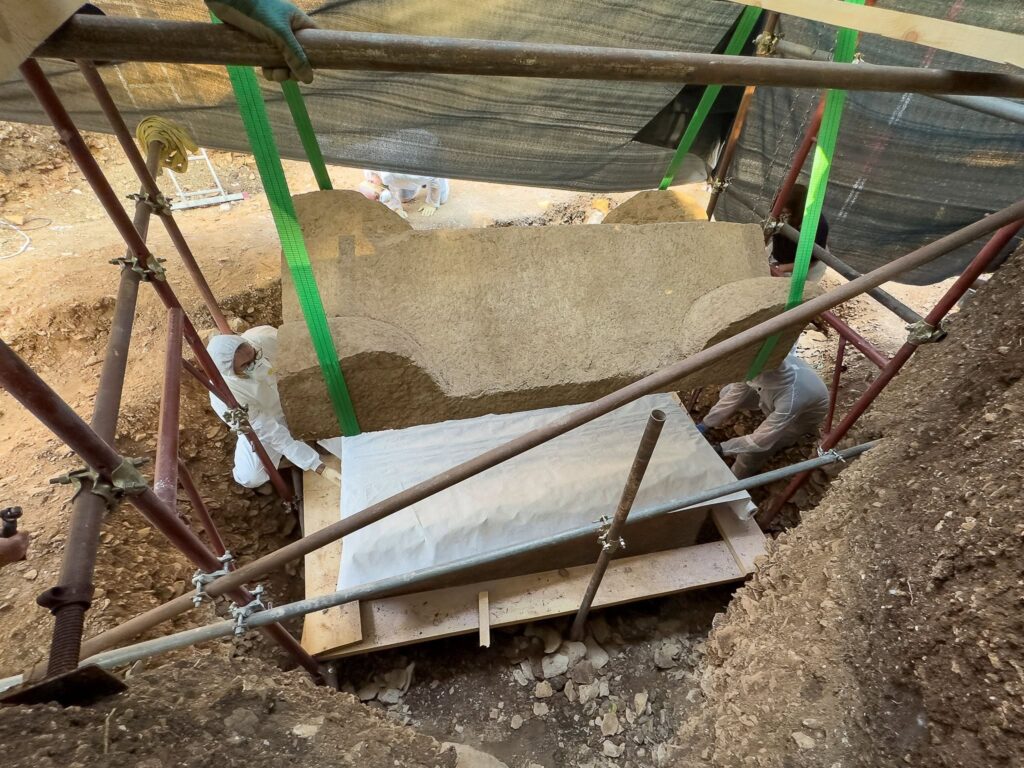
The lid was still sealed with lime mortar
Because of its size and weight, the sarcophagus could not be removed as a single block. Archaeologists decided to open it carefully and take out the lid and coffin separately, allowing the monument to be relocated without unnecessary damage.
Restorer Siniša Bizjak and sculptor Tomislav Šalo worked to remove the lime mortar that fixed the lid to the coffin. When the sarcophagus was opened, archaeologists found the remains of one individual inside.
The skeletal remains were poorly preserved, but the burial still offered valuable evidence. Samples of organic deposits and other material were collected from inside the coffin and will now be examined in laboratory conditions.
Those analyses may help narrow the date of the burial and reveal more about the person placed inside the sarcophagus. Even when bones survive badly, sealed tombs can preserve small traces that disturbed graves usually lose.
A rare chance to study an untouched Late Antique burial
The importance of the Cavtat sarcophagus is not based on luxury objects or dramatic grave goods. Its value lies in its condition.
An intact sealed burial allows archaeologists to study the relationship between the coffin, the body, the sealing material, and the exact place of burial. That kind of context is often lost before researchers ever reach a site.
In this case, the sarcophagus was still part of the necropolis of Epidaurum, a Roman colony on the Adriatic coast. Epidaurum was an important settlement in Roman Dalmatia, and its remains lie beneath modern Cavtat. Finds from the town often appear during construction work and protective excavations, making each intact discovery especially important.
This sarcophagus adds a direct piece of evidence from the final centuries of Roman life in the region, when burial customs, social identity, and local religious traditions were changing across the late empire.
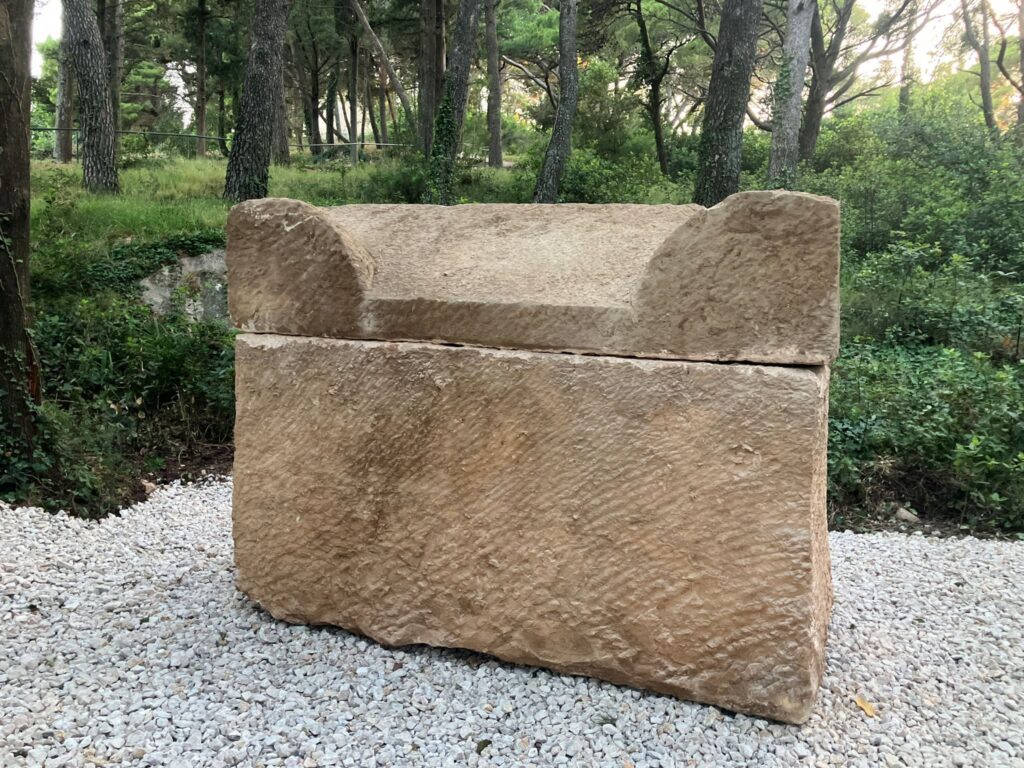
The sarcophagus is now visible in Cavtat
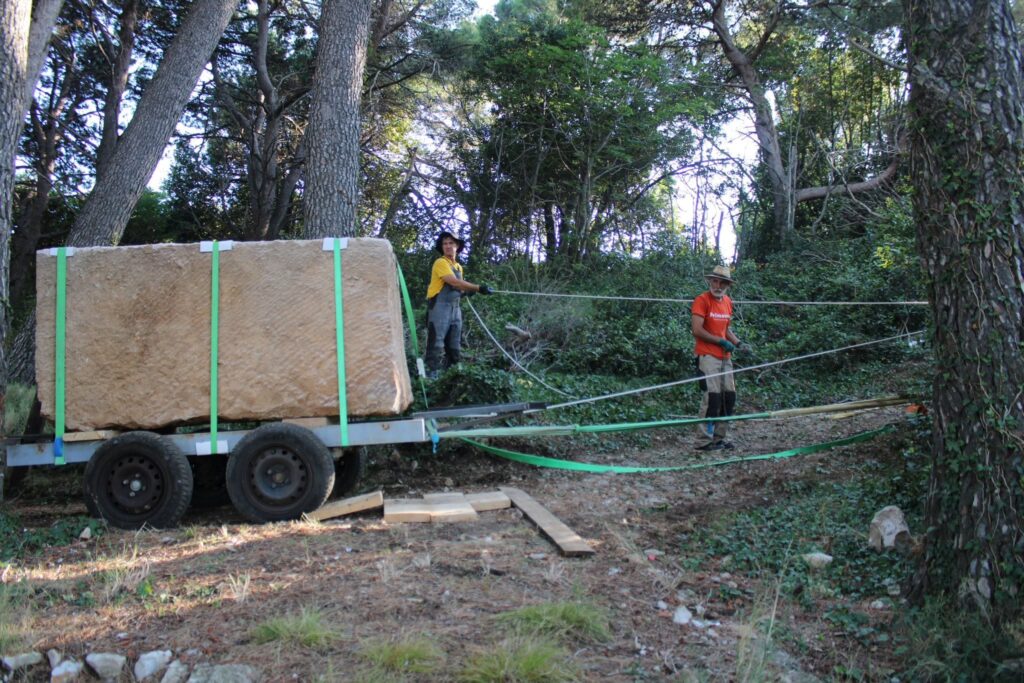
After documentation and removal, the sarcophagus was placed in a public area of Cavtat. It now stands at the junction of paths leading to the Račić Family Mausoleum, St. Rocco’s Cemetery, and the steps descending toward Ključice Beach.
The move gives the monument a second life. What was once hidden deep inside a Roman necropolis can now be seen by residents and visitors walking through the modern town.
For Cavtat, the find is more than an isolated archaeological object. It is a visible reminder that beneath its streets lies Epidaurum, a Roman colony whose dead were buried along the same Adriatic shore more than 1,500 years ago.
Laboratory work may still change what is known about the burial. For now, the sealed sarcophagus already stands as one of the clearest and rarest Late Antique funerary discoveries from Cavtat’s ancient past.
Cover Image Credit: Museums and Galleries of Konavle