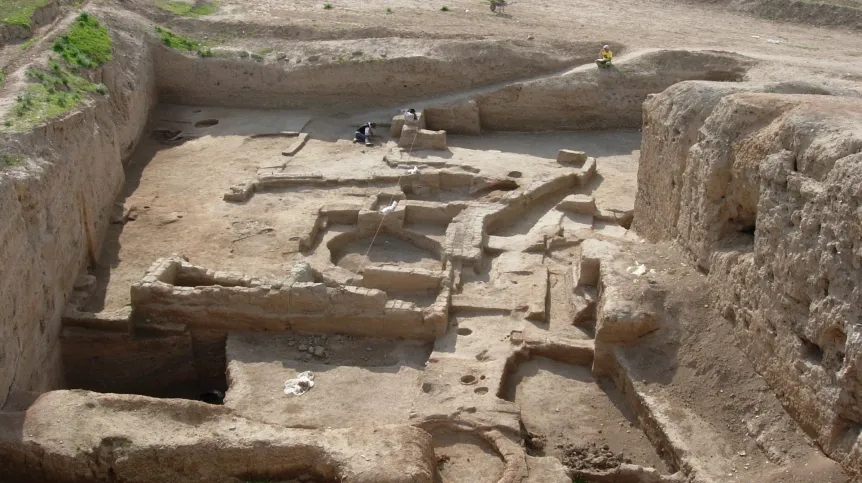
A 6,000-year-old infant skeleton from Tell Brak in northeastern Syria has revealed one of the rarest traces of violence against a child in prehistoric archaeology.
The child, who died between six and nine months of age, was buried during the Late Chalcolithic period, around 4200–3900 BCE. A new study by researchers from the University of Warsaw and Durham University found four healing rib fractures, along with other bone changes that point to severe stress or trauma.
The findings, published in the International Journal of Osteoarchaeology, do not prove abuse beyond doubt. But after weighing disease, birth trauma and accidental injury, the researchers argue that non-accidental trauma is the most convincing explanation.
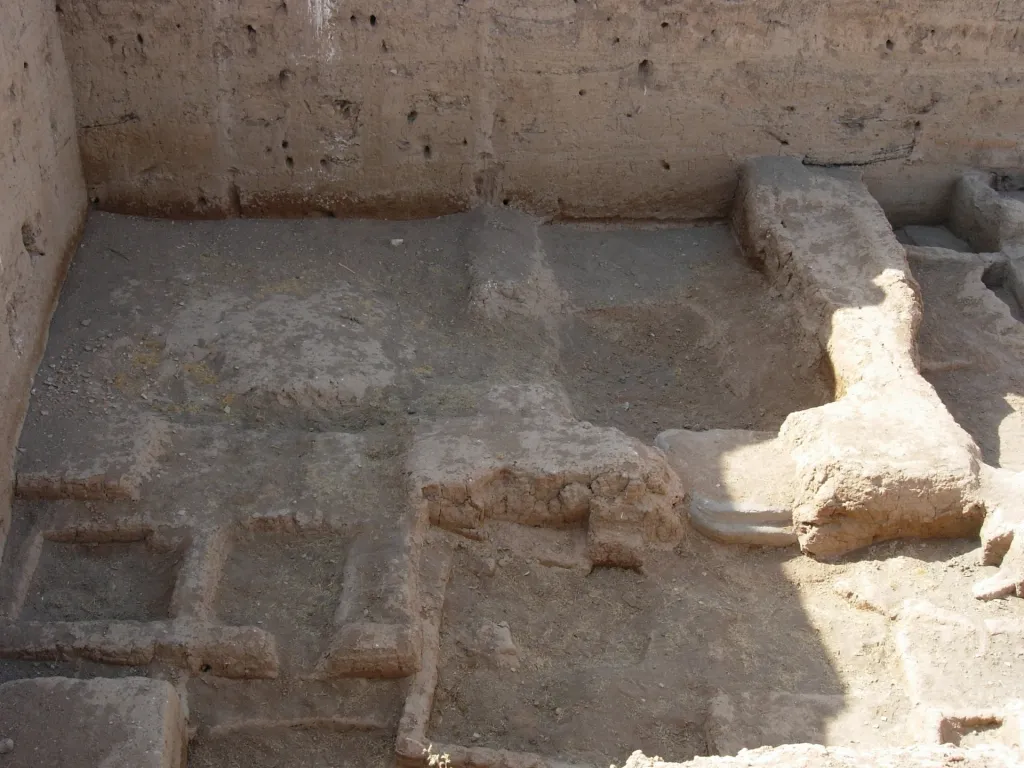
A fragile body in one of the world’s earliest cities
Tell Brak was one of the great early urban centers of northern Mesopotamia. Located in the Khabur region of modern Syria, the site grew into a large and complex settlement more than 6,000 years ago, with dense occupation, craft production and public architecture.
The infant was found in a cemetery where archaeologists documented 63 burials. Most belonged to children. That made the case especially important, because researchers could compare the infant’s bones with other young individuals from the same burial ground.
Among 38 examined child skeletons, no other bone fractures were found.
That detail matters. Other children showed signs of physical stress and difficult living conditions, but the combination seen in this infant was unique.
Four broken ribs changed the interpretation
The strongest evidence came from the rib cage.
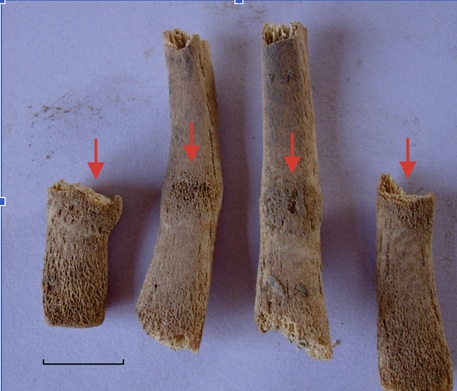
Researchers identified four fractures in the front part of the infant’s ribs. The breaks had already begun to heal, which means the child lived for some time after the injuries occurred.
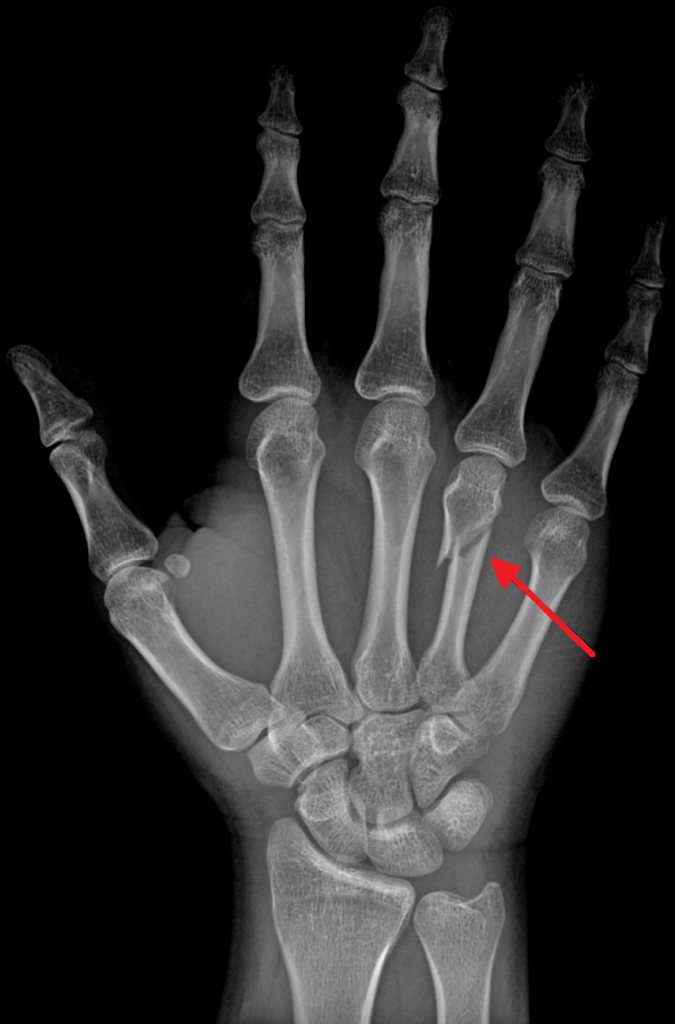
In modern forensic medicine, rib fractures in infants are treated as a serious warning sign. A baby of this age does not walk, climb or usually suffer such trauma from ordinary falls. These injuries can result from a strong blow or from forceful compression of the chest.
The skeleton also showed porous changes on the skull and abnormal bone formation on the femur. These signs do not tell a complete story on their own, but together with the rib fractures they suggest a wider pattern of stress or trauma.
Disease and birth trauma did not fit the evidence
The researchers considered several alternative explanations before linking the injuries to possible violence.
Rickets, scurvy, premature birth, birth trauma and even severe coughing were examined as possible causes. None matched the full pattern observed on the skeleton.
Rickets and scurvy usually leave characteristic changes on long bones, ribs and other skeletal areas. Those expected signs were absent. Birth trauma was also considered unlikely. If the ribs had been broken during delivery, the fractures would probably have healed completely by the time the child reached six to nine months of age.
The comparison with other children from the same cemetery added further weight. The broader population showed hardship, but not this kind of injury.
A rare case in prehistoric bioarchaeology
Evidence for violence against children is extremely hard to identify in ancient remains. Many injuries do not affect bone, and infant skeletons often survive poorly in the archaeological record.
For that reason, only a small number of possible prehistoric and ancient cases have been described from sites in places such as Egypt, France, Peru, England and Lithuania. The Tell Brak infant may now be added to that short list.
The study’s first author, Dr. Aleksandra Grzegorska of the University of Warsaw, stresses that the case should not be used to describe all children at Tell Brak. It is a single and extreme example, not a general portrait of childhood in the Late Chalcolithic.
Still, the skeleton is important because it preserves evidence that written sources could never provide for this period. No text tells us what happened to this child. The bones, however, show that something serious occurred before death.
A hard trace from early urban life
The Tell Brak infant forces a closer look at the human cost of early city life.
Archaeologists often study early urban centers through buildings, trade, administration and craft production. This case brings the scale down to one child’s body, where the pressures of life were recorded in fractured ribs and healing bone.
The researchers remain careful. They do not claim absolute certainty, and the child’s soft tissues were not preserved. But the age of the infant, the location of the rib fractures, the signs of healing and the lack of a better medical explanation all point in the same direction.
Grzegorska, A., Jakob, T., & Sołtysiak, A. (2026). A possible case of child abuse at the early urban centre of Tell Brak, NE Syria. International Journal of Osteoarchaeology. https://doi.org/10.1002/oa.70123