
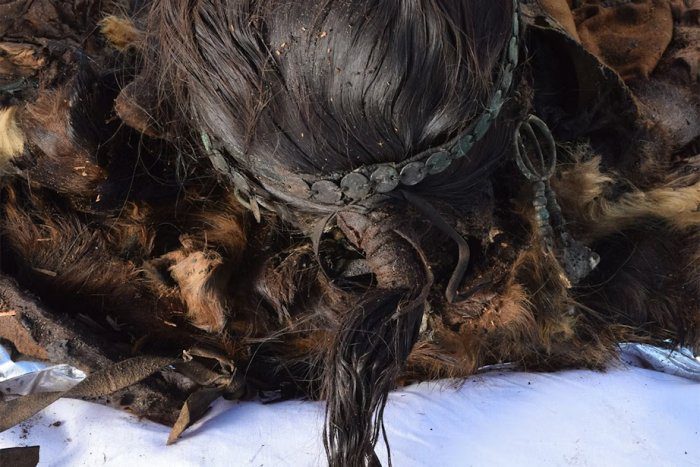
In the deep cold of northeastern Siberia, where winter still reaches –50°C, the past does not decay—it waits. Now, cutting-edge genetic research has given voice to one of the most enigmatic figures ever recovered from the permafrost: an 18th-century Yakut shaman whose life and lineage overturn long-standing assumptions about conquest, culture, and survival.
A large-scale DNA study, recently published in Nature, examined the naturally mummified remains of 122 Indigenous Yakut individuals buried between the 14th and 19th centuries in what is today the Sakha Republic (Yakutia). Among them was a woman whose burial, clothing, and genetics marked her as extraordinary—even within an elite spiritual class.
A Burial That Defied Erasure
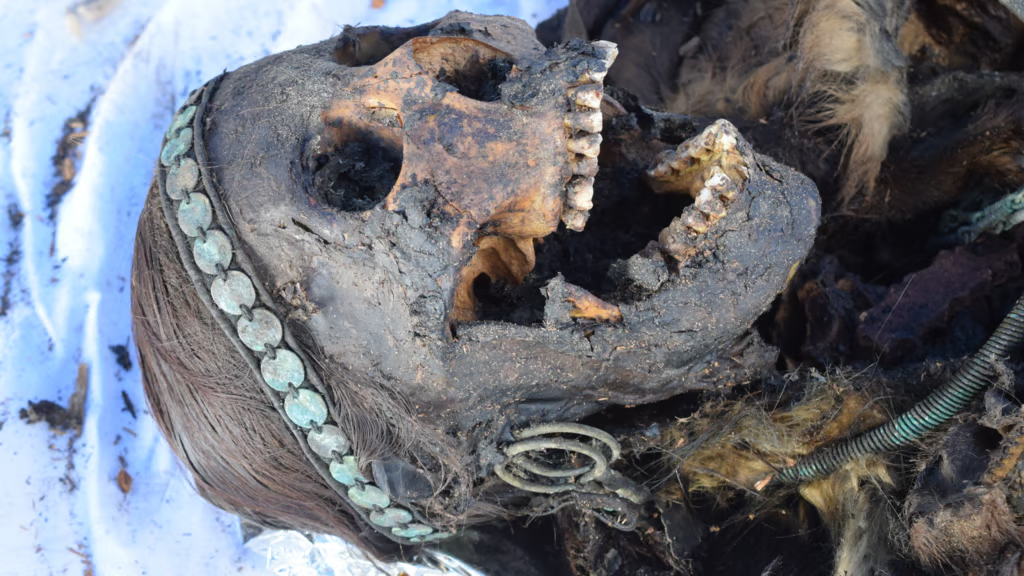
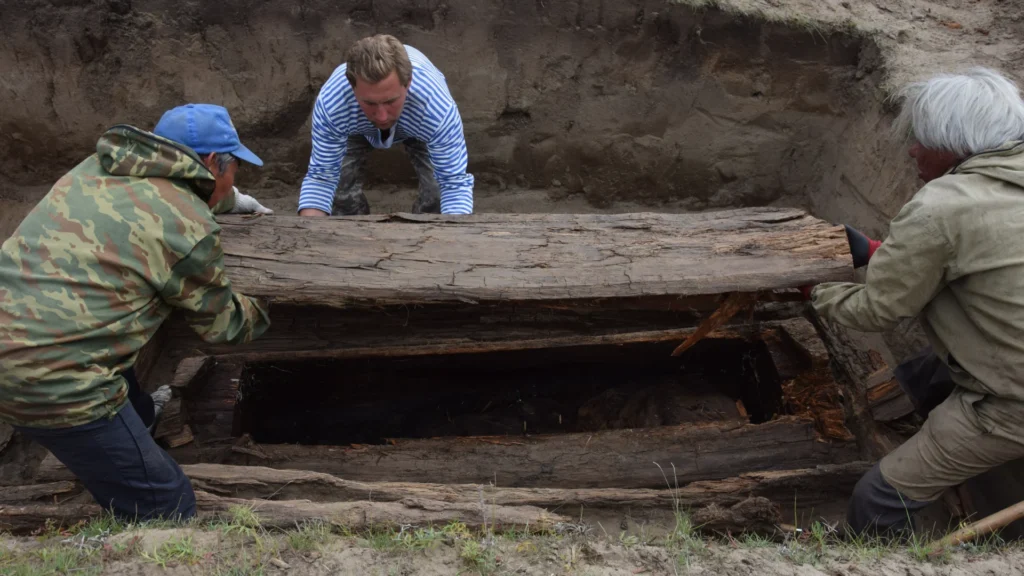
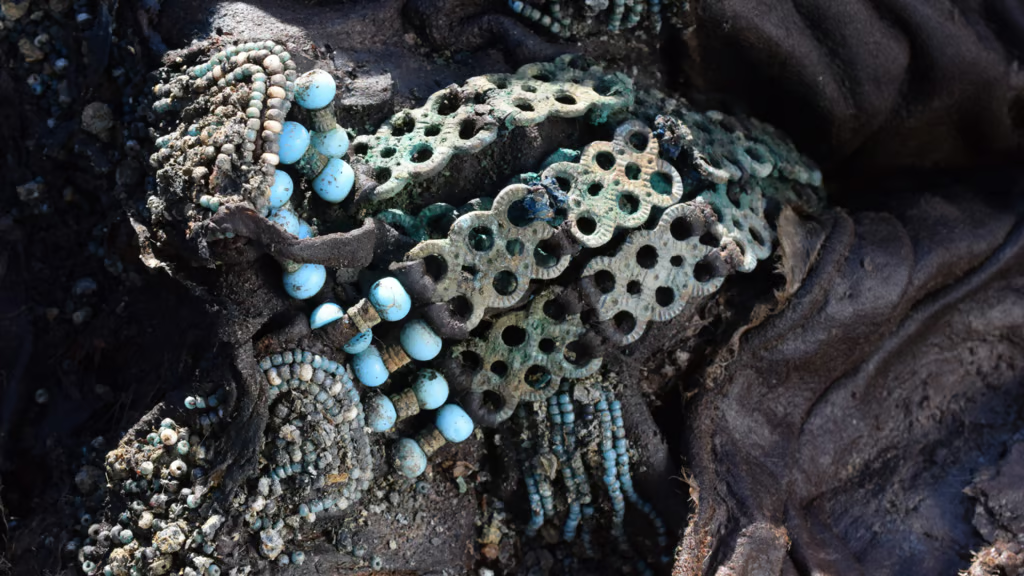
The woman, identified by researchers as UsSergue1, was interred in a coffin carved from a single tree trunk. Her body lay wrapped in layered garments: fur headwear, leather thigh-high leggings, and—most strikingly—a bright red wool dress, made from imported fabric rarely seen in Indigenous Siberian burials.
Red, in Yakut spiritual culture, carried powerful symbolic meaning. Combined with the richness of the materials, the clothing alone suggested high ritual status. Archaeology soon confirmed it.
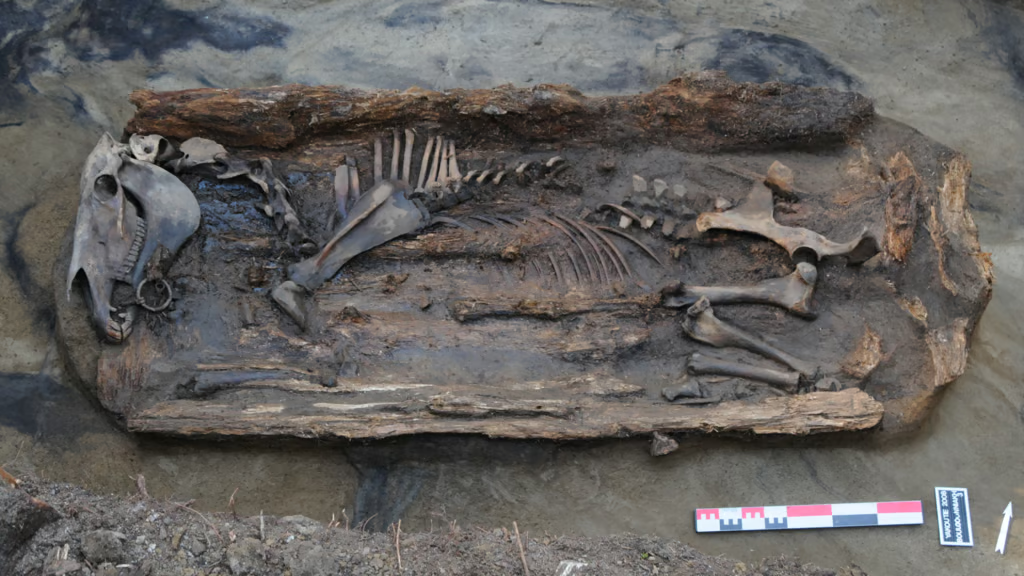
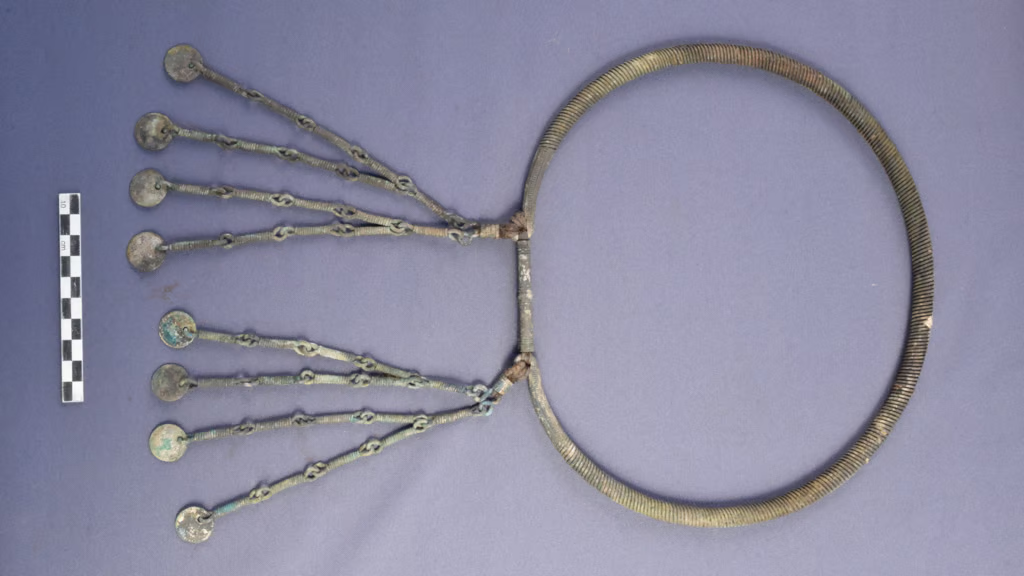
Close to her grave researchers uncovered a ritual pit containing the remains of three horses, one decorated with ornaments closely matching those worn by the woman herself. Horse sacrifices of this scale were not common funerary gestures. They were reserved for elite shamans believed to mediate between worlds.
Despite centuries of assumptions that Yakut shamanism vanished under Russian Christianization campaigns in the 17th century, this burial tells a different story. Traditional belief systems endured—quietly, deliberately, and far longer than history books suggested.
DNA That Shocked the Researchers
The burial alone was remarkable. The genetics were unprecedented.
Ancient DNA analysis revealed that the woman was the most genetically inbred individual among all Yakut remains studied. Her parents were second-degree relatives—possibly an uncle and niece, aunt and nephew, or half-siblings.
To modern eyes, such relationships appear unthinkable. But researchers stress caution.
This woman descended from one of the most dominant Yakut lineages, raising the possibility that restricted marriage practices were tied to elite spiritual authority, rather than social taboo Whether this union was ritualized, tolerated, or strategic remains unknown—but it clearly mattered.
Her DNA does not suggest marginalization. Quite the opposite. Everything about her burial signals power, reverence, and protection.
Colonization Without Collapse
Beyond one life, the broader genetic picture may be even more disruptive to conventional history.
Despite Russia’s military conquest of Yakutia in 1632, the study found no evidence of population collapse, forced replacement, or large-scale genetic mixing with Russian settlers. The Yakut gene pool remained strikingly stable from the 16th century to the present.
In other parts of the world, colonial expansion often meant demographic devastation. Here, it did not.
The reason appears brutally simple: geography. Yakutia’s extreme cold and isolation made mass settlement by outsiders nearly impossible. Russian authority arrived—but it layered itself over a society that remained biologically and culturally intact.
Even the Microbes Tell the Same Story
The evidence of continuity did not stop at DNA.
By analyzing dental plaque, researchers reconstructed the ancient oral microbiome of the Yakut individuals. They expected to see dramatic dietary shifts following Russian contact—barley, rye, tobacco.
They did not.
The microbial signatures remained stable across centuries, reinforcing the conclusion that daily life, foodways, and cultural habits persisted, even under external pressure.
Why This Shaman Matters Now
This woman was not a rebel leader. She left no written testimony. Yet her body delivers a message sharper than any chronicle.
Her red dress, her sacrificed horses, her lineage, and even her controversial genetics speak of resistance without uprising, survival without assimilation. In a world where Indigenous histories were often erased by violence or disease, the Yakuts endured—protected, in part, by the cold itself.
Crubézy, É., Guarino-Vignon, P., Seguin-Orlando, A. et al. An ancient DNA perspective on the Russian conquest of Yakutia. Nature (2026). https://doi.org/10.1038/s41586-025-09856-5
Cover Image Credit: Patrice Gérard-CNRS