
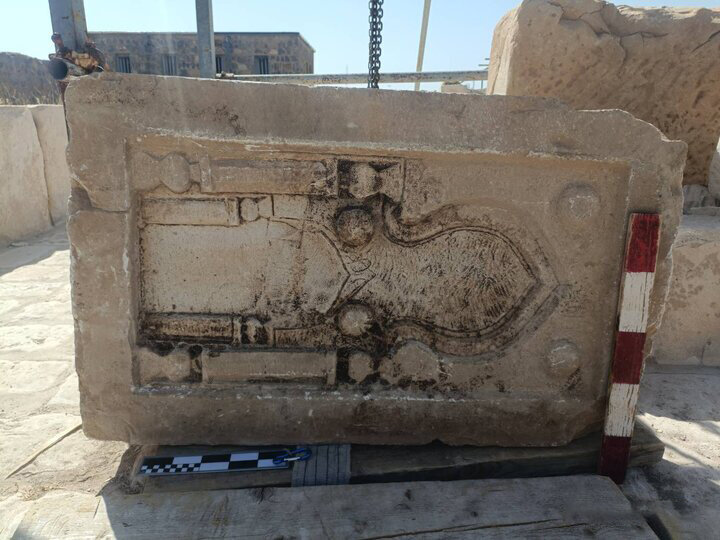
A historic mihrab has been identified during restoration work at a caravanserai within Pasargadae, the UNESCO-listed archaeological site that once served as the first capital of the Achaemenid Empire in Iran.
The architectural feature was found during protective and conservation operations at the caravanserai, according to Seyyed Abdolmajid Abedi, head of the Pasargadae World Heritage site. Specialists documented the mihrab shortly after it was recognized.
A mihrab is a niche associated with Islamic religious architecture that indicates the direction of prayer toward Mecca. Its presence at the caravanserai may help researchers better understand how parts of Pasargadae were used and altered during the Islamic period.
“This mihrab is of considerable importance in terms of its architectural and artistic features,” Abedi said, as quoted by Iran’s Mehr news agency.
Date and original function remain uncertain
Researchers have not yet established when the mihrab was constructed or whether it formed part of the caravanserai’s original design. Documentation, damage assessment and comparative architectural analysis are continuing to determine its date, construction history and original function.
The surviving decorative elements are reported to display a high level of craftsmanship. Abedi said their quality suggests that the structure occupied an important position within the architectural complex.
Emergency conservation work is now being carried out to protect the mihrab while specialists complete their examination. Officials said the technical findings will be published after the documentation and analysis have concluded.
A medieval building within an ancient Persian capital
Pasargadae is best known as the capital founded by Cyrus the Great in the sixth century BCE. Its 160-hectare archaeological zone includes the limestone tomb traditionally attributed to Cyrus, the fortified platform of Tall-e Takht, royal palaces and the remains of formal gardens. UNESCO listed Pasargadae as a World Heritage site in 2004, recognizing it as one of the earliest major expressions of Achaemenid Persian architecture.
The caravanserai represents a much later phase in the history of the site. Pasargadae’s Muzaffarid caravanserai stands approximately 100 meters north of the Tomb of Cyrus. It was constructed during the reign of Shah Shoja, who ruled parts of Iran between 1358 and 1374, and incorporated stone blocks transported from older Achaemenid monuments.
The building has a rectangular plan, with rooms arranged around a central courtyard, and probably served travelers moving through the region during the medieval period.
The newly identified mihrab adds another element to this later history. While Pasargadae is primarily associated with the beginnings of the Achaemenid Empire, the discovery shows that buildings within the ancient capital continued to be adapted and used more than a millennium after the construction of its royal monuments.