
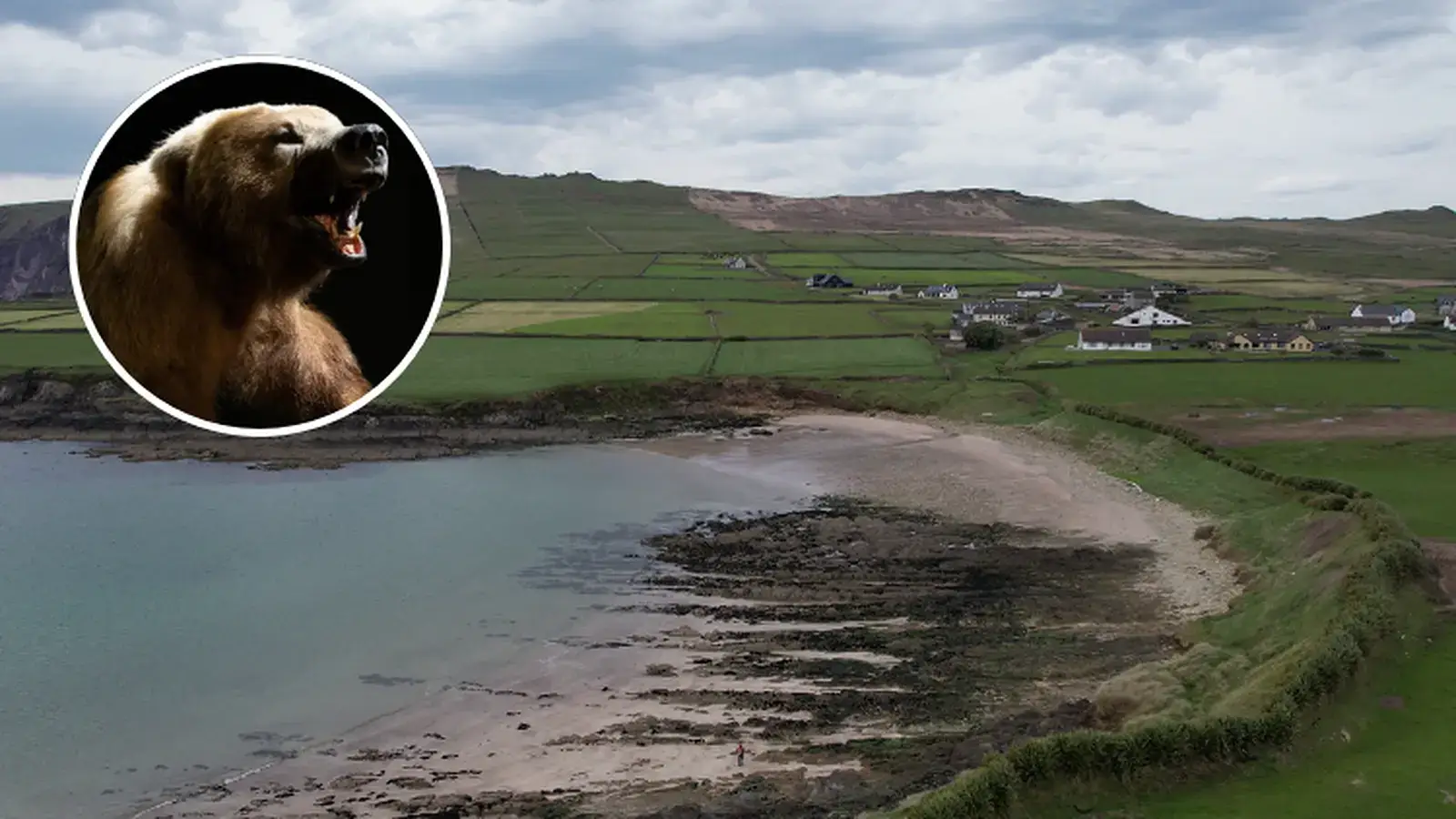
For more than three decades, a handful of bone fragments from a windswept cove in western Ireland appeared to preserve evidence of a remarkable prehistoric encounter. They were thought to show that domesticated cattle—and perhaps the first farmers—had reached Ireland before agriculture became established on the island. The celebrated “Kerry Cow,” however, was never a cow.
A new biomolecular analysis has identified the supposed cattle remains as bones from a bear and a wild boar. The result removes a crucial piece of evidence long used to argue that Ireland’s Mesolithic hunter-gatherers were in contact with farming communities before 4000 BC.
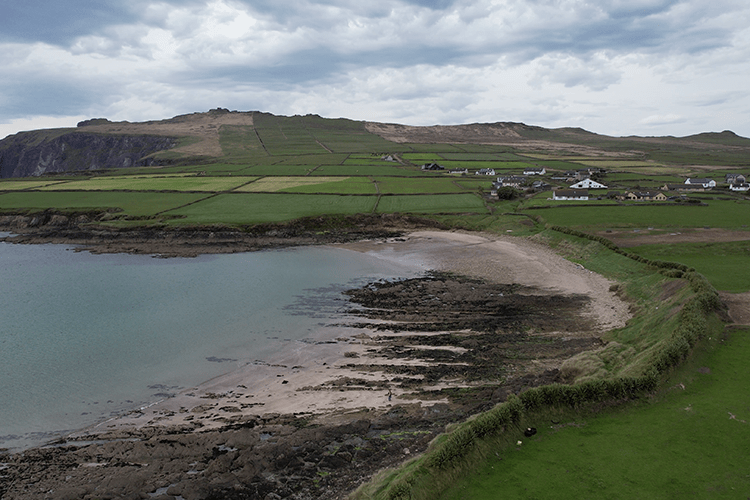
The findings emerged from a University College Dublin-led re-examination of material excavated at Ferriter’s Cove, on the Dingle Peninsula in County Kerry. The research was published in the Summer 2026 issue of PAST, the newsletter of the Prehistoric Society.
A Few Bones That Changed Irish Prehistory
Ferriter’s Cove was excavated between 1983 and 1995 by the late Professor Peter Woodman of University College Cork and his team. The coastal site produced evidence of activity during the Late Mesolithic, when Ireland was inhabited by communities that depended on hunting, fishing and gathering rather than farming.
Among the finds were several small and heavily fragmented bones dated to the second half of the fifth millennium BC. Two were identified as human, while three others were tentatively classified as belonging to domesticated cattle.
That identification had enormous consequences. If cattle were present in Ireland before 4000 BC, they could not have arrived without human assistance. Their bones therefore appeared to demonstrate that hunter-gatherers at Ferriter’s Cove had encountered—or perhaps exchanged animals with—Neolithic farmers from continental Europe or Britain.
The so-called Kerry Cow became central to sometimes heated debates over the transition from the Mesolithic to the Neolithic. Interpretations ranged from limited contact across the sea to an unsuccessful early attempt by farming groups to establish themselves in Ireland.
Yet the new study found that an important warning attached to the original identification had gradually disappeared from the story: the classification of the fragments as cattle had always been uncertain.
Ancient Proteins Overturn the Identification
The reassessment was led by Dr Martin Moucheron of UCD’s School of Archaeology under the mentorship of Professor Graeme Warren. Researchers from University College Cork and laboratories operated by France’s National Centre for Scientific Research also participated.
Eight bone samples from the original Ferriter’s Cove assemblage were examined using Zooarchaeology by Mass Spectrometry, commonly known as ZooMS. The method identifies animals through distinctive protein markers preserved in collagen, making it particularly useful when bones are too incomplete to distinguish reliably by their shape.
Two samples failed to produce dependable peptide sequences, but six could be identified. The results confirmed that two long-bone fragments belonged to Homo sapiens and refined the identification of another fragment as wild pig.
The real surprise came from the three bones previously assigned to domestic cattle. Protein markers showed that two belonged to a bear, while the third came from a wild boar. The famous cow had vanished from the archaeological record.
What the Result Changes—and What It Does Not
The finding does not overturn the broader evidence placing the establishment of farming in Ireland and Britain around the beginning of the fourth millennium BC. What disappears is the strongest case for an earlier presence of domesticated cattle in Ireland.
As the evidence currently stands, there is no secure archaeological basis for arguing that cattle—or the farming societies associated with them—had reached or influenced Ireland before 4000 BC.
The distinction matters. The transition to farming was not merely the adoption of a new food source; it brought domesticated animals, cultivated plants, permanent buildings and new social practices. The Kerry bones had seemed to offer a rare glimpse of that transformation beginning before the full Neolithic way of life appeared.
Rather than directly rewriting the date when farming arrived in Great Britain, the discovery principally weakens a wider model in which Ireland’s hunter-gatherers were already connected with neighboring farming communities. It leaves the period immediately preceding Ireland’s transition to farming less clearly understood than the Kerry Cow once appeared to suggest.
The Bear Bones Present a New Mystery
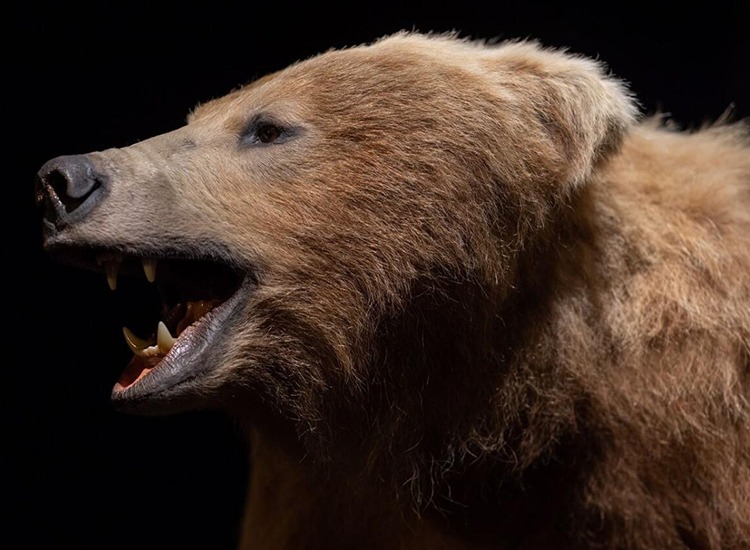
Although one prehistoric argument has been dismantled, the bear remains may open an entirely different line of inquiry.
Brown bears once lived in Ireland but disappeared thousands of years ago. Previous genetic studies have also raised questions about the relationship between ancient Irish bears, modern brown bears and polar bears.
ZooMS could identify the Ferriter’s Cove fragments only as bear. Further analysis using liquid chromatography-tandem mass spectrometry is now underway to determine whether they came from a brown bear or a polar bear. Researchers also hope to obtain ancient DNA that could contribute to debates over bear populations, possible hybridization and extinction in prehistoric Ireland.
The confirmed human fragments are equally significant because Mesolithic human remains from Ireland are rare. Isotope and ancient DNA studies could reveal information about the individuals’ diet, movement and biological ancestry.
Old Collections Can Still Overturn Established History
The Ferriter’s Cove discovery was not made through a new excavation but by returning to material recovered decades ago. Modern protein analysis tested an anatomical identification that had become increasingly influential as it was repeated in later publications.
“For at least four millennia hunting and gathering people lived on the island,” Moucheron said in a University College Dublin statement, adding that much more could be learned by revisiting old sites and collections with new techniques and an open mind.
The Kerry Cow helped shape interpretations of Ireland’s first encounters with farming for more than 30 years. Now, the bones behind that influential prehistoric story have been identified as the remains of a bear and a wild boar.
Cover Image: Ferriter’s Cove on Ireland’s Dingle Peninsula, where bones long identified as cattle were found to belong to a bear and a wild boar. Credit: Martin Moucheron / Karen Cox, courtesy of the National Museum of Ireland
Research Reference
Moucheron, M., Warren, G., Kanne, K., Gearey, B., McCarthy, M., Ó Donnabháin, B., Bray, F., & Garbé, L. (2026). No sacred cows: ZooMS identification of the Late Mesolithic bone assemblage at Ferriter’s Cove, Co. Kerry, Ireland. PAST, 113, 1–2.