Archaeologists working in Vietnam’s central highlands have identified a dense concentration of ancient artifacts buried beneath active rice fields in Ha Tinh province—a discovery that is reshaping understanding of long-term human settlement along the country’s western frontier. The finds emerged in the mountainous border commune of Son Kim 2, where farmers in the Lang Che area reported uncovering unusual objects during routine fieldwork.
What began as a local report has evolved into one of the most revealing archaeological surveys in recent years for western Ha Tinh, pointing to continuous human presence stretching from prehistory through Vietnam’s medieval period.
A Landscape Marked by Continuity, Not a Single Moment
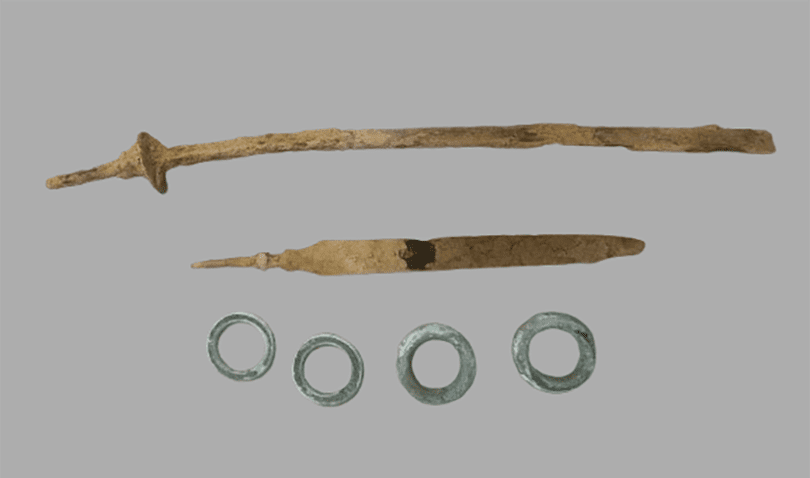
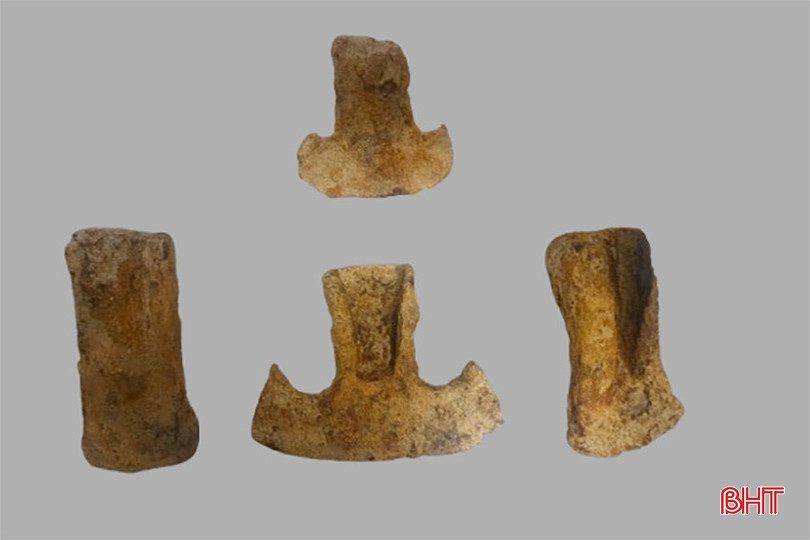
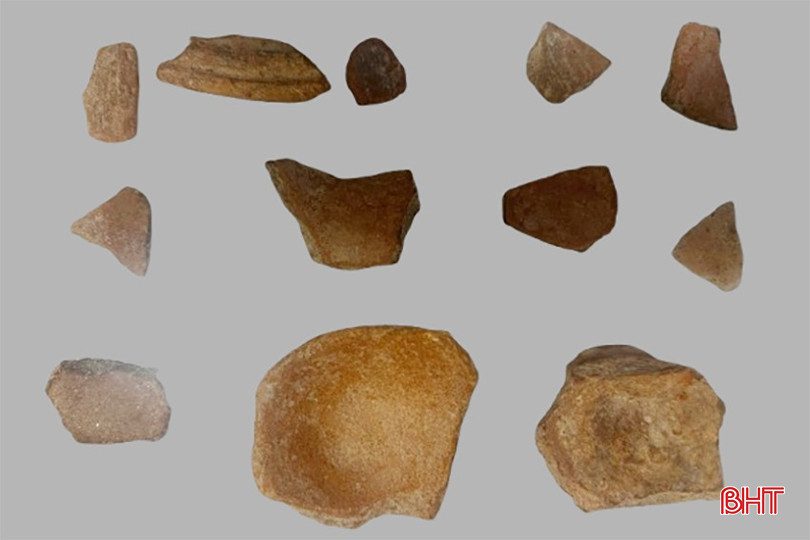
A systematic field survey conducted by the Ha Tinh Museum documented artifacts spanning multiple historical phases. Early recoveries included bronze bells, stone chisels, ceramic bowls, and iron swords—objects clearly originating from different eras and everyday contexts. As documentation expanded, archaeologists identified stone axes and pestles, grinding slabs, iron and bronze tools, and extensive fragments of coarse household pottery.
Among the most historically significant materials were high-quality glazed ceramics dated to the Tran Dynasty, a formative era in medieval Vietnamese history. Their presence suggests that the highland valleys of Ha Tinh were not isolated backwaters, but part of broader population movements and cultural expansion during the height of Đại Việt state formation.
Sacred Space and Daily Life Intertwined
The artifacts cluster across roughly one hectare of terraced farmland, indicating that the site likely functioned both as a habitation zone and a small-scale production area for early mountain communities. Hundreds of ceramic fragments—ranging from coarse earthenware to celadon-glazed pottery—were found near the ruins of the Sơn Thần shrine, an abandoned locus of ancestral and nature worship.
This proximity of domestic tools and ritual space offers rare insight into early belief systems tied to forests, upland agriculture, and the surrounding landscape. Rather than separating the sacred from daily life, the inhabitants of Lang Che appear to have woven ritual practice directly into their living environment.
At the Crossroads of Mountains and Routes
Geographically, Lang Che occupies a strategic position along the eastern slopes of the Truong Son Range, historically connected to trans-mountain routes linking northern and central Vietnam with what is now Laos. Archaeological evidence reflects this role as a cultural crossroads.
Stone tools point to prehistoric settlement patterns, while later bronze, iron, and ceramic artifacts chart technological transitions and social development over centuries. The Tran-era materials, in particular, align with a period when Dai Viet expanded beyond lowland deltas into upland valleys, establishing new communities along riverbanks and ridge lines.
Cultural Layers, Not Abandonment
Experts emphasize that the diversity of materials does not reflect isolated episodes of occupation. Instead, the evidence points to cultural continuity—successive communities adapting the same terrain, inheriting and reshaping traditions rather than abandoning the landscape. This pattern mirrors broader archaeological trends across north-central Vietnam, where mountain foothills served as both refuges and resource zones during periods of migration, political consolidation, and economic change.
From Local Discovery to Shared Heritage
For the Ha Tinh Museum, the Lang Che survey lays the groundwork for future excavation, conservation planning, and heritage interpretation in Son Kim 2. Museum representatives note that systematic research could refine settlement chronology, illuminate long-term subsistence strategies, and help protect the area from modern development pressures.
Crucially, the discovery also underscores the role of local communities. It was farmers—working rice fields cultivated for generations—who first recognized the importance of the objects beneath their feet and alerted authorities.
Beyond its academic value, the site strengthens the cultural identity of western Ha Tinh’s mountain communities. By documenting tangible links to ancient craftsmanship, ritual practice, and everyday life, Lang Che stands as a reminder that Vietnam’s deep past is not confined to monuments and museums, but continues to surface quietly beneath the rhythms of rural life.
BHT