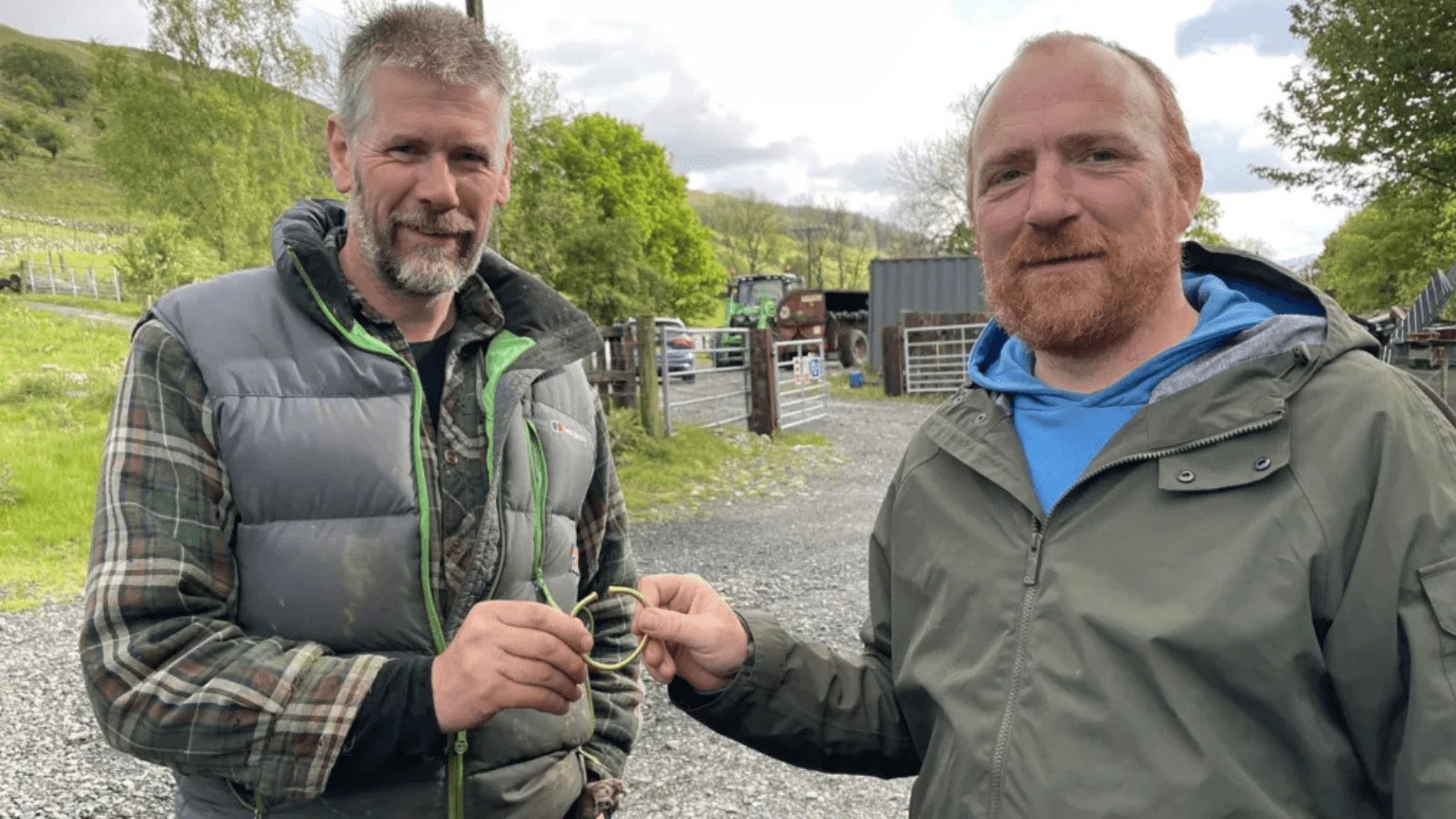
A metal detectorist searching a Welsh farm initially thought he had uncovered another scrap of foil. The flash beneath the soil was instead a Late Bronze Age gold bracelet, made around 3,000 years ago and now officially declared treasure.
Idris Thomas had spent only about 20 minutes scanning farmland at Llanuwchllyn in Gwynedd when his detector signalled. Until then, his most notable discovery after two years in the hobby had been a single silver coin.
According to the BBC, Thomas initially dismissed the signal as likely modern rubbish. After clearing away a little more soil, however, he caught sight of gold and quickly realised the object was unlike anything he had previously found.
A Bronze Age Bracelet Made from Almost Pure Gold
Experts at Amgueddfa Cymru – Museum Wales identified the object as a Late Bronze Age bracelet dating back approximately 3,000 years. Their analysis found that it contains 92.8 percent gold.
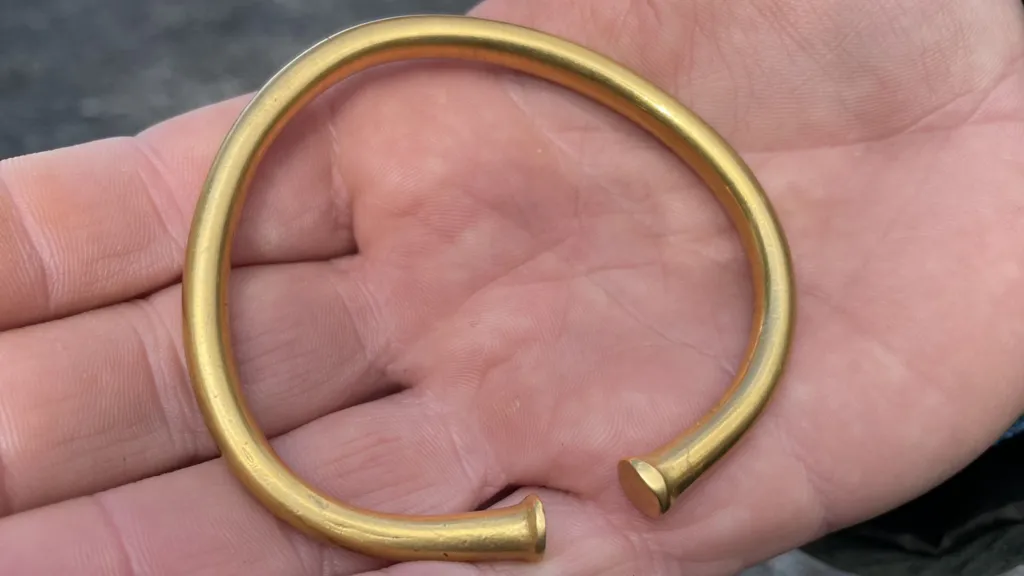
The bracelet would have been an exceptional possession in prehistoric Wales. Other discoveries suggest that Bronze Age gold jewellery circulated through far-reaching networks across ancient Europe. Experts at the treasure hearing said the object probably belonged to a prominent member of the local farming community.
Unlike modern jewellery, the bracelet bears no hallmark or maker’s stamp. Its age was instead established through archaeological examination of the object and comparisons with other Bronze Age goldwork.
The bracelet is also expected to undergo further analysis and recording. Researchers hope to establish where the gold originated, although no results have yet been announced.
Declared Treasure in Caernarfon
The discovery was formally considered at a coroner’s hearing in Caernarfon. North West Wales deputy coroner Sarah Riley described the bracelet as “absolutely stunning” before declaring it treasure.
The ruling does not establish the object’s final financial value. Brett Hammond, chief executive of Timeline Auctions, estimated that the bracelet could be worth between £15,000 and £20,000, but an official figure has not been announced.
The bracelet will pass through the formal valuation and acquisition process before its future ownership is decided. Storiel Museum and Art Gallery in Bangor has already expressed interest in acquiring it, raising the possibility that the object could remain in Gwynedd and enter a public collection.
A Rare Discovery on Familiar Farmland
For landowner Geraint Edwards, the discovery added an unexpected chapter to a landscape he had long regarded as distinctive. He said he had always felt there was something unusual about the land, although nothing had prepared him for a Bronze Age gold object emerging from one of its fields.
Edwards is particularly interested in learning where the gold came from and admitted that he had become attached to the bracelet. Few landowners have the opportunity to see an object of such age and rarity recovered from their own property.
Thomas was equally stunned by the discovery. He began metal detecting after watching others pursue the hobby on television and had been searching for only two years when he found the bracelet.
Many detectorists search for decades without uncovering anything comparable. Thomas described it as a once-in-a-lifetime find, while the interest shown by Storiel Museum suggests the bracelet may eventually be displayed close to the land where it remained hidden for some 3,000 years.
Cover Image: Metal detectorist Idris Thomas and landowner Geraint Edwards with the Late Bronze Age gold bracelet discovered on farmland at Llanuwchllyn in Gwynedd. The object was later declared treasure. Photo courtesy of Idris Thomas