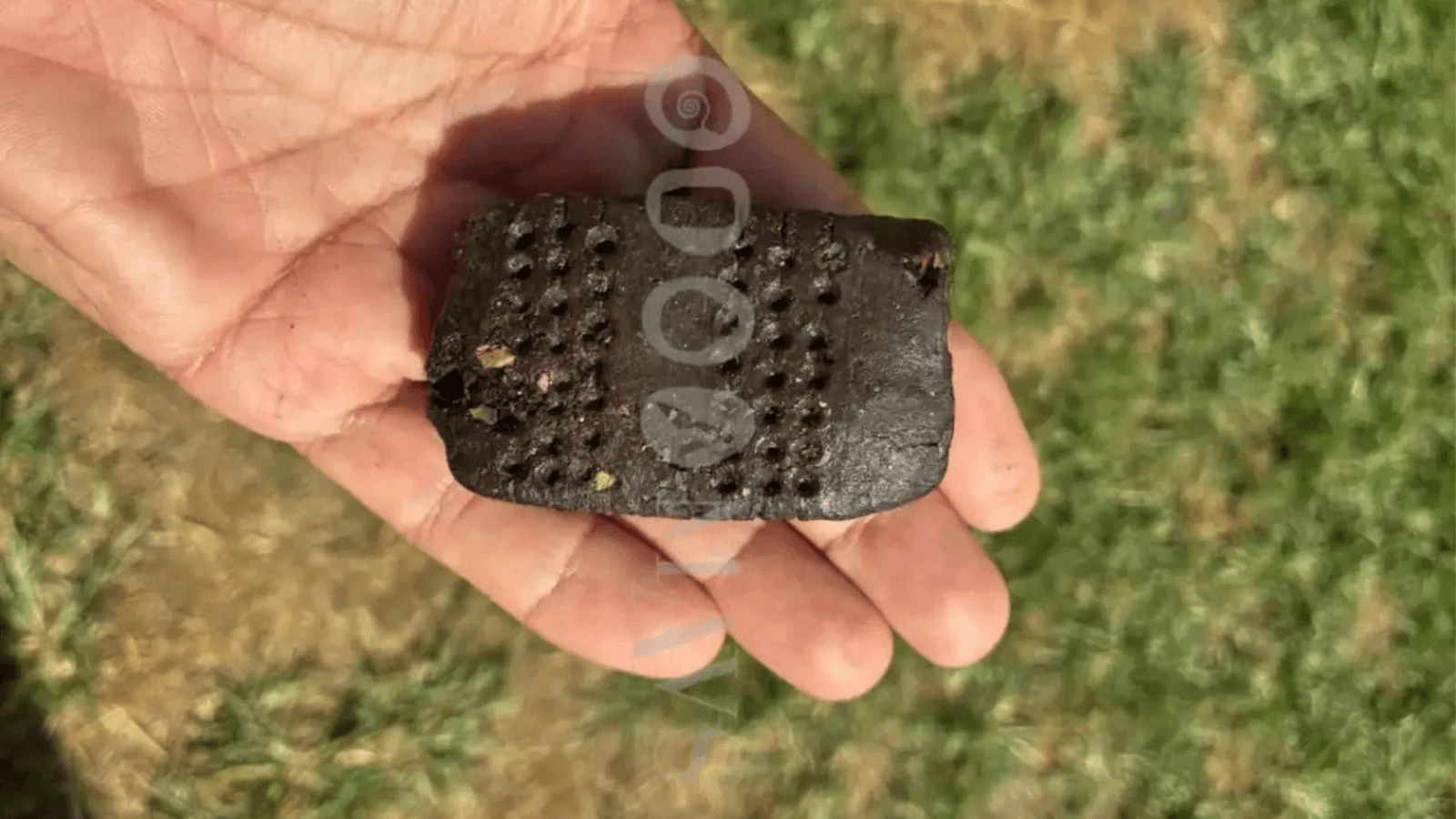
Archaeologists excavating a Bronze Age settlement in northern Italy have uncovered an intact 4,000-year-old clay tablet covered with geometric markings whose meaning remains unknown. The discovery is especially significant because it is the 21st “enigmatic tablet” recovered from the Lucone area, more than from any other known archaeological site.
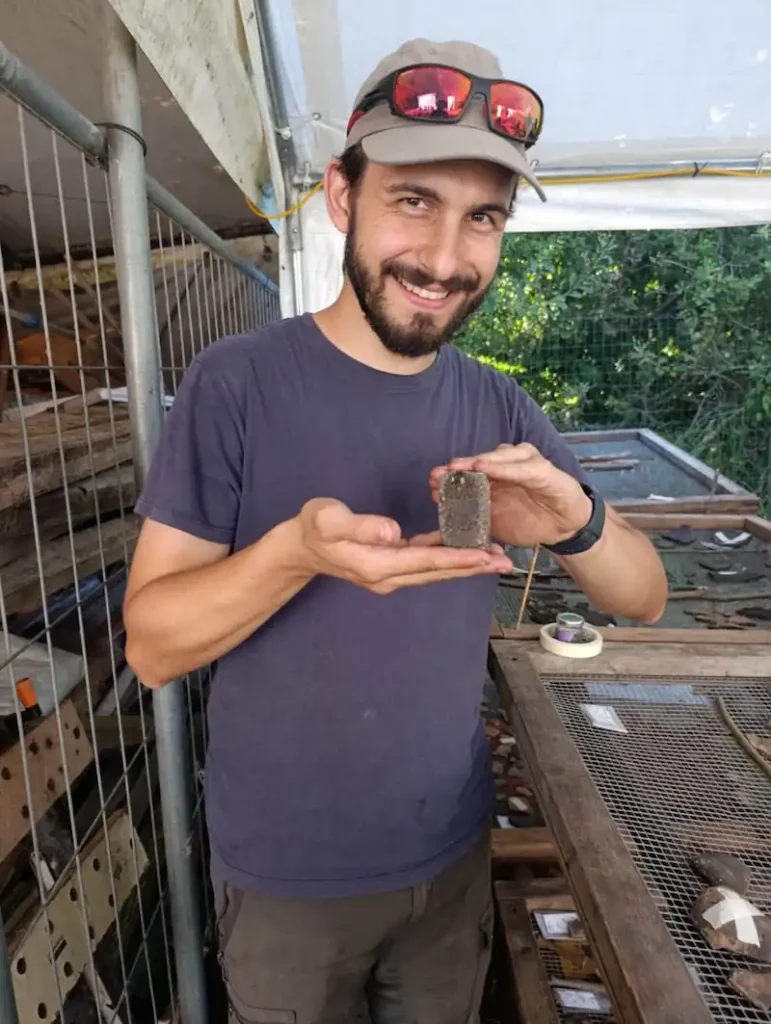
The object emerged during the 2026 excavation season at Lucone di Polpenazze, near the western shore of Lake Garda. According to the excavation team, it is the first enigmatic tablet found at the site since 2019 and only the third discovered in the area known as Site D.
Although small and visually simple, the object belongs to one of the more puzzling categories of artifacts from Bronze Age Europe. Archaeologists know roughly when these tablets were produced and where they circulated, but what people actually did with them remains uncertain.
A Bronze Age object that still has no clear explanation
Archaeologists call these objects tavolette enigmatiche, or “enigmatic tablets.” Usually made of clay and occasionally stone, they carry repeated combinations of lines, dots, circles, rectangles and other geometric impressions arranged in deliberate patterns.
They are also known by the German term Brotlaibidole, a reference to their bread-loaf-like shape. Examples have been found across northern Italy and parts of Central and Eastern Europe, generally in archaeological contexts dating from the Early to Middle Bronze Age.
What the markings represent remains debated. They have not been demonstrated to constitute a written language, so describing them as an undeciphered script would go too far. Researchers have instead proposed a range of possibilities, including systems connected with exchange, accounting, identification or symbolic communication.
The repeated appearance of similar signs on objects found across considerable distances is one reason the tablets continue to attract attention. Whatever their exact purpose, their distribution suggests that communities across Bronze Age Europe may have shared certain practices or conventions.
Why Lucone matters
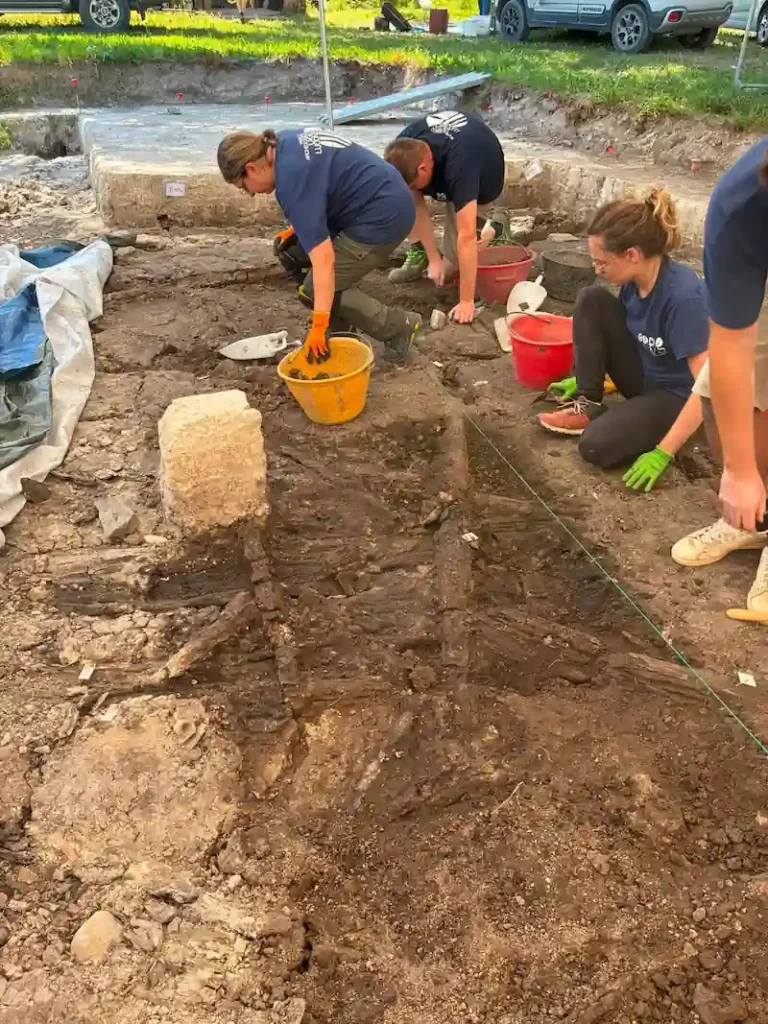
Lucone makes that mystery particularly important. With the latest discovery, 21 enigmatic tablets have now been documented across the Lucone plain, the largest known concentration of these artifacts.
The settlement itself forms part of the UNESCO-listed Prehistoric Pile Dwellings around the Alps, a network of exceptionally preserved prehistoric settlements built beside lakes and wetlands. Archaeological research at Lucone has revealed a Bronze Age community whose wooden structures and other organic remains survived unusually well in the wet environment.
Evidence from Site D places an important phase of occupation at the beginning of the second millennium BCE, making the newly discovered tablet approximately 4,000 years old.
Its intact condition is particularly valuable because researchers can compare its markings, manufacture and archaeological context with the other examples already recovered from Lucone. A single mysterious object can be difficult to interpret, but 21 examples from the same archaeological landscape offer something much more useful: patterns.
Those patterns may eventually help researchers determine whether the tablets were connected with trade, administration, identity or some other shared Bronze Age practice.
For now, the people who lived at Lucone four millennia ago appear to have used or possessed small objects covered with carefully arranged signs, and they were not alone in doing so. The signs survived, the tablets survived, and enough examples have now been found to show that they mattered.
Why Bronze Age communities made them, however, remains one of the unanswered questions raised by Lucone’s remarkable collection.
Cover Image: The newly discovered 4,000-year-old “enigmatic tablet” from Lucone di Polpenazze, marked with rows of geometric impressions whose purpose remains unknown. Credit: Scavi al Lucone.