
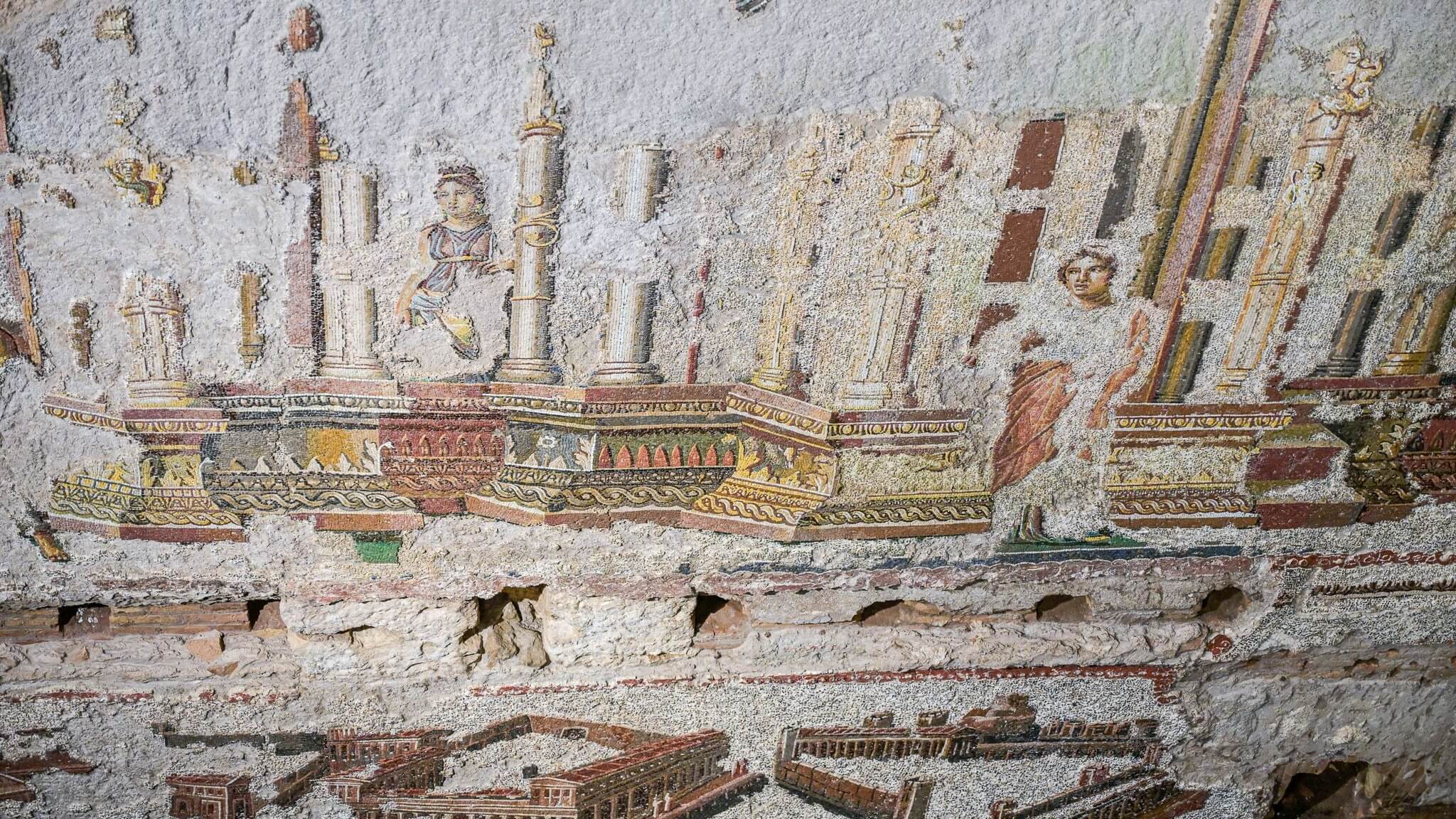
Archaeologists working beneath the Baths of Trajan in Rome have uncovered a previously unseen section of a monumental wall mosaic. The Roman port scene shows buildings arranged beside the sea, adding a coastal landscape to an artwork that may be the largest wall mosaic yet found in the Roman world.
The discovery emerged during the restoration of an underground gallery on the Oppian Hill, a short distance from the Colosseum. Beginning September 12, the gallery and its ancient decorations will open to the public for the first time as part of the new Museum of the Baths of Trajan.
According to Roma Capitale, archaeologists exposed an additional band of mosaic during work carried out through the PNRR Caput Mundi program. The newly uncovered buildings probably represent “maritime villas,” the luxurious coastal residences that appeared frequently in Roman art.
Whether the mosaic depicts a real harbor or an imagined coastal setting remains uncertain. Its position beneath a much larger architectural composition, however, adds an unexpected landscape to an already exceptional Roman interior.
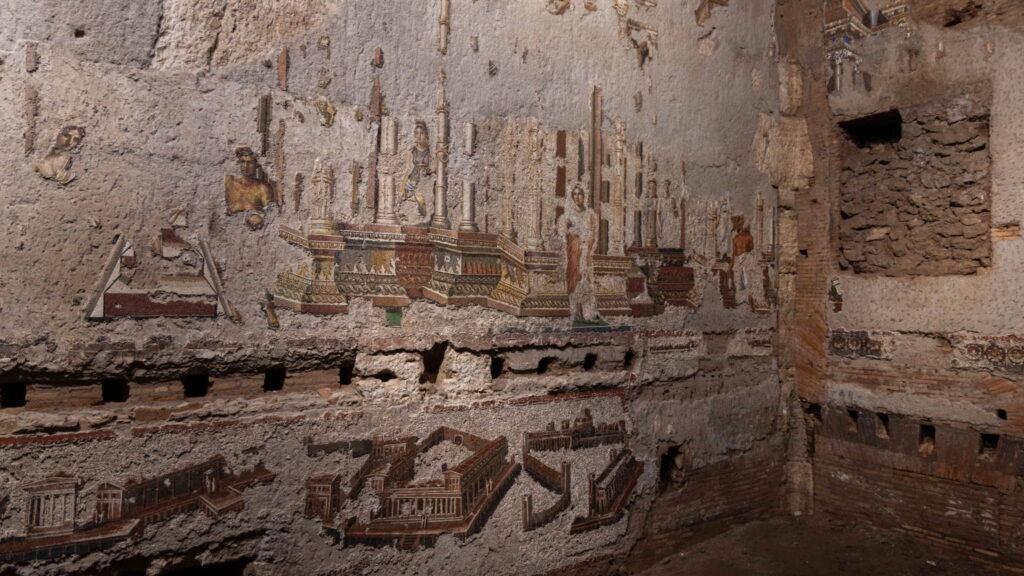
A Roman wall transformed into a theatre
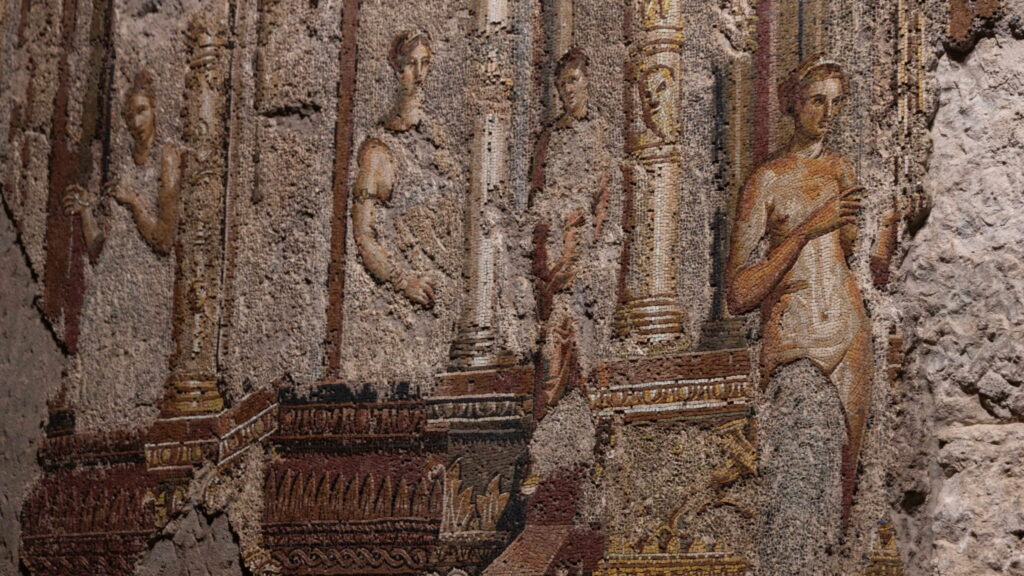
The Great Mosaic decorated a vast hall connected to a nymphaeum. Across its upper sections, tesserae create the illusion of a two-level theatrical façade, or scaenae frons, filled with columns, statues and human figures.
Among the surviving figures are a Muse, a bearded philosopher and characters associated with Apollo and the Muses. The decoration extends for nearly 16 meters along the wall, while evidence recovered during the latest excavation suggests that the room originally rose to a height of about 12 meters.
Archaeologist Francesco Pacetti, who worked on the excavation, told The Times that the team believes it may be the largest Roman wall mosaic ever discovered. Its full extent remains unknown because parts of the decorated structure are still buried.
Below the port scene, archaeologists also identified traces of a wall covering made from large marble slabs. At the center stood a marble-lined niche approximately 2.2 meters high. Together, the mosaic, colored stone and monumental architecture would have created an imposing setting for anyone entering the room.
A discovery made in stages
The mosaic did not emerge in a single excavation. Archaeologists first uncovered the section showing the Muse and philosopher in May 1998. Work resumed in 2011 and revealed that the decoration continued across the wall, bringing additional scenes connected with Apollo and the Muses to light.
The latest excavation has reached a lower part of the composition that had remained hidden. The appearance of the coastal buildings shows that the decorated wall combined theatrical architecture, human figures and a detailed view of the sea within the same visual program.
The mosaic dates to the second half of the first century AD and belonged to a building that existed before the Baths of Trajan. Some earlier structures beneath the baths formed part of the wider Domus Aurea complex, but archaeologists have not established that this particular hall belonged to Nero’s palace.
Another ancient city beneath Rome
Visitors will encounter a second remarkable artwork inside the same gallery. Known as the Città Dipinta, or Painted City, the approximately ten-square-meter fresco presents an unidentified settlement from a bird’s-eye perspective.
Walls and towers enclose streets and buildings represented with a striking sense of depth. Some details are fine enough for the windows of individual houses to remain visible, yet researchers still do not know whether the painter intended to portray a real city.
Archaeologists discovered the fresco in February 1998. Conservators have now removed surface deposits, stabilized weakened areas and treated the ancient surfaces against biological growth, making its faded colors and architectural details easier to see.
Emperor Trajan transformed the Oppian Hill when he commissioned the enormous bath complex designed by Apollodorus of Damascus. Inaugurated in AD 109, the Baths of Trajan covered approximately 60,000 square meters and incorporated older buildings beneath their foundations.
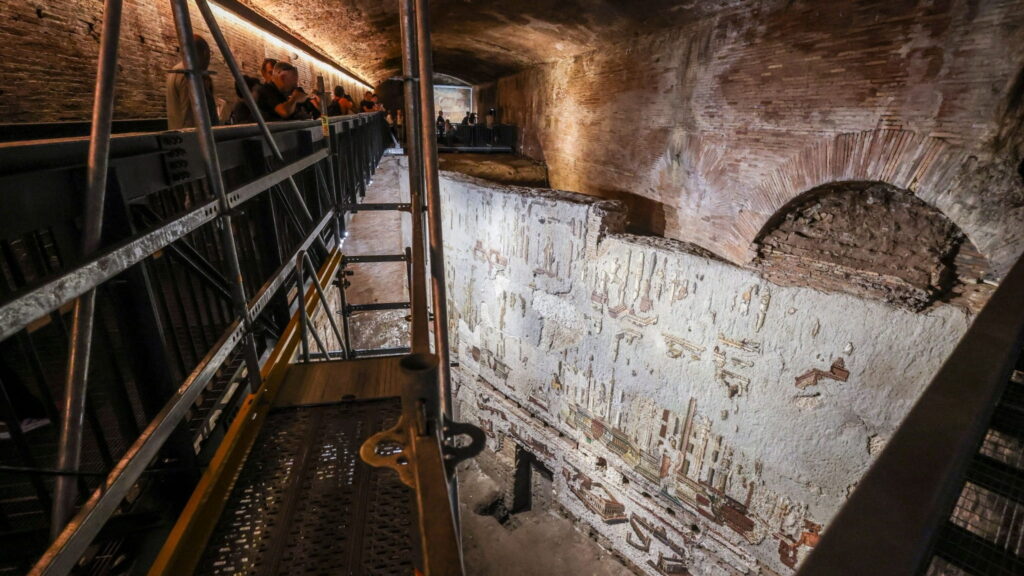
The restored route includes new walkways above the decorated rooms and a display of large lead pipes that once carried water through the baths. Visits will initially be limited to guided groups of no more than 15 people, allowing conservators to monitor the effects of humidity and human presence.
For the first visitors, the most revealing sight may lie at the lowest edge of the Great Mosaic: a line of Roman buildings facing a sea that disappeared beneath Trajan’s baths nearly 2,000 years ago.
Cover Image: The Great Mosaic beneath Rome’s Baths of Trajan combines theatrical architecture and human figures with a newly uncovered view of buildings facing the sea. Credit: Roma Capitale