
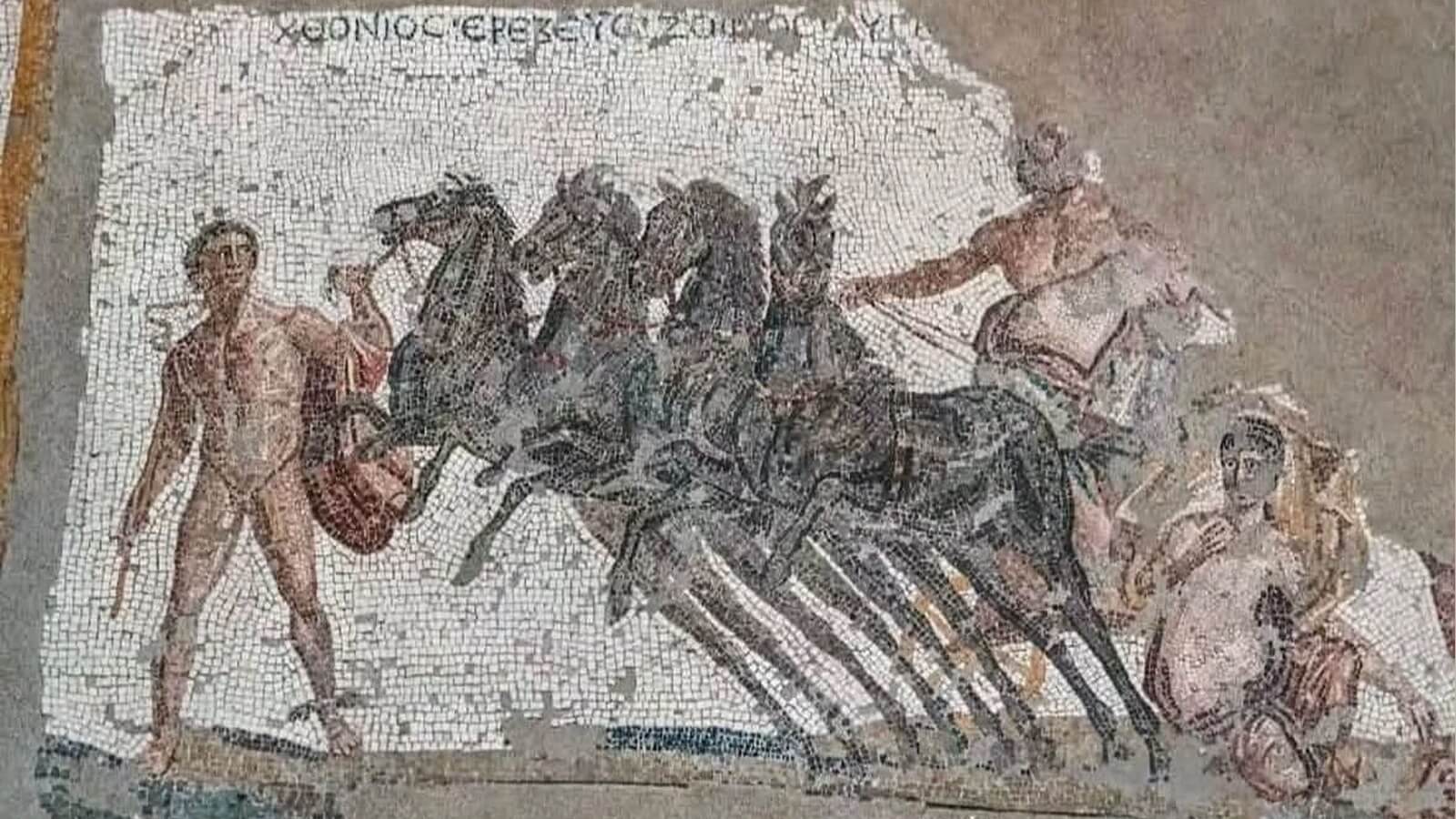
At the center of a Roman mosaic in the Centrale Montemartini, Pluto carries Proserpina toward the underworld in his chariot. Around this moment of violence, four personifications of the Seasons turn the scene into a wider story of separation, barrenness and the return of life.
The large polychrome mosaic dates to the middle of the second century AD. It was discovered in 1885 inside a columbarium—a Roman funerary structure built to hold cremation urns—along the Via Portuense in Rome.
The goddess taken to the underworld
Proserpina was the Roman counterpart of the Greek Persephone and the daughter of Ceres, goddess of agriculture. According to the best-known version of the myth, Pluto, ruler of the underworld, seized the young goddess and took her into his subterranean kingdom.
Ceres searched desperately for her daughter. Consumed by grief, she withheld the earth’s fertility: crops stopped growing, vegetation disappeared and the human world faced hunger. Jupiter eventually intervened and arranged for Proserpina’s return.
But she could not leave the underworld permanently. By eating pomegranate seeds there, Proserpina had formed a bond with Pluto’s realm. She would spend part of the year below ground and the rest reunited with her mother.
Ancient accounts differ over how the year was divided. Their central idea, however, remains the same: Proserpina’s disappearance brought a period of barrenness, while her return allowed the earth to flourish again.
The entire myth in a single image
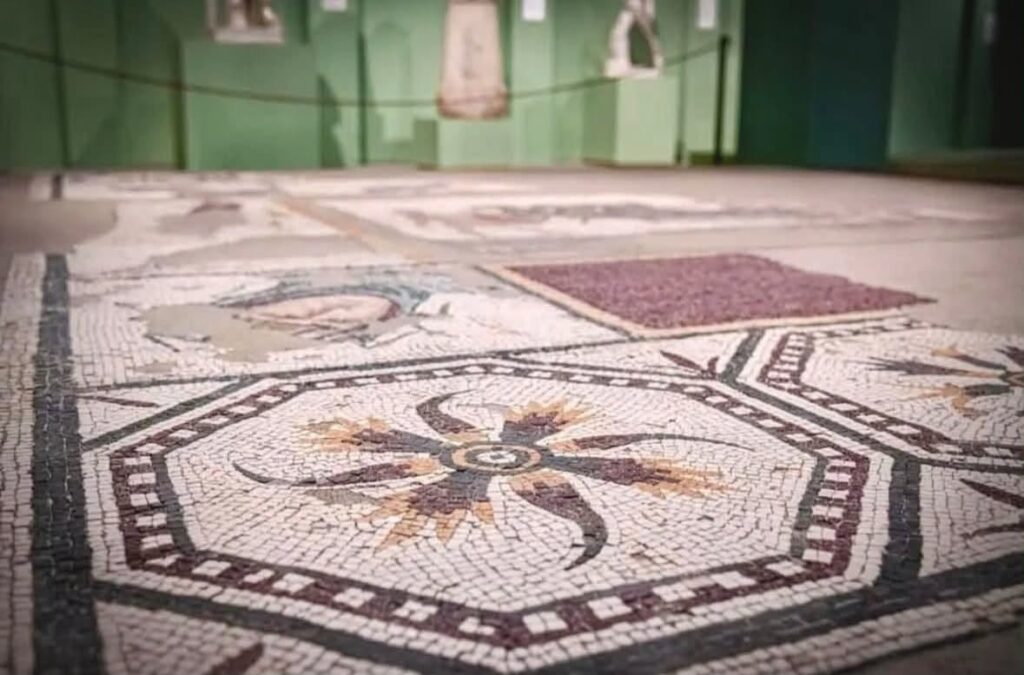
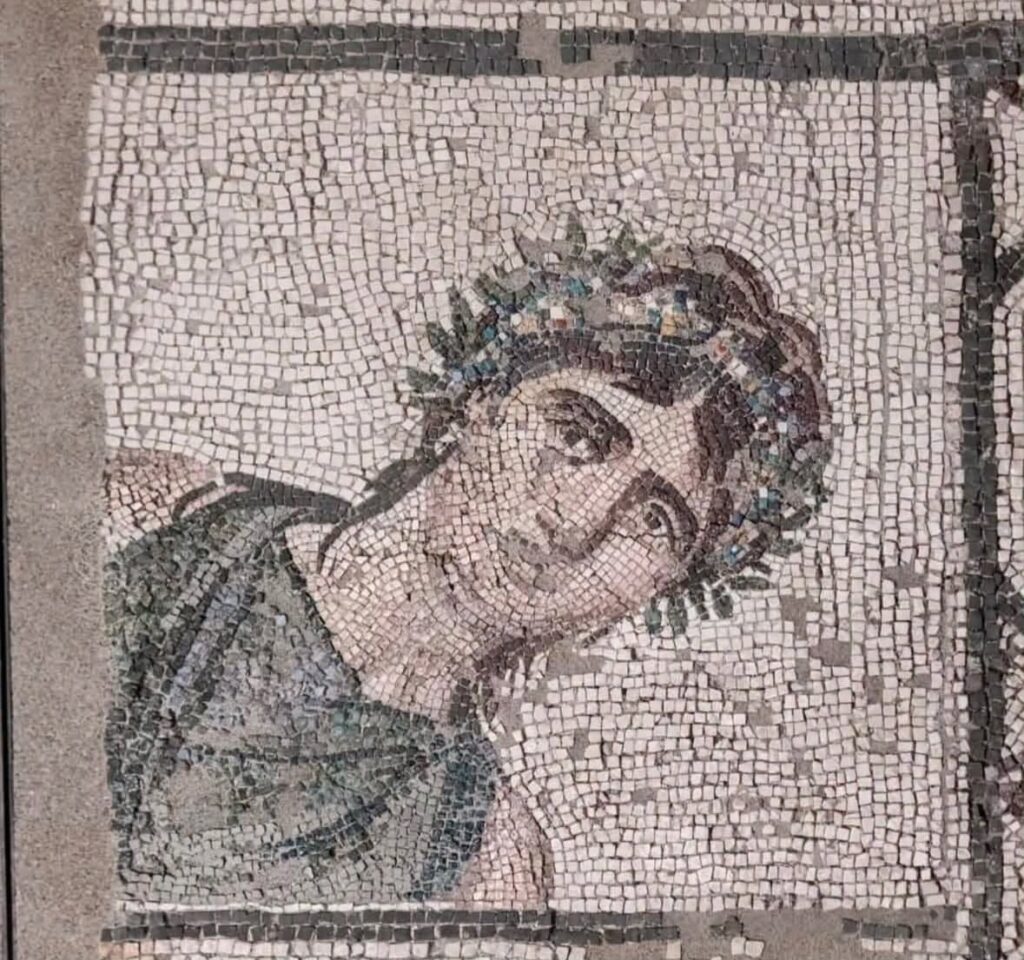
The mosaic’s central panel shows the abduction, but the figures surrounding it reveal the story’s broader meaning. Busts of the Seasons occupy its corners, accompanied by stylized geometric and floral decoration.
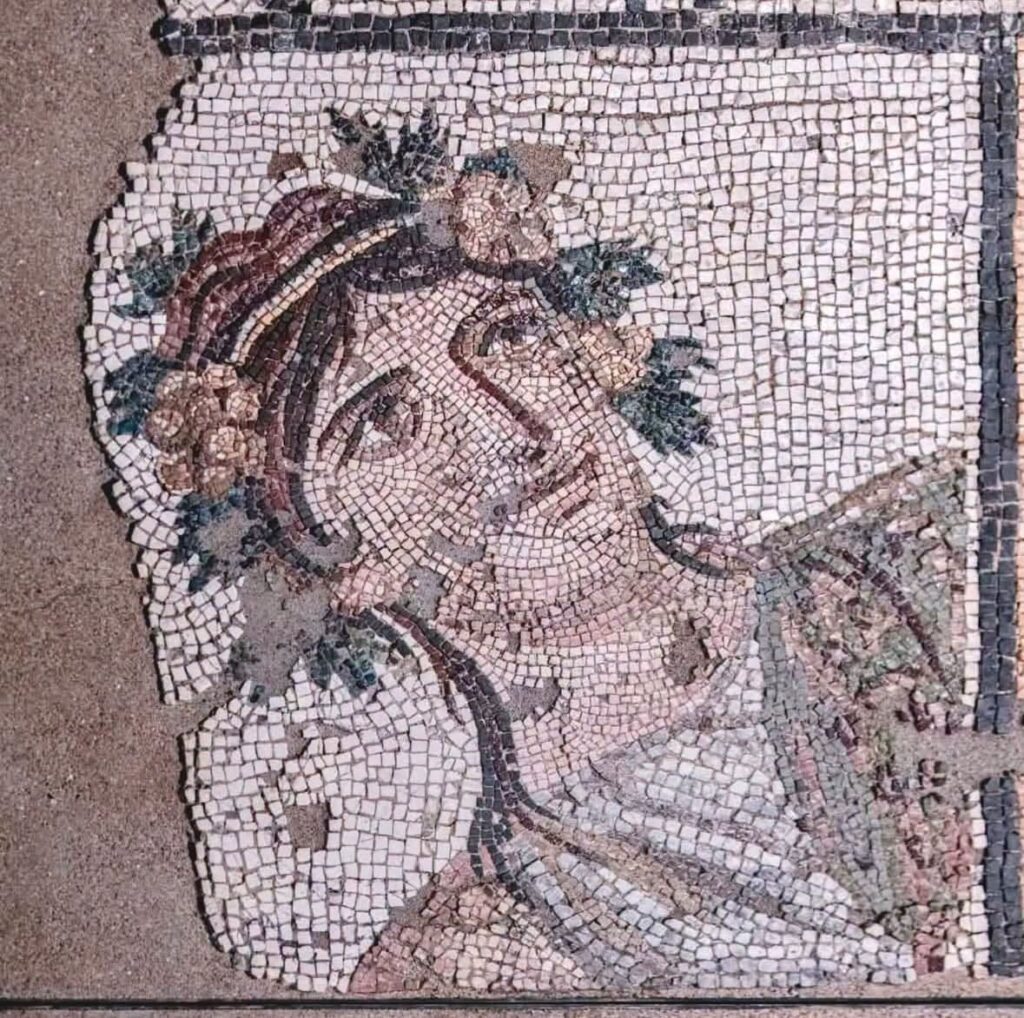
Rather than illustrating every stage of the myth, the artist brought its consequences into one composition. Pluto’s chariot represents Proserpina’s forced descent, while the Seasons evoke the changes that follow her movement between the worlds of the living and the dead.
Its discovery in a columbarium also connects the mosaic with broader Roman funerary beliefs, although the intentions of those who commissioned it remain unknown. In a funerary setting, viewers may have understood Proserpina’s descent and return as more than an explanation for seasonal change. The image could also suggest that death belonged to a larger order in which disappearance did not always mean a final ending.
Now held by the Centrale Montemartini, part of the Capitoline Museums, the mosaic preserves a Roman vision of nature and the underworld in which a family tragedy became an explanation for one of life’s most familiar mysteries: why the earth falls barren and blooms again.