Pope Leo XIV has published a landmark Apostolic Letter marking the centenary of the Pontifical Institute of Christian Archaeology, asserting that Christian archaeology is indispensable for understanding both the origins and the future direction of the Church. The document, released on Thursday, positions archaeology not as a specialist pursuit but as a field “open to all who wish to grasp how faith took shape in concrete places, communities, and historical moments.”
The Pope warns that a world defined by technological acceleration, war, and cultural fragmentation requires more than technical expertise. It needs a deeper wisdom rooted in memory, material evidence, and the lived experience of earlier Christian communities. Archaeology, he argues, anchors Christian identity in verifiable history, protecting theology from drifting toward abstraction or ideology.
History as the Ground of Faith
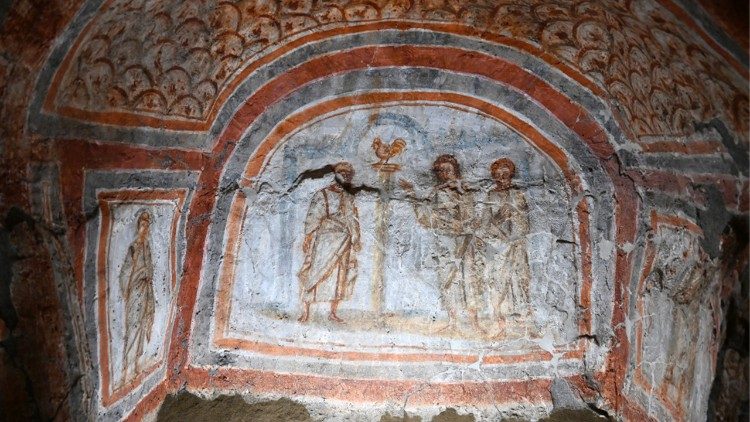
Leo XIV emphasizes that Christianity “was born not of an idea but of a body, a place, a grave.” Because the faith emerged from tangible events, he writes, its material traces—graves, houses, inscriptions, symbols—remain vital for understanding revelation itself. For the Pope, archaeology offers a “theology of the senses,” a way of seeing and touching the earliest expressions of belief.
This perspective is reinforced by a reminder that archaeology enriches theological formation. According to the Apostolic Constitution Veritatis gaudium, archaeology stands alongside Church history and patristics as a foundational discipline for understanding how doctrine, liturgy, and community life developed across centuries.
A Century of Scholarship and Global Impact
The letter pays tribute to the Pontifical Institute of Christian Archaeology, founded in 1925 by Pope Pius XI during a period of post-war uncertainty. Despite difficult circumstances, Pius XI envisioned an international research center capable of training excavators, conservators, museum professionals, and university professors.
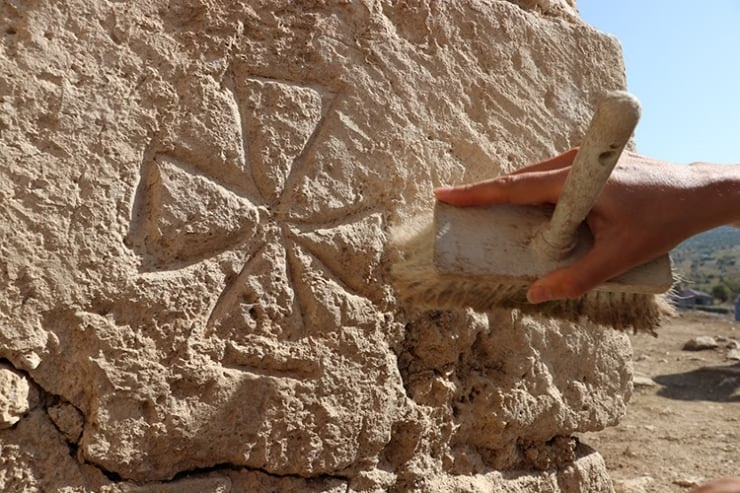
Over the past century, the Institute’s alumni have carried out scientific excavations, safeguarded early Christian monuments, and helped shape heritage policy in regions spanning Europe, the Middle East, Africa, and Latin America. Pope Leo XIV highlights that the Institute continued its mission even during wars—including holding a major congress in Split during the conflict in the former Yugoslavia—demonstrating what he describes as archaeology’s unexpected role in peacebuilding and dialogue.
Archaeology as Cultural Sustainability and Spiritual Ecology
The Apostolic Letter stresses repeatedly that archaeology is more than research: it is an ethical practice. By preserving even the smallest objects—mosaic fragments, graffiti, damaged gravestones—archaeologists model an alternative to the modern culture of rapid consumption and disposability. Leo XIV calls this “a school of humility, sustainability, and hope.”
He also underscores the transformative power of new technologies, noting that scientific imaging and analytical tools often extract meaning from artifacts previously deemed insignificant. In this sense, archaeology becomes a reminder that nothing truly disappears—a theological parallel to the Christian message of redemption and renewal.
A Pathway for Evangelization and Intercultural Dialogue
One of the document’s strongest themes is the missionary value of archaeology. The Pope argues that the earliest Christian material culture—catacombs, symbols of hope, graffiti, graves of martyrs—continue to speak universally, even to those outside the faith. In a world where roots are increasingly fragile, Christian archaeology offers a language capable of bridging cultures, generations, and belief systems.
Leo XIV also highlights the shared archaeological heritage of Eastern and Western Christianity, from common burial traditions to parallel artistic expressions. This shared past, he says, can support greater unity and mutual understanding.
A Call to Invest in Education and Research
The Pope concludes by urging bishops, educators, and cultural institutions to promote archaeological training among students, clergy, and lay scholars. The field, he notes, offers concrete professional pathways while strengthening the Church’s intellectual and cultural foundations.
His final message is addressed directly to archaeologists: a call to remain persistent in fieldwork, rigorous in analysis, and passionate in public communication. Their vocation, he insists, is a form of love—for the Church, for humanity, and for truth itself.
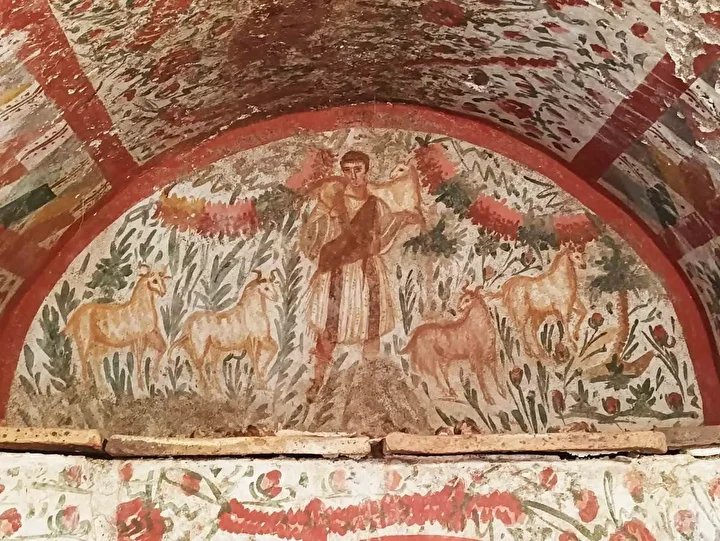
Cover Image: The Good Shepherd depiction discovered in a burial chamber in İznik, Türkiye.