The 1071 Battle of Malazgirt was fought between the Seljuk army of Sultan Alp Arslan and the Byzantine forces of Emperor Romanos IV Diogenes for control of eastern Anatolia. The Seljuk victory did not transform the region overnight, but it weakened Byzantine authority in the east and became one of the defining turning points in the medieval history of Anatolia.
More than 950 years later, archaeologists in Malazgirt district of Muş province in eastern Türkiye are examining medieval graves that may help clarify the human landscape that emerged around the battlefield and its aftermath.
Medieval Graves Under Investigation
Skeletons recovered from the graves are now being studied through anthropological and ancient DNA analyses as part of the “Identification of the Malazgirt Battlefield, Historical and Archaeological Survey Project,” launched in 2020 with the support of Türkiye’s Ministry of Culture and Tourism, in cooperation with the Ahlat Museum Directorate and Muş Alparslan University.
The excavation area is being evaluated as a possible Seljuk cemetery, although researchers are not presenting it as a confirmed burial ground from the battle itself. The evidence gathered so far points to a medieval Islamic cemetery whose dates, burial customs and demographic profile make the site an important candidate for further investigation.
Graves Cut Into the Bedrock
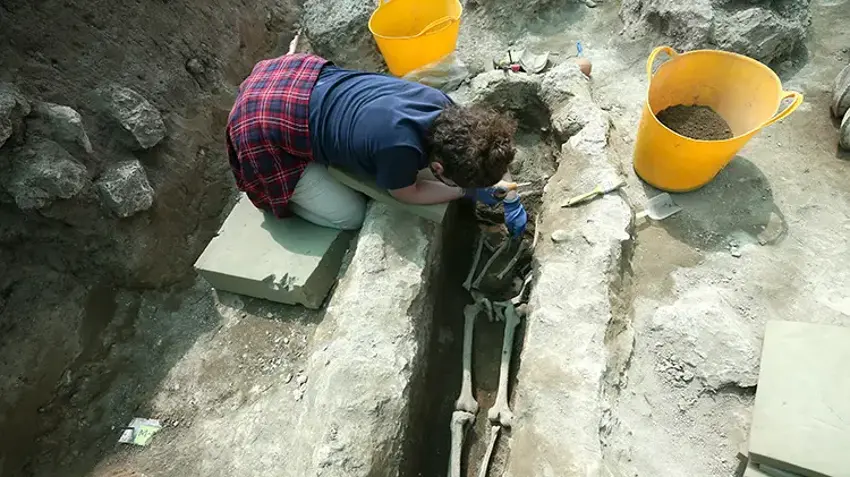
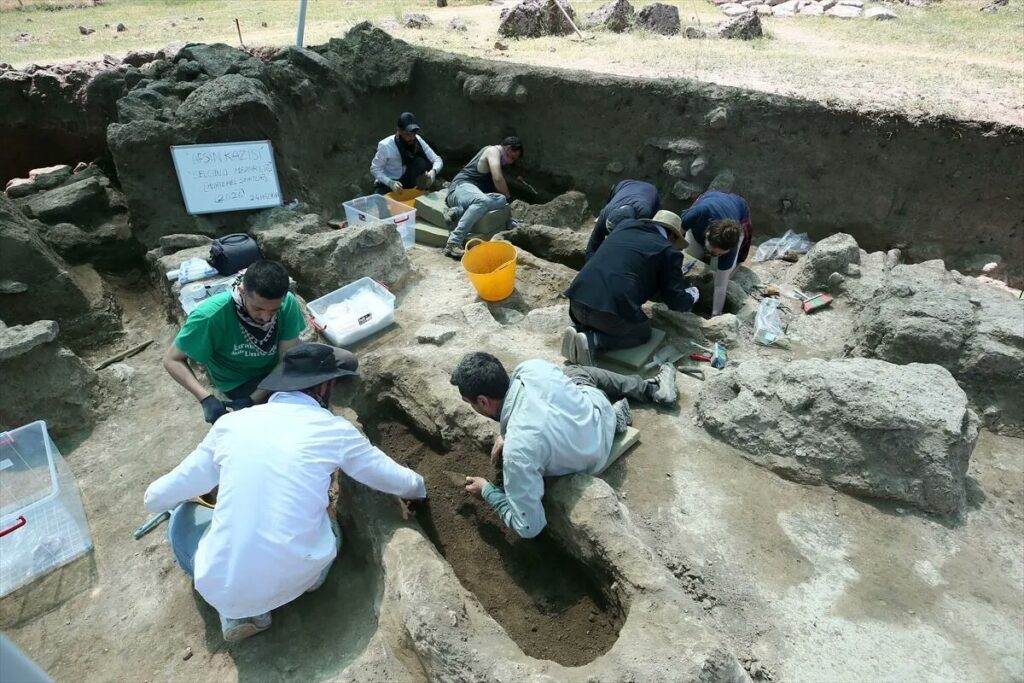
During the 2026 field season, archaeologists began working in an area where 18 graves had been identified during surface surveys. The team first documented the stone borders of the graves, along with their head and foot markers.
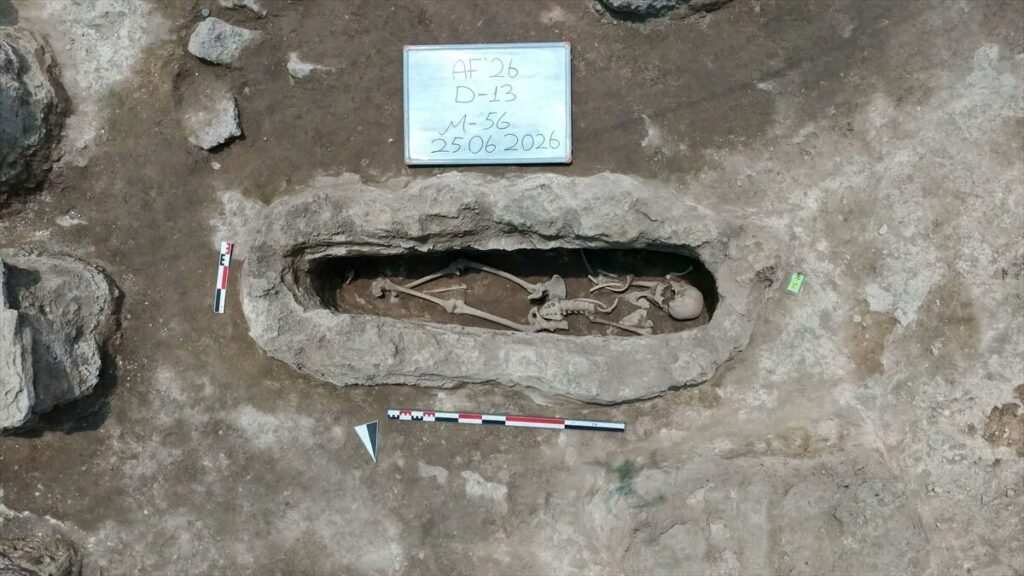
They then reached basalt cover slabs at a depth of about 80 to 110 centimeters. Beneath these slabs, the burials were found in cist-like graves carved into the bedrock.
Specialist archaeologist Muhammed Dolmuş, who is responsible for the excavation area, said radiocarbon samples taken from graves identified in earlier work produced results pointing to the period of the Battle of Malazgirt. Following these results, the team expanded its work in the area.
52 Graves Identified in Earlier Seasons
Dolmuş said that 52 graves were identified during the 2022, 2023 and 2024 seasons. All of them followed Islamic burial traditions, and about 40 percent of the individuals were young adult males.
The 2026 season began in June, with work focused on a 10-by-10-meter excavation area. So far, 18 adult burials have been uncovered there.
This demographic pattern is one of the reasons the cemetery has drawn attention, but it is not proof on its own that the individuals were killed in battle. The interpretation depends on the full archaeological context, radiocarbon dates, skeletal evidence and laboratory results.
What the Skeletons May Reveal
The bones removed from the graves were first sent to the Human Behavioral Ecology and Archaeometry Laboratory at Hacettepe University. There, Prof. Dr. Ali Metin Büyükkarakaya is examining the remains for age, sex, possible disease markers and other biological indicators.
If preservation conditions allow, the study may also help identify traces of trauma or possible causes of death. Such evidence would be especially important in assessing whether the cemetery has any direct relationship with armed conflict.
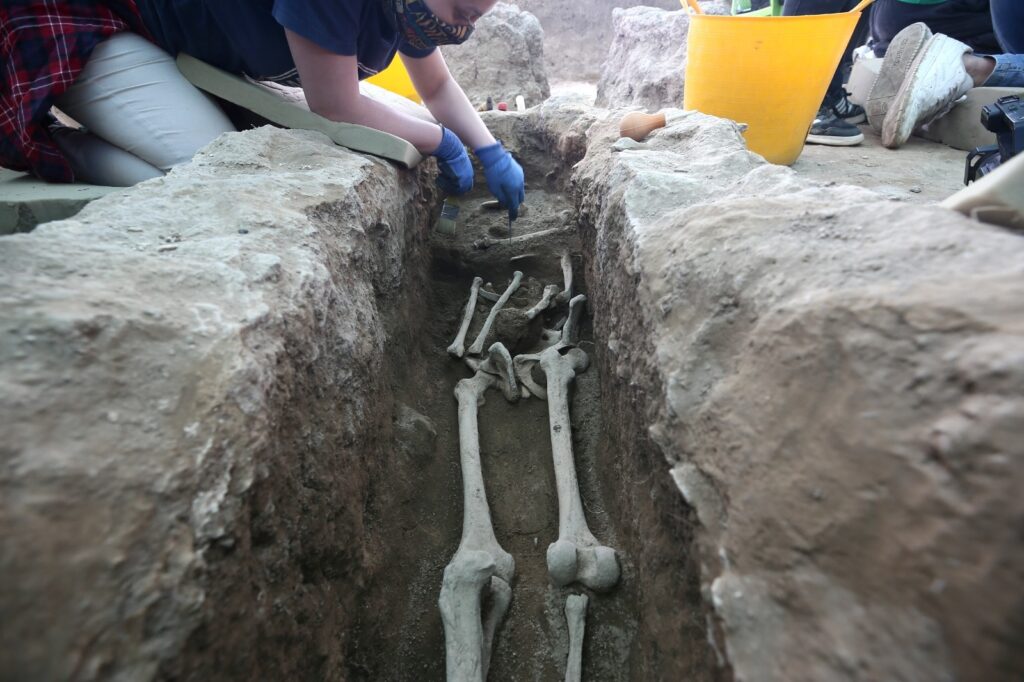
After this stage, the skeletons are transferred to the Anthropology Laboratory at the Seljuk and Malazgirt Application and Research Center of Muş Alparslan University, where ancient DNA studies are being carried out.
These analyses may provide information about the biological profiles of the buried individuals and allow researchers to compare the laboratory results with the archaeological context of the cemetery.
A Cautious Link to 1071
The Malazgirt battlefield has long been known mainly through written sources and later historical memory. Archaeological work in the district is therefore important not only for locating possible traces of the 1071 battle, but also for understanding the medieval communities that lived in eastern Anatolia during the Seljuk-Byzantine frontier period.
For this reason, the cemetery must be interpreted carefully. The presence of Islamic burial practices, 11th- or 12th-century dating and a notable proportion of young adult male individuals makes the site significant. But these elements do not yet prove that those buried there died in the Battle of Malazgirt.
The coming laboratory results may help determine whether the graves are connected to the aftermath of the 1071 Seljuk-Byzantine battle or whether they represent a broader medieval Muslim population in the region.
In either case, the excavation adds rare material evidence to a period that shaped the political and cultural future of Anatolia.