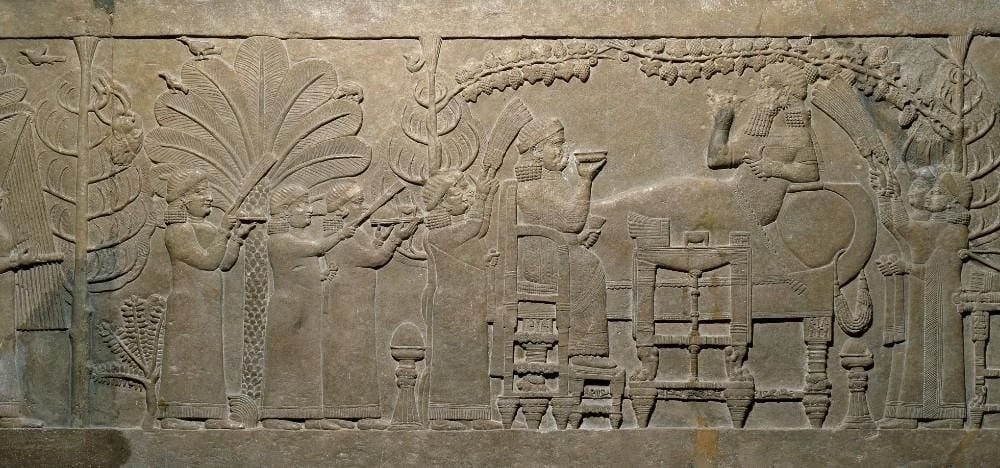
When modern visitors think of paradise, they might imagine palm trees, fountains, and fragrant blossoms. But over 2,600 years ago, the Assyrian kings had already created their own version of heaven on earth — engineered, irrigated, and ruled with an iron hand.
A Garden of Power, Not Peace
In the 7th century BCE, King Ashurbanipal of Assyria ruled from Nineveh, a city whose scale and sophistication stunned the ancient world. The royal palaces were not merely homes — they were political manifestos carved in stone and planted in soil.
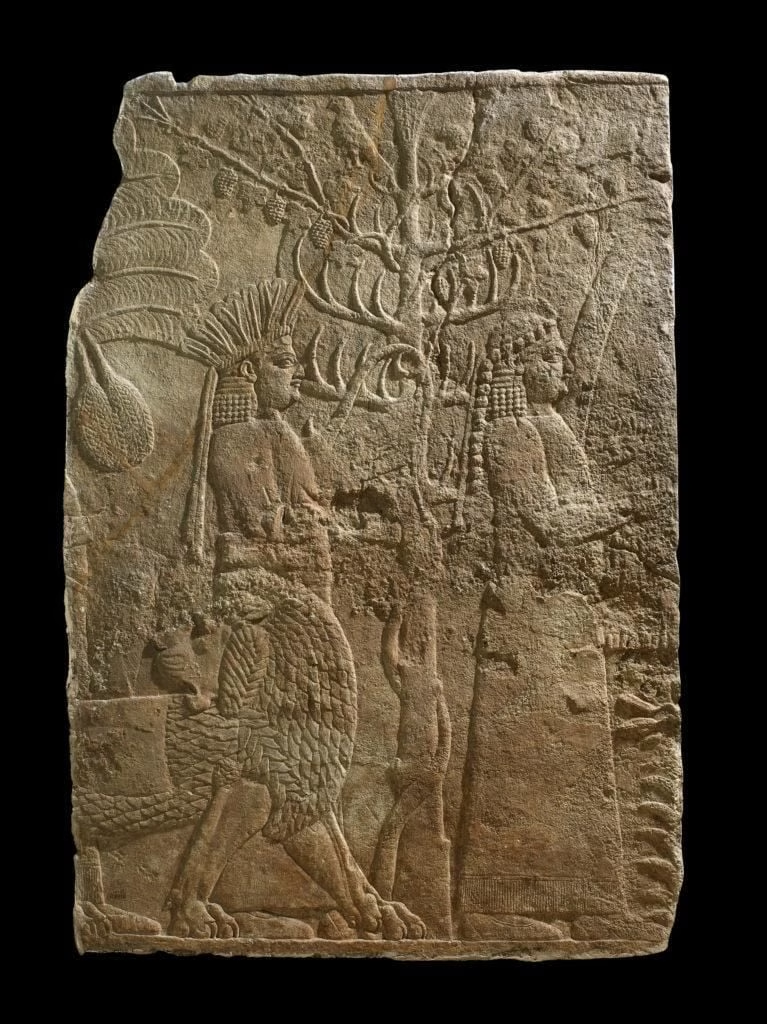
Around them stretched vast orchards, artificial parks, and botanical collections. Inscriptions reveal that Assyrian kings collected plants and animals from the farthest edges of their empire: from the cedar forests of Lebanon to the mountains of Iran.
“I planted beside my palace a garden containing every kind of tree, fruit, and vegetable,” Ashurbanipal wrote — a statement that was less about agriculture and more about dominion. Controlling nature was, in the Assyrian mind, equal to controlling the world.
Sennacherib’s Great Water Machine
The lushness of these gardens was not left to the mercy of rain. Decades earlier, Ashurbanipal’s grandfather, King Sennacherib, had constructed one of the most ambitious hydraulic systems of the ancient world — a 50-kilometer canal network that brought mountain water to Nineveh.
He ordered the building of aqueducts and stone channels, including the monumental Jerwan Aqueduct, made of over two million blocks of limestone and waterproof cement. Its inscription still proclaims:
“Over steep-sided valleys I spanned an aqueduct of white limestone; I made those waters flow over it.”
This achievement predates Roman aqueducts by more than five centuries and stands as one of the earliest examples of imperial landscape engineering.
The King and the Lion
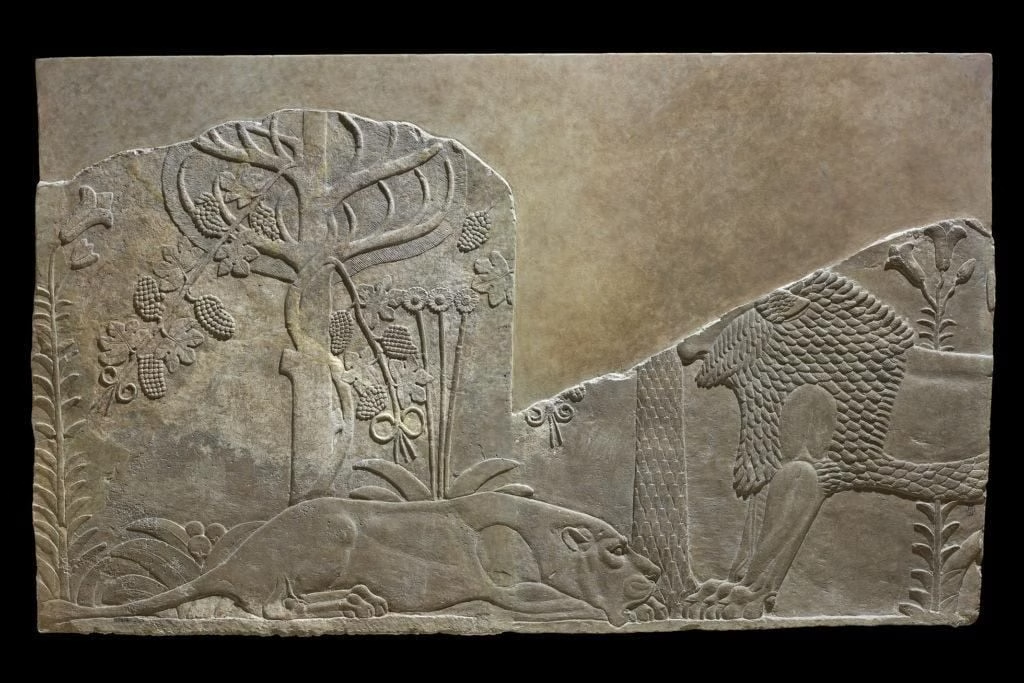
The gardens were not empty sanctuaries of peace. Reliefs from Ashurbanipal’s palace depict lions lying beneath cypress trees — a potent metaphor for the king’s control over chaos. In Assyrian ideology, the lion symbolized the wild and dangerous forces of nature; a subdued lion represented order, empire, and divine authority.
The same beasts that roamed the royal parks were later hunted in staged spectacles. These “lion hunts” were not sport — they were rituals of domination, reinforcing the king’s image as both warrior and protector of Assyria.
Between Beauty and Blood
One of the most striking palace reliefs shows Ashurbanipal reclining with his queen amid vines, palms, and musicians — a tranquil scene of abundance. Yet, hanging from a nearby tree is the severed head of his enemy. Even in the midst of paradise, the reminder of conquest was never absent. The gardens were a living tableau of peace achieved through war.
The Real Hanging Gardens?
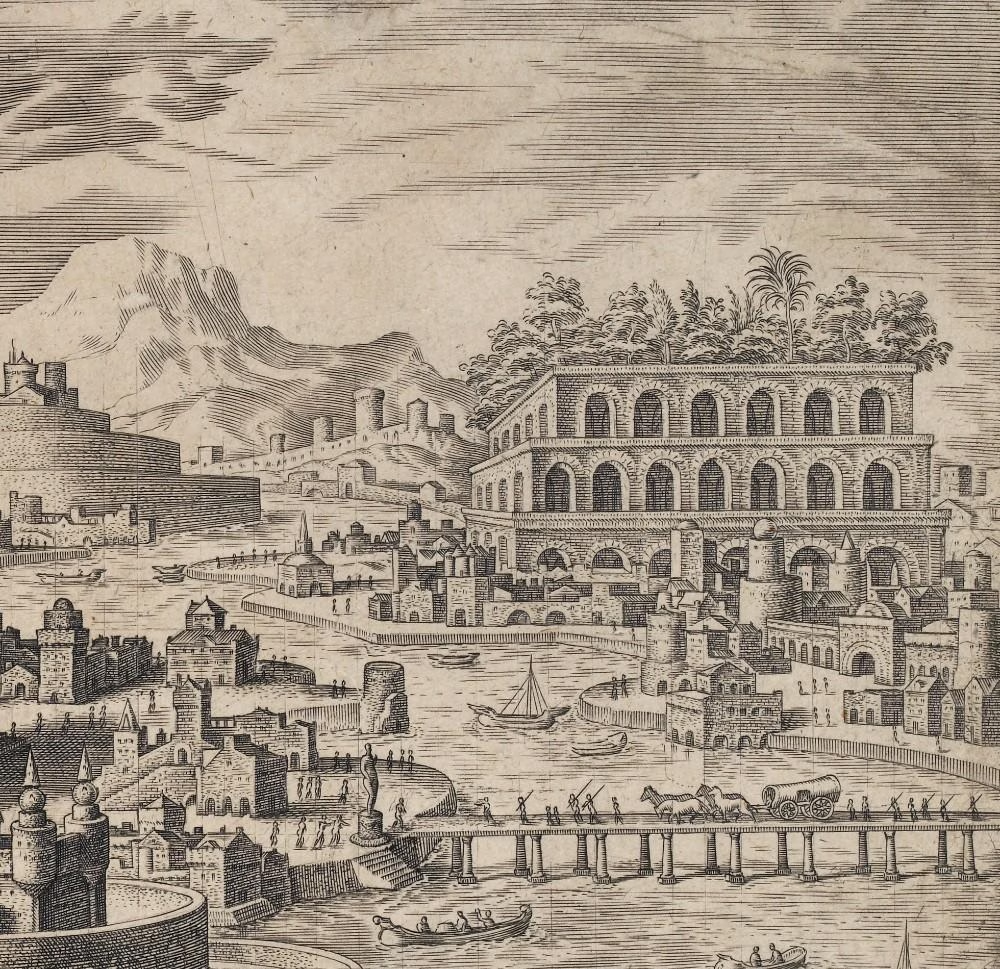
For decades, scholars have debated whether the fabled Hanging Gardens of Babylon were in fact located at Nineveh. Lost Assyrian reliefs once depicted trees growing atop roofed colonnades, much like the terraced gardens described by classical authors.
If so, the wonder of the ancient world may not have belonged to Babylon at all, but to Assyria — the empire that mastered both earth and water to display its eternal power.
Cover Image: Carved panel depicting Ashurbanipal and his queen in a garden. The head of Ashurbanipal’s enemy hangs from a tree on the far left. 645–640 BC. Nineveh, Iraq. Credit:British Museum