Archaeologists excavating ahead of a housing project in southern Switzerland have uncovered a Roman settlement containing evidence of iron and bronze working on a significant scale. The complex, occupied during the second and third centuries AD, came to a violent end when a fire brought down its tiled roof.
The discovery was made near Via Mastri in Ligornetto, a village in the canton of Ticino close to the Italian border. Excavations began in June 2026 and are being conducted by the Archaeology Service of Ticino’s Office of Cultural Heritage.
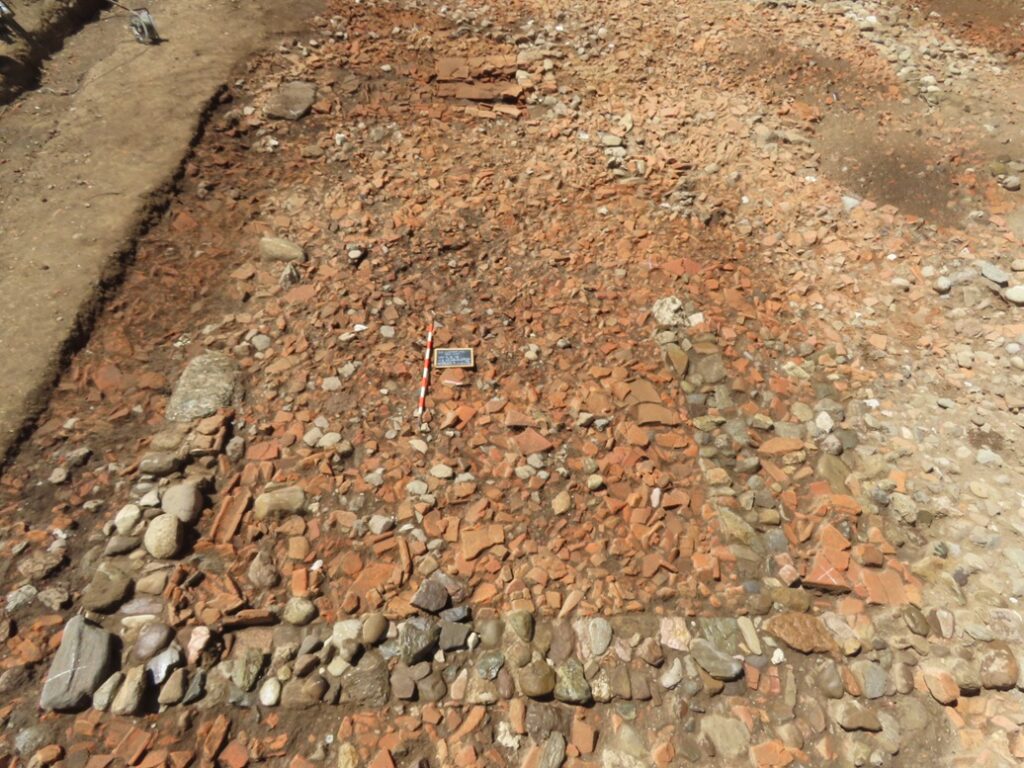
The site includes a substantial masonry building facing a small road, with an extensive area behind it apparently used for craft and agricultural activities. Although the building’s exact function remains uncertain, the finds are opening a new window onto economic life in this part of the Roman countryside.
Six rooms and a portico beside a Roman road
The excavation covers approximately 500 square meters between Via Mastri and a nearby watercourse. Archaeologists have so far identified six rooms belonging to a masonry structure built during the second century AD.
The building measures approximately eight meters across and extends for at least 11 meters. Its western section continues beyond the limits of the construction plot, meaning that its complete size and layout have yet to be determined.
A portico roughly three meters wide ran along the southern side of the building and faced a small road. Two rooms measuring approximately 16 and 20 square meters were investigated at the rear.
The complex did not remain unchanged. Between the second and third centuries AD, new partition walls were added, while a platform was constructed inside the portico using reused bricks and tiles.
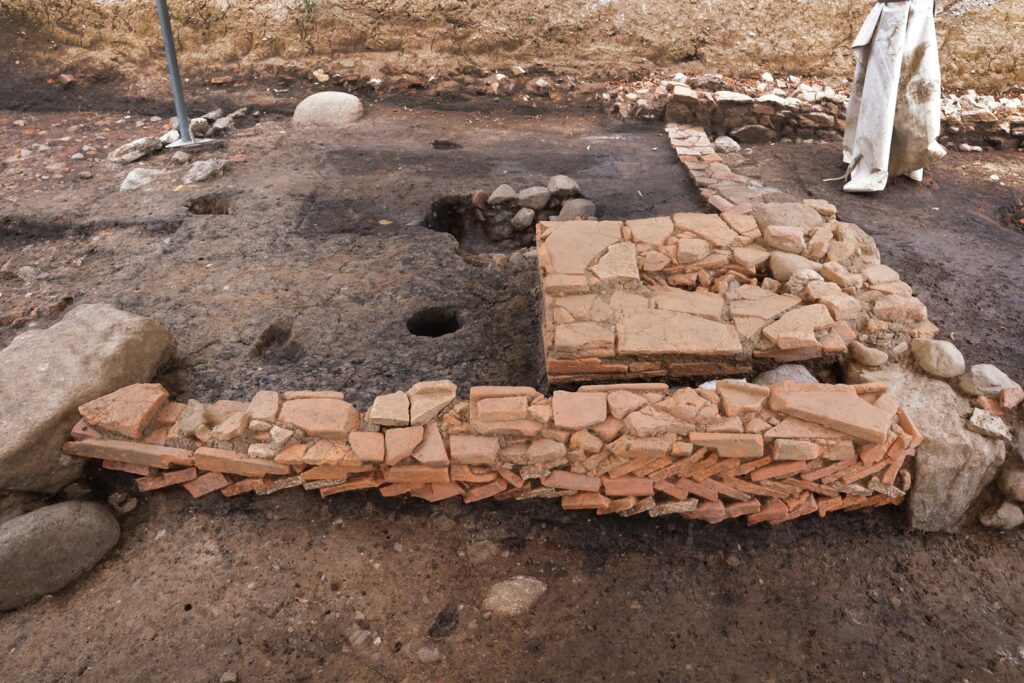
The purpose of the building has not yet been established. However, the absence of hearths and other features normally associated with domestic life suggests that it was probably not used as a residence.
Iron slag and bronze-working waste
Behind the masonry building stretched a broad area devoted to agricultural and craft activities. Postholes found there indicate that lightweight structures, shelters or temporary roofs once stood on parts of the site.
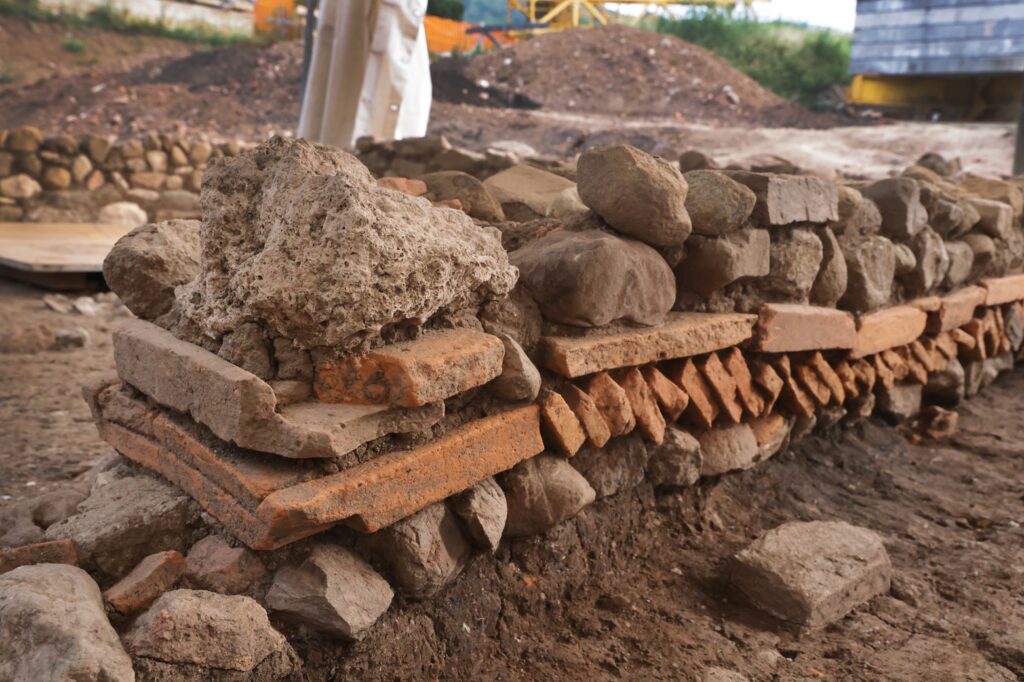
Archaeologists also uncovered a narrow path made from reused Roman building materials. It may have served as both a walkway and a boundary separating different sections of the property.
The most significant evidence came from layers dating to the second and third centuries AD. These contained an unusually large quantity of iron slag as well as waste produced during bronze working.
The concentration of this material suggests that metals were being processed somewhere in the immediate vicinity. According to the cantonal archaeological service, the quantity of waste points to metalworking activity on a significant scale rather than occasional domestic production.
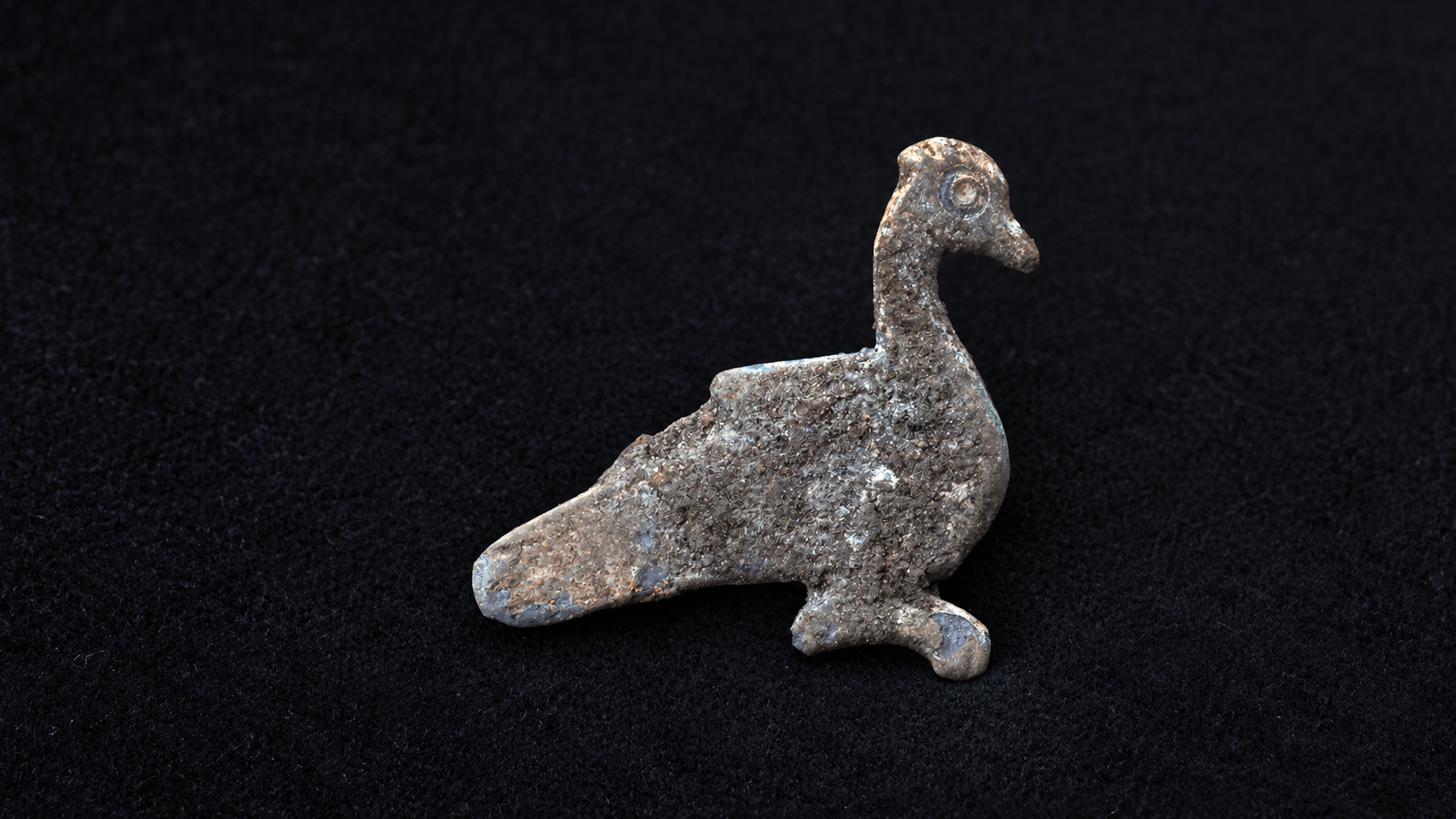
Among the objects recovered at Stramonte is a zoomorphic bronze brooch dating to the second or third century AD. The stylized bird has been tentatively identified as a peacock.
No furnaces or other installations have yet been reported, so the masonry building cannot currently be identified as a workshop with certainty. Continued excavation and analysis may determine whether production took place inside the building, beneath nearby shelters or in an area lying beyond the present excavation boundaries.
A violent fire ended the complex
The building’s occupation ended during the third century AD when a violent fire swept through the complex. The blaze caused its tiled roof to collapse and left extensive deposits of charcoal among the ruins.
The cause of the fire remains unknown. Nevertheless, the collapsed tiles and carbonized material preserve evidence of the building’s final phase and may help archaeologists understand how its rooms were being used shortly before its destruction.
The Roman masonry building was not the first structure erected at Stramonte. Beneath it, researchers identified traces of wooden buildings dating to the final decades before the beginning of the Common Era.
These earlier remains show that activity at the site began before the construction of the Roman complex. They also place Stramonte within a much longer history of occupation in the Ligornetto area.
Ligornetto between Como and Milan
Archaeological discoveries across the Mendrisiotto region document human activity from at least the second century BC through the Roman period and into the early Middle Ages. The area contains settlement remains, cemeteries, evidence of places of worship and numerous Lombard graves dating to the first half of the seventh century.
During the Roman period, Ligornetto and the wider Mendrisiotto lay within the sphere of influence of Comum, modern Como, and Mediolanum, present-day Milan. Inscriptions previously found at Ligornetto and nearby Stabio refer to families connected with people who held important political offices in those cities.
The Stramonte settlement is also located less than one kilometer from the wealthy Roman villa of San Pietro at Stabio. While the villa reflects the lives of the region’s elite, the newly discovered building may offer a different perspective by revealing the roads, working areas and craft activities that supported the local economy.
Excavations are expected to continue through autumn 2026. Further study of the iron slag, bronze-working waste and fire deposits may reveal what was produced at Stramonte and how craft activity was organized in Roman Ligornetto nearly 1,800 years ago.
Cover Image: A bronze zoomorphic brooch, probably representing a peacock, discovered at the Roman settlement in Ligornetto. The object dates to the second or third century AD. Credit: Archive UBC–Archaeology Service / Photo: Daniela Rogantini-Temperli