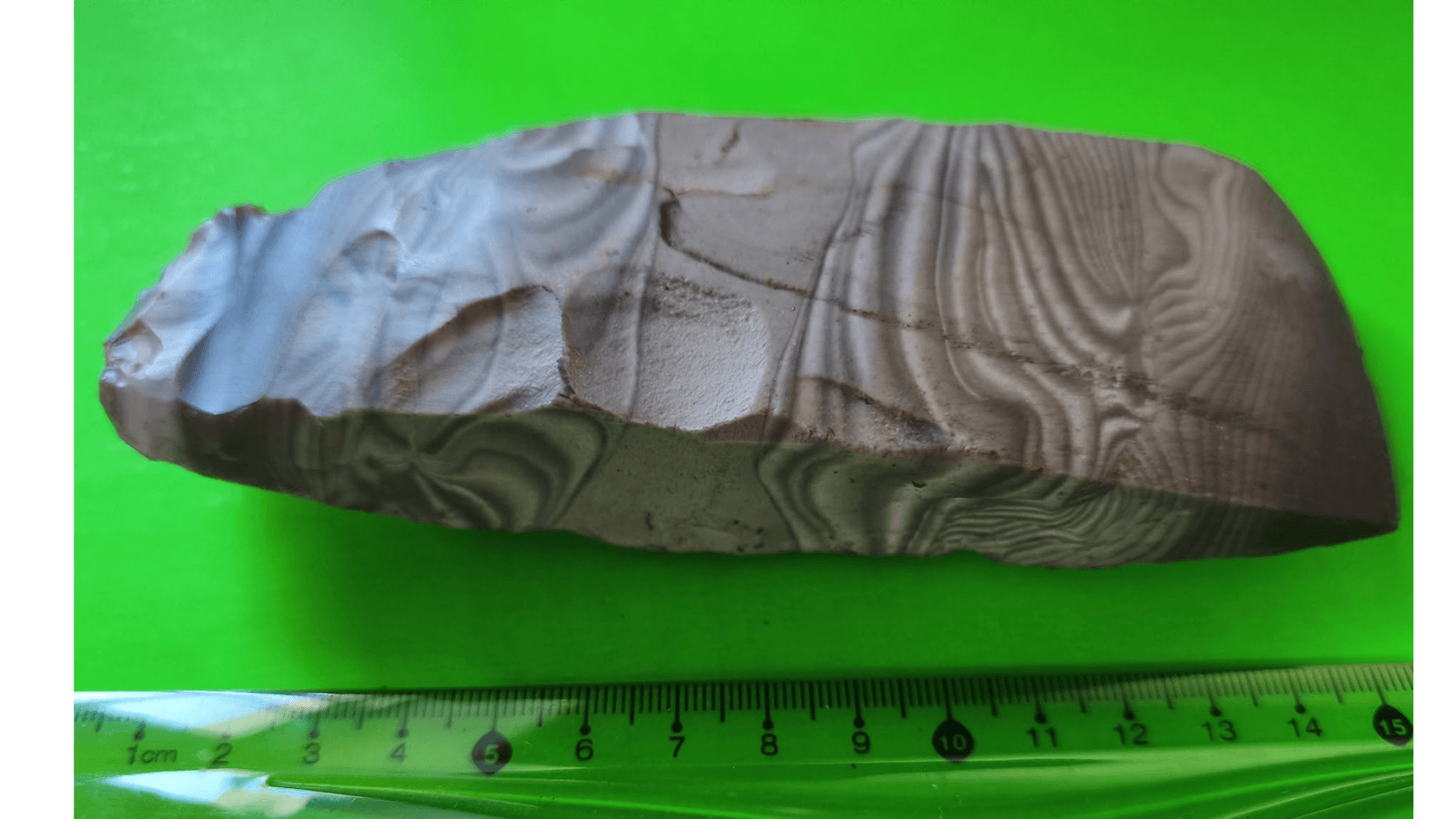
A colorful stone uncovered while a couple were weeding tobacco in eastern Poland has been identified as a nearly 6,000-year-old Neolithic axe. Made from distinctive striped flint, the remarkably well-preserved tool may add to evidence that the surrounding region was more intensively occupied in prehistory than archaeologists once believed.
Agnieszka and Krzysztof Obszański discovered the object on June 20, 2026, while working in their field at Potok Górny in Poland’s Biłgoraj district. According to the Zamość branch of the Provincial Office for the Protection of Monuments in Lublin, the stone lay only around 7 to 15 centimeters beneath the surface.
A Chance Discovery in a Tobacco Field
The object came to light when a gardening tool struck something hard beneath the soil. Its unusual bands of color caught the couple’s attention, but they did not initially know whether it was an archaeological artifact.
In July, they sent photographs to the Museum of the Biłgoraj Region. Museum specialists recognized it as a Neolithic flint axe and advised them to notify the regional heritage authorities.
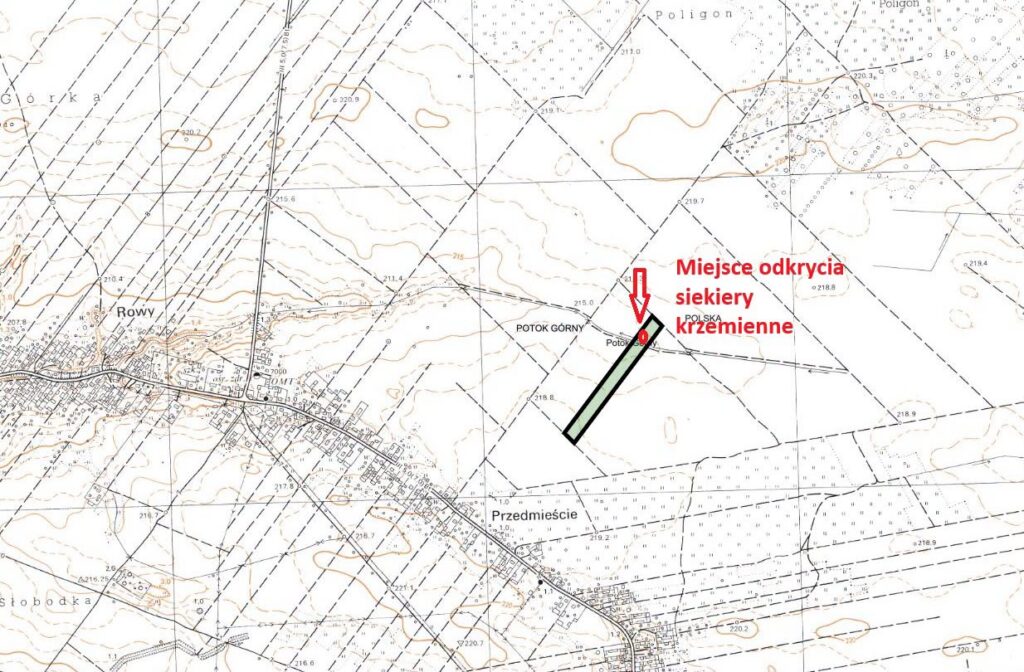
The discovery was formally reported on August 11. Archaeologists from the heritage office’s Zamość branch later collected the axe and examined the location where it had been found.
A surface survey carried out around the discovery site produced no other apparent archaeological objects. Although the axe appears to be an isolated find, it joins several prehistoric artifacts previously reported from Potok Górny and the surrounding area.
An Axe Made from Poland’s Striped Flint
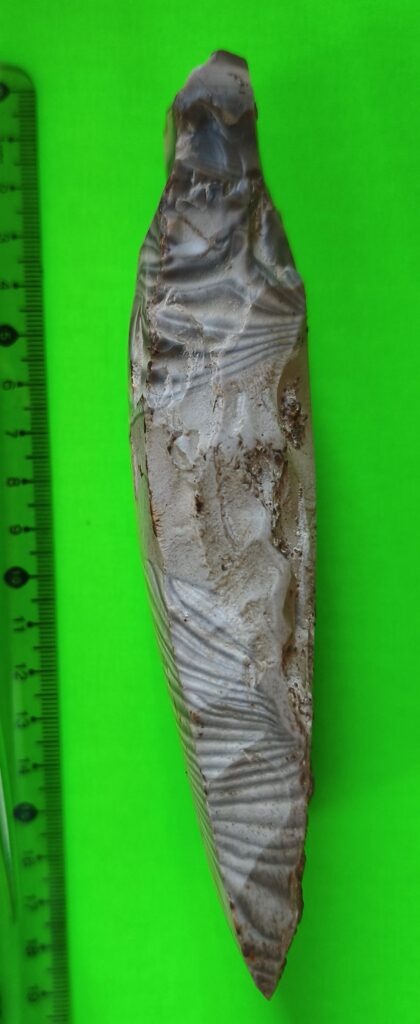
The four-sided axe measures approximately 16 centimeters long, with a maximum width of 6 centimeters and a thickness of about 2.5 centimeters. It was fashioned from striped flint, a decorative variety distinguished by bands of white, light gray and dark gray that often form striking concentric patterns.
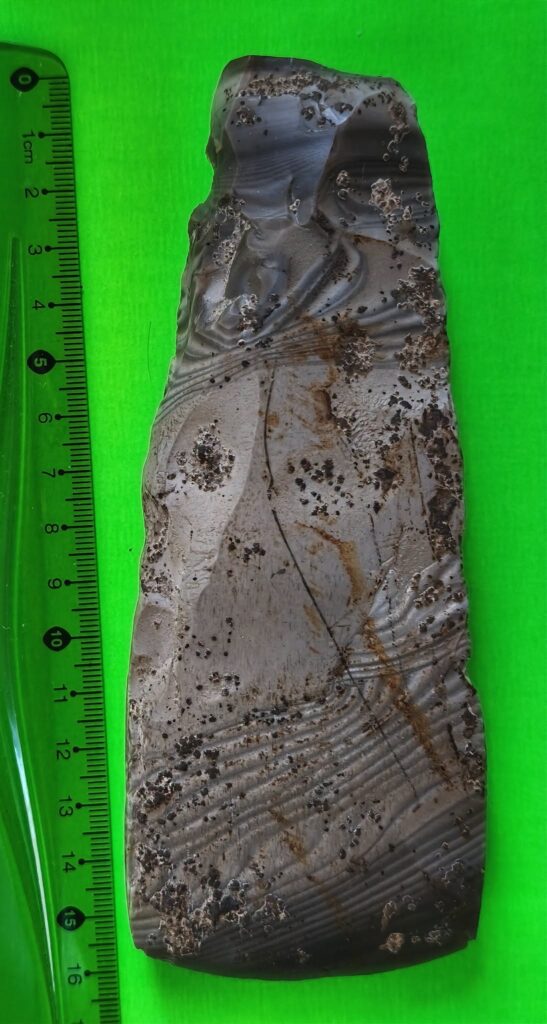
Striped flint occurs naturally almost exclusively in Poland, particularly along the northeastern edge of the Świętokrzyskie Mountains. During the Neolithic period, it was extracted from mining complexes such as Krzemionki Opatowskie and used to produce axes and other stone tools.
The broad upper and lower surfaces of the Potok Górny axe were carefully polished. Its sides retain scars from the earlier shaping process, while additional polishing is visible close to the cutting edge.
Both the edge and the rectangular butt survive without major damage. The butt was deliberately narrowed and shaped, probably allowing the tool to be mounted in a handle made from wood or deer antler.
Based on its proportions, construction and typology, archaeologists believe the axe was most likely produced by the Neolithic Funnel Beaker culture. It has been provisionally dated to between approximately 3800 and 3000 BC, placing it close to 6,000 years ago.
New Evidence for Prehistoric Settlement
The discovery is significant because the Biłgoraj district was once regarded as an area with relatively little prehistoric settlement. A growing number of finds now suggest that people lived in or repeatedly used this landscape from the Neolithic period onward.
Three flint axes and a spearhead have now been recorded in Potok Górny alone. Two more flint axes have been discovered elsewhere in the Księżpol municipality.
The striped flint used for the latest axe also indicates that either the raw material or the finished tool traveled from the Świętokrzyskie mining region to what is now eastern Poland. While a single object cannot reveal the precise nature of that movement, it points to wider networks through which valued stone and finished tools circulated during the Neolithic.
The axe is currently held by the Zamość branch of the Provincial Office for the Protection of Monuments. It is expected to be transferred to the Museum of the Biłgoraj Region, while its discovery location will be formally added to Poland’s archaeological heritage records.
Cover Image: The nearly 6,000-year-old axe found in Potok Górny was made from Poland’s distinctive striped flint. Credit: Provincial Office for the Protection of Monuments in Lublin, Zamość Branch