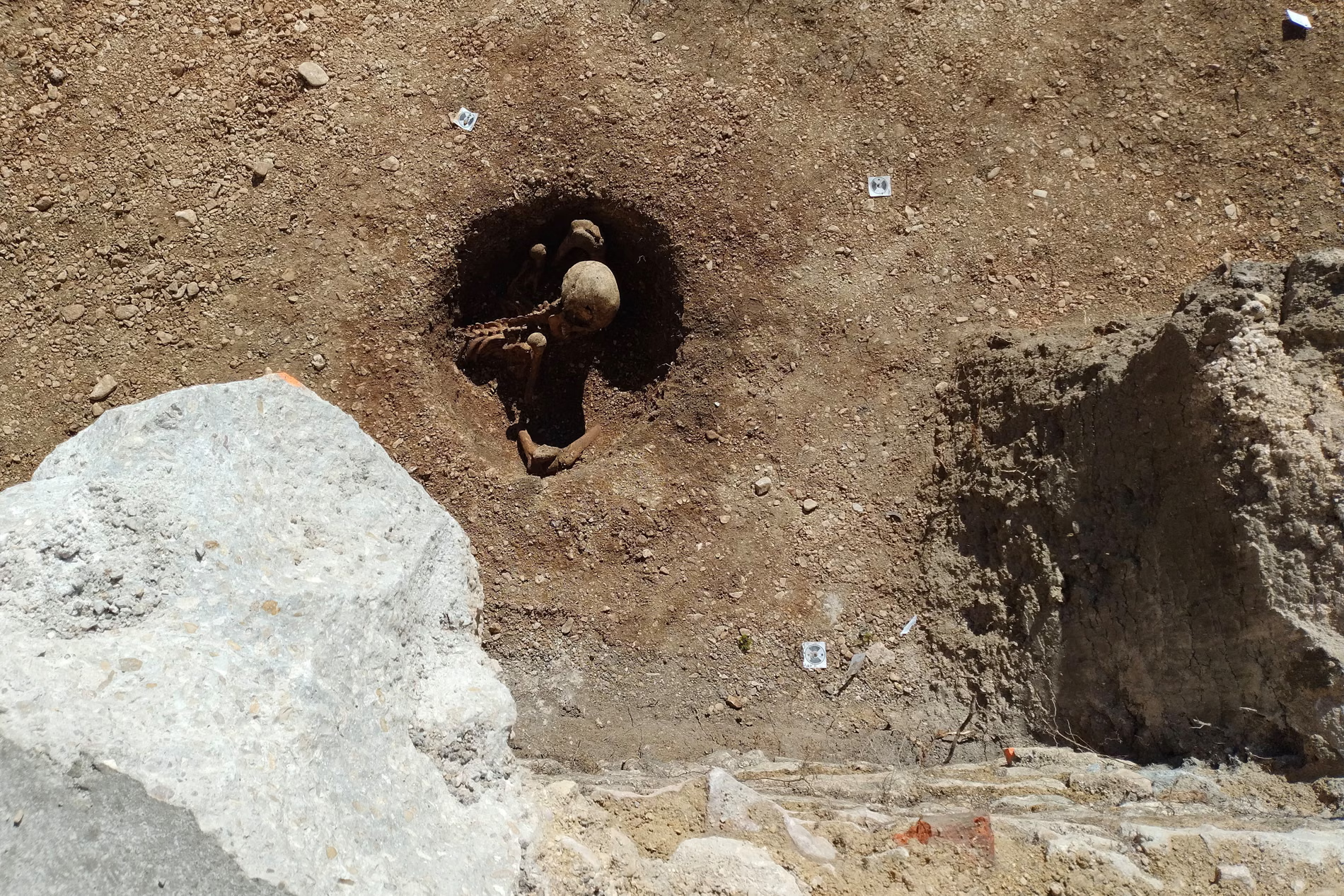
A skeleton sitting upright, hands resting calmly in its lap, was discovered beside a primary school in Dijon, eastern France—facing west after more than two millennia underground, in a case that is shedding new light on the burial practices of the ancient Gauls.
The discovery, made near a playground in Dijon, is not an isolated case. It is part of a growing cluster of unusual seated burials linked to the ancient Gauls, a Celtic people whose customs still remain only partially understood.
A burial position unlike any other
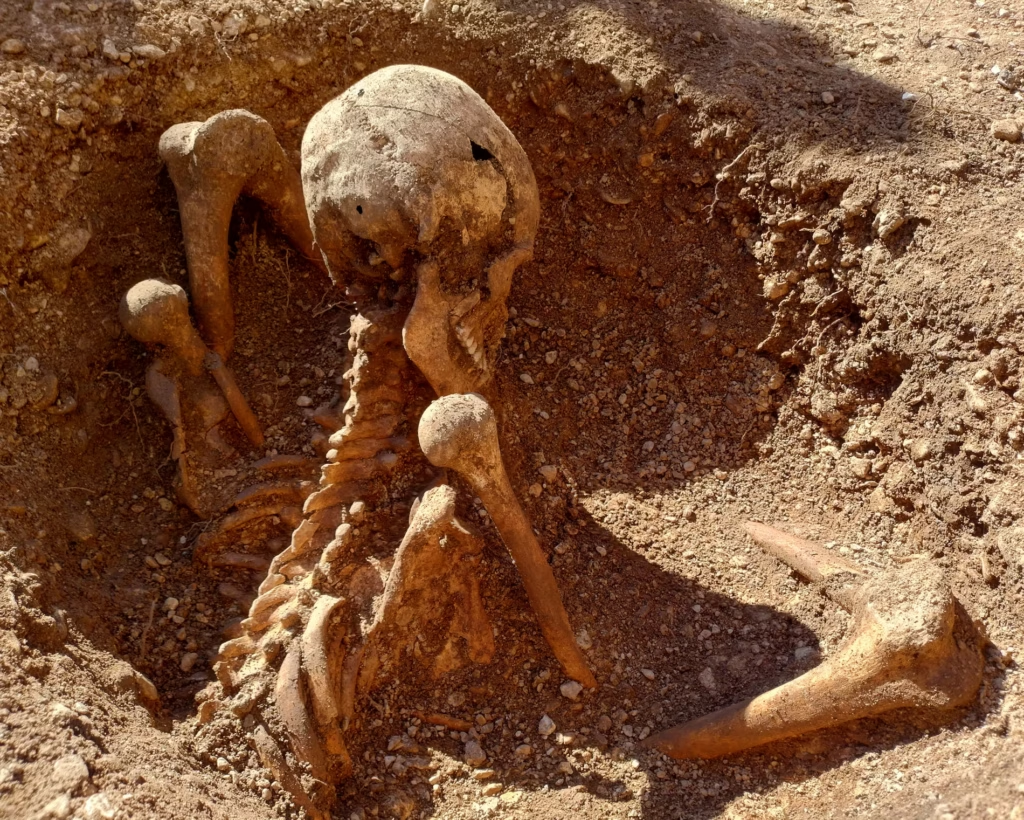
Archaeologists uncovered the latest skeleton inside a circular pit roughly one meter wide. The body had been carefully placed in a seated position, its back supported against the eastern wall, its face deliberately oriented toward the west.
This pattern is not accidental.
Four similar burials were discovered earlier at the same site, all sharing the same posture and orientation. Nearby excavations have revealed even more. In total, around 20 seated burials have now been documented in Dijon—an extraordinary concentration given that only about 75 such graves are known worldwide.
The consistency suggests a deliberate ritual practice rather than isolated or accidental burials.
A rare window into Gaulish society
The individuals are believed to date between 300 and 200 BC, during the late Iron Age, a period when Gaulish communities dominated large parts of Western Europe.
Despite their historical importance, the Gauls remain elusive. Much of what is known comes from outside observers—most notably Julius Caesar, whose accounts are shaped by conquest and propaganda.
This makes archaeological evidence like the Dijon burials especially valuable.
Over decades of excavations, researchers have begun to recognize Dijon as a significant Gallic settlement, possibly holding regional or symbolic importance within the Celtic world.
Violence, labor, and missing identity
The skeletons themselves offer clues—but also deepen the mystery.
Several of the individuals show clear signs of violence, including skull injuries that may have been fatal. Their bones also reveal traces of osteoarthritis, pointing to physically demanding lives, particularly involving the lower body.
At the same time, something is strikingly absent.
Unlike many ancient burials, these graves contain almost no personal belongings. No weapons, no ornaments—only a single armband has been found to help date the site. This lack of grave goods complicates any interpretation of their social status.
Were these individuals honored—or deliberately stripped of identity?
Punishment, ritual, or something else entirely?
The central question remains unresolved: why were these people buried seated and facing west?
Researchers are considering multiple possibilities.
The position could reflect a ritualized burial practice, perhaps linked to beliefs about the afterlife or cosmology. The westward orientation may hold symbolic meaning—possibly connected to the setting sun, death, or transition.
But there is a darker possibility.
The signs of trauma on some skeletons raise the question of whether these individuals were executed, sacrificed, or even buried alive. The upright posture could represent punishment, exclusion, or a specific funerary category reserved for certain individuals.
For now, there is no consensus.
As archaeologist Annamaria Latron noted, the absence of upper soil layers—long lost to time—means that crucial contextual evidence is missing. Without it, interpretations remain speculative.
A discovery that deepens the mystery
Each new skeleton adds detail—but not clarity.
The Dijon burials are now among the most significant collections of their kind ever found, yet they continue to resist easy explanation. They challenge assumptions about Celtic funerary customs and highlight how much remains unknown about Iron Age Europe.
Sometimes, archaeology does not provide answers.
Instead, it sharpens the questions—and leaves us facing the past, much like these ancient individuals, in a position we do not fully understand.
Cover Image: Five seated Gaul burials uncovered in central Dijon. Photograph: Frédéric Bourigault / AFP via Getty Images