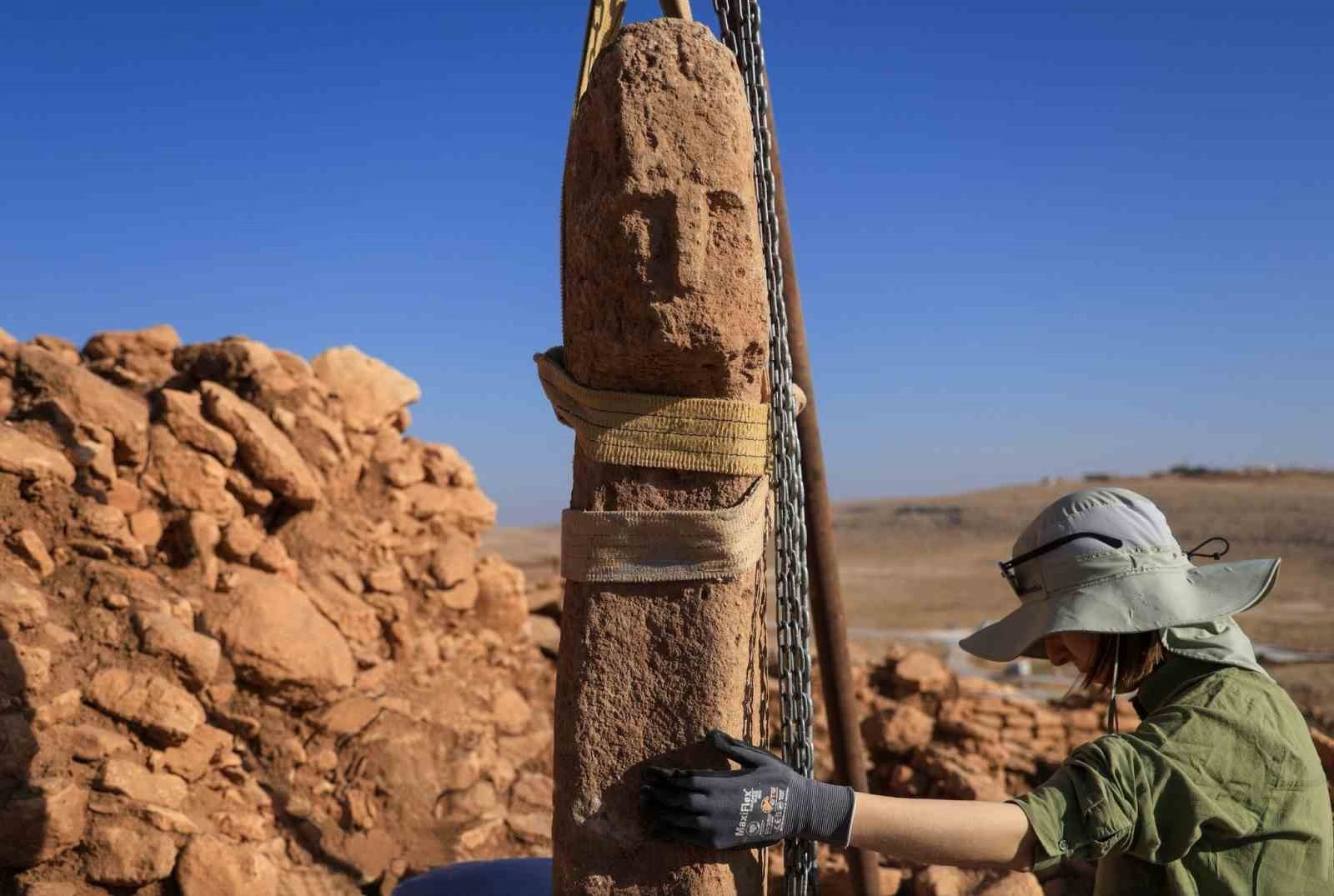
Archaeologists working at Karahantepe, one of Türkiye’s oldest Neolithic sites, have uncovered a T-shaped stone pillar bearing a carved human face — a discovery hailed as a first in human history.
The announcement was made by Minister of Culture and Tourism Mehmet Nuri Ersoy, who shared the news on his official X (Twitter) account, writing:
“Karahantepe — A first in history! Within the scope of our Taş Tepeler Project, a T-shaped pillar with a human face has been unearthed for the first time.”
This extraordinary find comes from the ongoing Taş Tepeler (Stone Hills) Project, a large-scale archaeological initiative exploring 12,000-year-old settlements across the Şanlıurfa region, widely considered one of the cradles of civilization.
A Face from the Dawn of Humanity
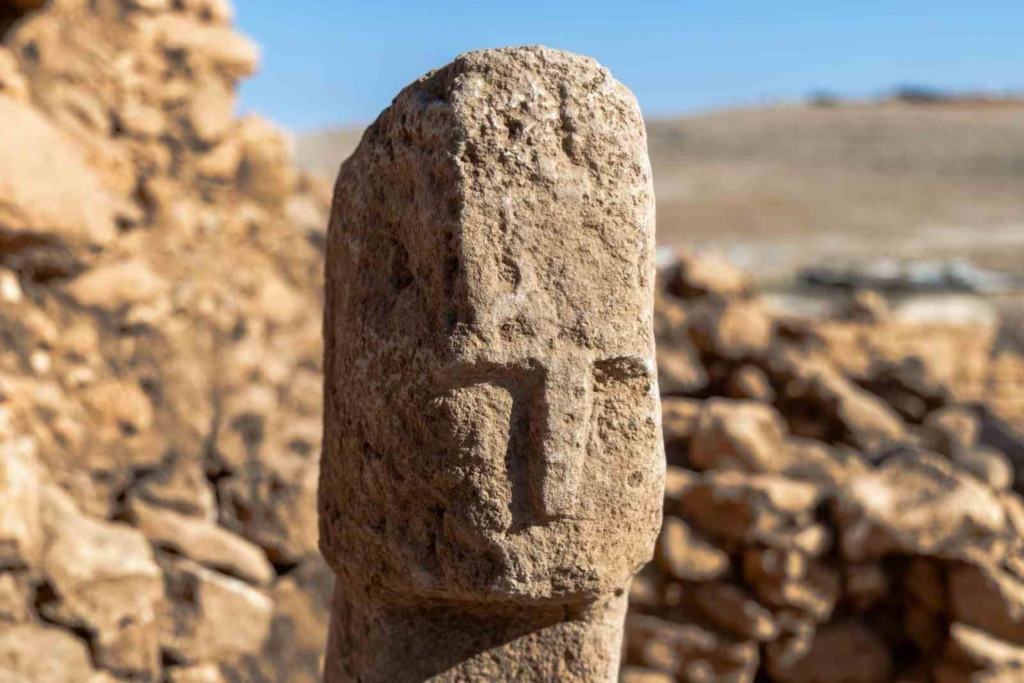
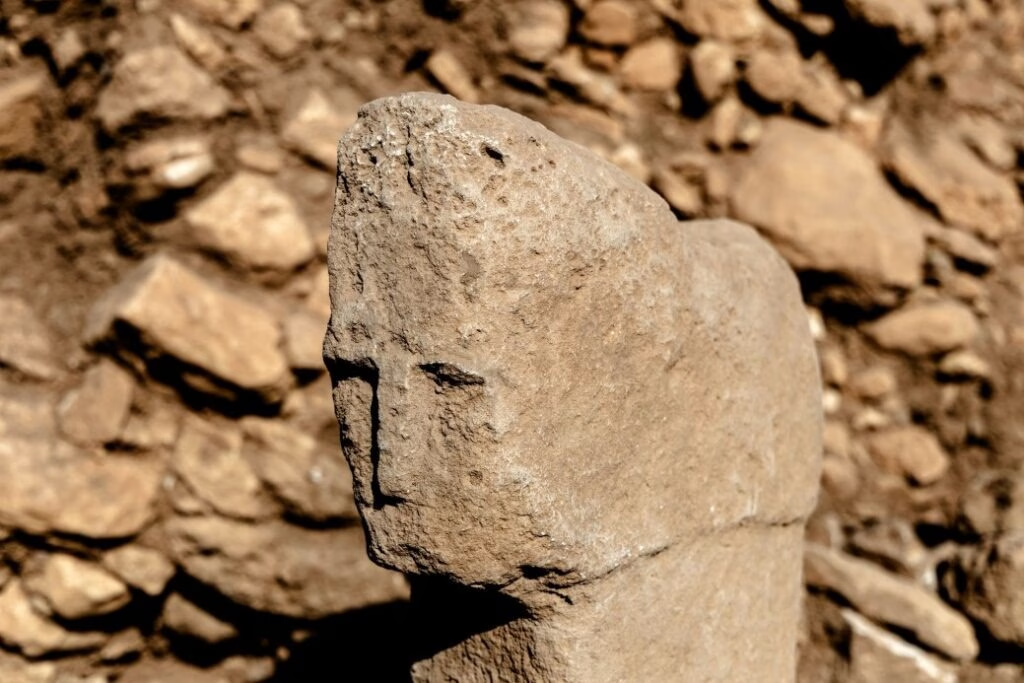
Until now, the T-shaped monoliths discovered at sites like Göbeklitepe and Karahantepe were believed to symbolize the human form, especially with carved arms and hands on their surfaces. However, this new pillar — the first with a clearly defined human visage — offers direct evidence of early self-representation.
The carving displays deep eyes, a broad nose, and sharply cut facial features, echoing the style of other human sculptures previously found in the area. Experts describe it as a striking example of early human abstraction and the growing symbolic thought that characterized the Neolithic revolution.
Rewriting Neolithic Symbolism
This discovery suggests that these T-shaped pillars were not merely architectural supports or ritual markers, but also representations of identity, memory, and humanity itself. It reveals that the people of Karahantepe — more than 12 millennia ago — were already engaging with ideas of personhood and artistic expression.
The Taş Tepeler Project
The Taş Tepeler Project encompasses several Neolithic sites — including Göbeklitepe, Sefertepe, Sayburç, Harbetsuvan Tepesi, and Çakmaktepe — all located in the Şanlıurfa province. Together, these sites chronicle the transformation from hunter-gatherer groups to the world’s earliest temple-building communities.
With each new discovery, Karahantepe continues to challenge established views of prehistory, demonstrating that Anatolia was not just a witness to civilization’s birth — it was its beating heart.