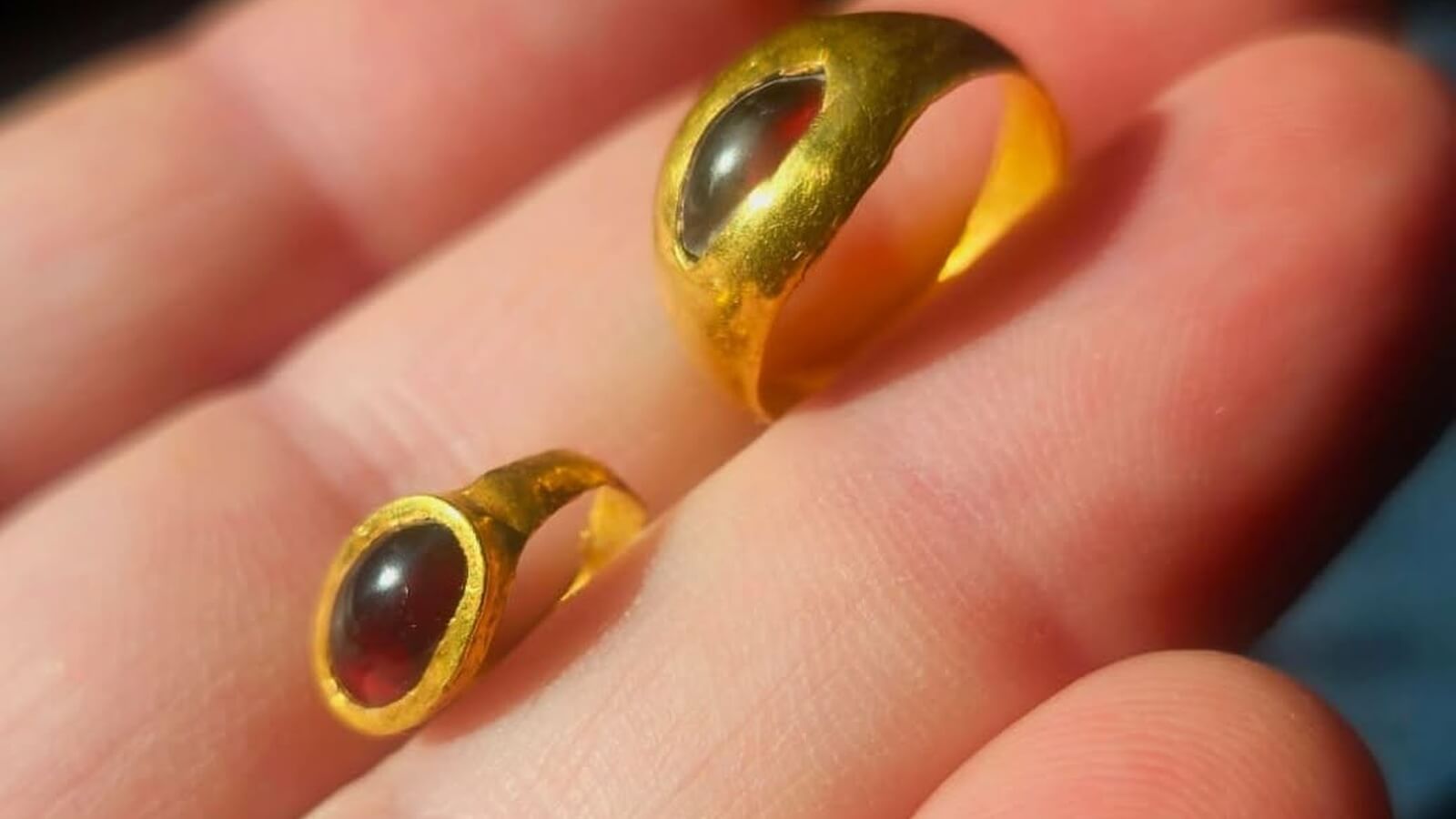
A tiny gold ring set with a deep-red stone may reveal an unexpectedly personal side of life in Hellenistic Jerusalem more than 2,200 years ago.
Archaeologists discovered the ring beneath the floor of a large residential building at the Givati Parking Lot excavation in the City of David. Measuring just 1.2 centimeters in diameter, the ring was small enough to have belonged to a child, most likely a young girl.
The discovery becomes more intriguing when viewed alongside other jewelry from the same building. Excavations conducted by the Israel Antiquities Authority and Tel Aviv University uncovered four gold ornaments and three bronze earrings associated with the structure, known as Building 110. Researchers date the objects to the late third and early second centuries BCE.
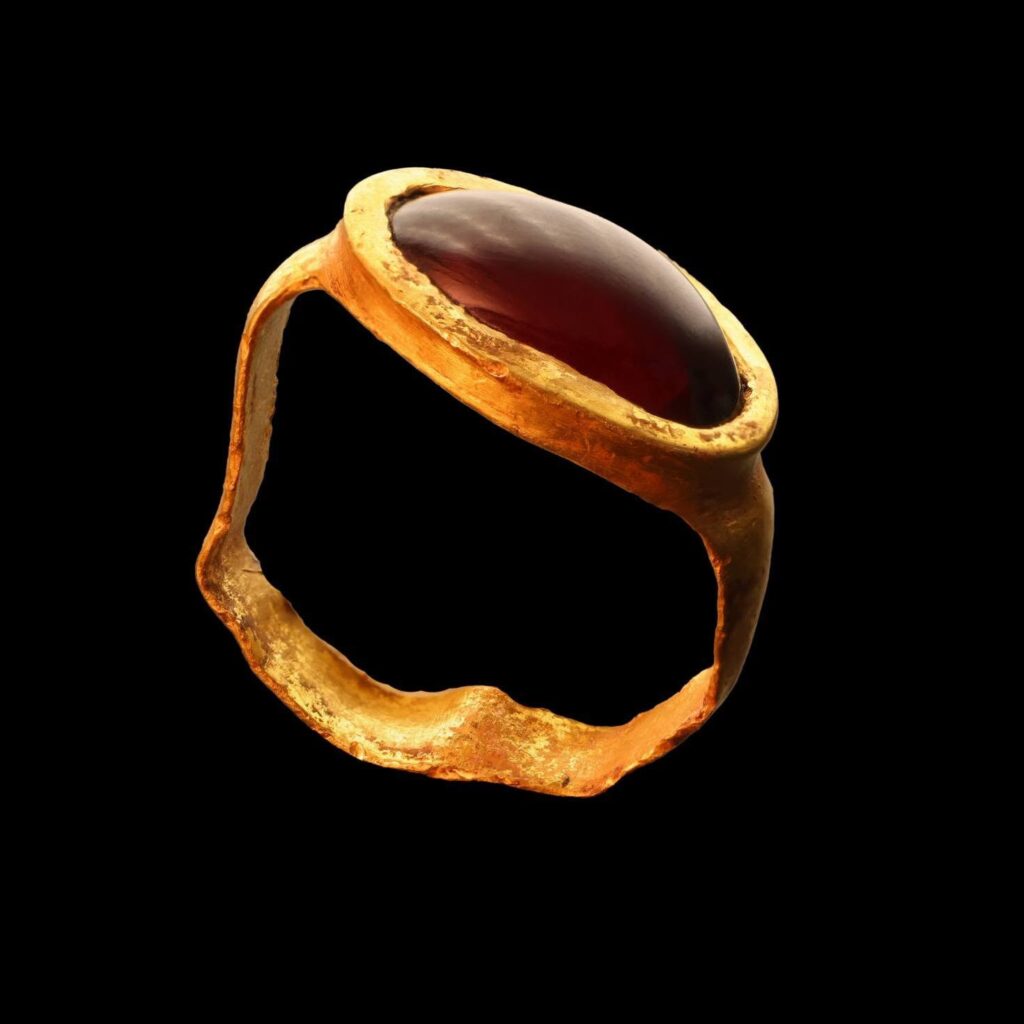
Rather than appearing together in a concealed cache, individual pieces or small groups of jewelry turned up beneath floors at different locations throughout the building. Their intact condition, value and repeated appearance in similar contexts led researchers to argue that people deliberately deposited them rather than simply losing them.
Not a hidden treasure
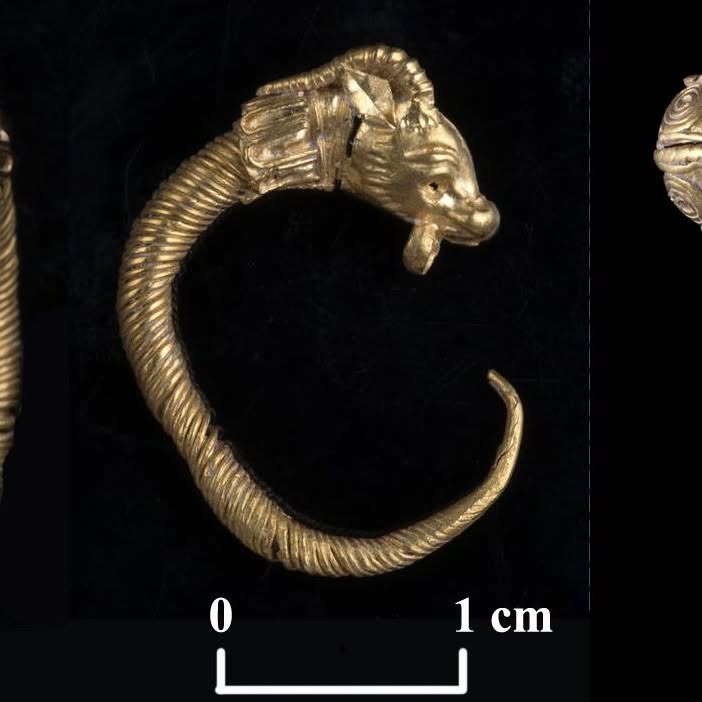
A new study published in ‘Atiqot examines why valuable jewelry repeatedly ended up beneath the floors of the same residence. Researchers Marion Sindel, Efrat Bocher, Rikki Zalut Har-Tuv, Yuval Gadot and Yiftah Shalev argue that the distribution does not resemble a conventional hoard. Someone hiding valuables during a crisis would normally gather them in one place with the intention of recovering them later. Here, however, the jewelry appeared as isolated deposits in different parts of the building.
The repeated pattern suggests that the objects may instead reflect a domestic ritual carried out on several occasions. The unusually small rings offer an additional clue. Drawing on evidence from the wider Hellenistic world, the researchers note traditions in which girls approaching adulthood or marriage dedicated objects associated with childhood. They suggest that Jerusalem families may have practiced a comparable custom, possibly placing childhood jewelry beneath household floors during an important stage of life.
The researchers do not claim that the evidence proves a specific ceremony. However, the recurrence of valuable jewelry in similar contexts makes a purely accidental explanation increasingly difficult to sustain.
A wealthy household in Hellenistic Jerusalem
Building 110 itself strengthens the picture. Its size, construction quality and luxury objects indicate that a prosperous family occupied the residence, possibly members of Jerusalem’s urban elite. Other recent discoveries in Jerusalem have likewise shown how small objects can reveal surprisingly detailed aspects of everyday life in the ancient city.
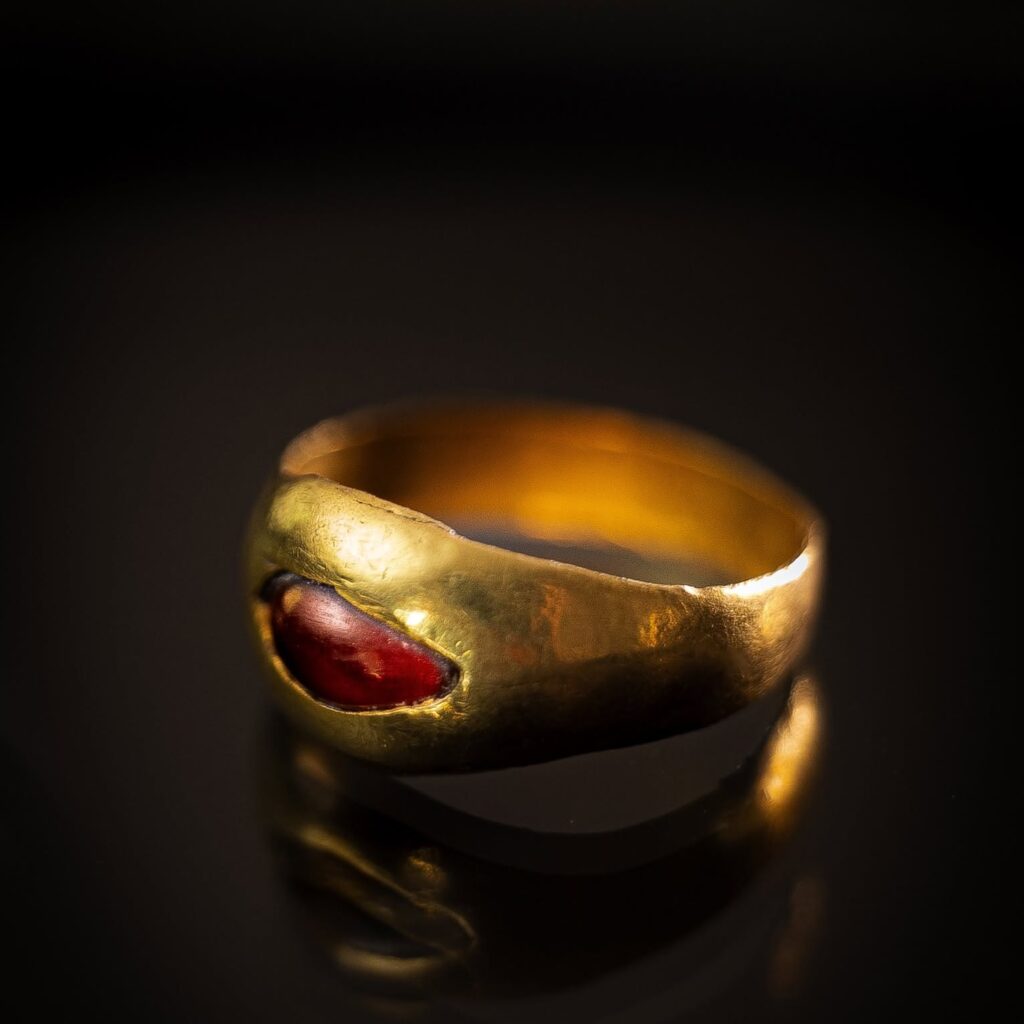
The gold ornaments also connect the household with broader Hellenistic fashions that circulated throughout the eastern Mediterranean. Jewelry made from gold and colorful stones served not only as decoration but also as visible expressions of wealth, identity and social status.
Yet the smallest objects may carry the most intimate story. If the researchers’ interpretation is correct, these tiny rings may preserve evidence of a deeply personal transition: the moment when childhood possessions became part of a family ritual marking the passage toward adulthood.
Cover Image: Two gold rings set with red stones discovered in a Hellenistic-period residential building at Jerusalem’s City of David. The smaller ring measures only about 1.2 cm in diameter. Credit: City of David / Israel Antiquities Authority.