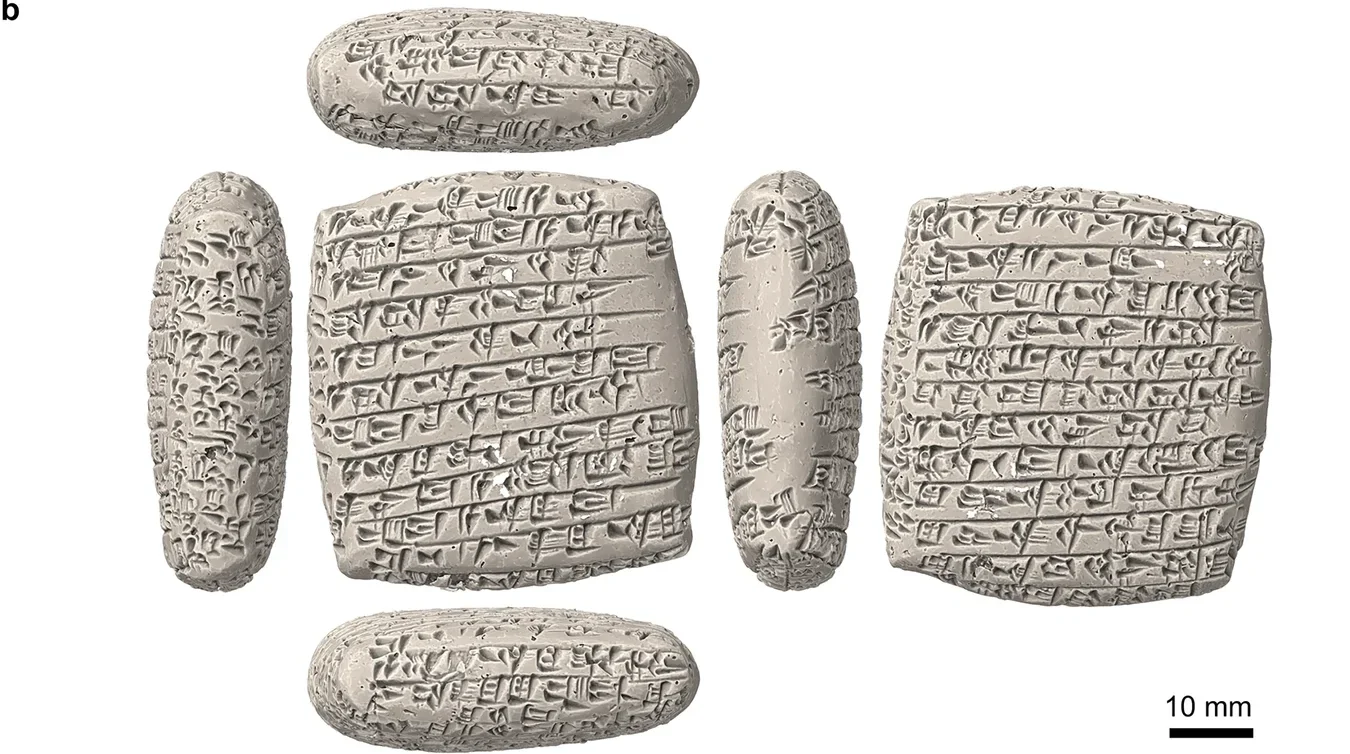
Nearly 4,000 years ago, cuneiform letters sent through the Old Assyrian trade network in Anatolia were written on small clay tablets, wrapped in thin clay envelopes, sealed, and sent on their way. The outside usually carried only limited information: the sender, the recipient, and seal impressions. The message itself stayed hidden until the recipient cracked the envelope open.
Some of those letters were never opened.
Now, researchers have read sealed cuneiform letters from Kültepe, ancient Kanesh, without breaking the clay envelopes that kept them closed for four millennia. The work, published in npj Heritage Science, used a mobile X-ray CT scanner designed to examine fragile museum objects on site.
A locked archive from ancient Kanesh
Kültepe, in central Anatolia, was one of the main centers of the Old Assyrian merchant network in the 19th and 18th centuries B.C. Traders from Assur, in northern Mesopotamia, lived there for long periods, sending letters about textiles, silver, debts, caravans, family affairs and business disputes.
Hundreds of clay tablets from this world are preserved today, many of them in the Museum of Anatolian Civilisations in Ankara. But sealed examples have always posed a problem. Break the envelope, and the text can be read. Leave it intact, and the letter remains silent.
Earlier generations sometimes opened such envelopes. That gave scholars access to hidden texts, but it also destroyed part of the object: the envelope, the seal impressions and the evidence of how the letter had been prepared for transport.
The scanner went to the museum
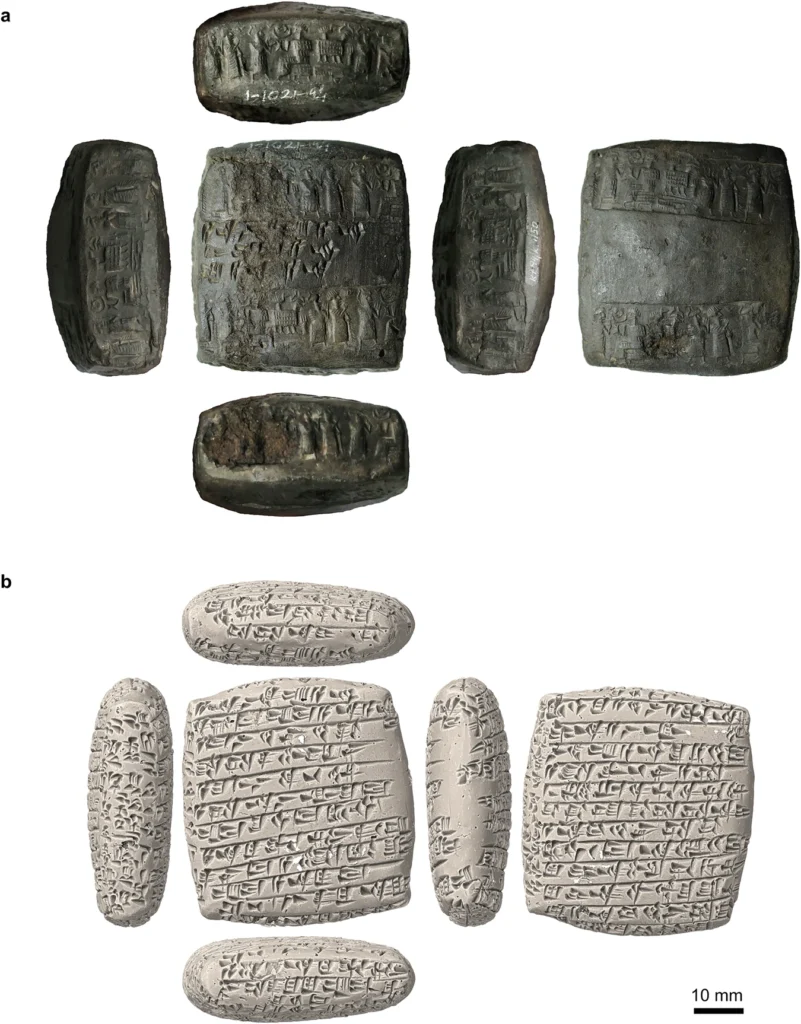
The new device, called ENCI, short for Extracting Non-destructively Cuneiform Inscriptions, was developed by a team including Assyriologist Cécile Michel and X-ray physicist Christian G. Schroer.
Although ENCI is not lightweight, it was built to move between collections. The scanner weighs about 420 kilograms and can be dismantled into eight parts. After a first campaign at the Louvre Museum in Paris, it was taken to Ankara, where researchers recorded 64 tomograms of 48 tablets and related objects over three weeks.
The scans create detailed 3D images of the object’s interior. With digital processing, researchers can separate the hidden tablet from its envelope on screen and make the cuneiform signs readable without touching the original surface.
A wife, a debt and a refusal
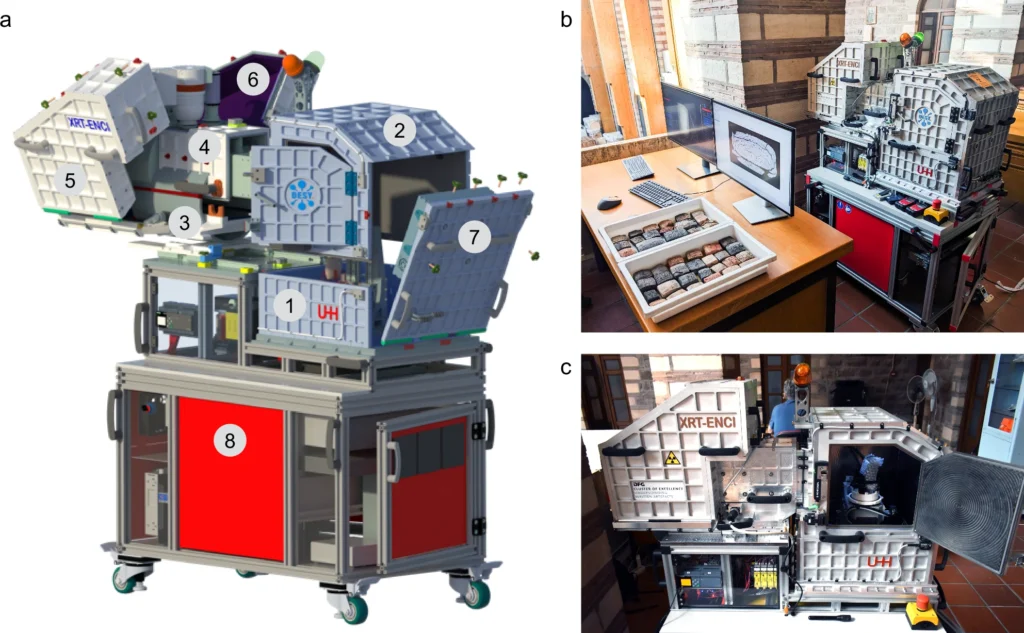
One of the clearest results came from a sealed letter excavated at Kültepe in 1994. Its envelope was addressed to Ennum-Aššur, son of Šalim-Aššur, and bore the seal of Anna-anna, his wife.
The text inside was not a royal decree or a literary work. It was a household business letter. Anna-anna had been trying to recover silver owed to her absent husband. The debtor refused to hand it over to her, saying he would pay only when Ennum-Aššur returned.
That detail is precisely why the letter matters. It shows a woman acting within the commercial life of an Assyrian household in Anatolia, not merely appearing as a name on the edge of a male archive. While merchants travelled, women could be left to manage debts, messages and decisions at home.
Another sealed letter showed that some ancient writers used a second small clay tablet as an added page when the first was full. The scanner also revealed details of envelope construction, including clay layers and internal traces that would be lost if the object were opened.
The result is not simply a new way to read old words. It changes the status of sealed tablets in museum collections. They no longer have to be treated as a choice between text and object. For Kültepe, that means some of the oldest private letters from Anatolia can now be read while the material signs of privacy — the sealed envelope, the seal impressions and the folds of clay — remain intact.
Michel, C., Schroer, C.G., Olbrich, S. et al. Deciphering 4000-year-old cuneiform letters hidden in clay envelopes using a mobile X-ray computed tomography scanner. npj Herit. Sci. 14, 303 (2026). https://doi.org/10.1038/s40494-026-02568-7
Cover Image Credit: Letter Kt 94/k 1150 from the Museum of Anatolian Civilisations in Ankara. Credit: Michel, C., et. al., 2026