
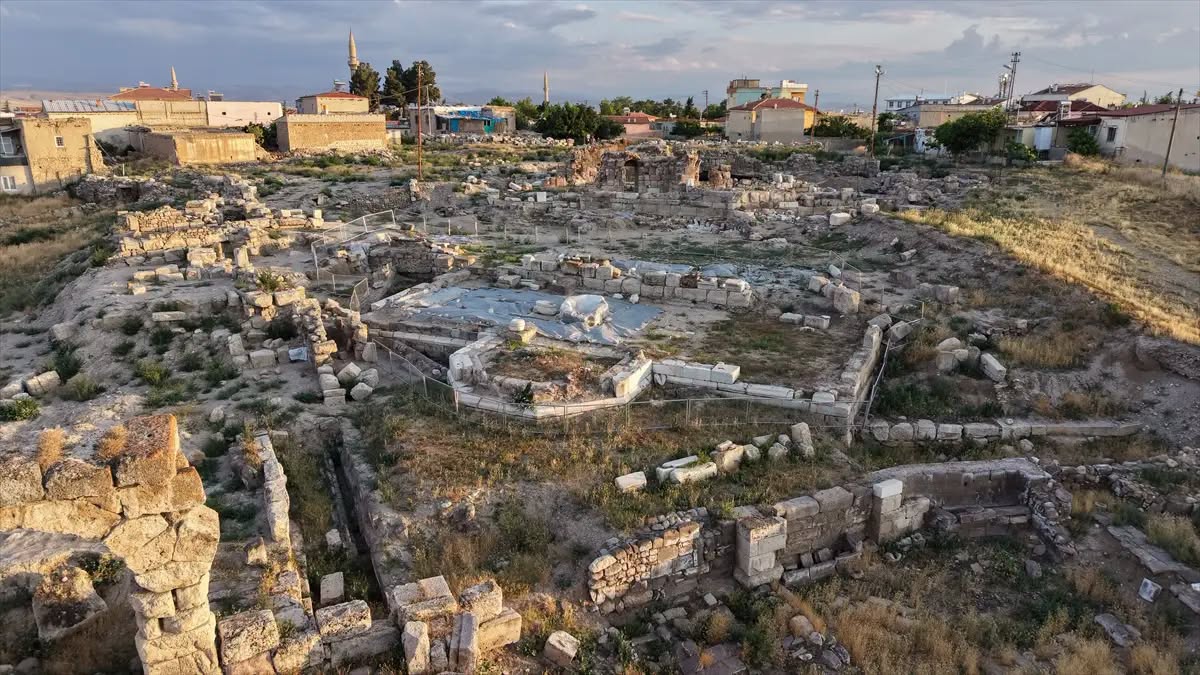
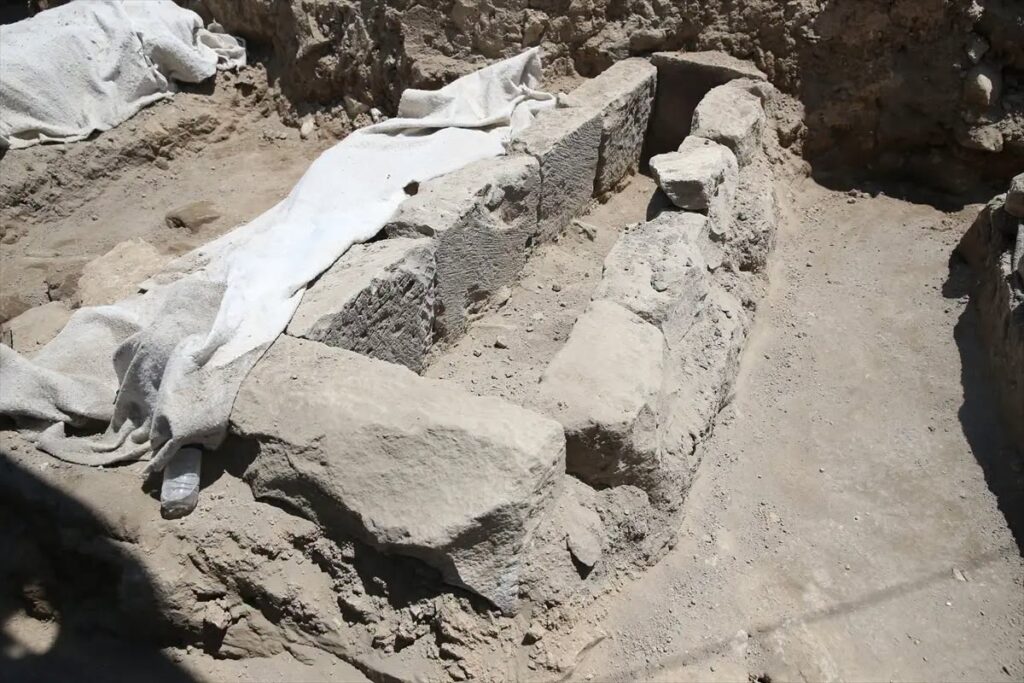
Archaeologists excavating the ancient city of Tyana in central Turkey have identified 42 Late Roman graves inside an octagonal church. Eighteen of the burials have been excavated so far, while most of the remaining graves will be examined in future seasons.
The graves are concentrated in the western nave of the church at Kemerhisar, a town in the Bor district of Niğde Province. Tyana was an important city in antiquity and is best known today for the Roman aqueducts that still cross the modern settlement.
The Number of Graves Rose from 25 to 42
The excavation team entered the season with 25 graves that had been prepared during earlier work. As archaeologists cleared the soil around them, they identified additional burials, bringing the total to approximately 42.
Prof. Dr. Ömür Dilek Erdal of Hacettepe University’s Department of Anthropology said the discovery prompted the team to concentrate its work in the western nave.
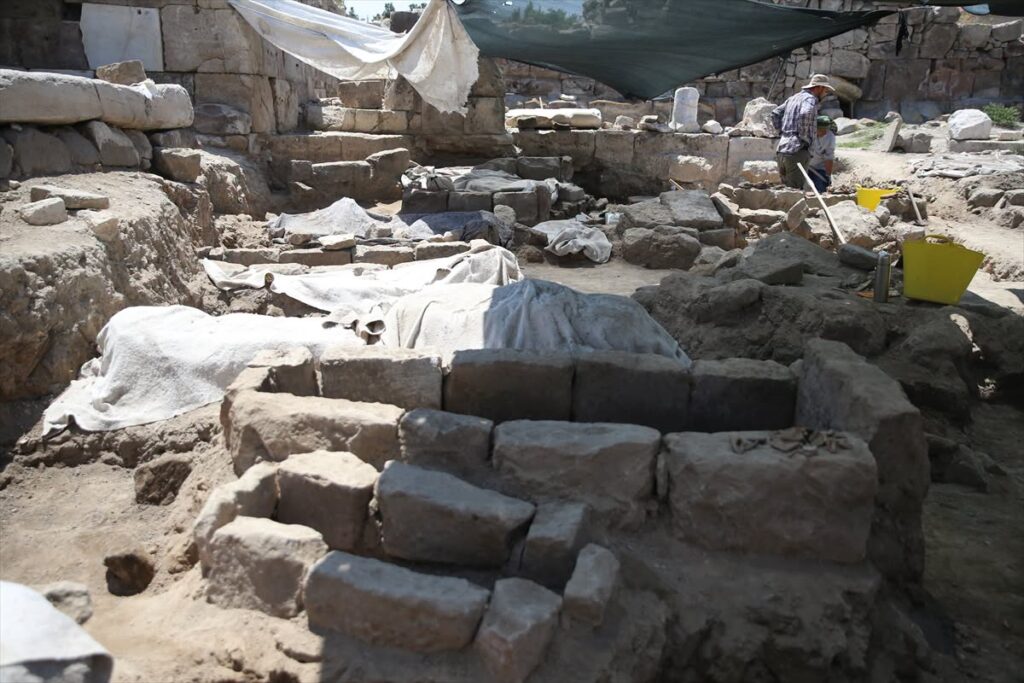
Eighteen graves have now been opened. Two more are scheduled to be excavated during the current season, while the remaining 22 will be protected and left ready for work next year.
Human skeletal remains recovered from the graves are being examined by anthropologists. Detailed results have not yet been announced, and the excavation team has not stated whether all 42 burials belong to a single period or represent several phases of use.
Burials Inside a Reworked Church
According to the excavation team, the octagonal church originated during the early Christian period and was altered at different points in its history.
The graves show that part of the building was used as a burial area during the Late Roman period. The available announcement does not establish whether the burials were placed inside the church while it was still functioning as a place of worship or during a later phase of the structure’s history.
This question may become clearer as the remaining graves are excavated and their relationship with the church’s floors and architectural phases is documented.
Work is also continuing in the central nave, the wide main space between the entrance and the altar. Excavation director Prof. Dr. Osman Doğanay of Aksaray University said the church is one of the areas the team hopes to prepare for visitors.
Tyana’s Aqueducts Are Also Being Prepared for Tourism
The wider excavation program includes conservation and visitor-access work around Tyana’s aqueducts, one of the ancient city’s most visible monuments.
The aqueducts and the octagonal church form part of plans to make more of the archaeological site accessible to the public. The excavation of the church, however, remains incomplete, with more than half of the identified graves still unopened.
Future work on the remaining burials is expected to provide a firmer chronology for the cemetery and a clearer picture of how the church was used and modified during Late Antiquity.
Cover Image: Aerial view of the octagonal church and surrounding ruins at the ancient city of Tyana in Niğde, Turkey. Credit: AA