
Beneath what was once a bustling market in northeastern Türkiye, archaeologists have uncovered something far older — and far rarer — than anyone expected.
Excavations in the Pazarkapı district of Trabzon have revealed an ancient quay structure now identified as one of only three known river harbors in the world. The structure, linked to the Kuzgundere Stream, dates back to between the 1st century BCE and the 1st century CE, yet continued to be used and modified for centuries.
The discovery reshapes how historians understand trade networks along the Black Sea coast.
A Harbor Connected to a Stream, Not the Open Sea
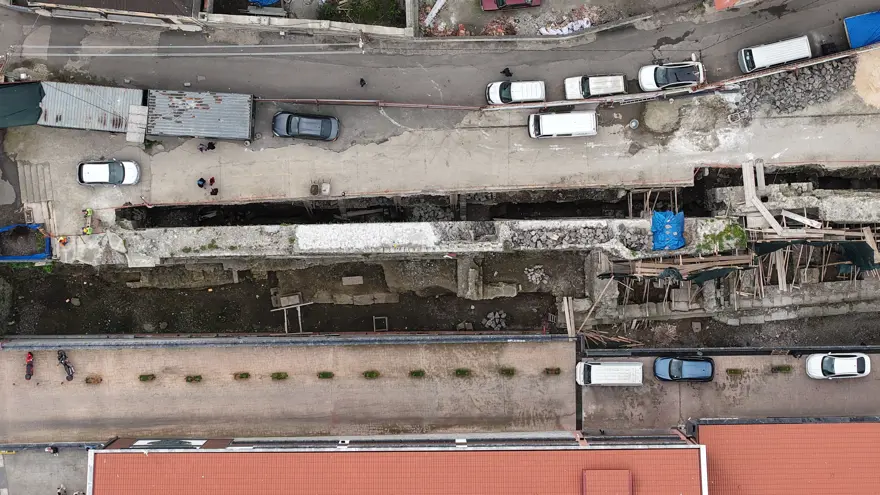
Trabzon — known in antiquity as Trapezus — has long been recognized as an important Black Sea port. But this newly identified structure tells a more complex story.
Archaeological investigations led by Vedat Keleş and conservation specialist Yaşar Selçuk Şener determined that the structure was not simply a maritime quay. Instead, it functioned as a river harbor connected to the Kuzgundere Stream, suggesting that trade activities extended inland through controlled freshwater access points.
River harbors are exceptionally rare in the archaeological record. Unlike open-sea ports, they require carefully engineered retaining walls, flood management, and adaptable access systems. Their scarcity makes each example significant for understanding regional trade logistics.
135 Meters of Stone, Eight Meters Below Ground
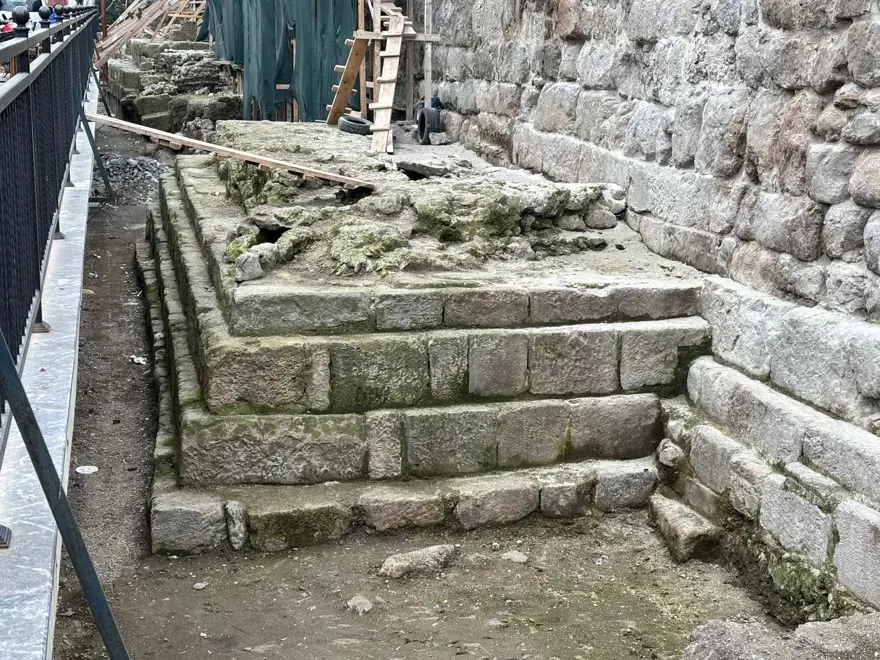
Excavations reaching depths of 6–8 meters exposed a massive quay wall measuring approximately 135 meters in length and 2 meters in thickness.
The structure shows multiple construction phases. Archaeologists identified perpendicular wall segments that may have served as storage units or commercial spaces. Two former gateways were also detected — one arched and one possibly belonging to an earlier phase — indicating controlled access for goods transfer.
Material evidence suggests the harbor saw continuous use across four historical periods: Roman, Byzantine, Ottoman, and Republican.
Trade Links Across the Black Sea
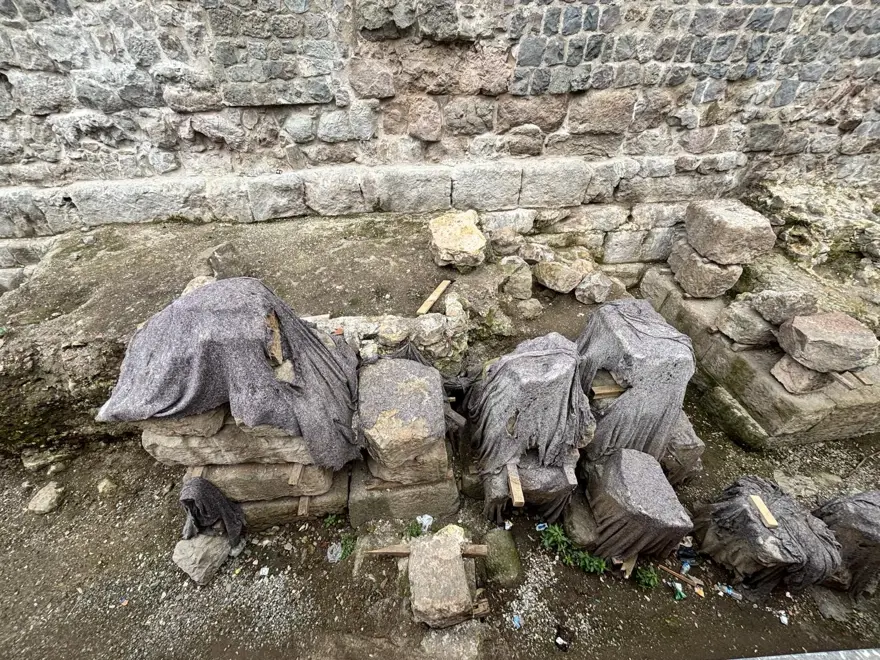
Among the most telling discoveries was an oil lamp identified as Crimean in origin. This find provides tangible evidence of trade connections between Trabzon and the Crimean Peninsula across the Black Sea.
Fragments of Byzantine ceramics further reinforce the site’s long commercial life.
Together, these finds push Trabzon’s documented trade activity back to at least the late Hellenistic–early Roman period, demonstrating that its economic significance predates many previously assumed benchmarks.
Preserving the Structure for the Future
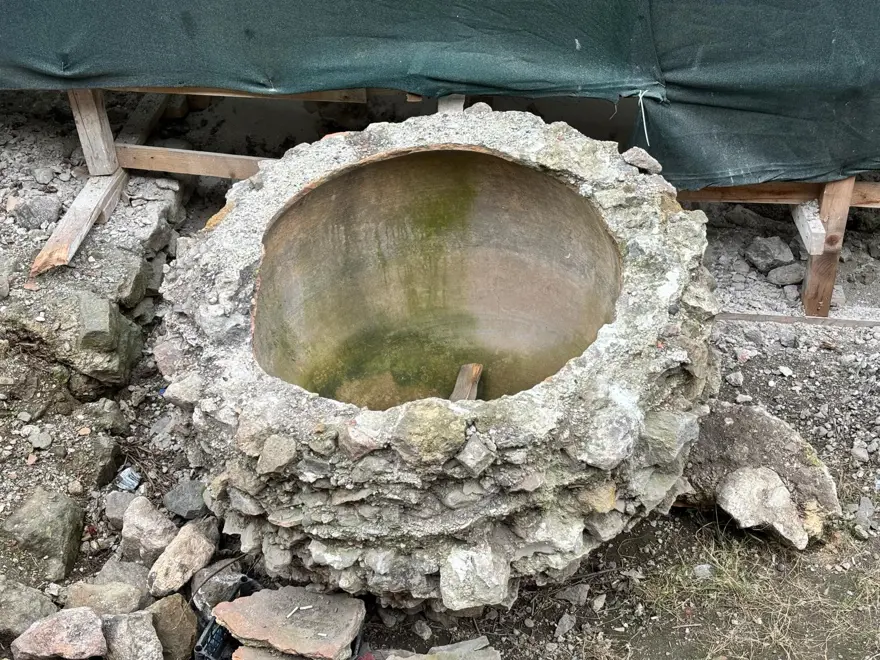
The quay walls had suffered from modern cement interventions that threatened the integrity of the original masonry. Conservation teams removed harmful materials and applied hydraulic lime-based injection techniques to stabilize internal voids.
The final protective capping layer ensures long-term preservation against water infiltration and environmental damage.
The goal is not merely excavation — but durability.
Why This Discovery Matters
River harbors represent a different model of ancient trade infrastructure. Instead of relying solely on maritime docking, they allowed goods to move through inland waterways, offering security and logistical flexibility.
The identification of such a structure in Trabzon suggests that Black Sea commerce was more structurally sophisticated than previously understood.
And perhaps most striking of all: for decades, modern urban life continued above this harbor — completely unaware of the ancient trade corridor lying beneath.