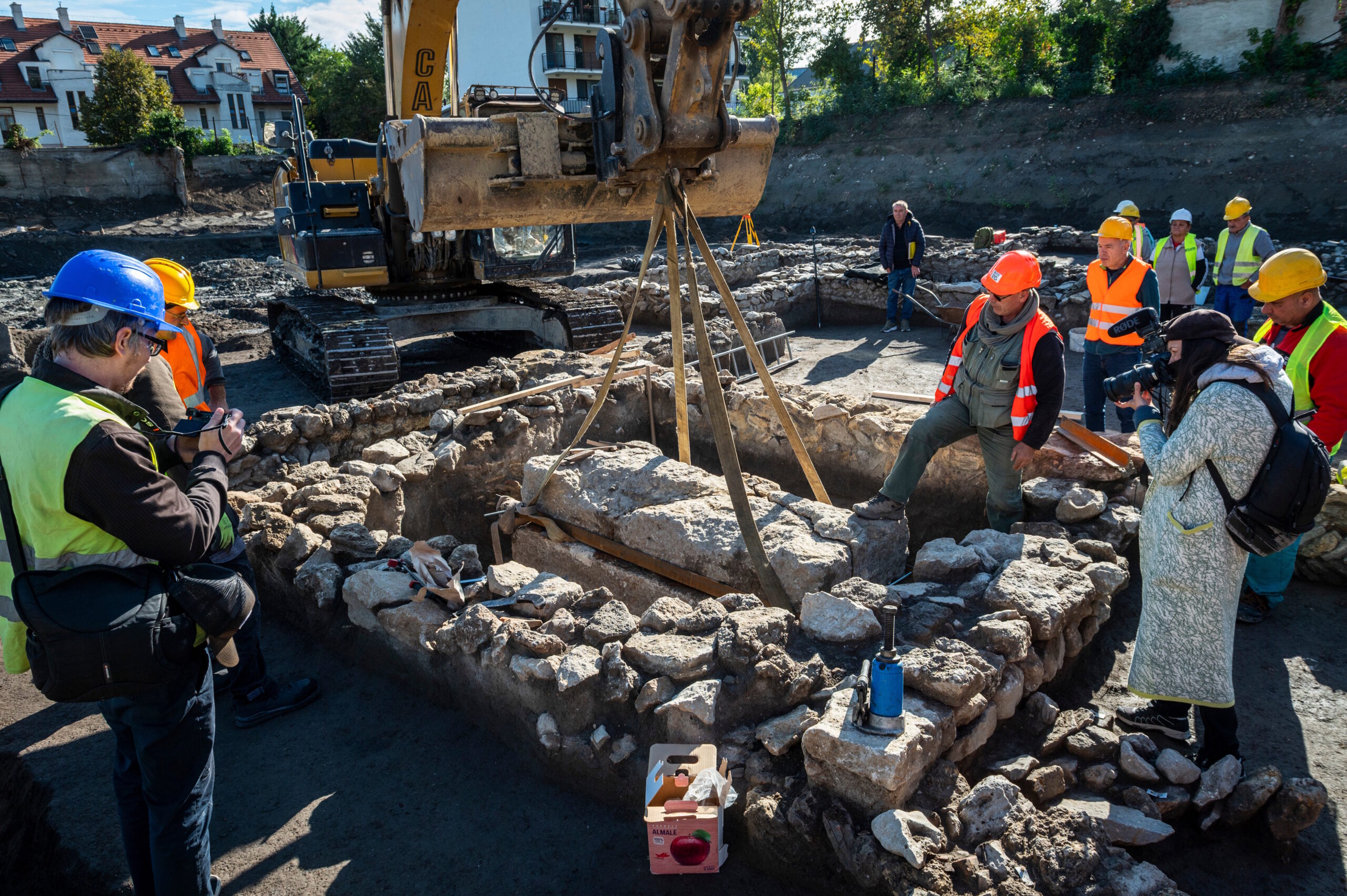
When archaeologists in Budapest lifted the heavy limestone lid of a Roman sarcophagus—still sealed after 1,600 years—they had little idea how well its interior had survived. As the dust settled, the outline of a young woman appeared, surrounded by a collection of grave goods so finely preserved that the entire burial instantly became one of the most remarkable Roman-era finds in Hungary in decades.
A Window Into Late Roman Aquincum
The sarcophagus surfaced during excavations in Óbuda, part of the ancient city of Aquincum, a vibrant Roman center on the Danube. The settlement began as a Celtic foundation of the Eravisci tribe in the 1st century BC before Rome transformed it into a major military and administrative hub. By the late 2nd century AD, Aquincum had grown into a provincial capital with grand bath complexes, a governor’s palace, luxury residences, and an industrial sector known for pottery, metalworking, textile dyeing, and food production.
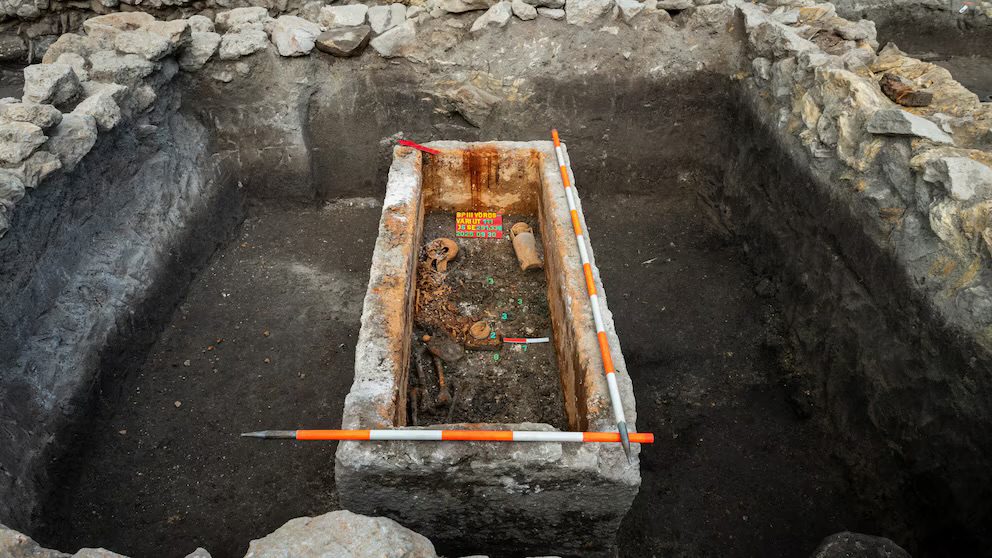
Inside this once-bustling urban landscape, archaeologists uncovered a row of Late Roman graves inserted into the remains of abandoned 3rd-century houses. Among the nine burials found here, one stood apart in both scale and craftsmanship: a massive limestone sarcophagus whose lid was still locked in place by iron clamps and poured lead, a rare survival that kept looters away for centuries.
The Unsealing
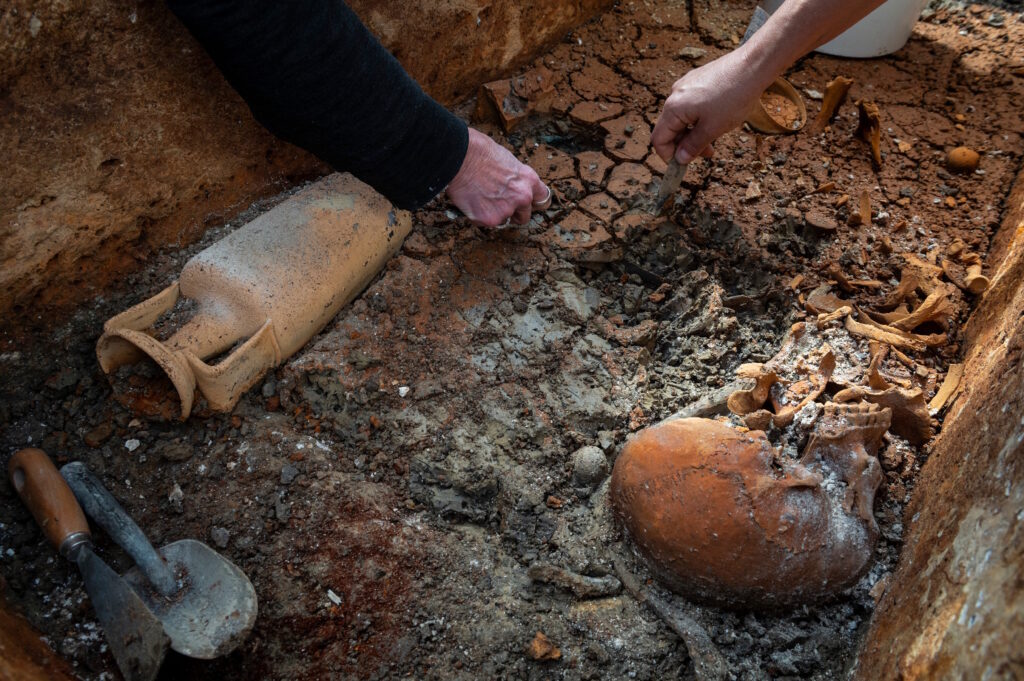
Once the sarcophagus was safely moved, researchers removed a thin layer of clay that had seeped through the ancient seal. What lay beneath was astonishing:
- A bone hairpin
- Small bronze figurines
- A polished amber piece
- 140 coins
- A light-green glass vase and matching bowl
- Textiles bearing traces of gold thread
- And at the center, the remains of a young woman
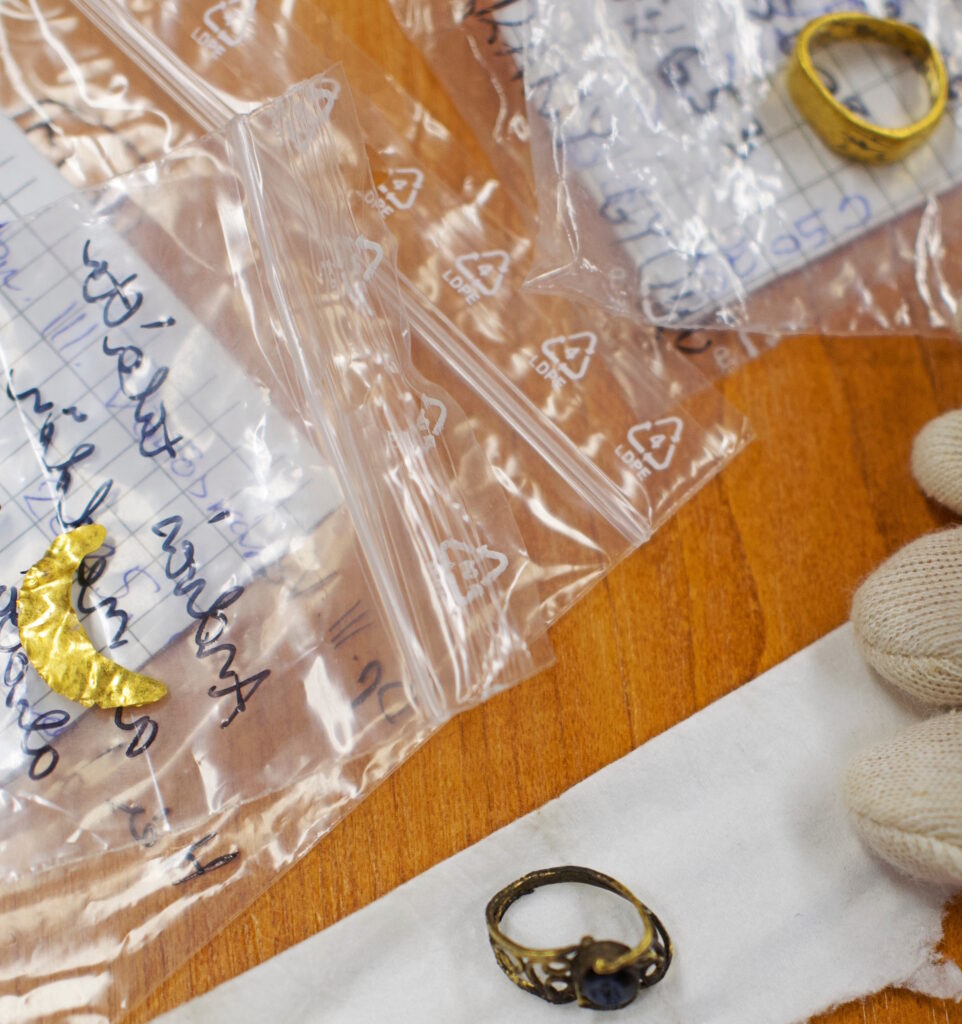
The combination of grave goods, the specially-made sarcophagus, and the quality of the objects suggest she belonged to Aquincum’s wealthy elite—possibly a member of a family closely tied to the city’s administrative or commercial life during the 4th century.
Why This Burial Matters
While the reuse of older sarcophagi was common by the 4th century, this coffin appears to have been crafted specifically for the woman buried inside it. The undisturbed nature of the tomb makes it an unusually complete snapshot of elite funerary practice in Late Roman Pannonia.
The find also enriches ongoing research into how Aquincum’s urban spaces were repurposed after periods of decline. The transformation of once-luxurious homes into a burial ground reflects the shifting landscape of the city during late antiquity.
What Comes Next
The skeletal remains and the objects are now undergoing laboratory analysis and conservation at the Budapest History Museum. Specialists will study the young woman’s biological profile, the origins and craftsmanship of the grave goods, and the broader cultural implications of the burial.
The results are expected to illuminate not only one woman’s story, but also the social dynamics of a city standing at the crossroads of Rome’s Danube frontier.
This report is based on information originally released by the Associated Press (AP). The story has been independently rewritten for Ancientist.