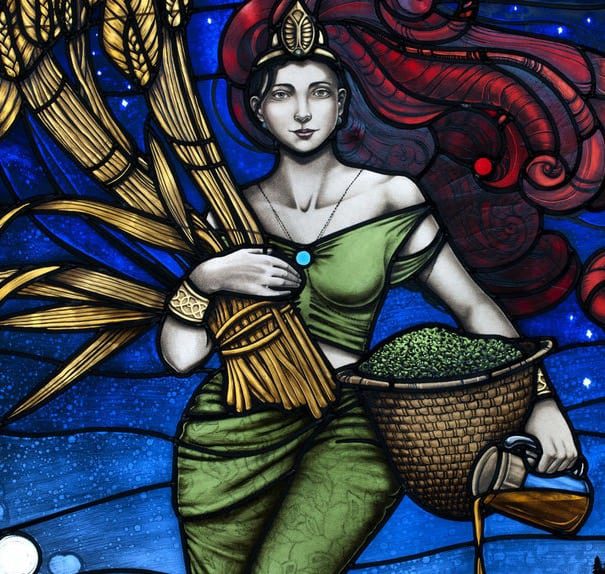
In ancient Sumer, beer was more than a drink. It was nourishment, a safer alternative to unpredictable water sources, a social binder, and a sacred gift offered to gods and ancestors. Fermentation shaped daily life, ritual practice, and even the rhythm of community gatherings across Mesopotamia.
At the center of this long-lived tradition stood Ninkasi — the divine brewer, the embodiment of beer’s life-giving spirit, and one of the most captivating goddesses of the Sumerian world.
Ninkasi: Brewer of the Gods, Giver of Joy
According to Sumerian mythology, Ninkasi was born during one of the healing acts of the mother goddess Ninhursag as she restored the god Enki. This mythical origin ties beer directly to themes of renewal, healing, and cosmic balance. For the Sumerians, beer carried spiritual significance: it brought vitality, comfort, and lightness of spirit.
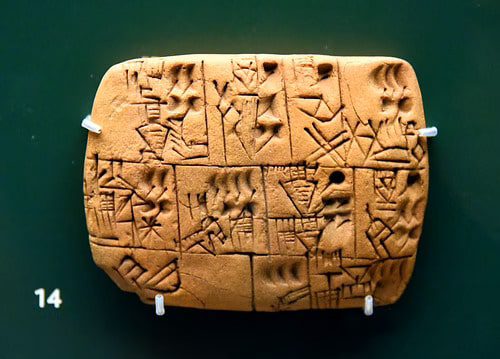
Ninkasi’s priestesses—among the earliest professional women brewers—crafted beer through a ritualized process. Each stage, from preparing grain to cooling the mash on reed mats, echoed the divine labor of their goddess. Brewing was not merely production; it was worship.
Beer in Sumerian Life and Ritual
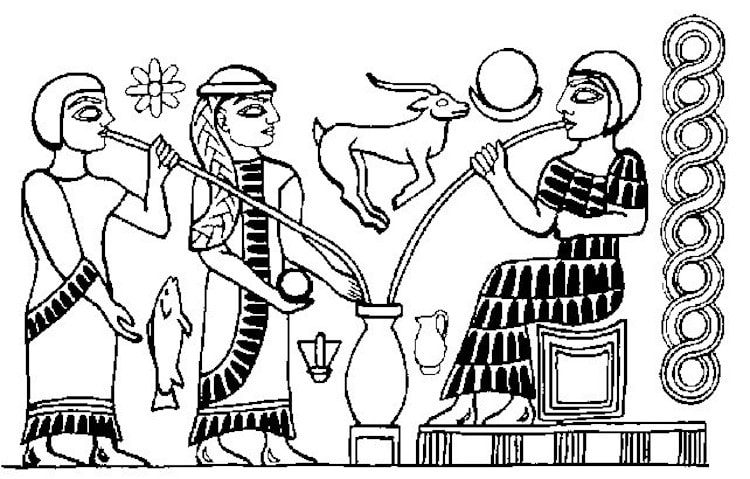
Texts and artwork show that beer was consumed across all levels of society:
from laborers receiving daily rations to nobles sharing ceremonial vessels at banquets. Beer was poured for gods during offerings, presented to ancestors, and enjoyed during festive gatherings.
Sumerian literature treats drunkenness as a human weakness—but the beer itself is never criticized. The drink was considered a divine gift meant to bring joy, clarity, and connection, as long as one respected its strength.
The Hymn to Ninkasi: A Mythic Poem and the World’s Oldest Beer Recipe
Among the literary treasures of ancient Mesopotamia, few texts rival the Hymn to Ninkasi.
Part praise-song, part brewing manual, this poem is believed to be the earliest surviving recipe for beer. Its rhythmic structure helped priestesses memorize each step of the brewing process in a largely oral society.
Selected Hymn to Ninkasi
Born from the flowing waters,
watched with compassion by Ninhursag.
Born from the flowing waters,
gently guarded by Ninhursag.
After she built your city beside the sacred lake,
she raised its great walls for you.
Ninkasi, once your city stood by the holy lake,
its walls were completed in your honor.
Your father is Enki, Lord Nidimmud;
your mother is Ninti, queen of the sacred lake.
Ninkasi, your father is Enki, Lord Nidimmud;
your mother is Ninti, ruler of the holy waters.
You work the dough with a great ladle,
mixing it in the pit, sweet-smelling bappir rising.
Ninkasi, you shape the dough with the great ladle,
stirring the fragrant bappir in the deep pit.
You bake the bappir in the mighty oven,
you set the heaps of husked grain in order.
Ninkasi, you who bake the bappir in the great oven,
arranging the tall piles of grain.
You moisten the malt upon the ground,
keeping even noble dogs and rulers at bay.
Ninkasi, you water the malt upon the earth,
while noble dogs and lords are held back.
You soak the malt within the jar,
as waves rise and waves fall.
Ninkasi, you immerse the malt in the vessel,
as the waters swell and subside.
You spread the cooked mash on wide reed mats,
letting the coolness prevail.
Ninkasi, you lay the warm mash on reed mats,
allowing the cool air to take hold.
You hold the great sweet wort in both hands,
blending it with honey and wine.
Ninkasi, you pour the sweet wort into the vat,
enriching it with honeyed fragrance.
You set the filtering vat—its pleasant sound ringing—
properly above the great collector vat.
Ninkasi, you place the singing filter vessel
securely atop the wide collecting jar.
And when you pour out the filtered beer
from the collector’s barrel,
it rushes like the Tigris and Euphrates in flood.
Ninkasi, you release the purified beer,
a surge like the twin rivers in full force.
The Eternal Legacy of Ninkasi
The techniques of modern breweries may rely on steel tanks and carefully calibrated temperatures, yet the cultural heart of beer still echoes the ancient world. For the Sumerians, beer connected communities, sustained life, and mediated the relationship between humans and the divine.
At the center of this legacy stands Ninkasi —
goddess, brewer, healer, and the enduring spirit of human celebration.
Her hymn preserved a recipe;
her cult preserved a tradition;
and her name preserved the joy that beer carried through thousands of years.