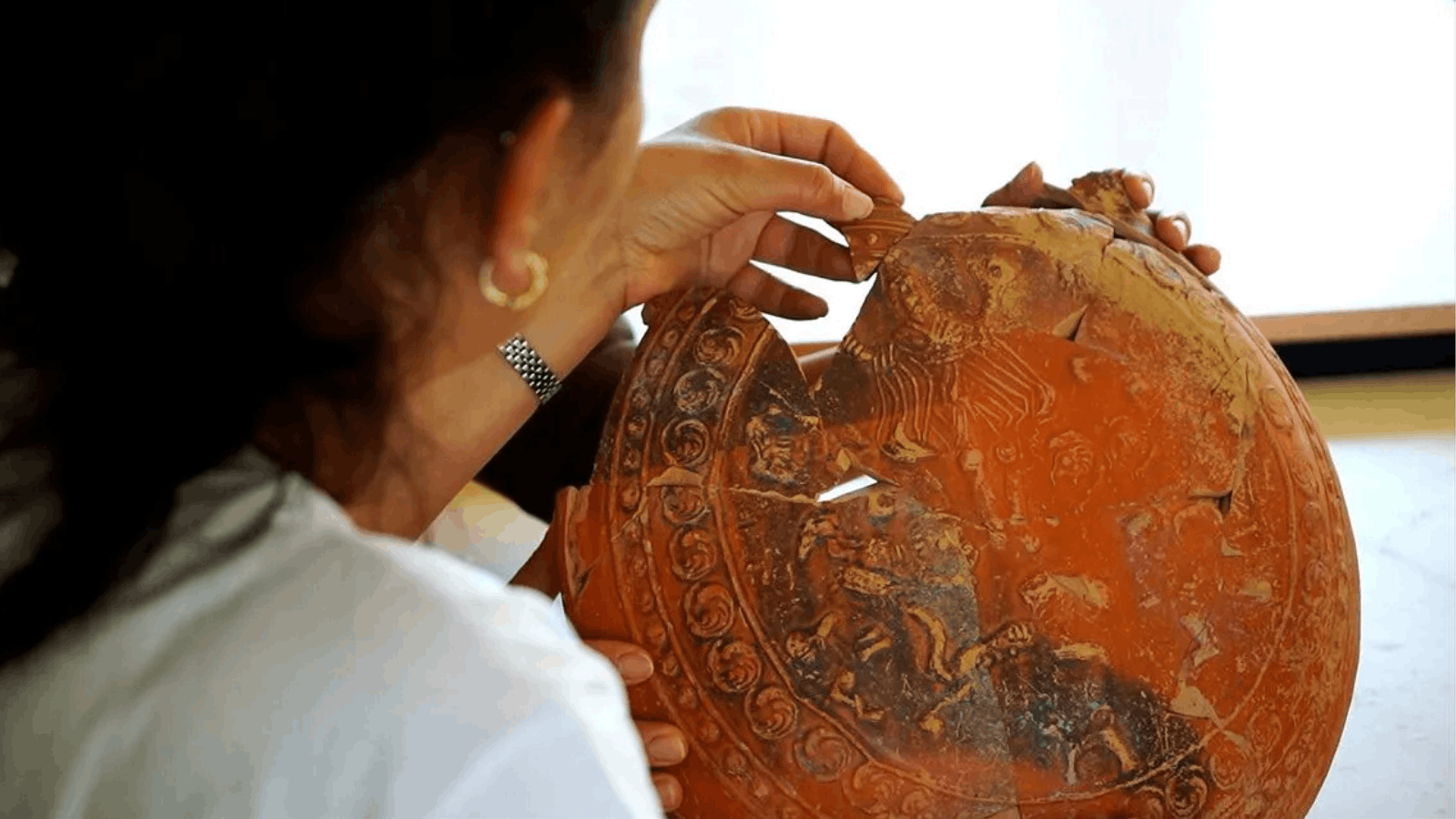
A 1,500-year-old liturgical vessel discovered at Pisidian Antioch carries a scene that archaeologists say has no known parallel in Christian art: Daniel shown together with all four beasts from his biblical vision.
The two-handled vessel dates to the 6th century AD and was uncovered during excavations in the ancient city’s Christian complex in Yalvaç, southwestern Türkiye.
Prof. Dr. Mehmet Özhanlı, an archaeologist at Süleyman Demirel University and director of the Pisidian Antioch excavations, said the arrangement of the figures makes the find exceptional. Daniel appears on both sides of the vessel alongside the four creatures described in the Book of Daniel, while other animal motifs, including a lion, deer and dog, are also incorporated into the decoration.
According to Özhanlı, no other liturgical vessel currently known brings together the creatures of Daniel’s vision in the same Christian iconographic composition.
A biblical vision transformed into an image
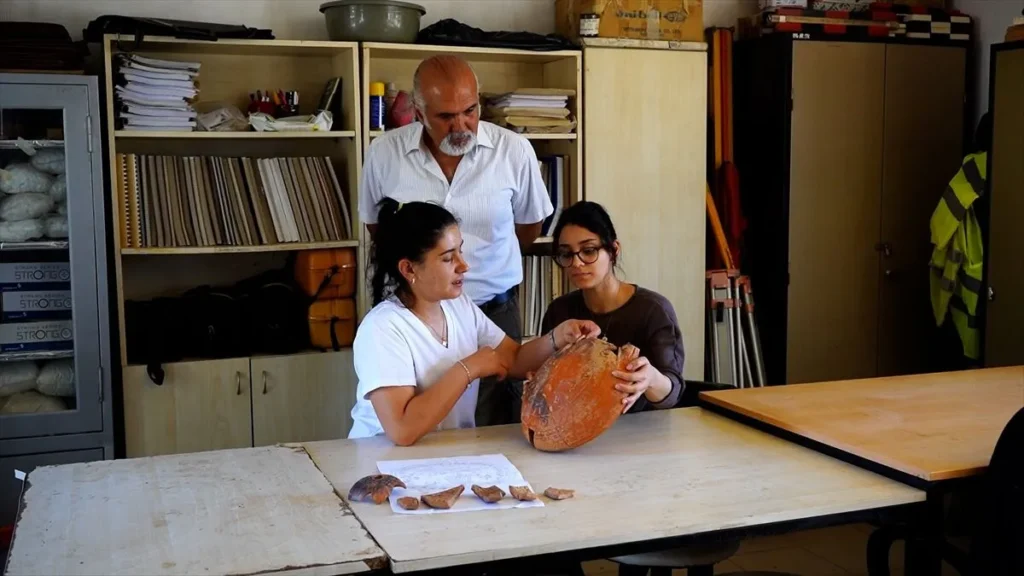
The imagery comes from one of the most striking passages in the Book of Daniel.
Daniel describes four great beasts rising from a turbulent sea, each different from the one before it. The vision was understood as a sequence of earthly kingdoms that would ultimately give way to divine rule.
According to Özhanlı, Jewish tradition associated the four beasts with Babylon, Media, Persia and the Hellenistic kingdoms. In Christian interpretation, the fourth beast was associated particularly with Rome, while the “Son of Man” who appears later in the vision was understood in relation to Christ.
Daniel was already a familiar figure in early Christian art. His miraculous survival in the lions’ den appears on sarcophagi, wall paintings and other objects from the Roman and Late Antique worlds.
Rather than concentrating solely on the lions’ den episode, however, the newly discovered vessel draws on the more complex imagery of Daniel’s prophetic vision. By bringing the four beasts together in a single composition on an object apparently intended for liturgical use, the vessel represents an iconographic arrangement for which the excavation team says there is currently no known counterpart.
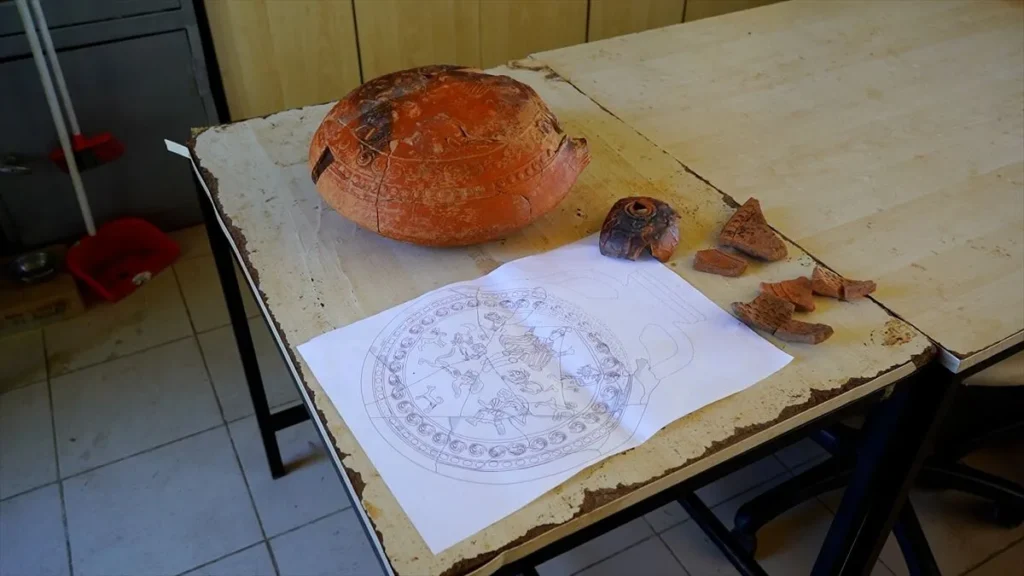
Recovered from a layer of destruction
Excavations have been continuing around the church and associated structures on Aedilicus Hill, an area that preserves several phases of Pisidian Antioch’s Christian history.
Archaeological work has identified a substantial layer of fire and ash linked to the Arab raids of AD 713. The vessel was recovered among remains associated with this destruction phase, placing it within one of the most clearly dated archaeological contexts on Aedilicus Hill.
Recent research by Özhanlı has shown that the area developed over centuries rather than in a single building phase. Earlier Roman remains were followed by structures from the Constantinian period and then by a church associated with the age of Emperor Justinian. After the destruction of the early 8th century, parts of the area were later reorganized and reused.
This long sequence places the vessel within a period when Pisidian Antioch was undergoing major political, religious and urban change.
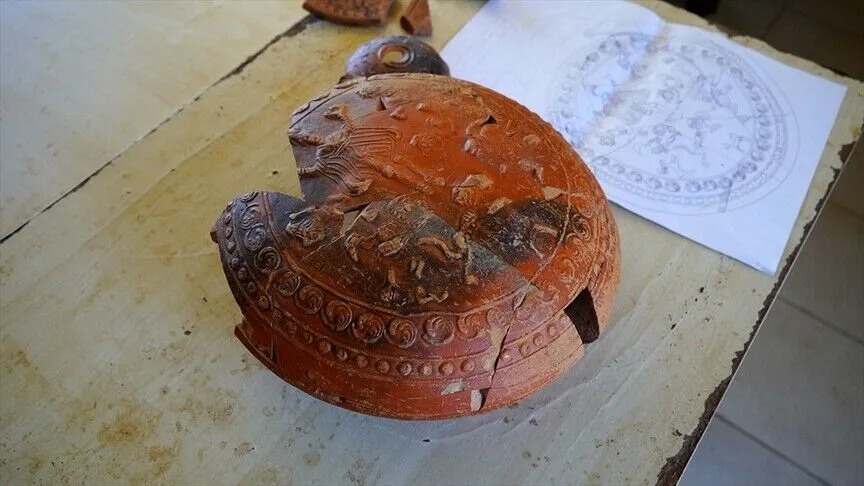
Was the vessel made in Pisidian Antioch?
The excavation team also believes the vessel may have been produced locally.
Excavations at Pisidian Antioch have uncovered numerous ceramic molds, while previous studies of pottery from the site have produced strong evidence for local manufacture. Oil-lamp molds, locally produced lamps and small ceramic containers have all been documented in and around the ancient city.
If the local-production hypothesis is confirmed, the vessel would provide evidence that the city’s ceramic workshops also produced objects carrying specialized Christian imagery.
Its decoration is particularly notable because the maker was not simply reproducing a cross or another widely used Christian symbol. The composition required a far more complex biblical episode to be translated into a recognizable visual form.
A city closely tied to early Christianity
Pisidian Antioch occupies a prominent place in the history of Christianity in Anatolia.
According to the Acts of the Apostles, Paul and Barnabas visited the city during the 1st century AD and preached in its synagogue. The episode became one of the best-known events associated with Paul’s first missionary journey through Asia Minor.
In the centuries that followed, Christianity increasingly shaped the city’s religious landscape. Churches and ecclesiastical buildings became part of Pisidian Antioch’s transformation from a Roman colonial center into an important Christian settlement.
Following the Council of Nicaea in AD 325, the city also emerged as the metropolitan center of the Pisidia region, reflecting its growing ecclesiastical importance in Late Antiquity.
The Daniel vessel belongs to this later phase of the city’s history. Its unusual iconography, possible local manufacture and discovery within the destruction horizon of AD 713 together provide a rare archaeological record of Christian material culture at Pisidian Antioch during the centuries before the site was substantially reorganized.