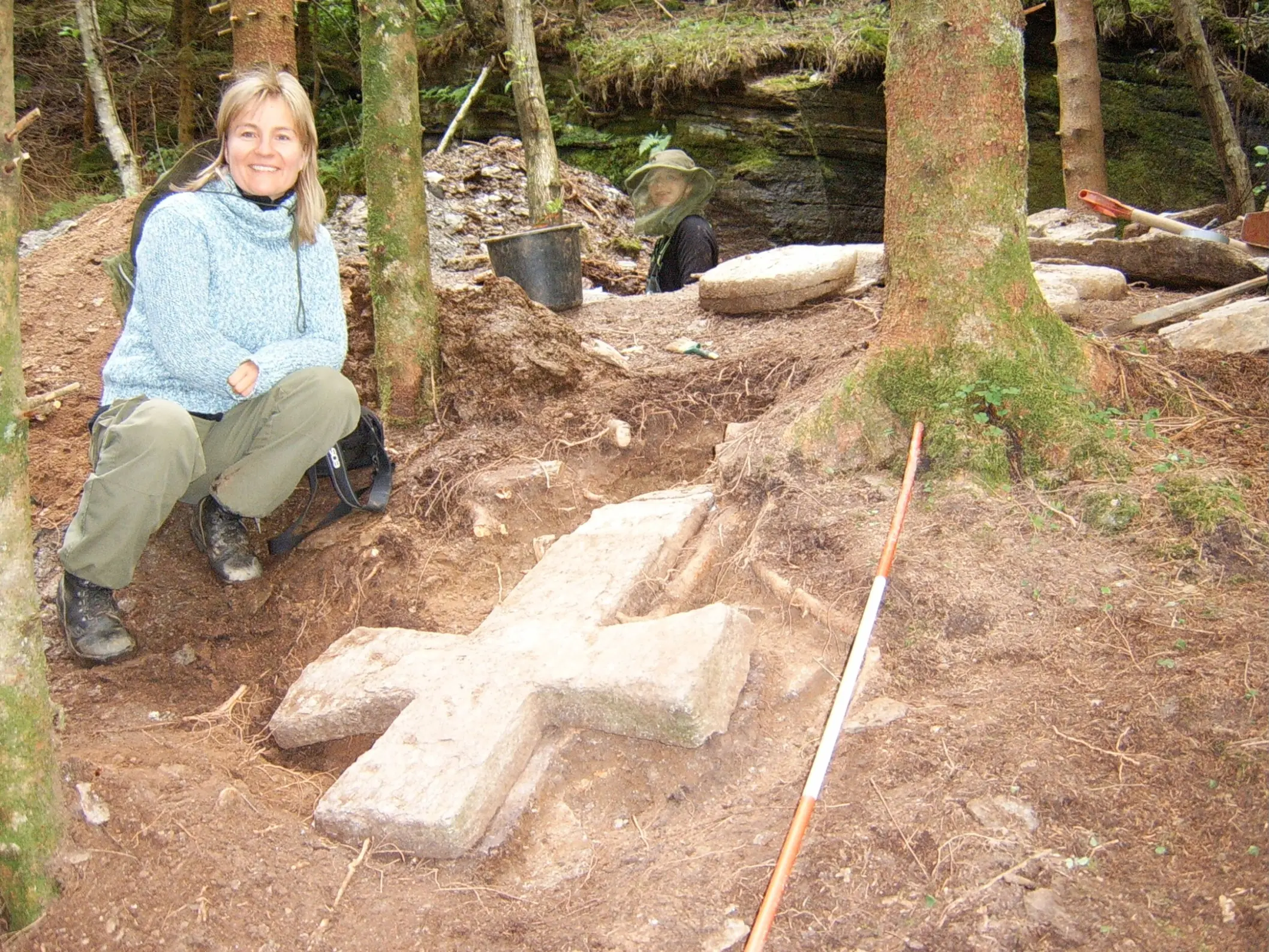
A heap of broken stone at Hyllestad in western Norway concealed more than ordinary quarry waste. Buried among the debris were fragments of seven medieval stone crosses, including pieces from monuments that may once have stood several metres high.
The discovery was made in 2008 during an excavation led by University of Bergen archaeologist Irene Baug. Her team had opened the trench to investigate the chronology of millstone production at Hyllestad, one of Norway’s most extensive historic quarry landscapes.
Instead, the excavation identified a place where medieval craftspeople had also produced monumental Christian crosses.
The finds have gained renewed attention as Baug prepares further research into the stone-cross tradition of western Norway.
Seven Crosses Abandoned at the Quarry
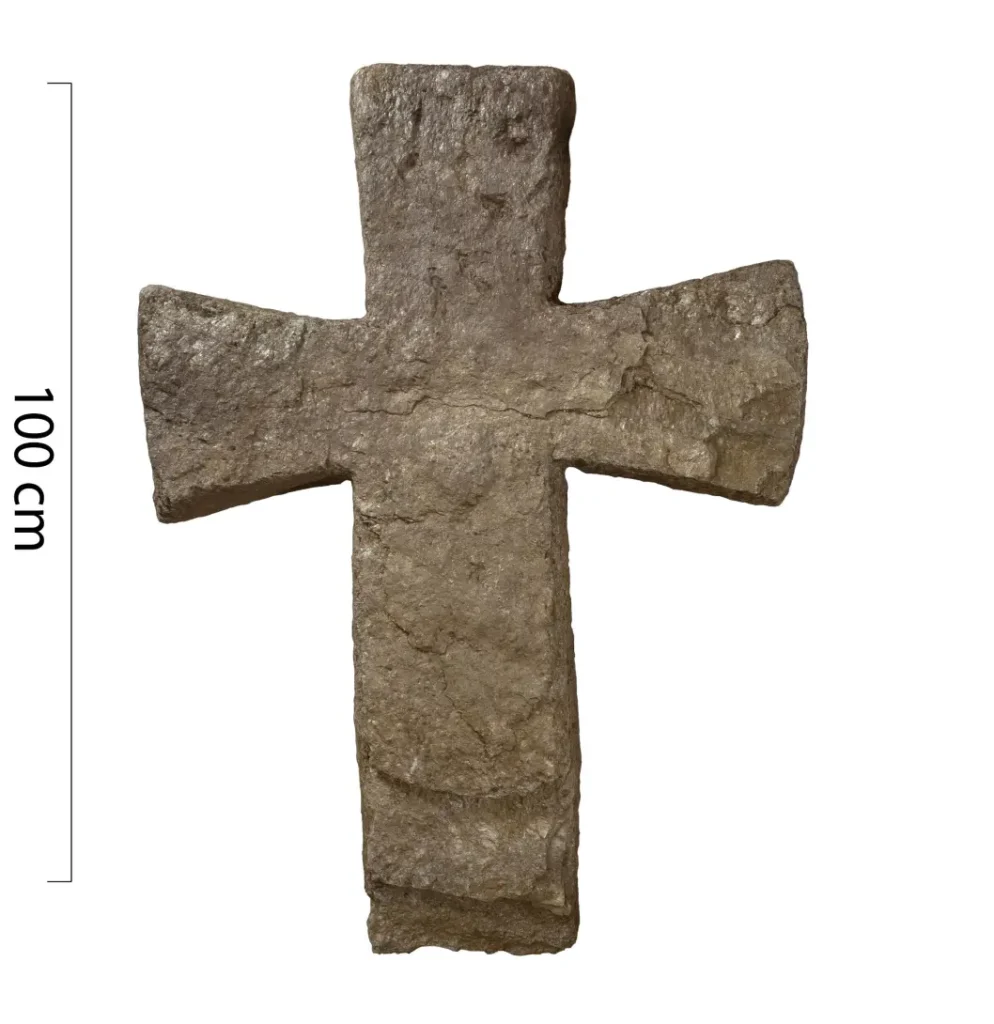
The fragments came from crosses of different sizes. Some may have been intended for churchyards or burial grounds, while the largest examples were substantial monuments designed to stand prominently in the landscape.
The biggest surviving piece measures around 1.2 metres long. According to Baug, the completed cross may originally have reached a height of two to three metres.
Some of the crosses appear to have broken before they left the quarry. Once damaged, the pieces were discarded with waste produced during stone extraction and carving.
That failure preserved evidence archaeologists rarely encounter.
Completed crosses were transported away from their production sites and erected elsewhere. Broken pieces remained among the quarry debris, recording where and how the monuments had been made.
Researchers had previously recognised stone from Hyllestad in medieval crosses found across western Norway. The seven discarded examples provided a more direct connection between those monuments and a specific production area.
More Than a Millstone Industry
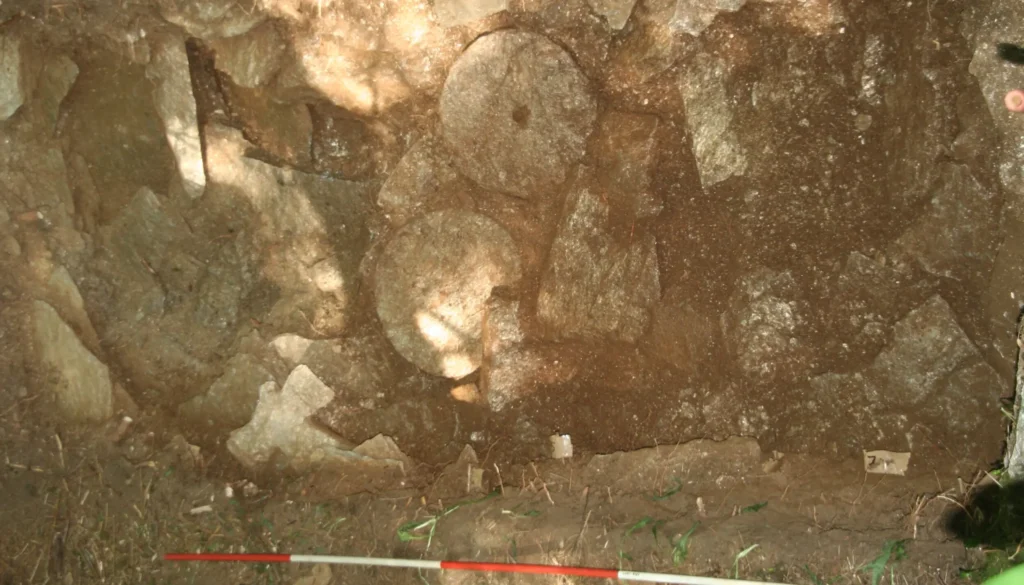
Hyllestad is best known for the large-scale manufacture of quernstones and millstones used to grind grain.
Stone was extracted from hundreds of quarry sites spread across the surrounding landscape. Production began during the Viking Age and continued for centuries, eventually supplying markets beyond western Norway.
Moving heavy millstones required skilled labour and access to maritime transport. Quarry workers had to identify suitable rock, separate usable slabs and shape products without causing fractures.
The same expertise could be applied to stone crosses, although their manufacture presented different challenges.
Some surviving Hyllestad crosses were carved from relatively thin stone slabs despite standing several metres tall. A fracture during extraction or shaping could ruin a monument before it was completed.
The fragments found in the waste heap preserve this less visible side of medieval craftsmanship: valuable material, labour and time could be lost through a single break.
Crosses Made for Individual Patrons
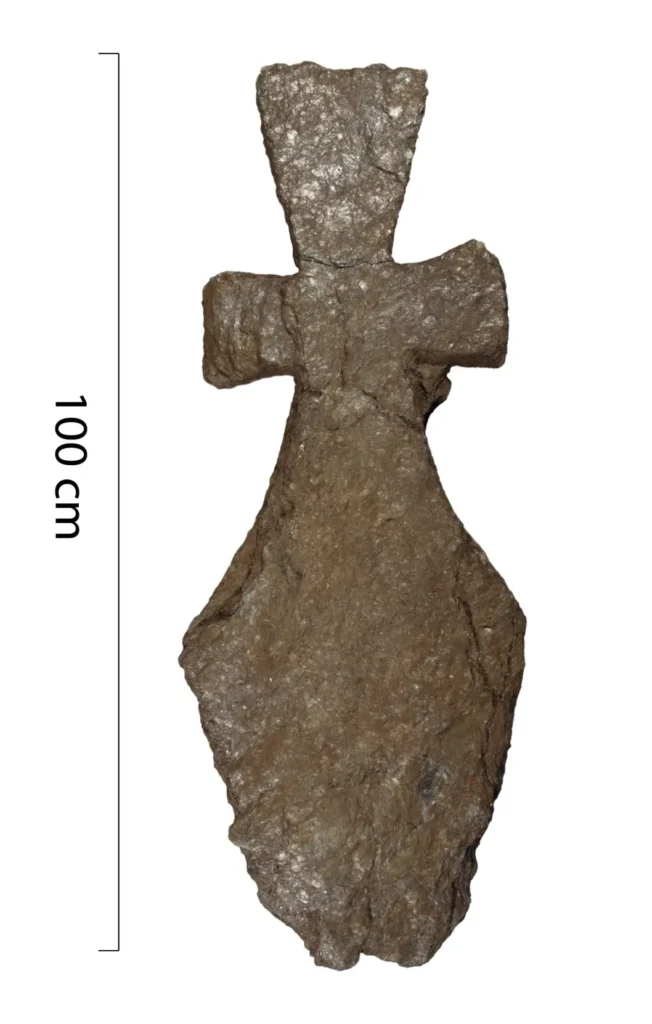
Millstones were produced in large quantities for a broad commercial market. Monumental crosses were probably made to order.
Baug has suggested that their patrons may have included wealthy landowners, church institutions or other influential figures able to commission large stone monuments.
The crosses were created during the centuries in which Christianity became firmly established in Norway. Freestanding monuments could mark places of worship or burial, but they also made religious identity visible within the wider landscape.
Their size would have made them difficult to ignore. Ordering, transporting and erecting such a monument required resources, organisation and access to specialised craftspeople.
Some crosses associated with Hyllestad also display forms comparable to examples from the British Isles. Western Norway maintained close maritime connections with Ireland and Britain during the Viking and medieval periods, making artistic influence from those regions possible.
Continental European traditions have also been considered, however, and the precise origins of the designs remain uncertain.
Dating the Quarry Waste
Charcoal recovered from the waste heap produced radiocarbon dates between the 11th and 13th centuries.
Evidence beneath the deposit shows that quarrying had begun earlier, meaning stone extraction was already established before the cross fragments accumulated in the heap.
The dates place their production within a significant period in Norway’s religious history, following the gradual adoption and consolidation of Christianity.
The fragments cannot reveal who commissioned each cross or where the completed monuments were supposed to stand. Nor can archaeologists determine with certainty why every piece was discarded.
What the discovery does establish is that Hyllestad was not only a major centre for millstone production. Its craftspeople were also creating some of western Norway’s most distinctive medieval Christian monuments.
The surviving crosses found elsewhere show the finished results. The seven pieces from the waste heap reveal the difficult work—and occasional failures—that took place before a monument could leave the quarry.
Cover Image: The Medieval Stone Crosses were discovered in 2008, when Irene Baug was excavating at Hyllestad for evidence of millstone production. Credit: Private.