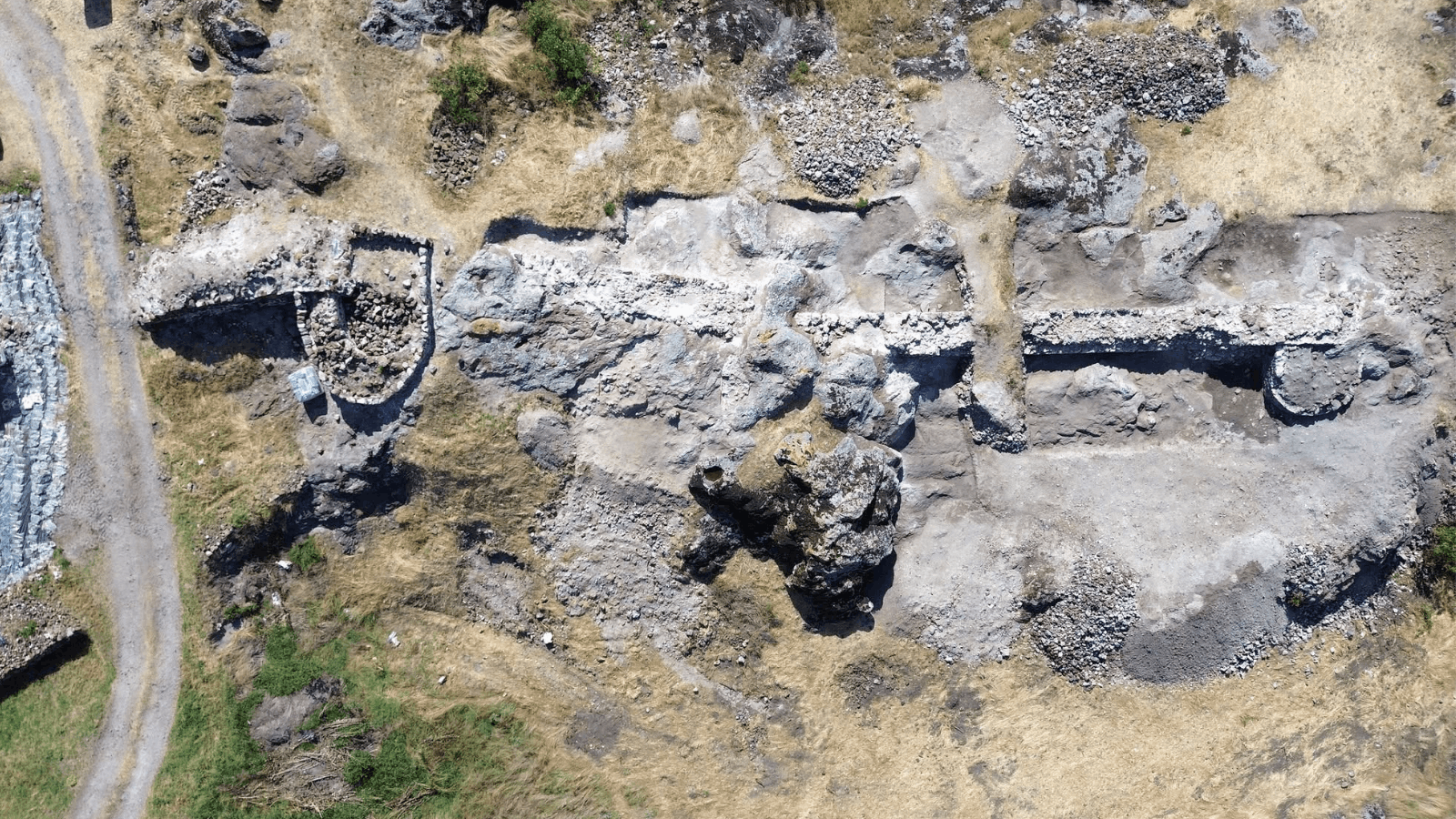
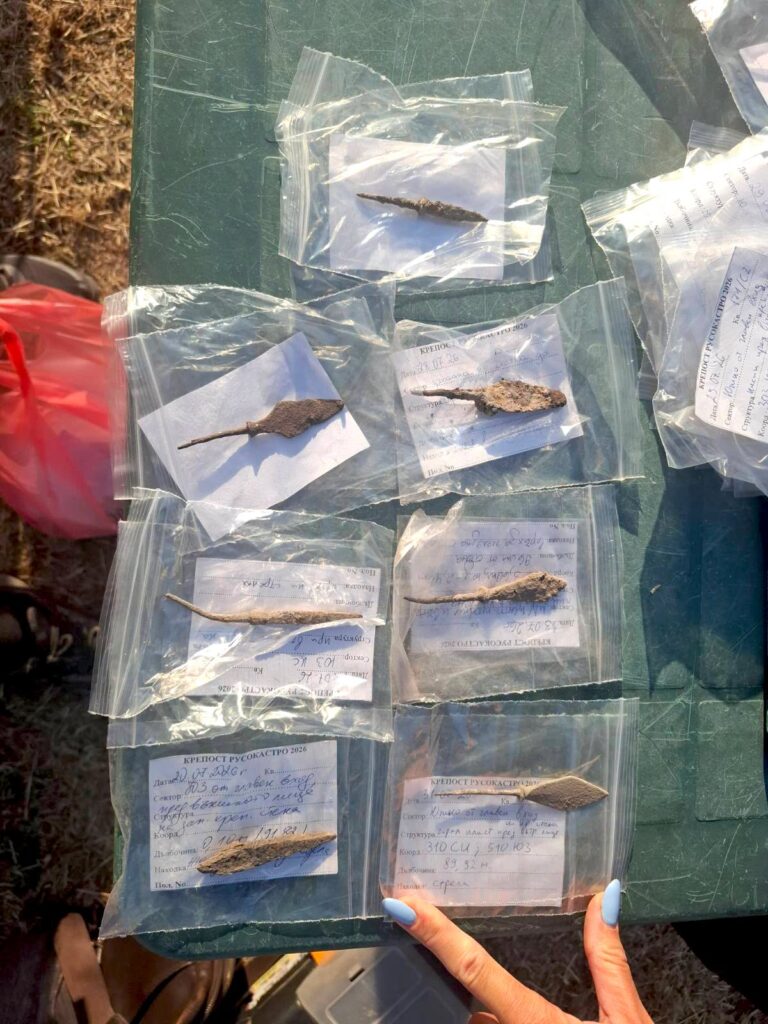
Archaeologists investigating Rusokastro Fortress in southeastern Bulgaria have uncovered two previously unknown defensive towers and 18 iron projectile points concentrated beside the medieval walls. Several of the points were bent after striking stone, offering physical evidence of fighting around this part of the fortress.
The discovery was announced by the Regional Historical Museum – Burgas, which is carrying out the excavations with annual financial support from Kameno Municipality.
Towers built centuries apart
The two towers belong to different phases in Rusokastro’s defensive history.
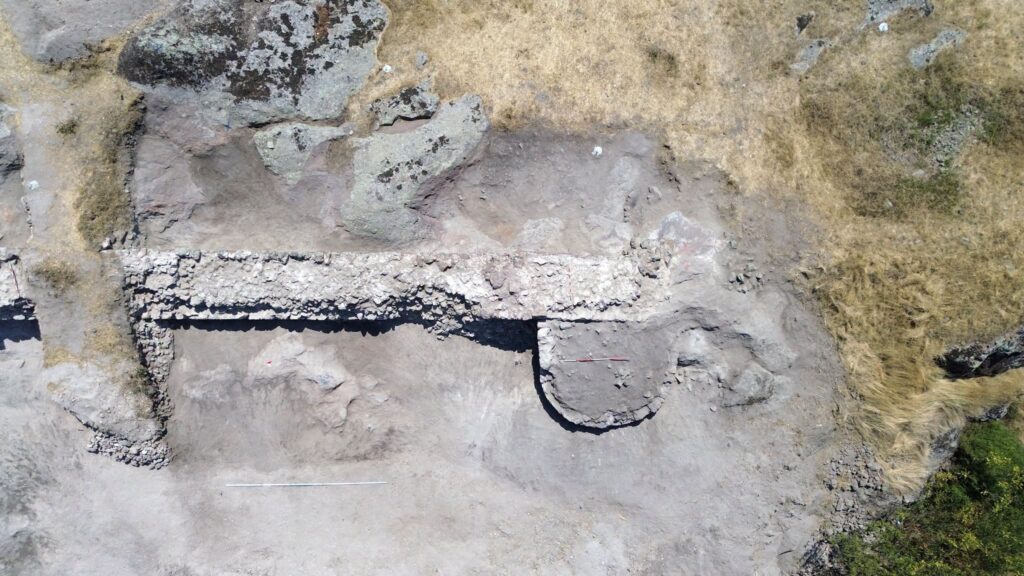
The earlier structure is a rectangular tower dating to the Early Byzantine period. Archaeologists found that it had been dismantled during the Middle Ages, when this section of the fortifications was reorganized.
A second, U-shaped tower was built during the second quarter of the 13th century. Its position shows that it guarded a previously unknown postern—a small secondary entrance through the fortress wall.
The discovery adds a new element to the known plan of Rusokastro’s southwestern defenses and shows how the fortification system changed between the Early Byzantine and medieval periods.
Eighteen projectiles found beside the wall
The clearest evidence of combat came from a small area near the later tower.
Archaeologists recovered 18 iron arrowheads and crossbow bolt heads from the inner side of the wall. All were found at the same archaeological level within an area covering only a few square metres.
Several of the projectiles have bent edges or damaged tips. The excavation team believes the deformation occurred when they struck stones, possibly those forming part of the fortress wall.
The weapons were discovered in a layer of ash that was covered during the 14th century by a deposit of stones and pebbles. Their concentration, position and visible impact damage led archaeologists to identify the area as a place where active fighting had occurred.
The museum has not yet associated the projectiles with a particular siege or documented military event.
A fortress remembered for a medieval battle
Rusokastro was an important fortified settlement during the Middle Ages and controlled routes across southeastern Bulgaria. The site is particularly known for the Battle of Rusokastro, fought on July 18, 1332.
During the battle, Bulgarian forces commanded by Tsar Ivan Alexander defeated the Byzantine army of Emperor Andronikos III Palaiologos. The confrontation became one of the most notable Bulgarian victories of the 14th century.
Although the newly discovered projectiles were sealed beneath a deposit formed during that century, archaeologists have not established a direct connection between the finds and the 1332 battle. Further examination of the weapons and surrounding archaeological layers will be required before they can be linked to a specific episode.
The latest discoveries provide new evidence for the development of Rusokastro’s defensive system and the violence experienced along its walls. Excavations at the medieval town are conducted by the Regional Historical Museum – Burgas as part of a wider program supporting archaeological research and cultural tourism.